Bank Of Korea Halts CBDC Project As Lawmakers Focus On Stablecoin Regulation

bitcoinistPublicado a 2025-07-01Actualizado a 2025-07-01

Resumen

The Bank of Korea (BOK) has reportedly halted its Central Bank Digital Currency (CBDC) project following the South Korean government’s...

Trusted Editorial content, reviewed by leading industry experts and seasoned editors. Ad Disclosure

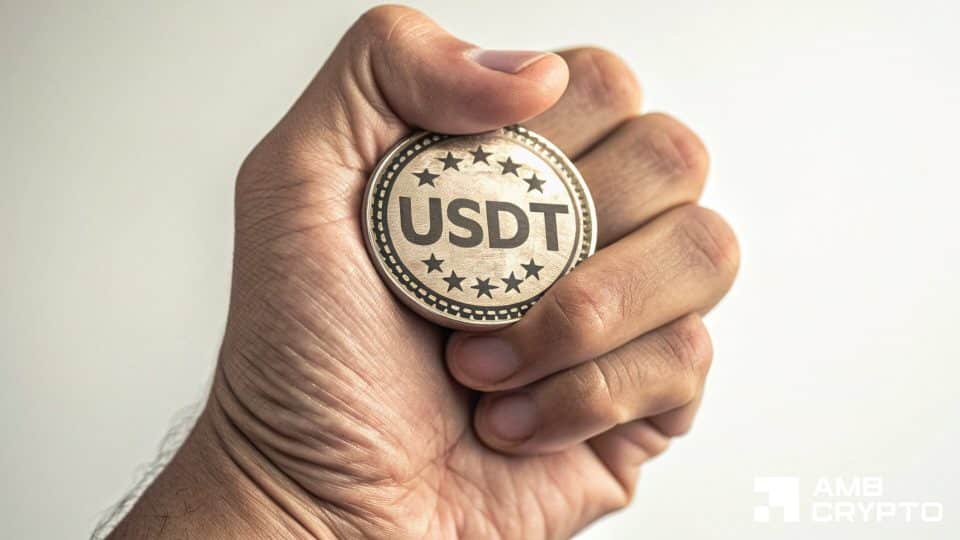
The Bank of Korea (BOK) has reportedly halted its Central Bank Digital Currency (CBDC) project following the South Korean government’s focus on stablecoins. The shift has left project participants with “no long-term roadmap” and banks pivoting to this sector.

BOK Suspends Second Phase Of CBDC Testing

On Sunday, local news outlet Yonhap News Agency reported that the Bank of Korea had notified banks participating in the Han River Project that the second phase of CBDC testing would be suspended.

The BOK and seven banks began the first phase of testing in April, targeting 100,000 financial consumers and planning to complete it by June 30. Originally, the project was scheduled to start its second phase at the end of the year, testing peer-to-peer transfers, expanding payment merchant locations, and simplifying authentication methods.

However, banks reportedly raised concerns about the “excessive cost burden without concrete plans for commercialization,” leading to the project’s pause. Notably, the banking sector is bearing the cost of the project and recently demanded that the Bank of Korea provide a clear long-term roadmap with plans for commercialization.

Banks requested the BOK to “establish a ‘CBDC General User Real-Transaction Test Task Force’ involving all relevant departments of the Bank of Korea and banks to develop a long-term roadmap including post-test commercialization plans, and then realistically adjust the project schedule based on this roadmap.”

As a result, the BOK has concluded that it must clarify its internal stance and schedule regarding digital assets, as stablecoin momentum grows and discussions in the National Assembly and the private sector intensify.

According to a senior official at a commercial bank, the Bank of Korea explained that it would “wait and see how the situation develops, given that the legalization of stablecoins is currently underway, while it is unclear how CBDC, stablecoins, and deposit tokens differ and can coexist.”

Similarly, another senior official affirmed that the atmosphere is shifting toward stablecoins, detailing that “Until the dinner meeting between Bank of Korea Governor Lee Chang-yong and bank presidents on the 23rd, the atmosphere was not like this, but the situation has changed significantly since then.”

Nonetheless, the Han River Project could be reconsidered in 2026, according to another bank official, who claimed that the Bank of Korea mentioned the possibility of revisiting CBDC testing and “pushing forward with it around the first half of next year.”

Banks Prepare For Stablecoin Legislation

Following this development, banks participating in the CBDC project are expected to shift to stablecoin issuance as related legislation gains support, preparing for issuance with other banks or non-bank entities.

 At the start of the month, a member of South Korea’s ruling party, Min Byeong-deok, introduced a comprehensive bill to establish a more structured regulatory framework for crypto assets in the country.

As reported by Bitcoinist, the Democratic Party of Korea (DPK) lawmaker proposed the Digital Assets Basic Act to complement the Virtual Asset Investor Protection Act and offer a broader legal foundation for the industry.  Additionally, it focuses on implementing a licensing system for stablecoin issuers and clear rules.

The banking sector is considering a business model in which banks establish a joint venture to collectively issue stablecoins, while contacting various non-bank companies to prepare for the legalization and issuance of stablecoins.

A bank official affirmed that “It is unclear whether banks or big tech (large IT companies) and fintech (financial technology companies) will be the issuers of stablecoins,” adding that they “have no choice but to prepare for both scenarios before legalization.”

Another bank official stated that it is necessary to collaborate with fintech companies for scalability, explaining that banks are “not only discussing stablecoins with the Bank of Korea and other banks, but also meeting regularly with ‘payment’ companies, cryptocurrency exchanges, and blockchain companies to prepare for the issuance of stablecoins.”
stablecoin, Bitcoin, btc, btcusdt

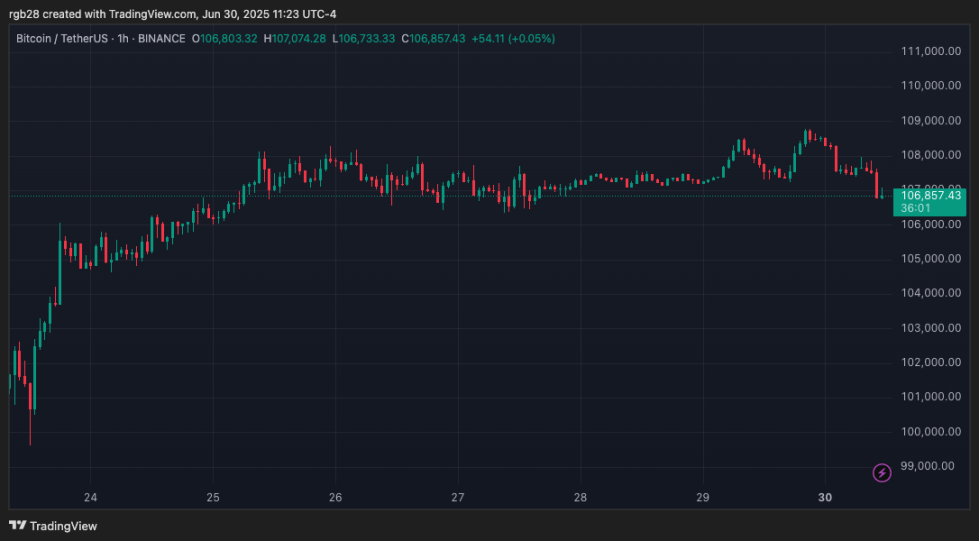
Bitcoin (BTC) trades at $106,857 in the one-week chart. Source: BTCUSDT on TradingView
Featured Image from Unsplash.com, Chart from TradingView.com
Editorial Process for bitcoinist is centered on delivering thoroughly researched, accurate, and unbiased content. We uphold strict sourcing standards, and each page undergoes diligent review by our team of top technology experts and seasoned editors. This process ensures the integrity, relevance, and value of our content for our readers.

Rubmar is a crypto enthusiast who likes learning and improving constantly. She enjoys reporting on the latest news and developments in the crypto industry. Rubmar also enjoys scrapbooking, crafting, simulation games, and watching football.

Criptos en tendencia

Lecturas Relacionadas

Ondo, the Leader in RWA Tokenization, is Entering the Perp DEX Arena

Ondo Finance, the dominant player in the real-world asset (RWA) tokenization space, is entering the perpetual futures (Perp) DEX arena with the launch of "Ondo Perps." This move signifies a strategic pivot from primarily being an asset issuer to becoming a comprehensive trading infrastructure provider. The platform uniquely focuses on tokenized traditional assets like stocks, indices (e.g., US 500), and commodities (gold, silver, oil), offering up to 20x leverage for 24/7 trading. A key differentiator is its planned multi-asset collateral system, which will allow users to employ tokenized stocks and bonds as margin, enabling sophisticated portfolio hedging and strategies. This approach leverages Ondo's existing strengths—deep institutional relationships, regulatory approvals, and a vast library of tokenized assets—to create a bridge between traditional finance liquidity and decentralized, permissionless trading. By integrating its asset issuance (Ondo Global Markets) with a proprietary trading venue, Ondo aims to complete the RWA financialization loop, transforming tokenized holdings from passive investments into productive capital for leverage and complex financial engineering. The launch positions Ondo Perps not just as another derivatives exchange, but as a foundational piece of next-generation infrastructure merging TradFi assets with DeFi-native execution.

Foresight NewsHace 2 hora(s)

Ondo, the Leader in RWA Tokenization, is Entering the Perp DEX Arena

Foresight NewsHace 2 hora(s)

Founder of Baixing.com: The Notion That Large Language Models Will Devour Everything, I Believe Half of It

Founder of Baixing.com: I Only Half-Believe the Saying “Large Language Models Will Devour Everything” Author: Wang Jianshuo, Founder of Baixing.com Many proclaim that large models are everything, but the author is skeptical. He argues that such sweeping claims often stem from a limited understanding of the future. Drawing parallels to past technologies like electricity and the internet—which were predicted to “devour everything” but didn’t—he suggests that large language models (LLMs) are better seen as a foundational base. Like electricity, this base is essential for modern development, but its real value emerges only when applied to specific scenarios through various “machines” or “tools” (e.g., Claude Code for programming, Claude Design for design). The author acknowledges that LLMs may indeed replace many existing software systems built on rigid rules, workflows, and forms (e.g., CRMs, SaaS tools), as these are precisely what LLMs excel at processing. However, he emphasizes that beyond software, elements like customer data, execution capabilities (e.g., booking a flight), trust, and physical-world interactions will not be “devoured.” Instead, he foresees that after streamlining existing software, LLMs will open up a larger space for innovative, next-generation applications. These new tools will likely feature fluid interfaces and rely less on fixed rules, unleashing greater creativity. The author cautions against short-sightedness, recalling how in 2004 many believed internet giants like Sina, Sohu, and NetEase would monopolize the market—only to be proven wrong by subsequent disruptions. In conclusion, while LLMs are a crucial foundation and a current focal point, the true mainstream of this wave lies in the diverse applications built atop them to solve concrete problems. The phrase “devour everything” is imprecise; the real opportunity lies in identifying and leveraging the areas where LLMs do bring transformative change.

marsbitHace 2 hora(s)

Founder of Baixing.com: The Notion That Large Language Models Will Devour Everything, I Believe Half of It

marsbitHace 2 hora(s)

Founder of Baixing.com: I Only Half Believe in the Notion that Large Language Models Devour Everything

The founder of Baixing Wang states that while large language models (LLMs) are an extremely important foundational technology—akin to electricity or the internet—he only "half believes" the notion that they will "consume everything." He argues that LLMs provide a base layer of intelligence, but real-world value and transformation come from integrating this intelligence into specific applications and devices designed for particular scenarios—like how electricity powers various appliances from washing machines to TVs. He agrees LLMs will likely consume or replace a significant portion of existing rule-based, workflow-driven software (e.g., many SaaS systems, CRMs), as these are precisely what LLMs excel at handling. However, numerous other elements—such as customer data, execution capabilities (e.g., booking a flight), trust, and physical-world interactions—will not be consumed. Wang emphasizes that after LLMs absorb certain software layers, they will open up a much larger space for innovation: new types of "streaming" software with less rigid interfaces, where fixed rules are managed by AI. This next wave of applications built on top of the stable LLM foundation is where the true mainstream opportunity lies. He cautions against the short-sightedness of declaring any technology as all-consuming, drawing parallels to past premature predictions about internet giants monopolizing the web. The key is to find opportunities within the areas LLMs do transform.

链捕手Hace 2 hora(s)

Founder of Baixing.com: I Only Half Believe in the Notion that Large Language Models Devour Everything

链捕手Hace 2 hora(s)

Trading

Spot

Artículos destacados

Qué es $BANK

Banco AI: Un Paso Revolucionario en el Futuro de la Banca Introducción En una era marcada por avances rápidos en tecnología, Banco AI se sitúa en la intersección de la inteligencia artificial (IA) y los servicios bancarios. Este proyecto innovador busca redefinir el panorama financiero, mejorando la eficiencia operativa, las medidas de seguridad y las experiencias del cliente a través del poder de la IA. Al embarcarnos en esta exploración de Banco AI, profundizaremos en lo que implica el proyecto, sus dinámicas operativas, su contexto histórico y hitos significativos. ¿Qué es Banco AI? En su esencia, Banco AI representa una iniciativa transformadora destinada a integrar la inteligencia artificial en varias operaciones bancarias. Este proyecto aprovecha las capacidades de la IA para automatizar procesos, mejorar los protocolos de gestión de riesgos y mejorar la interacción con los clientes a través de servicios personalizados. Los objetivos principales de Banco AI incluyen: Automatización de Funciones Bancarias: Al aprovechar las tecnologías de IA, Banco AI tiene como objetivo automatizar tareas rutinarias, reduciendo la carga sobre los recursos humanos y mejorando la eficiencia. Mejora en la Gestión de Riesgos: El proyecto utiliza algoritmos de IA para predecir e identificar riesgos, fortaleciendo así las medidas de seguridad contra fraudes y otras amenazas. Personalización de Servicios Bancarios: Banco AI se centra en ofrecer productos y servicios financieros a medida al analizar datos y comportamientos de los clientes. Mejoramiento de la Experiencia del Cliente: La implementación de soluciones impulsadas por IA, como chatbots y asistentes virtuales, tiene como objetivo proporcionar a los usuarios interacciones más humanas, revolucionando la forma en que los clientes se relacionan con los bancos. Con estos objetivos, Banco AI se posiciona como un jugador crucial para hacer que la banca sea más eficiente, segura y centrada en el usuario. ¿Quién es el Creador de Banco AI? Los detalles sobre el creador de Banco AI siguen siendo desconocidos. Como tal, no se ha identificado a ninguna persona u organización específica en la información disponible. El anonimato que rodea el inicio del proyecto plantea preguntas, pero no resta valor a su ambiciosa visión y objetivos. ¿Quiénes Son los Inversores de Banco AI? Al igual que con el creador del proyecto, no se ha divulgado información específica sobre los inversores u organizaciones que apoyan a Banco AI. Sin esta información, es un desafío delinear el respaldo financiero y el apoyo institucional que podrían estar impulsando el proyecto hacia adelante. No obstante, la importancia de contar con una sólida base de inversión es fundamental para sostener el desarrollo en un campo tan innovador. ¿Cómo Funciona Banco AI? Banco AI opera en múltiples frentes innovadores, centrándose en factores únicos que lo diferencian de los marcos bancarios tradicionales. A continuación, se presentan las características operativas clave: Automatización: Al aplicar algoritmos de aprendizaje automático, Banco AI automatiza varios procesos manuales dentro de los bancos. Esto resulta en la reducción de costos operativos y permite que los trabajadores humanos redirijan sus esfuerzos hacia actividades más estratégicas. Gestión Avanzada de Riesgos: La integración de la IA en las prácticas de gestión de riesgos equipa a los bancos con herramientas para predecir con precisión amenazas potenciales como el fraude, garantizando que la información y los activos de los clientes permanezcan seguros. Recomendaciones Financieras Personalizadas: A través del aprendizaje continuo a partir de las interacciones con los clientes, los sistemas de IA desarrollan una comprensión matizada de las necesidades del usuario, lo que les permite ofrecer consejos adaptados sobre decisiones financieras. Interacciones Mejoradas con los Clientes: Al utilizar chatbots y asistentes virtuales impulsados por IA, Banco AI permite una experiencia más atractiva para el cliente, permitiendo a los usuarios resolver sus consultas rápidamente, reduciendo así los tiempos de espera y mejorando los niveles de satisfacción. En conjunto, estas características operativas posicionan a Banco AI como un pionero en el sector bancario, estableciendo nuevos parámetros para la entrega de servicios y la excelencia operativa. Línea de Tiempo de Banco AI Entender la trayectoria de Banco AI requiere mirar su contexto histórico. A continuación, se presenta una línea de tiempo que destaca hitos y desarrollos importantes: Inicios de 2010: La conceptualización de la integración de la IA en los servicios bancarios comenzó a ganar atención a medida que las instituciones bancarias reconocieron los posibles beneficios. 2018: Se produjo un aumento notable en la implementación de tecnologías de IA cuando los bancos comenzaron a utilizar herramientas de IA como chatbots para el servicio al cliente básico y sistemas de gestión de riesgos para mejorar la seguridad. 2023: La sofisticación de la IA continuó avanzando, con la introducción de IA generativa para tareas más complejas como el procesamiento de documentos y análisis de inversiones en tiempo real. Este año marcó un salto significativo en las capacidades que la tecnología de IA otorgó a los bancos. 2024-Estatus Actual: A partir de este año, Banco AI se encuentra en una trayectoria ascendente, con investigaciones y desarrollos en curso que pronto mejorarán las capacidades en las operaciones bancarias. La continua exploración de las aplicaciones de IA sugiere emocionantes desarrollos aún por venir. Puntos Clave Sobre Banco AI Integración de la IA en la Banca: Banco AI se centra en adoptar inteligencia artificial para optimizar los procesos bancarios y mejorar la experiencia del usuario. Enfoque en Automatización y Gestión de Riesgos: El proyecto enfatiza fuertemente estas áreas, con el objetivo de desplazar la carga de tareas rutinarias mientras mejora los marcos de seguridad a través de análisis predictivos. Soluciones Bancarias Personalizadas: Al aprovechar los datos de los clientes, Banco AI permite servicios bancarios adaptados a las necesidades individuales de los usuarios. Compromiso con el Desarrollo: Banco AI se mantiene comprometido con esfuerzos de investigación y desarrollo continuos, asegurando su adaptabilidad y relevancia continua a medida que la tecnología sigue evolucionando. Conclusión En resumen, Banco AI ejemplifica un paso crucial hacia adelante en la industria bancaria, aprovechando la inteligencia artificial para redefinir los paradigmas operativos, mejorar la seguridad y promover la satisfacción del cliente. A pesar de las lagunas en la información sobre el creador y los inversores, los objetivos claros y los mecanismos funcionales de Banco AI proporcionan una sólida base para su evolución continua. A medida que la tecnología de IA sigue avanzando y fusionándose con el sector bancario, Banco AI está bien posicionado para impactar significativamente el futuro de los servicios financieros, mejorando la forma en que entendemos e interactuamos con la banca.

171 Vistas totalesPublicado en 2024.04.06Actualizado en 2024.12.03

Qué es $BANK

Cómo comprar BANK

¡Bienvenido a HTX.com! Hemos hecho que comprar Lorenzo Protocol (BANK) sea simple y conveniente. Sigue nuestra guía paso a paso para iniciar tu viaje de criptos.Paso 1: crea tu cuenta HTXUtiliza tu correo electrónico o número de teléfono para registrarte y obtener una cuenta gratuita en HTX. Experimenta un proceso de registro sin complicaciones y desbloquea todas las funciones.Obtener mi cuentaPaso 2: ve a Comprar cripto y elige tu método de pagoTarjeta de crédito/débito: usa tu Visa o Mastercard para comprar Lorenzo Protocol (BANK) al instante.Saldo: utiliza fondos del saldo de tu cuenta HTX para tradear sin problemas.Terceros: hemos agregado métodos de pago populares como Google Pay y Apple Pay para mejorar la comodidad.P2P: tradear directamente con otros usuarios en HTX.Over-the-Counter (OTC): ofrecemos servicios personalizados y tipos de cambio competitivos para los traders.Paso 3: guarda tu Lorenzo Protocol (BANK)Después de comprar tu Lorenzo Protocol (BANK), guárdalo en tu cuenta HTX. Alternativamente, puedes enviarlo a otro lugar mediante transferencia blockchain o utilizarlo para tradear otras criptomonedas.Paso 4: tradear Lorenzo Protocol (BANK)Tradear fácilmente con Lorenzo Protocol (BANK) en HTX's mercado spot. Simplemente accede a tu cuenta, selecciona tu par de trading, ejecuta tus trades y monitorea en tiempo real. Ofrecemos una experiencia fácil de usar tanto para principiantes como para traders experimentados.

805 Vistas totalesPublicado en 2025.05.09Actualizado en 2026.06.02

Cómo comprar BANK

Discusiones

Bienvenido a la comunidad de HTX. Aquí puedes mantenerte informado sobre los últimos desarrollos de la plataforma y acceder a análisis profesionales del mercado. A continuación se presentan las opiniones de los usuarios sobre el precio de BANK (BANK).

活动图片