最新“大毛”:Cookie首个合作项目Spark刷分攻略

Odaily星球日报Publicado a 2025-05-26Actualizado a 2025-05-26

Resumen

Spark官方积分与Cookie Snaps活动积分联动中。

原创 | Odaily星球日报(@OdailyChina

作者 | Asher(@Asher_ 0210 

最新“大毛”:Cookie首个合作项目Spark刷分攻略

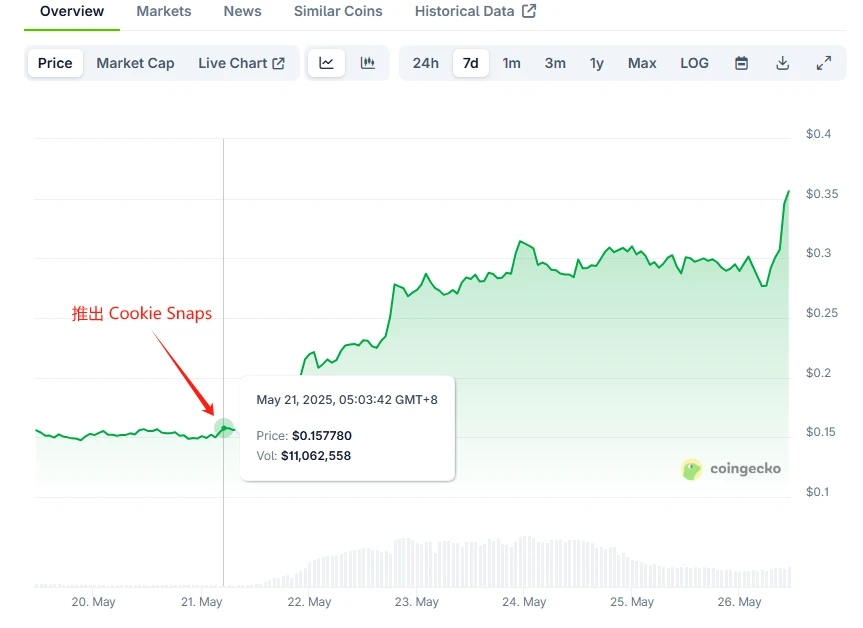
在绝大多数山寨币价格持续“画门”,无明显山寨狂潮的当下,Cookie DAO 平台 Cookies.fun 由于近期推出 Cookie Snaps,价格表现喜人。今日上午,COOKIE 上涨突破 0.35 美元,24 小时涨幅 23.16%,7 日涨幅超 125%,流通市值暂报 1.8 亿美元。
最新“大毛”:Cookie首个合作项目Spark刷分攻略

COOKIE 近期价格走势图

上周末,Cookie DAO 在 X 平台发文宣布上线 Cookie Snaps 活动首个项目 Spark,用户可赚取 Spark Snaps 积分博代币空投奖励。接下来,Odaily星球日报带大家解析 Cookie Snaps 首个项目 Spark、平台质押交互以及如何通过 Cookie Snaps 赚积分博代币空投。

Cookies.fun 推出 Cookie Snaps
最新“大毛”:Cookie首个合作项目Spark刷分攻略

Cookies.fun 是一个专注于 AI Agent 的数据分析与索引平台,致力于提供实时的加密市场洞察。该平台通过追踪市场情绪、用户参与度、链上数据及智能关注等关键指标,帮助用户发现高潜力、低市值的 AI Agent 项目。作为加密原生的数据工具,Cookies.fun 以其优秀的分析功能和用户友好的界面受到好评,支持投资者和开发者在快速发展的 AI 与区块链交汇领域做出明智决策。另外,平台依靠 COOKIE 代币主导,用户若需高级功能,可通过购买 COOKIE 代币解锁。

5 月 21 日,Cookie 上线 InfoFi 第一阶段,包括 cookie.fun v1.0 alpha 版和 Cookie Snaps,用来分析加密领域的项目和 KOL,获取优质 CT 内容奖励。此外,Cookie 将推出去中心化、社区主导的奖励池。昨晚,Cookie CEO Filip 在 X 平台发文表示,“自 v1.0 alpha 推出以来,平台浏览量已接近 100 万次,独立访客超过 13 万,正如我们预期的那样,民主化的信息金融正在展现出强劲动力”。

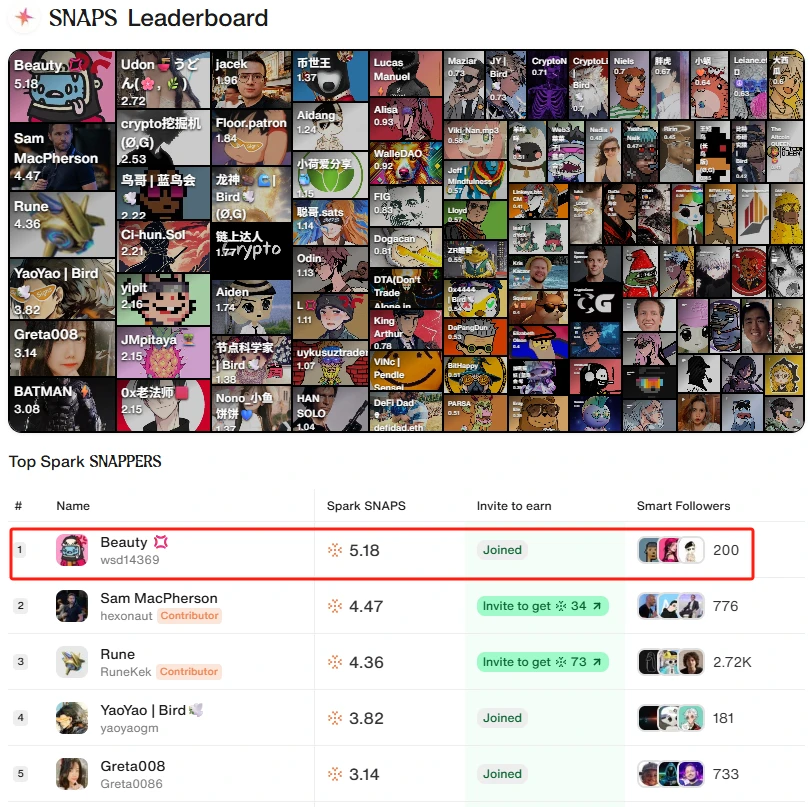
Cookie Snaps 功能刚刚推出,相较于 Kaito 赚 Yap 积分,目前 Cookies.fun 赚 Snaps 积分竞争还不算激烈,根据平台数据,与 Cookies.fun 合作的第一个项目 Spark 的 Snaps 榜单中,排名第一为 KOL Beauty,仅有 5.18 积分,上榜的第 100 名为 0.23 积分,因此只要“方法得当”就能第一时间拿到宝贵的 Snaps 积分,领跑积分榜

最新“大毛”:Cookie首个合作项目Spark刷分攻略

Spark 项目 Cookie Snaps 积分排名情况

那么,Spark 是一个什么样的项目呢?

Spark 项目简介与交互教程

最新“大毛”:Cookie首个合作项目Spark刷分攻略

Spark 是一个去中心化金融(DeFi)协议,专注于优化资本分配,提供深度流动性和高收益机会,隶属于 MakerDAO 生态系统。它通过 SparkLend 等产品为用户提供以稳定币 DAI 为核心的借贷市场,目前管理超过 26 亿美元的流动性。

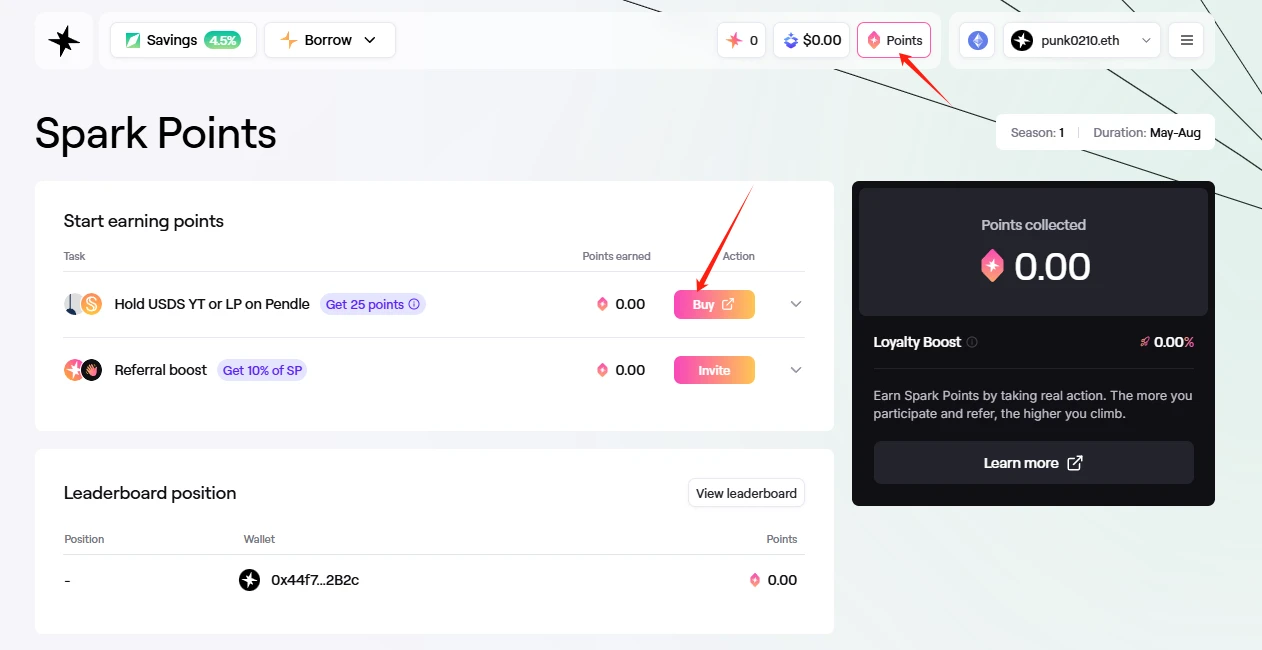
目前,参与  Spark 的平台质押可以获得 Spark Points(官方获取积分需要存款质押,非 0 成本),具体交互教程如下:

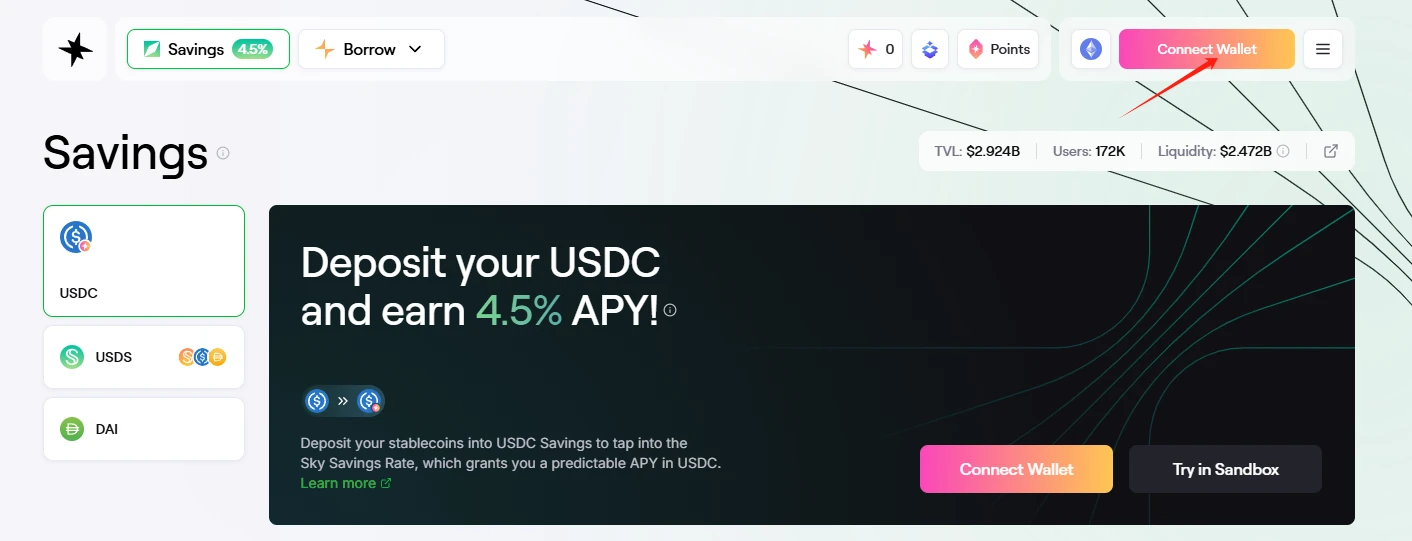
STEP 1. 进入交互链接(点击此处跳转)并点击“Connect Wallet”连接钱包(新人参与活动需要填写邀请码,邀请码为:CXJDI2)。
最新“大毛”:Cookie首个合作项目Spark刷分攻略

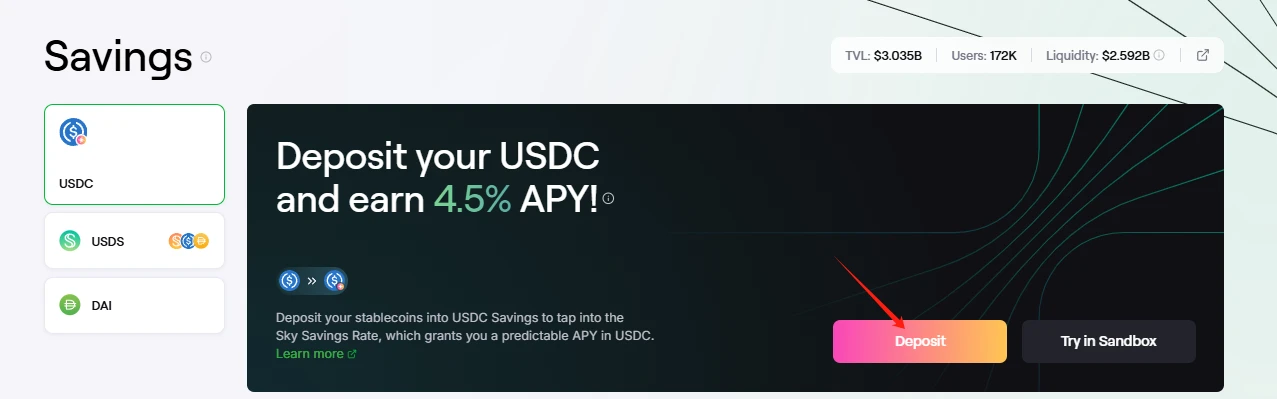
STEP 2. 点击“Deposit”后在 Spark 平台存入 USDC(建议存超 10 枚 USDC)。
最新“大毛”:Cookie首个合作项目Spark刷分攻略

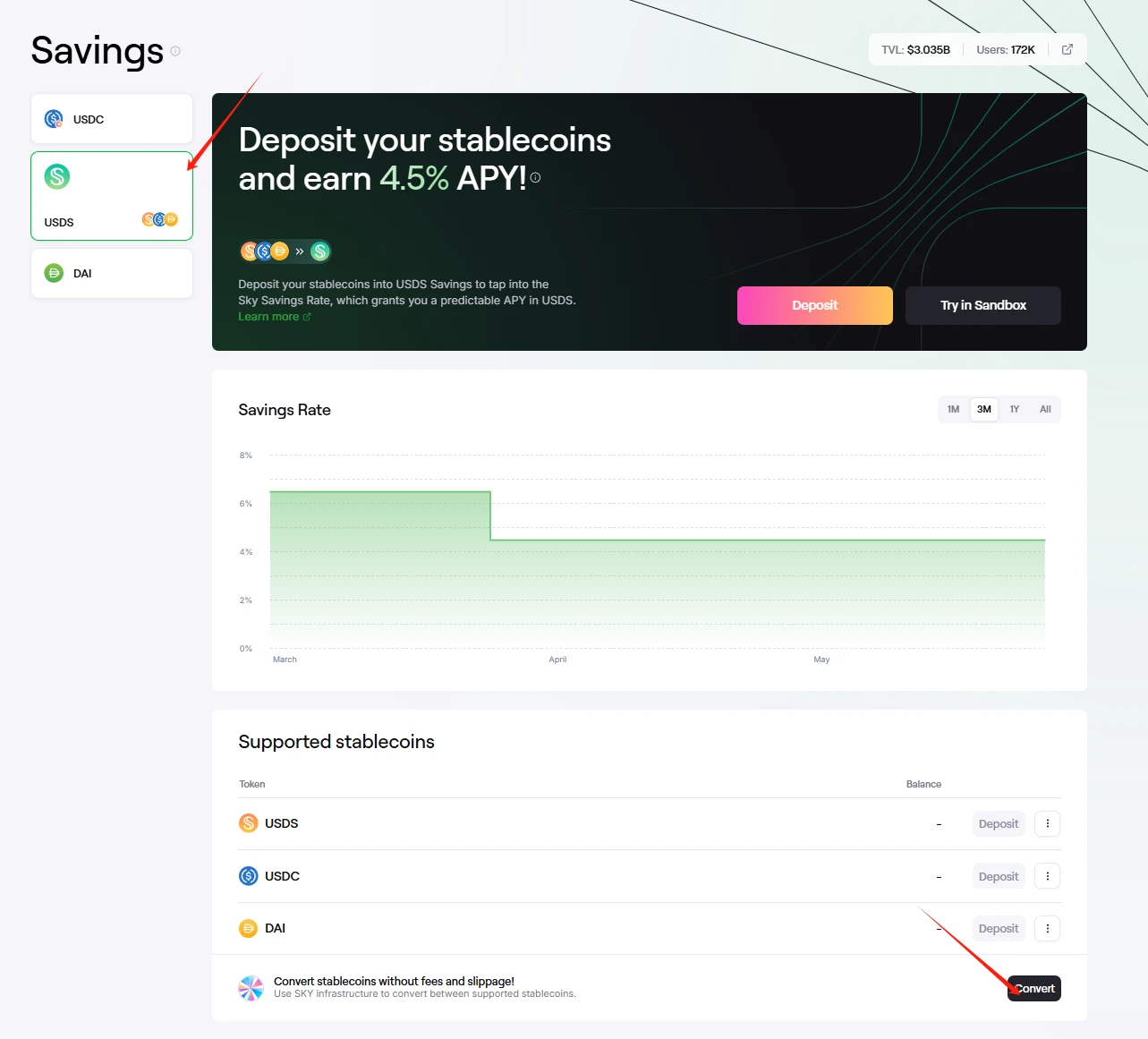
STEP 3. 在 Savings 栏目下选择 USDS 后点击页面下方的 “Convert”按钮,将 USDC 换成 USDS。
最新“大毛”:Cookie首个合作项目Spark刷分攻略

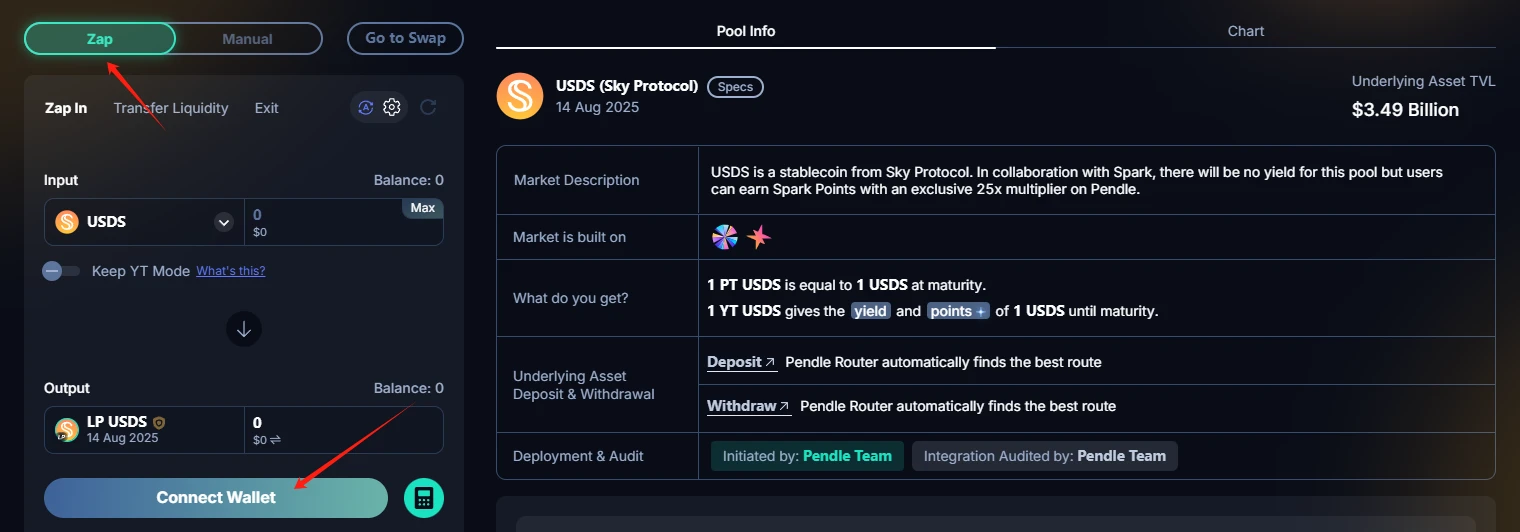
STEP 4. 回到积分界面,点击“Hold USDS YT or LP on Pendle”后将 USDS 换成 LP USDS。
最新“大毛”:Cookie首个合作项目Spark刷分攻略

最新“大毛”:Cookie首个合作项目Spark刷分攻略

除了参与平台质押交互换得积分外,如何通过 Cookies.fun 获取 Snaps 积分呢?

如何赚 SNAPS 积分?

一方面,参与 Cookie Snaps 活动需要先在 Cookies.fun 平台注册账户;另一方面,了解 Cookie.fun 的 Snaps 积分机制,其核心内容为:

  • 积分计算依据:Snaps 得分基于两方面参与度指标(包括发帖频率、互动量)、内容质量(评估内容与项目叙事的契合度及情感倾向);

  • 持续性奖励:持续支持同一项目(非频繁切换)可提升用户信任度,获得额外 Snaps 积分;

  • 查看与排名:用户可在 Cookie.fun 平台的个人资料标签页查看自己在各项目的 Snaps 得分和排行榜排名;  

  • KOL 额外机制:KOL 可通过邀请链接带人参与,邀请对象的积分会按比例返还一部分给 KOL;

  • 快照与奖励:Snaps 积分用于快照分配奖励(如空投或其他激励)。

因此,对于本次 Spark 项目,多在 X 平台上发推文来介绍 Cookie DAO 与  Spark 来帮助项目获得更大的影响力,并建议撰写的推文带上 #SparkFi  #snaps 标签以便平台更好追踪。

此外,注册 Cookie 账户后在 X 平台发布 Spark 相关内容外,仍可以通过加入 Spark 官方 Discord(链接:https://discord.com/invite/sparkdotfi) “肝等级”博未来代币空投机会,目前级别分为三个等级,分别为三级的紫色、六级的金色以及十级的蓝色。

最新“大毛”:Cookie首个合作项目Spark刷分攻略

通过加入官方 Discord “肝等级”博代币空投

Lecturas Relacionadas

Introduction to the Concept of World Models: A Story from Psychology to the Main Battlefield of AI

**World Models: From Psychology to AI's Core Concept** "World model" is a trending but often confusing term in AI, describing a system that allows machines to internally simulate, predict, and rehearse potential outcomes before taking real-world action—like a mental "sandbox." While definitions vary—Yann LeCun emphasizes physical understanding, OpenAI's Sora is a video-based "world simulator," Google DeepMind's Genie 3 creates interactive 3D environments, and companies like Alibaba and Tesla focus on practical applications—the core goal is consistent: reduce reliance on vast real-world data by creating an internal, predictive model for safer and more efficient AI. The concept has deep roots, tracing back to psychologist Kenneth Craik (1943). In AI, it was revitalized by researchers like David Ha and Jürgen Schmidhuber (2018). Major technical approaches include: 1) generative video models (e.g., Sora) for visual realism; 2) abstract predictive models (e.g., LeCun's JEPA) for efficiency and physical reasoning; and 3) explicit 3D simulators (e.g., NVIDIA Omniverse) for precision. Fei-Fei Li proposes a classification based on the AI action loop: renderers (output observations), simulators (output world states), and planners (output actions). The emerging "World Action Model" (WAM) paradigm aims to unify future prediction and action generation. An industry framework is forming: upstream (data, compute, sensors), midstream (general and vertical platforms), and downstream applications (autonomous driving, robotics, gaming, etc.). Autonomous driving is currently the most mature use case. The current lack of a unified definition reflects the field's early, dynamic stage, similar to past tech revolutions. Different approaches—focusing on pixels, physics, or behavior—represent parallel explorations of how best to compress and understand the world. This diversity, while seemingly chaotic, signals that world models have moved from an academic idea to a critical industrial battleground, ultimately aiming to give machines the ability to understand, imagine, and reason about the world.

marsbitHace 5 min(s)

Introduction to the Concept of World Models: A Story from Psychology to the Main Battlefield of AI

marsbitHace 5 min(s)

Building the Bright Path While Secretly Crossing Chencang: Is Walsh Paving the Way for a September "Rate Cut"?

The title "Building the Plank Road Openly While Secretly Crossing at Chencang: Is Walsh Paving the Way for a September 'Rate Cut'?" suggests Federal Reserve Chair Kevin Walsh's hawkish stance may be a deliberate smokescreen. Academy Securities analyst Peter Tchir argues in a report that markets, currently pricing a 75% chance of a September hike, are missing a potential path to a September rate cut that Walsh himself might be quietly preparing. Tchir posits that Walsh's hawkish rhetoric aims to suppress long-term yield risks (with the 10-year Treasury yield falling recently) while creating room for a narrative shift based on upcoming data. The potential political endgame, according to this view, could be rate cuts in September and October, ahead of the midterm elections. This hinges on a political logic where the Trump administration's preference for lower rates remains unchanged. A core part of Tchir's argument involves redefining inflation metrics. He contends the Fed under Walsh may deprioritize the PCE index, criticizing its lagging components like Owners' Equivalent Rent (OER). Instead, he points to alternative, more real-time indicators like the New Tenant Repeat Rent Index (NTRR) and the Truflation daily index, which shows core inflation around 1.45%. He suggests the Fed could shift its data narrative to justify policy easing. Furthermore, Tchir downplays AI-driven inflation fears. He argues that consumer price sensitivity, evidenced by negative market reactions to price hikes (e.g., Apple), contradicts persistent inflation narratives. He also separates AI/data center spending—which he sees as relatively rate-insensitive—from broader consumer affordability issues, implying rate hikes are misdirected. Based on this analysis, Tchir sees a re-pricing of rate cut expectations as likely, creating opportunities in short-duration Treasuries. He maintains a neutral-to-slightly-bullish view on the long end of the yield curve. For equities, he recommends a significant overweight in energy (especially global nuclear assets) and, within defense/security themes, an overweight in biotech/pharma versus an underweight in semiconductors, expressing caution on AI/data center valuations.

marsbitHace 31 min(s)

Building the Bright Path While Secretly Crossing Chencang: Is Walsh Paving the Way for a September "Rate Cut"?

marsbitHace 31 min(s)

"King of Shilling" Hayes Strikes Again, This Time Setting His Sights on Deribit

On June 29, BitMEX co-founder Arthur Hayes acquired approximately 6.16 million SYN tokens via OTC platform Flowdesk, valued at around $2.2 million. Subsequently, Hayes publicly endorsed SYN on X, calling it one of the most asymmetric investments he's seen since HYPE and declaring it time for an on-chain options DEX to challenge industry leader Deribit, naming Hypercall as that challenger. The article details the evolution of the Synapse Protocol, originally launched in 2021 as a cross-chain messaging and liquidity network. While its TVL peaked above $1 billion during the last bull market, it has since declined. The protocol's team has since built Hypercall, an on-chain options trading platform on Hyperliquid's HyperEVM, which supports trading options on "any asset" with features like 24/7 trading and defined risk limited to the premium paid. Deribit, founded in 2016, is highlighted as the dominant centralized crypto options exchange, commanding roughly 85% market share in BTC and ETH options. Its strengths include deep liquidity and professional tools, though it faces critiques over custody risk, KYC requirements, and regulatory uncertainty. The analysis suggests Hypercall's potential lies in decentralization, permissionless access, and transparency, potentially carving a niche in DeFi-native and emerging asset options. However, it faces significant challenges competing with Deribit's established network effect and liquidity depth. The piece concludes by noting Hayes's recent and mixed "call" history, referencing his previous promotion and subsequent sale of HYPE, as well as a controversial price target report for CARDS from his family office, Maelstrom, which was followed by a significant price drop for the asset. This activity has drawn criticism, with some accusing Hayes of creating exit liquidity for his followers.

Foresight NewsHace 1 hora(s)

"King of Shilling" Hayes Strikes Again, This Time Setting His Sights on Deribit

Foresight NewsHace 1 hora(s)

Trading

Spot
活动图片