Unichain Gains EVM Liquidity via Enso Migration Tool, LayerZero

TheCryptoTimesPublicado a 2025-05-01Actualizado a 2025-05-01

Unichain, the Layer 2 network that operates as an EVM rollup, is poised to gain a major liquidity boost following the creation of a one-click migration tool. Enso, which specializes in middleware for onchain protocols, has launched a solution that simplifies moving liquidity to Unichain with a little help from LayerZero and Stargate.

As it stands, liquidity providers (LPs) on EVM chains wanting to migrate to Unichain have to endure a multi-step process, including manual bridging, that makes the task a chore. Enso’s solution cuts those nine steps down to just one. This breakthrough looks poised to turn on the tap for Unichain, with the prospect of up to $3.5B in liquidity being moved there.

Why Unichain?

Unichain is where the best iteration of Uniswap’s exchange can be found. V4 takes advantage of Unichain’s architecture, which boasts one-second block times and ultra-low fees.

Developed by Uniswap Labs, Unichain is intent on becoming the home of DeFi, through scaling where Ethereum can’t. While the tech to realize this vision is in place, the liquidity has yet to seriously arrive. Enso’s migration tool looks poised to fix that.

The tool is targeted at LPs currently running V2 or V3 of Uniswap on Ethereum or its Layer 2 chains. By moving to V4 in one click they’ll be able to enjoy a low-fee environment together with all the other tech improvements that come bundled with V4.

Uniswap Labs elected for a soft launch of Unichain in February, and as a result adoption has been slow and steady. With tooling now in place to streamline liquidity deployment, that pace is poised to pick up.

Enso Co-Founder Connor Howe appears confident that everything is aligning for Unichain, venturing that “Through engineering a unified solution with the help of Stargate and LayerZero, Enso has added the missing piece to the puzzle.

With the ability to transfer their positions in one click, Uniswap LPs are about to trigger one of the largest liquidity migration events in Ethereum history.”

Three Partners Work as One

Creating a solution that automates the process of unstaking, removing liquidity, bridging it, and then re-adding it on a new chain and DEX is no mean feat. So it’s no surprise that when it came to handling the bridging component, Enso turned to the veterans of interoperability, LayerZero and Stargate.

Between them, the three partners have come up with the goods, with Uniswap LPs the prime beneficiaries of this. But the solution will also benefit traders on Unichain, who will be able to enjoy tighter spreads and better pricing.

While Uniswap Labs isn’t technically in competition with Ethereum, it’s naturally eager to lure traders to its own take on EVM infra. As if the prospect of block times that are 12x faster than Ethereum aren’t enough, these will be pushed to as low as 200 milliseconds in a future update.

But in the here and now, it’s still got plenty to entice traders and LPs alike. Particularly now that Enso, Stargate, and LayerZero have risen to the challenge and made liquidity migration a cinch.

Also Read: Sam Altman’s World Project Launches in US with Visa Card


Lecturas Relacionadas

Breaking: OpenAI Undergoes Major Reorganization, President Brockman Assumes Command

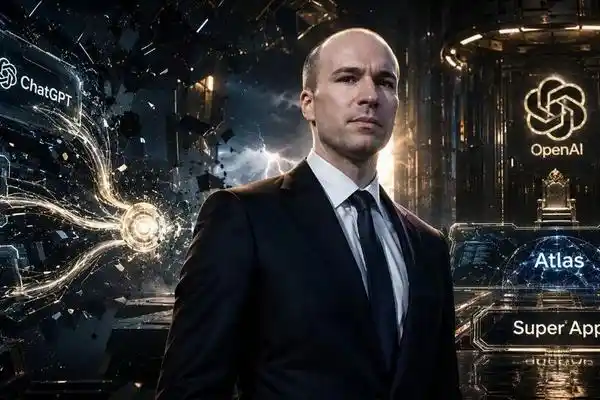
OpenAI has announced a major internal reorganization just months before its anticipated IPO. The company is merging its three flagship product lines—ChatGPT, Codex, and the API platform—into a single, unified product organization. The most significant leadership change involves co-founder and President Greg Brockman moving from a background technical role to take full, permanent control over all product strategy. This follows the indefinite medical leave of AGI Deployment CEO Fidji Simo. Additionally, ChatGPT's longtime lead, Nick Turley, has been reassigned to enterprise products, with former Instagram executive Ashley Alexander taking over consumer offerings. The consolidation, internally framed as a strategic move towards an "Agentic Future," aims to break down internal silos and create a cohesive "Super App." This planned desktop application would integrate ChatGPT's conversational abilities, Codex's coding power, and a rumored internal web browser named "Atlas" to autonomously perform complex user tasks. The reorganization occurs amid significant internal and external pressures. OpenAI has recently seen a wave of high-profile departures, including Sora co-lead Bill Peebles and other senior technical leaders, leading to concerns about a thinning executive bench. Externally, rival Anthropic recently secured funding at a staggering $900 billion valuation, surpassing OpenAI's own. Google's upcoming I/O developer conference also poses a competitive threat. Analysts suggest the dramatic restructure is a pre-IPO move to present a clearer, more focused narrative to Wall Street—streamlining operations and demonstrating decisive leadership under Brockman to counter internal turbulence and intense market competition.

marsbitHace 26 min(s)

Breaking: OpenAI Undergoes Major Reorganization, President Brockman Assumes Command

marsbitHace 26 min(s)

Two Survival Structures of Market Makers and Arbitrageurs

Market makers and arbitrageurs represent two distinct survival structures in high-frequency trading. Market makers primarily use limit orders (makers) to profit from the bid-ask spread, enjoying high capital efficiency (nominally 100%) but bearing inventory risk. This "inventory risk" arises from passive, fragmented, and discontinuous order fills in the limit order book (LOB). This risk, while a potential cost, can also contribute to excess profit if managed within control boundaries, allowing for mean reversion. Market makers essentially sell "time" (uncertainty over execution timing) to the market for price control and low fees. In contrast, cross-exchange arbitrageurs typically use market orders (takers) to exploit price differences or funding rates, resulting in lower nominal capital efficiency (requiring capital on both exchanges) and higher transaction costs. Their risk exposure stems from asymmetries in exchange rules (e.g., minimum order sizes), execution latency, and infrastructure risks (e.g., ADL, oracle drift). These exposures are active, exogenous gaps that primarily erode profits rather than contribute to them. Arbitrageurs essentially sell "space" (capital sunk across venues) for localized, immediate certainty. Both strategies engage in a trade-off between execution friction and residual risk. Optimal systems allow for temporary, controlled risk exposure rather than enforcing zero exposure at all costs. Their evolution converges towards hybrid models: arbitrageurs may use maker orders to reduce costs, while market makers may use taker orders or hedges for risk management. Ultimately, both use different forms of risk exposure—market makers exposing inventory, arbitrageurs immobilizing capital—to extract marginal, hard-won certainty from the market.

链捕手Hace 26 min(s)

Two Survival Structures of Market Makers and Arbitrageurs

链捕手Hace 26 min(s)

Who Will Define the Rules of the AI Era? Anthropic Discusses the 2028 US-China AI Landscape

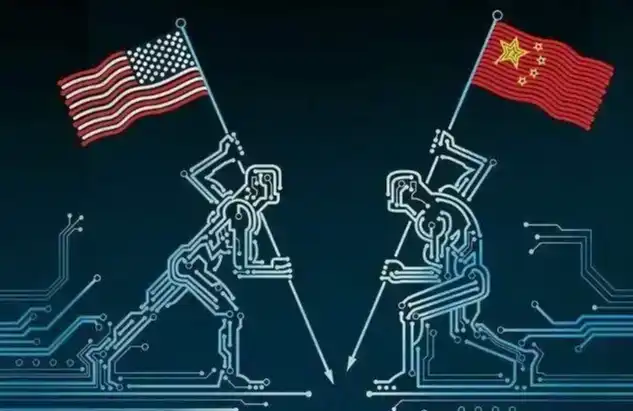
This article, based on Anthropic's analysis, outlines the intensifying systemic competition between the U.S./allies and China for AI leadership by 2028. It argues that access to advanced computing power ("compute") is the critical bottleneck, where the U.S. currently holds a significant advantage through chip export controls and allied innovation. However, China's AI labs remain competitive by exploiting policy loopholes—via chip smuggling, overseas data center access, and "model distillation" attacks to copy U.S. model capabilities—keeping them close to the frontier. The piece presents two contrasting scenarios for 2028. In the first, decisive U.S. action to tighten compute controls and curb distillation locks in a 12-24 month AI capability lead, cementing democratic influence over global AI norms, security, and economic infrastructure. In the second, policy inaction allows China to achieve near-parity through continued access to U.S. technology, enabling Beijing to promote its AI stack globally and integrate advanced AI into its military and governance systems, altering the strategic balance. Anthropic contends that maintaining a decisive U.S. lead is essential for shaping safe AI development and governance. The core recommendation is for U.S. policymakers to urgently close compute and model access loopholes while promoting global adoption of the U.S. AI technology stack to secure a lasting strategic advantage.

marsbitHace 2 hora(s)

Who Will Define the Rules of the AI Era? Anthropic Discusses the 2028 US-China AI Landscape

marsbitHace 2 hora(s)

Trading

Spot
Futuros

Artículos destacados

Cómo comprar LAYER

¡Bienvenido a HTX.com! Hemos hecho que comprar Solayer (LAYER) sea simple y conveniente. Sigue nuestra guía paso a paso para iniciar tu viaje de criptos.Paso 1: crea tu cuenta HTXUtiliza tu correo electrónico o número de teléfono para registrarte y obtener una cuenta gratuita en HTX. Experimenta un proceso de registro sin complicaciones y desbloquea todas las funciones.Obtener mi cuentaPaso 2: ve a Comprar cripto y elige tu método de pagoTarjeta de crédito/débito: usa tu Visa o Mastercard para comprar Solayer (LAYER) al instante.Saldo: utiliza fondos del saldo de tu cuenta HTX para tradear sin problemas.Terceros: hemos agregado métodos de pago populares como Google Pay y Apple Pay para mejorar la comodidad.P2P: tradear directamente con otros usuarios en HTX.Over-the-Counter (OTC): ofrecemos servicios personalizados y tipos de cambio competitivos para los traders.Paso 3: guarda tu Solayer (LAYER)Después de comprar tu Solayer (LAYER), guárdalo en tu cuenta HTX. Alternativamente, puedes enviarlo a otro lugar mediante transferencia blockchain o utilizarlo para tradear otras criptomonedas.Paso 4: tradear Solayer (LAYER)Tradear fácilmente con Solayer (LAYER) en HTX's mercado spot. Simplemente accede a tu cuenta, selecciona tu par de trading, ejecuta tus trades y monitorea en tiempo real. Ofrecemos una experiencia fácil de usar tanto para principiantes como para traders experimentados.

263 Vistas totalesPublicado en 2025.02.11Actualizado en 2025.03.21

Cómo comprar LAYER

Discusiones

Bienvenido a la comunidad de HTX. Aquí puedes mantenerte informado sobre los últimos desarrollos de la plataforma y acceder a análisis profesionales del mercado. A continuación se presentan las opiniones de los usuarios sobre el precio de LAYER (LAYER).

活动图片