Анализ Тимоти Петерсона: биткоин достигнет $138 000 за 90 дней

cryptonews.ruPublicado a 2020-05-20Actualizado a 2025-04-20

Биткоин может взлететь до $138 000 за три месяца благодаря макроэкономическим факторам, несмотря на сложную рыночную обстановку. К такому выводу пришел сетевой экономист Тимоти Петерсон (Timothy Peterson) в своем недавнем анализе.

Макроэкономика играет на руку биткоину

Главная криптовалюта сейчас существует в крайне необычных экономических условиях из-за продолжающейся торговой войны США. Однако даже в этой ситуации история предлагает подсказки о будущем движении цены BTC.

По мнению Петерсона, ключевым индикатором выступает индекс доходности облигаций США, который сейчас превышает 8%.
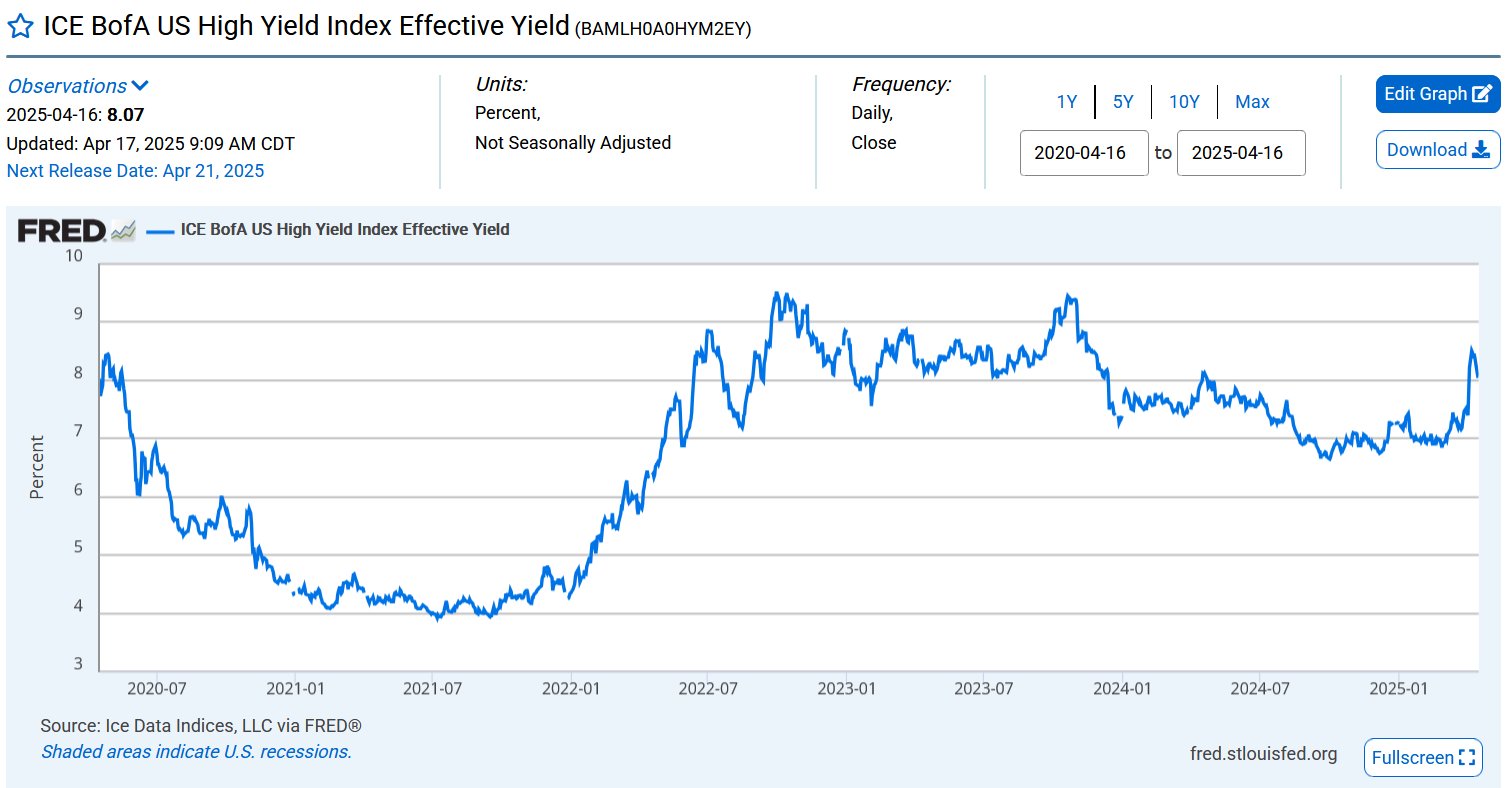
Индекс эффективной доходности облигаций США. Источник: Тимоти Петерсон

«Такая ситуация возникала 38 раз с 2010 года (если смотреть месячные данные)», — объяснил экономист. «Через 3 месяца: биткоин рос в 71% случаев. Медианный рост составлял +31%. В случаях падения, максимальная потеря составила -16%».

С учетом того, что показатели BTC/USD явно смещены в сторону роста, Петерсон вселил надежду тем, кто ждет повторения январского исторического максимума. «Это означает, что курс биткоина будет находиться в диапазона между $75 тыс. и $138 тыс. в течение 90 дней», — подвел итог аналитик.

Чтобы достичь максимальной отметки, биткоину потребуется вырасти на 62% за этот период. И хотя это звучит амбициозно, история показывает, что такие ралли реальны для первой криптовалюты.

Необычная корреляция с долларом

Индекса доллара США (DXY) продолжает держаться ниже ключевой отметки в 100 пунктов, что является одним из самых низких уровней за последние три года.
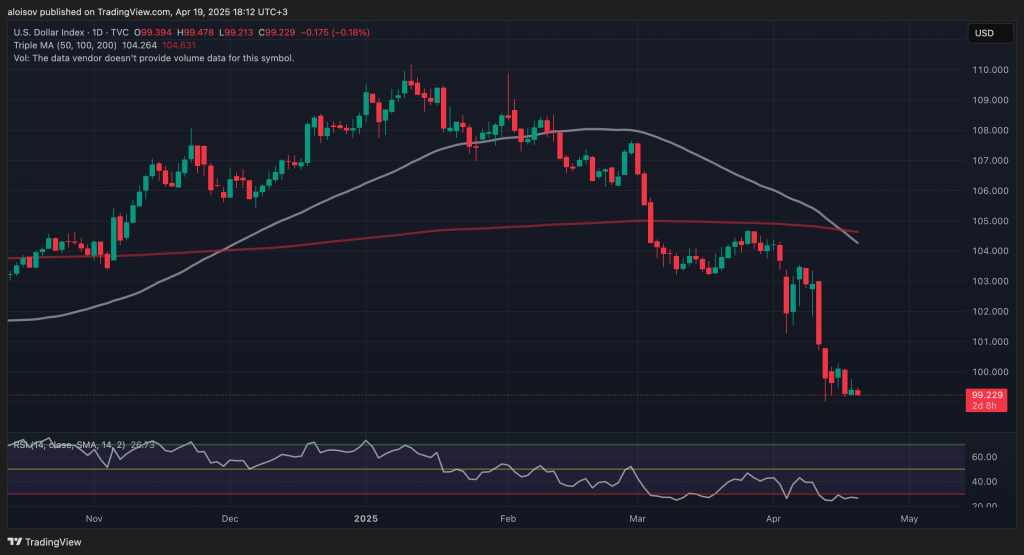
1-дневный график индекса доллара (DXY)

Обращая внимание на драматическое падение DXY из-за торговых тарифов США, экономист предсказал, что необычная положительная корреляция с биткоином в конечном итоге прекратится.

«Такой уровень корреляции BTC и USD беспрецедентен. Связь не является причинно-следственной, а отражает базовые условия, влияющие на оба актива», — пояснил он.

«Исторически эта взаимосвязь была обратной, но в 2024 году она изменилась, поскольку оба актива начали реагировать на одни и те же макроэкономические стрессоры: ужесточение ликвидности, высокие реальные ставки и глобальное избегание рисков. Биткоин разорвет эту связь и начнет расти, когда реальная доходность упадет и вернется ликвидность».

Lecturas Relacionadas

RIP: Atlas, Which Lived Only 292 Days

On August 9, 2026, OpenAI discontinued its standalone AI browser, Atlas, just 292 days after its launch on October 21, 2025. Initially positioned as a challenger to Chrome and the broader AI browser ecosystem, Atlas aimed to fundamentally redesign how users interact with browsers by deeply integrating ChatGPT. Its features included an AI-powered address bar, a sidebar for webpage analysis, Browser Memories for context retention, and an Agent Mode to automate multi-step tasks like shopping and research. Despite building on Chromium with a custom OWL (OpenAI Web Layer) framework, OpenAI struggled with the immense complexity of maintaining a full-fledged browser. The team spent significant time addressing basic functionalities—password managers, extensions, input methods—that mainstream browsers already handled seamlessly. Atlas's core AI agent capabilities also faced issues with reliability, speed, and security vulnerabilities like prompt injection. Furthermore, Atlas was limited to Apple Silicon Macs, failing to release promised Windows, iOS, and Android versions. This, coupled with the high switching cost for users entrenched in Chrome or Edge's ecosystems, hindered its adoption. By mid-2026, updates slowed, and OpenAI announced its shutdown, opting to integrate Atlas's AI explorations into the ChatGPT desktop app and browser extensions instead. The article contrasts two AI browser development paths: standalone products like Atlas, Perplexity's Comet, and Dia, which redesign the browser around AI but face user migration barriers; and the approach of incumbents like Chrome and Edge, which add AI features atop existing, widely-used platforms. The key question remains whether users need a completely new "AI browser" or simply AI capabilities within their current browser. While Atlas's experiment ended, the broader trend of AI integration into browsing continues.

marsbitHace 30 min(s)

RIP: Atlas, Which Lived Only 292 Days

marsbitHace 30 min(s)

Bitcoin's "Anti-Spam" Update Failed, Lasting Less Than a Day

A Bitcoin update proposal aimed at curbing spam by temporarily banning non-financial data from being stored on the network, BIP-110, has failed decisively. After months of debate, developers attempted to launch a separate blockchain, which collapsed within a day. The failure stemmed from a critical lack of miner support, with less than 1% signaling approval for the update. The vast majority of miners chose to continue mining the main Bitcoin blockchain without providing explanations. Despite this, the initiative's developers proceeded to launch an alternative blockchain—a hard fork of Bitcoin—on August 8. This meant a small subset of miners stopped mining Bitcoin to support the new chain with BIP-110 changes. However, the new network inherited Bitcoin's mining difficulty. With only a tiny fraction of the total computational power, block times stretched to roughly 7 hours instead of the standard 10 minutes, rendering the network practically non-functional. Michael Saylor, founder of major corporate Bitcoin holder MicroStrategy and a vocal opponent of BIP-110, commented: "Bitcoin worked exactly as designed. The BIP-110 fork occurred, and network participants were free to choose which chain to follow. As a result, about 99.85% of the network's hash power remained with Bitcoin." The event had no significant impact on Bitcoin's price, which traded in a narrow range between approximately $64.5k and $65.5k from August 7 through August 10.

cryptonews.ruHace 36 min(s)

Bitcoin's "Anti-Spam" Update Failed, Lasting Less Than a Day

cryptonews.ruHace 36 min(s)

Trading

Spot
活动图片