Доходность облигаций резко выросла, доллар колеблется: является ли этот хаос позитивным фактором для криптовалют?

cryptonews.ruPublicado a 2025-01-14Actualizado a 2025-04-14

  • Тарифная политика США вызвала резкий рост доходности облигаций, за которым последовала неопределенность на рынке
  • Кашкари из ФРС отмечает, что иностранные инвесторы «отступают», поскольку статус убежища в США ставится под сомнение
  • Высокая доходность на фоне потенциального смягчения создает решающее испытание для направления криптовалют

Резкие движения в экономике США после объявления тарифов президентом Трампом привлекли внимание трейдеров. Доходность облигаций растет; доллар колеблется, и трейдеры теперь ожидают перетекания на рынок криптовалют.

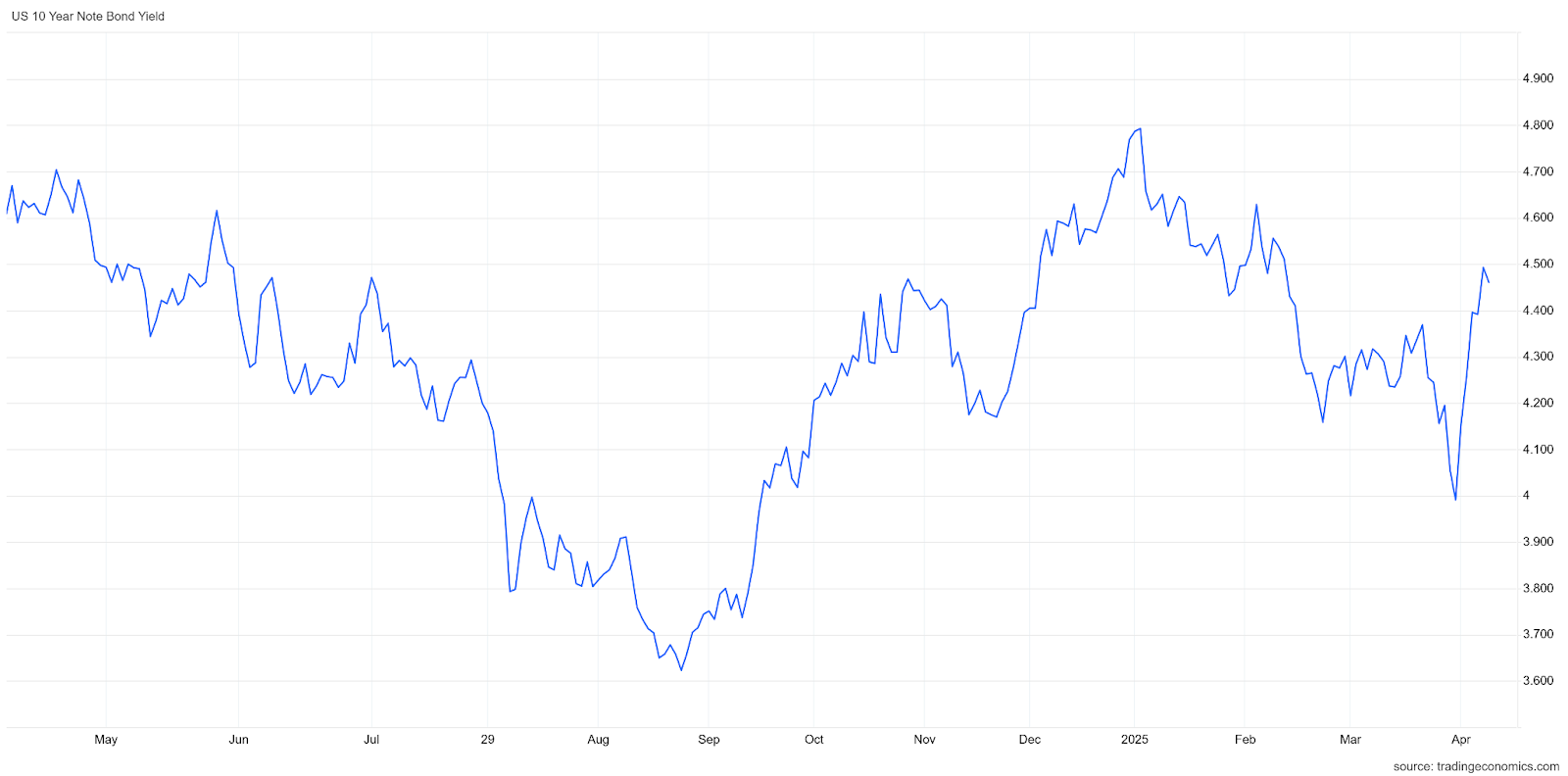
2 апреля Трамп призвал ввести всеобщую пошлину в размере 10% на весь импорт США. Хотя позднее на этой неделе он смягчил тон и позицию, сообщение рынкам было ясным: глобальная торговая напряженность снова на повестке дня, а Китай столкнулся с пошлинами в размере 125%. Это заявление вызвало быструю распродажу казначейских облигаций США, подтолкнув базовую доходность 10-летних облигаций на значительные 50 базисных пунктов в течение нескольких дней.

Good luck explaining how #Trump panicked and suspended #tariffs for 90 days because the US bond market had been collapsing for 48 hours and was headed towards catastrophe.

Half the country still think tariffs are fees paid by one government to another.#TrumpTariffs #BondMarket pic.twitter.com/33KkfyXZoW

— Matthew VanDyke (@Matt_VanDyke) April 10, 2025

По теме: Конгресс занимает твердую позицию: Трамп подписывает законопроект, отменяющий решение IRS о DeFi

Реакция рынка: Кашкари отмечает отток инвесторов, ФРС сохраняет стабильность
Источник изображения

Это один из самых резких шагов за последние десятилетия. Президент ФРС Миннеаполиса Нил Кашкари прокомментировал последствия, отметив, что международные инвесторы «отходят от активов США». Это признак того, что репутация Америки как безопасного убежища может пошатнуться.

Интересно, что Федеральная резервная система решила остаться в стороне, не подавая сигнала о необходимости срочно корректировать ставки, несмотря на волатильность.

Родственный: MAGA: Снова сделать рынки ужасными? Трамп приносит исторические потери рынка

Палка о двух концах для криптовалют: появляются дела «быков» и «медведей»

С ослаблением доллара США и ростом доходности облигаций на криптовалютном рынке могут возникнуть два сценария:

Бычий аргумент:

  • По мере ослабления доллара криптовалюты становятся более привлекательными в качестве альтернативных средств сбережения.
  • Более высокая доходность облигаций может на начальном этапе ужесточить условия, но в конечном итоге может привести к более мягкой политике ФРС, если рынки остановятся, увеличив ликвидность.
  • В периоды денежной нестабильности биткоин часто выигрывает от своей стратегии «страховки от инфляции».

Медвежий взгляд:

  • Некоторые инвесторы могут избегать волатильных активов и переходить на традиционные «безопасные» инструменты, такие как казначейские облигации США, особенно если фондовые рынки продолжат коррекцию.
  • Если рынки облигаций и акций будут двигаться синхронно и станут сигналом к ​​более глубокому экономическому расколу, спекулятивные активы, такие как криптовалюты, могут столкнуться с резким оттоком средств.

Доходность облигаций резко возросла, анализ рыночной капитализации и цели

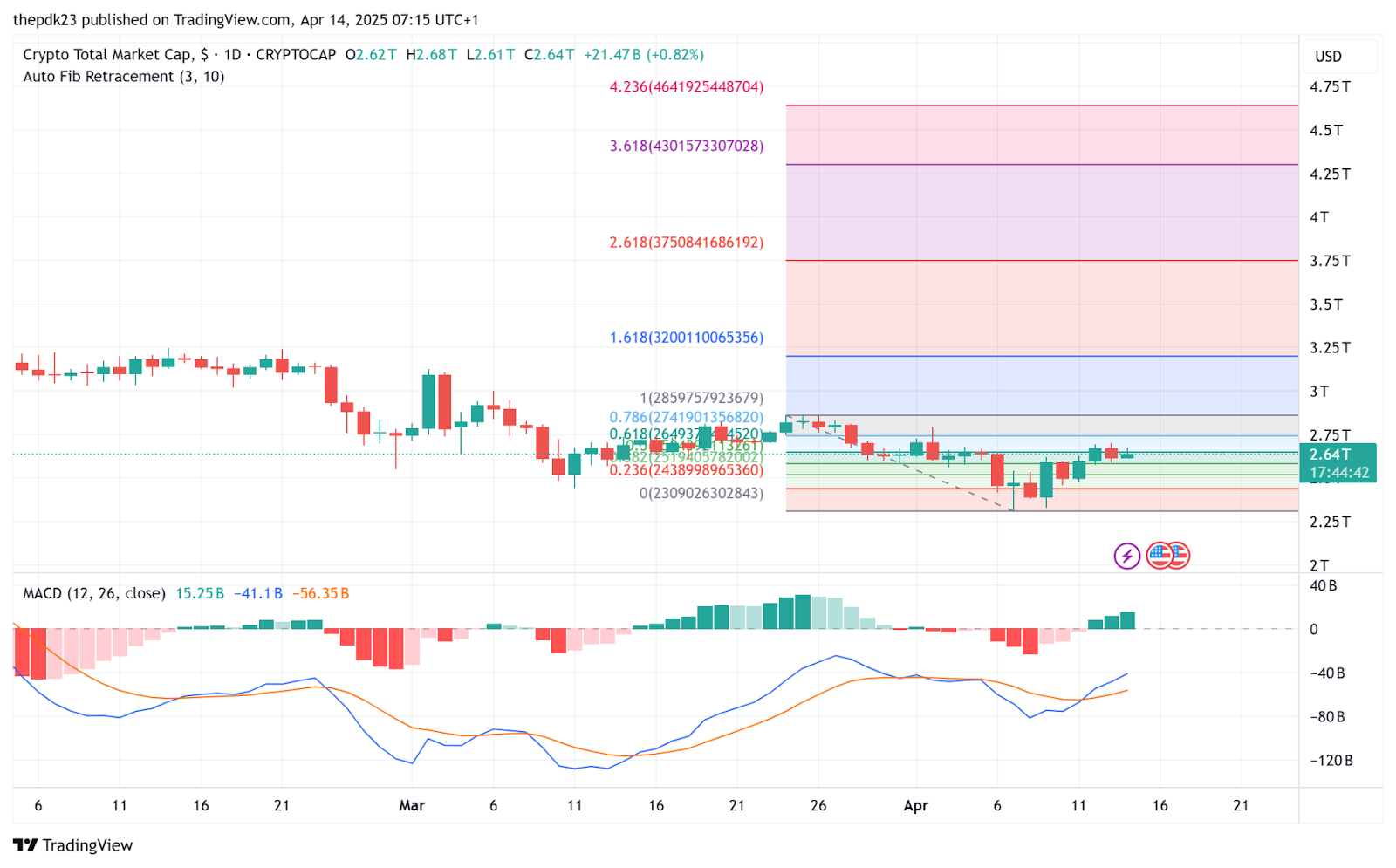
Текущая общая капитализация рынка криптовалют колеблется примерно на уровне $2,64 трлн, что немного выше уровня коррекции Фибоначчи 0,618 ($2,64 трлн), критической точки сопротивления. Удержание этого уровня очень важно.

Кроме того, прорыв выше $2,75 трлн, что соответствует уровню Фибоначчи 0,786, может стать сигналом о возобновлении импульса и открыть путь к $2,85 трлн и выше, потенциально подтвердив дно.
Источник: TradingView

Между тем, индикатор MACD показывает признаки бычьего пересечения, гистограмма становится зеленой, импульс смещается в сторону благоприятствования. Краткосрочный рост можно рассмотреть.

Однако неспособность удержать текущие уровни, особенно падение ниже уровня 0,5 Фибоначчи (~$2,52 трлн), может привести к тому, что рынок вернется к более низким зонам поддержки вблизи минимума недавнего цикла в $2,3 трлн.

Lecturas Relacionadas

Predicting World Cup Knockout Matches: Why Are Different AI Models So Far Apart?

AI performance in predicting the 2026 FIFA World Cup knockout matches varied significantly, according to an analysis of models including ChatGPT, Grok, DeepSeek, Gemini, and Claude. The standout predictions came from DeepSeek and Gemini for the Netherlands vs. Morocco match. Gemini precisely forecasted a 1-1 draw and a penalty shootout win for Morocco, while DeepSeek correctly identified the high probability of a draw and Morocco's potential to advance via a defensive and counter-attacking strategy. Grok and Tongyi Qianwen (千问) demonstrated strength in predicting accurate scores for matches with clearer favorites. They correctly called the narrow 1-0 win for Canada over South Africa and Brazil's 2-1 victory over Japan, as well as Norway's 2-1 win over Ivory Coast. ChatGPT and Claude excelled more in match process analysis than in predicting exact scores or upsets. They frequently identified potential challenges for favorites, such as Japan's pressing against Brazil or DR Congo's defensive tactics against England, even when predicting the favorite's ultimate victory. A notable failure was the unanimous misjudgment of Germany vs. Paraguay. All models incorrectly favored Germany, underestimating Paraguay's ability to force a penalty shootout and cause an upset. In summary, Gemini and DeepSeek showed the most insight for high-stakes, unpredictable matches. Grok and Qianwen were reliable "score predictors" for less volatile games. ChatGPT and Claude were strong "analytical models," adept at outlining match dynamics but often hesitant to predict upsets.

Odaily星球日报Hace 9 min(s)

Predicting World Cup Knockout Matches: Why Are Different AI Models So Far Apart?

Odaily星球日报Hace 9 min(s)

Will There Be a Next Wave of Web3 Games? Veteran Player's Review: At the Peak of Hype, You Should at Least Sell Half

**Title: Is There Another Wave for Web3 Gaming? A Veteran Player's Review: When Hype Peaks, You Must Exit at Least Half** **Summary:** In an interview, veteran player "Earn Money Chicken" shares his journey and reflections on Web3 gaming. He transitioned from being a traditional in-game trader to a Web3 gamer, having profited from games like Mobox, StepN, and Seraph, but also experiencing significant losses. He defines himself primarily as a player, not an investor, attracted to Web3 games for the blend of earning potential, engaging gameplay, and the satisfaction of researching game mechanics. While he enjoys strategic "gambling" within games, he emphasizes it's not about zero-sum competition with other players. The interview explores the complex, often adversarial relationship between players, projects, and major investors (whales). The player's experience as a traditional game merchant helped develop his analytical mindset for spotting opportunities, but wasn't directly transferable. He identifies the core sources of profit in early Web3 gaming as **"era红利" (era-specific红利)** and strategic foresight, not just simple calculations. He warns that the biggest mistake ordinary players make is calculating their return-on-investment (ROI) period at peak hype, as asset and yield depreciation can trap them. Reflecting on his wins and losses, he now advocates for managing expectations. His most successful exit was from Seraph, where he sold at a relatively good time. The key problem with current Web3 games, he argues, is that most are not mature games first. A successful Web3 game must primarily be a **good, fun game** with a genuine player base willing to spend money for enjoyment, not just participants seeking profit. The blockchain element should solve problems within that context, not be the primary driver. While he believes the sector might see another speculative boom (possibly another strong "Ponzi" model attracting hype), a truly mature and sustainable Web3 game likely needs to come from a traditional major game studio. It would leverage a proven IP, mature content, a functional NFT trading system, and attract both traditional and crypto-native players, offering more normalized returns rather than extreme暴利. His final advice: Newcomers without prior experience should avoid the space now, as it's like searching for a diamond in the rough. For those remaining, the rule is: be brave when assets are low and overlooked, but **when everyone is talking about it (at peak hype), you must sell at least half your holdings.**

marsbitHace 54 min(s)

Will There Be a Next Wave of Web3 Games? Veteran Player's Review: At the Peak of Hype, You Should at Least Sell Half

marsbitHace 54 min(s)

The Most Hidden AI Winners

"The Most Under-the-Radar AI Winners" While core AI giants and their direct suppliers have dominated headlines, a group of seemingly unrelated, decades-old manufacturing companies have emerged as major beneficiaries. A key example is Japan's TOTO, famous for bathroom fixtures. Its stock soared 145% in a year, driven not by its mainstay toilet business but by its nearly 40-year-old semiconductor ceramic component unit. Specifically, TOTO manufactures electrostatic chucks—critical, hard-to-replace parts for advanced chip manufacturing processes like etching and EUV lithography. This segment, though only 9% of revenue, contributed over 54% of operating profit in FY2025 with a 43% margin. High barriers to entry, including deep know-how in high-purity ceramic sintering and long supplier certification cycles (5+ years), secure its position. This pattern repeats across industries. Nitto Boseki, a 128-year-old glass fiber maker, saw its stock rise 325% due to near-monopoly supply of T-glass, an essential low-expansion material for AI chip substrates. Similarly, Ajinomoto, the global MSG leader, commands 80-95% of the market for ABF film, a vital insulating layer in chip packaging. These "hidden" segments, often born from deep materials science expertise, are now bottleneck supplies in the AI hardware chain, enjoying pricing power and high margins. In China's A-share market, the theme combines this AI-driven demand with domestic substitution. Companies like Zhongci Electronic (advancing in electrostatic chucks) and Honghe Technology & Feilihua (in high-end electronic glass fabrics) are gaining traction. The investment thesis hinges on whether these domestic players can rapidly scale qualified capacity to capture the supply gap within the critical time window. Ultimately, these cases show that in the AI supply chain, high-profit concentrations exist not only at the cutting-edge tech frontier but also in indispensable, difficult-to-replicate materials and components. Market recognition often lags behind fundamental profit shifts, creating potential for significant re-ratings as traditional industrial firms are re-evaluated as key enablers of advanced semiconductor manufacturing.

marsbitHace 1 hora(s)

The Most Hidden AI Winners

marsbitHace 1 hora(s)

Trading

Spot
活动图片