Биткоинер предполагает, что «массовый» бот-спам ненадолго вывел из строя биткоин-рассылку

cryptonews.ruPublicado a 2024-11-04Actualizado a 2025-04-04

Один из ключевых инструментов общения биткоинеров, используемый для обсуждения потенциальных изменений протокола, был отключен на несколько часов, начиная со 2 апреля, и один модератор предполагает, что это могла быть целенаправленная атака с участием ботов.

В течение нескольких часов 2 и 3 апреля разработчики ядра Bitcoin и исследователи не могли взаимодействовать в Google Groups после того, как Google забанил группу за спам.

«Список рассылки по биткон-разработке был идентифицирован как содержащий спам, вредоносное ПО или другой вредоносный контент», — гласило предупреждение Google в то время.
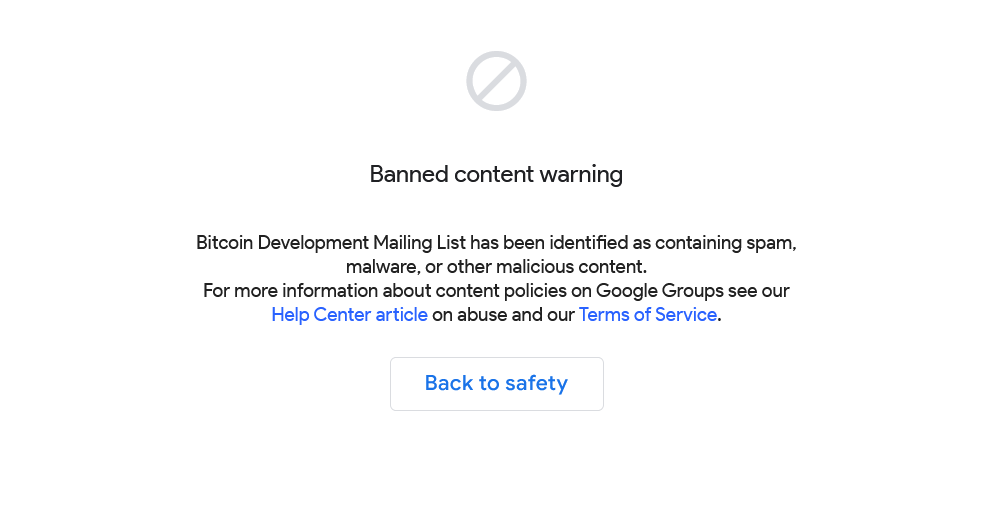

Предупреждение списка рассылки по разработке Bitcoin до снятия запрета. Источник: Google

Разработчик Bitcoin Core Брайан Бишоп рассказал, что запрет мог быть вызван отдельными лицами или ботами, которые массово сообщали о рассылке Bitcoin с нескольких аккаунтов.

Это обычная тактика злоумышленников, желающих забанить или подвергнуть цензуре сообщество, сказал Бишоп, отметив, что подобные инциденты происходят на YouTube, X и TikTok довольно часто.

«Так что вполне возможно, что все это могло быть вызвано чем-то подобным. Возможно, кто-то просто массово нажимал на эти ссылки, чтобы сообщить об этом», — пояснил он.

Аккаунт X службы поддержки Google Workspace подтвердил, что проблема была решена 3 апреля в 2:23 утра UTC в ответ на сообщение одного из других модераторов биткоин-рассылки Рубена Сомсена.

Сторонник Биткоина и глава Block Inc Джек Дорси также привлек внимание к запрету, призвав генерального директора Google Сундара Пичаи расследовать проблему.

Списки рассылки обычно включают в себя одного модератора, который отправляет информацию подписчикам в группе для обсуждения и совместной работы над темой или общими интересами.

Список рассылки по биткоину используется разработчиками ядра Bitcoin и исследователями для обсуждения потенциальных изменений протокола Биткоин, который обеспечивает более 1,6 триллиона долларов для пользователей сети по всему миру.

Он стал одним из основных списков рассылки по биткоину с тех пор, как псевдонимный создатель сети, Сатоши Накамото, поделился Bitcoin Whitepaper в списке рассылки Cryptography 31 октября 2008 года.

Модераторы списка рассылки Bitcoin планируют остаться в Google Groups

Несмотря на инцидент, Бишоп сказал, что модераторы списка рассылки по биткоину не намерены отказываться от общения по электронной почте:

«Реальность ситуации такова, что этот конкретный список рассылки всегда был электронной почтой, и поэтому участники, которые обсуждают разработку протокола Bitcoin по электронной почте, для обеспечения непрерывности обслуживания должны заменить ее электронной почтой».

Почтовая рассылка по биткоину официально перешла в Google Groups в феврале 2024 года.


Источник: Брайан Бишоп

До этого рассылка размещалась на Linux Foundation, инфраструктуре Open Source Lab Университета штата Орегон и SourceForge.net.

Бишоп предположил, что форум по биткоину не должен ограничиваться одной конкретной платформой, указав, что есть несколько других платформ, где обсуждаются разработки Bitcoin, включая GitHub и децентрализованную социальную сеть Nostr.


Lecturas Relacionadas

A Decade of Change: The Demise of Crypto Startups

"The Decade-Long Transformation: The Demise of Crypto Startups" The article traces the dramatic evolution of the cryptocurrency industry from its anarchic beginnings to its current highly regulated and institutionalized state. In the early days (circa 2017), launching a crypto startup was remarkably simple: a whitepaper, a GitHub repository, and a Telegram group could attract thousands of retail investors via an Initial Coin Offering (ICO). Founders operated anonymously with near-zero regulatory and financial barriers, enabling rapid, global innovation but also widespread fraud. By 2026, the landscape is fundamentally different. To operate in major markets like the US, EU, and Asia, crypto businesses must now navigate a complex web of regulations akin to traditional finance. Compliance costs are prohibitive: estimates for a US multi-state operation range from $750,000 to $1.2 million in the first three years, with annual costs exceeding $2 million thereafter. Regulations like MiCA in the EU and New York's BitLicense have created high capital and operational hurdles that act as barriers to entry. Simultaneously, venture capital investment has shifted dramatically. Following the collapses of Terra and FTX, funding has concentrated in later-stage, established companies, creating a "barbell market." Early-stage and seed funding has shrunk significantly, while mega-funds like Andreessen Horowitz's $15 billion pool dominate. Most capital now flows to trading platforms, lending infrastructure, and B2B services. This environment favors mergers and acquisitions as the primary path for growth. Companies like Coinbase and Ripple are acquiring firms like Deribit and Hidden Road not for their technology, but for their licenses, banking relationships, and institutional trust—assets far more valuable than code. Distribution channels, compliance, and brand reputation have become the new moats, overshadowing pure technical innovation. The industry's maturation brings benefits: reduced scams, increased institutional participation, and clearer regulatory frameworks. However, it comes at a cost. The low-barrier, experimental ethos that defined crypto's first decade is fading. Entrepreneurs without substantial capital, pre-existing licenses, or institutional connections face immense challenges. Funding for exploratory fields like decentralized social media or novel governance models is drying up. Ultimately, the crypto industry is replicating the consolidation pattern seen in banking and tech after the 2008 financial crisis. While this brings stability and legitimacy, it raises a critical question: in this new, resource-intensive reality, is there still room for the disruptive, from-scratch innovation that gave birth to the sector?

Foresight NewsHace 36 min(s)

A Decade of Change: The Demise of Crypto Startups

Foresight NewsHace 36 min(s)

Trading

Spot
活动图片