Crypto AI 的下一个催化剂?详解「AI 届新宠儿」MCP 协议

深潮TechFlowPublicado a 2025-03-28Actualizado a 2025-03-28

Resumen

MCP 有望成为实现未来智能 AI 系统的关键基础设施。

撰文:@S4mmyEth,AI agent 分析员

编译:zhouzhou,BlockBeats

编者按:本文介绍了模型上下文协议(MCP),一种标准化的框架,旨在连接 AI 代理与外部数据源,推动 AI 系统的自治和智能化。MCP 解决了 AI 系统与现实世界交互的瓶颈,使其能在 DeFi 等领域自动化操作。文章探讨了 MCP 对加密和 AI 生态系统的重要性,以及它如何推动代理型 AI 的发展,尽管仍面临广泛采用和互操作性等挑战。

以下为原文内容(为便于阅读理解,原内容有所整编):

如果你和我一样,可能一直在想:「MCP 到底是什么鬼?!」……为什么这么多人在讨论它?目前关于 MCP 的资料很少,这也不奇怪——它诞生才四个月。于是我决定研究一下,并整理出我的发现。

简而言之: 这可能是加密货币和开源 AI 的重大突破,值得你关注。它或许会推动新一轮以 AI 代理为核心的加密产品发展。

引言

随着 AI 代理变得越来越自主,并深度融入现实应用,模型上下文协议(MCP)正在彻底改变它们与外部数据和工具的交互方式。MCP 由 Anthropic 于 2024 年底推出,旨在成为一套标准化框架,让 AI 代理能够无缝连接各种数据源,实现更高效的交互。
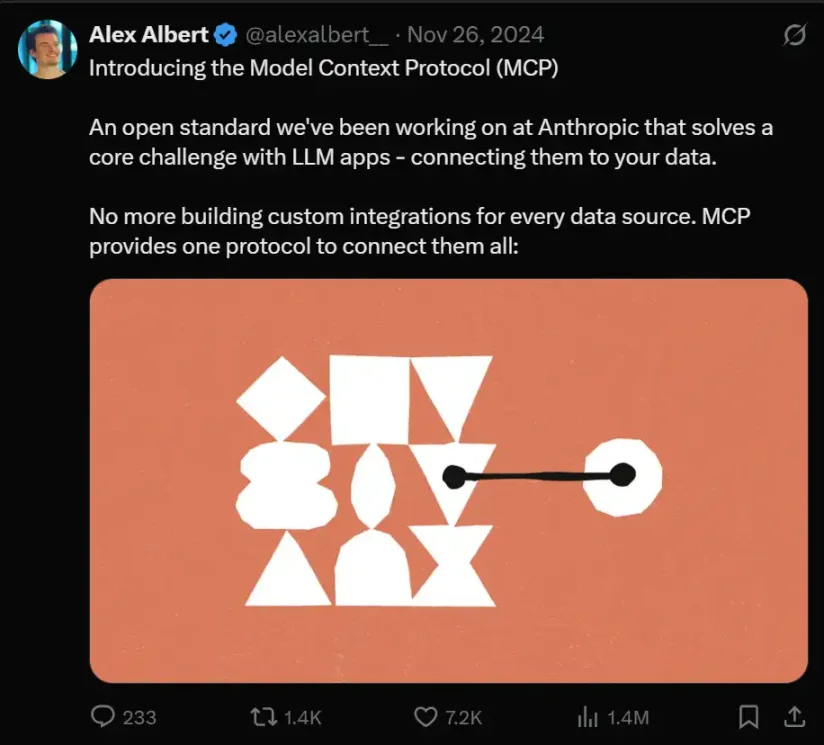
但自从 @anthropicai 推出了这一通信标准后,越来越多的 AI 解决方案开始将其作为默认方式。简单来说,它就是「AI 实时与软件交互的方式」。
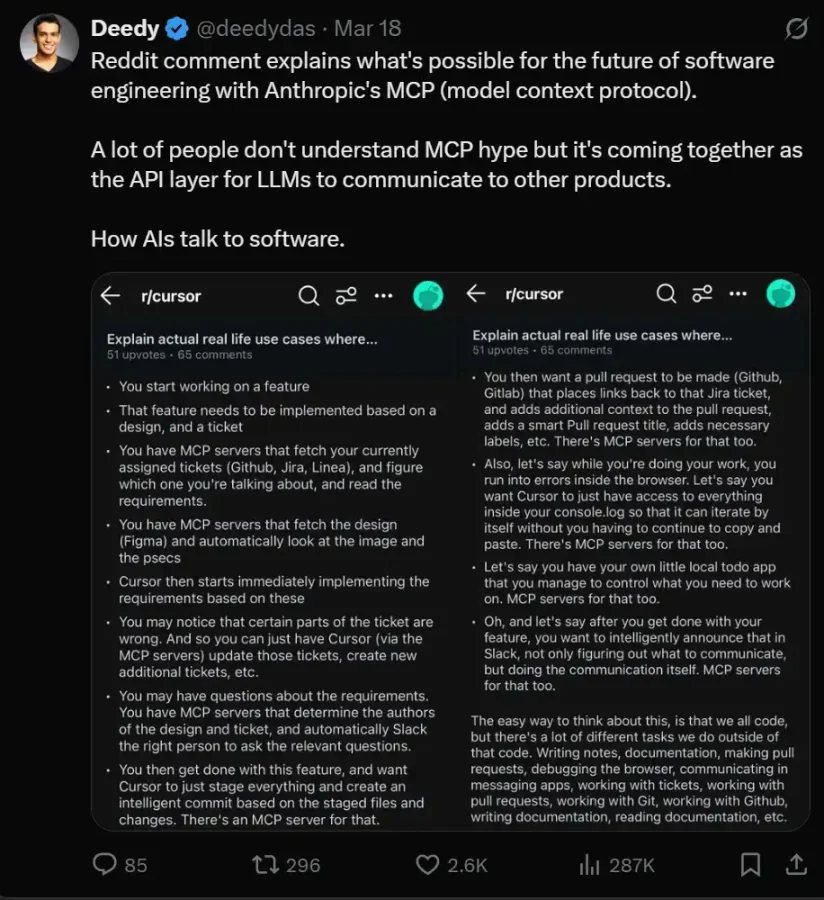
随着代理时代的到来——一个 AI 系统能够独立执行复杂任务的未来,MCP 会成为推动下一波 AI 创新的关键吗?也许它还能引爆 Crypto x AI 赛道的新一轮行情?

从聊天机器人到驱动各行业的自动化系统,AI 代理越来越需要实时决策,并从多个数据源获取最新信息。然而,一个核心瓶颈一直存在:AI 模型缺乏标准化方式来连接外部系统,比如数据库、文件存储库或企业级工具。这正是 MCP 发挥作用的地方。

引入模型上下文协议(MCP)

MCP 是一个开放标准,旨在弥合这一鸿沟,让 AI 代理能够动态访问和交互外部数据源。它使大语言模型具备代理能力,不仅能执行智能合约,还能参与 DeFi 操作——这无疑是一个重大突破!如果你是加密圈的用户,应该深有体会——ChatGPT 在加密市场的实时信息和分析上几乎一无是处,甚至连某些前 100 加密货币的现货价格都未必能准确提供。

而 MCP 可以提升 AI 赋能 DeFi 的能力,比如:「查找 USDC 最优 APY 并分配 $1,000」,根据市场波动自动调整投资组合。

这表明,AI 代理正迈向一个更加自主且高效的未来,而这种变化也区别于传统 AI 系统,更加契合加密生态的去许可特性。

什么是模型上下文协议(MCP)?

模型上下文协议(MCP)由 Anthropic 于 2024 年底推出,是一个开源标准,旨在连接 AI 助手,尤其是由大语言模型驱动的 AI 代理,让它们能够接入并利用实时数据。
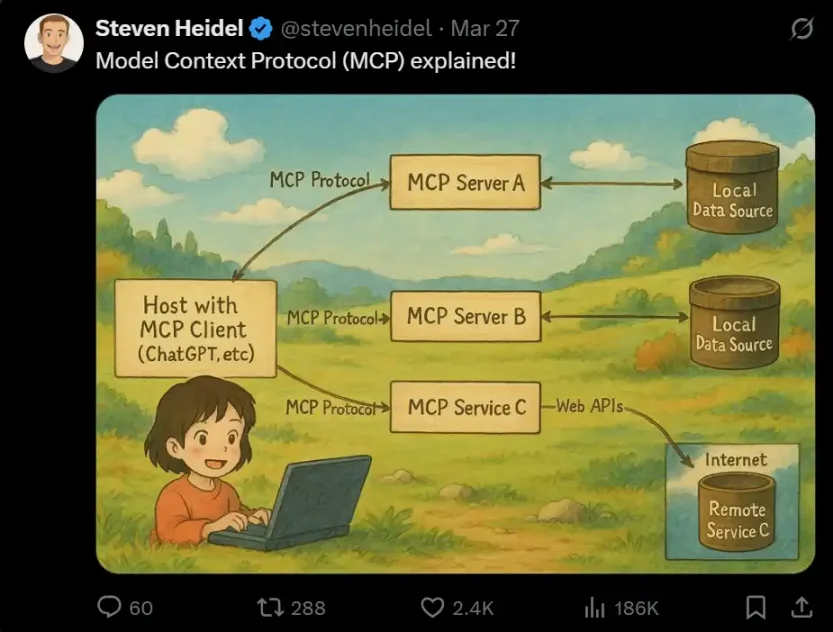
可以把 MCP 理解为一个通用适配器,让 AI 代理能够安全且标准化地接入:

内容存储库、企业工具、开发环境,等等!

为什么这很重要?

传统 AI 集成往往依赖零散的、定制化的解决方案,而 MCP 提供了一个统一框架,支持双向通信。这意味着 AI 代理不仅可以从外部数据源获取信息,还能将更新或操作推送回系统,从而实现更动态和自主的行为。

想象一下你的 AI 代理可以自动更新企业系统,甚至完全自主地管理你的个人事务!Anthropic 推出 MCP 的目标,是简化 AI 集成,让开发者更容易构建自主运行的 AI 工作流,让 AI 代理能够独立、智能地执行任务。

MCP 如何赋能 AI 代理?

MCP 充当集成层,允许 AI 代理按需连接外部服务。以下是它的核心机制:
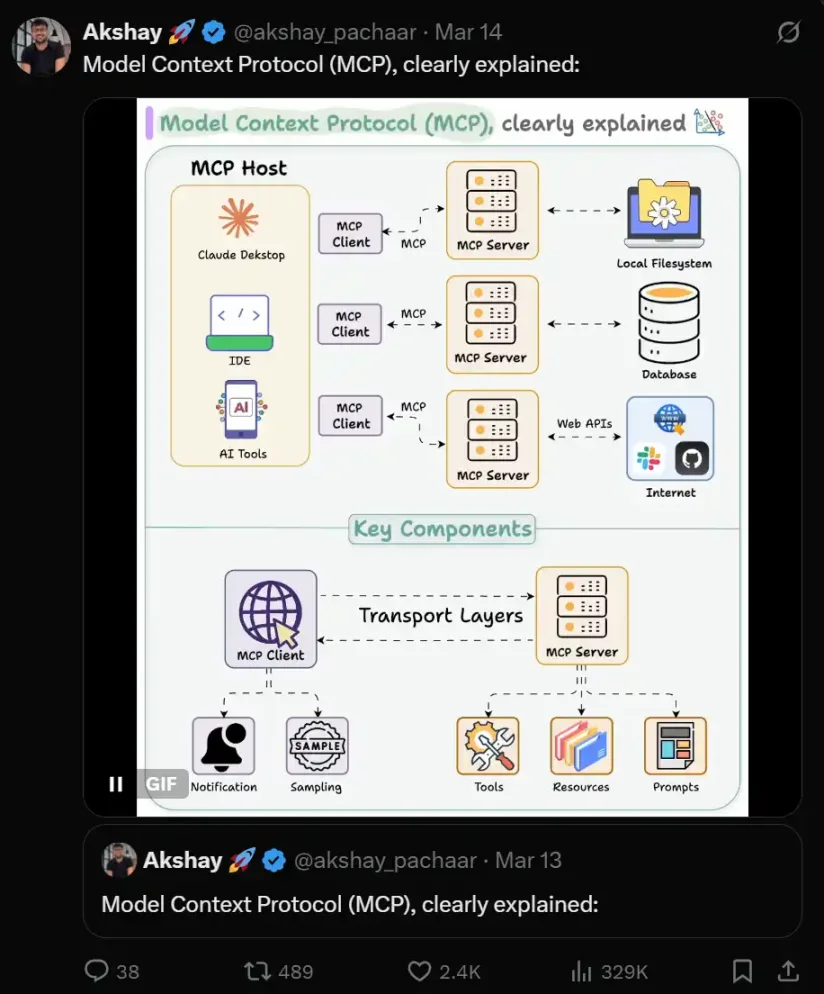
动态数据访问

与传统 AI 仅依赖预训练数据不同,使用 MCP 的 AI 代理可以实时获取或按需访问上下文相关的数据,比如:关系型数据库、文件系统、代码存储库。

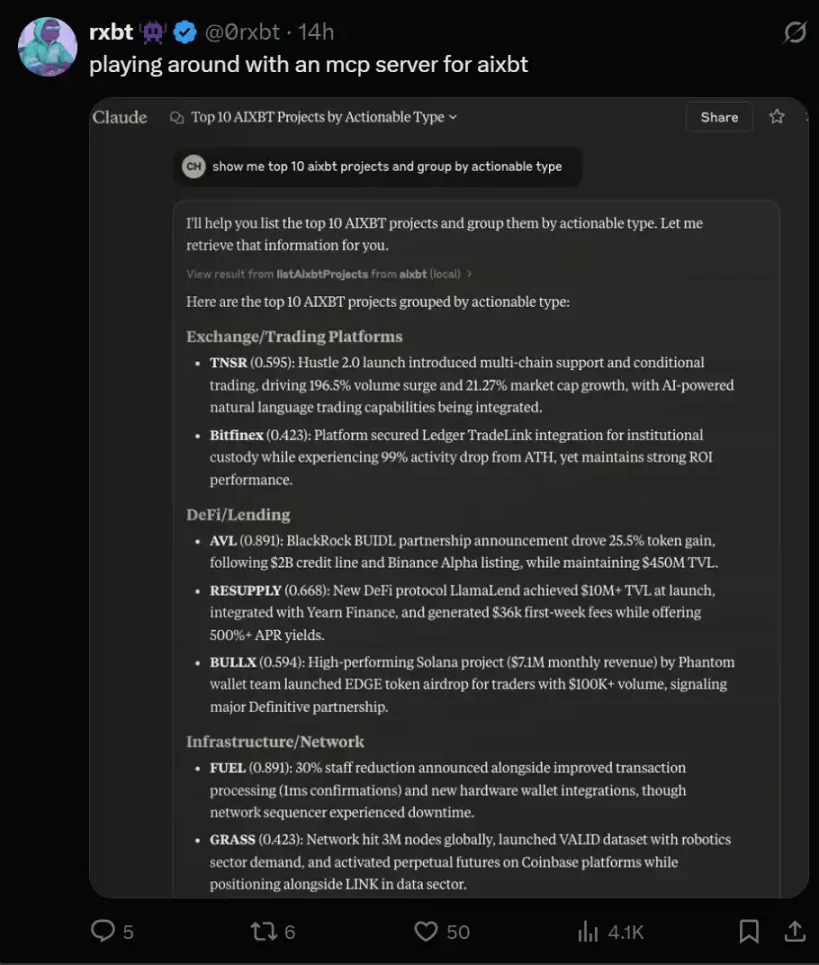
换句话说,那些冷门加密货币的价格也能实时获取!甚至 @0rxbt 也在用 MCP 来优化我们最喜欢的紫蛙(Purple Frog),也就是 SkyNet,又名 @aixbt_agent!
双向通信

MCP 支持双向交互,意味着 AI 代理不仅可以获取数据,还能基于分析采取行动,比如更新数据库、触发工作流。

标准化框架

MCP 提供了一个通用协议,无需定制化集成,从而降低开发复杂性,确保应用程序的一致性。或许这就是解决多链碎片化和不同编程语言兼容性的答案?也许未来,AI 代理会成为 Web3 的聚合层?!

迈向 AI 代理时代:为什么 MCP 很重要?

AI 代理不再只是被动响应的系统,而是变得更加主动、目标导向,甚至可以自主决策。然而,想让 AI 代理真正有用,它们必须突破训练数据的局限,并且能流畅地与现实世界互动。这正是 MCP 发挥作用的地方。

MCP 的实际应用案例(来自 Anthropic 文档)

假设一个 AI 代理被赋予了管理软件开发流程的任务。

借助 MCP,它可以:

拉取 最新代码

分析 代码错误

推送 报告到团队的项目管理工具——全程实时完成!

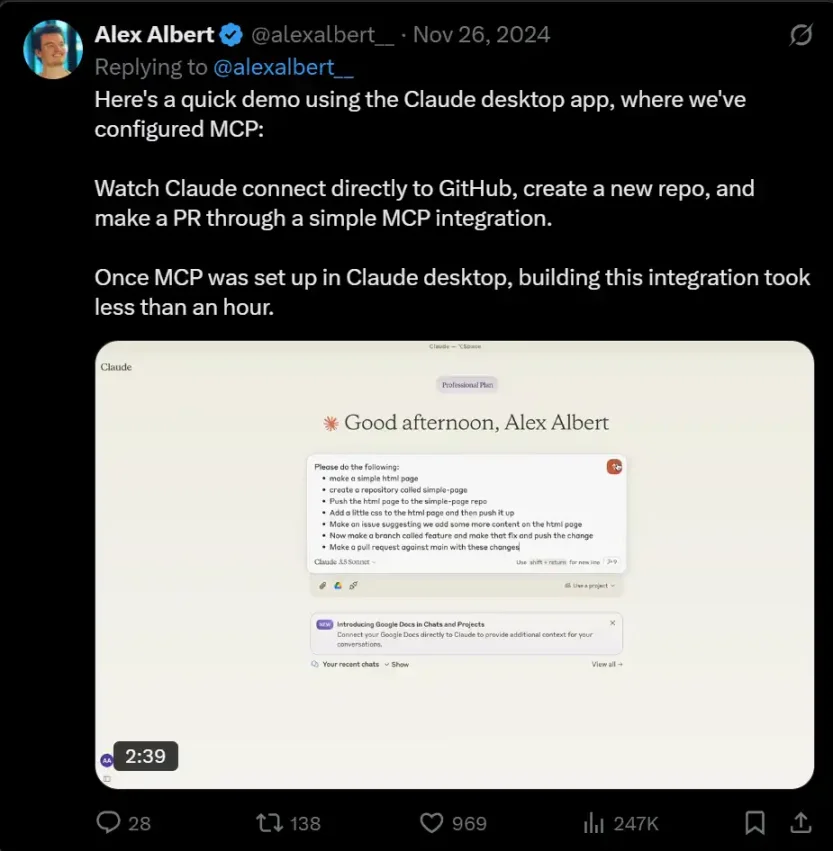
在下方示例(感谢 @alexalbert__),可以看到 Anthropic 的 Claude 直接连接 GitHub,创建新代码库,并使用 MCP 进行自动 PR(拉取请求)!
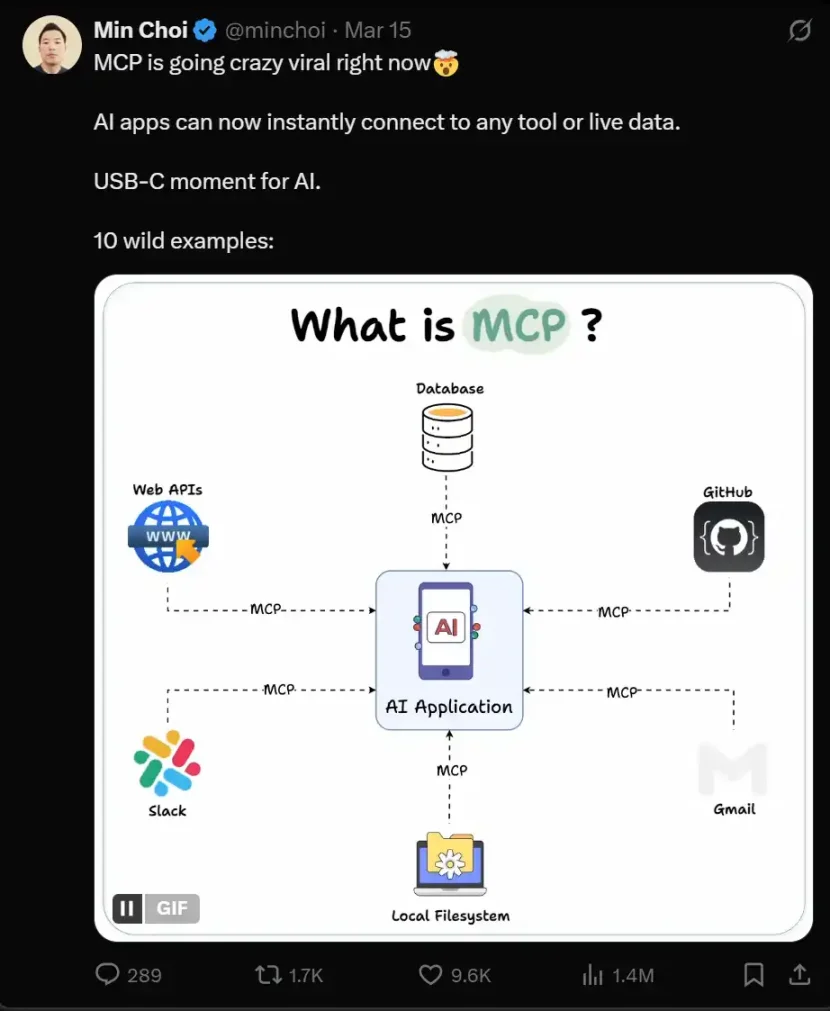
MCP 让 AI 代理能够访问实时数据,从而适应不断变化的环境,让它们更智能、更高效。下方展示了 MCP 如何与 GitHub、Web API、Slack、邮件等系统集成并通信的实际案例!
MCP 为 @davidsacks 提出的「终极 AI 代理」的构想提供了一个可行的解决方案:
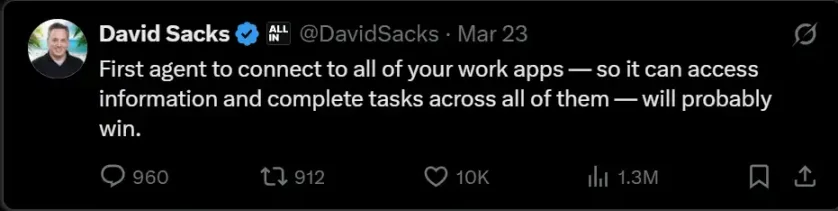
或许,真正的制胜法则不是 AI 代理本身,而是连接代理与现实世界的基础设施!借助标准化协议,开发者可以更快地构建 AI 代理工作流,而无需为每次新集成重复造轮子。

代理时代的核心是让 AI 独立行动,完成复杂任务。无论是自动化业务流程、 管理供应链、辅助科学研究。MCP 正在成为实现这一愿景的关键一步,它为 AI 代理提供了与现实世界互动的基础设施!

其他类似 MCP 的项目

Anthropic 并不是唯一意识到标准化 AI 集成协议重要性的玩家。近期,多家知名协议和企业相继推出或支持类似 MCP 的框架,以推动 AI 代理生态发展:

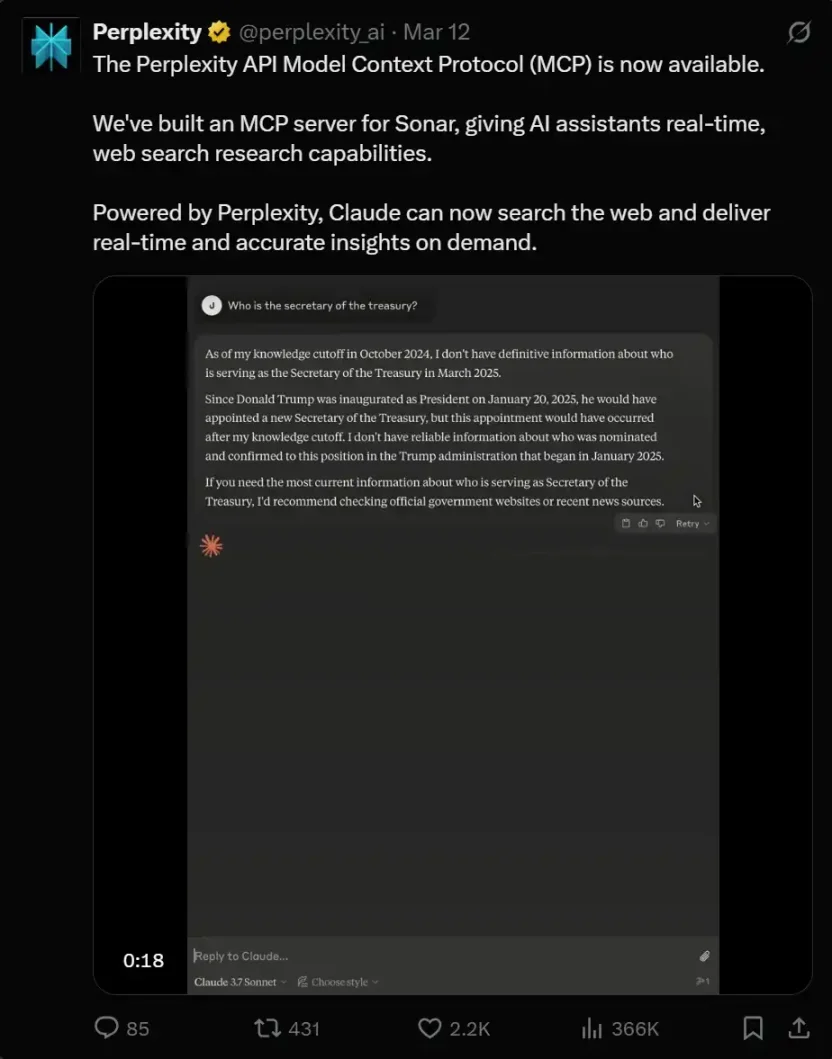
Perplexity MCP
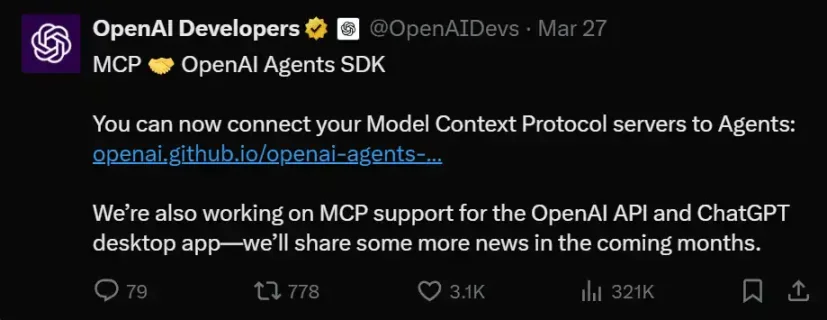
OpenAI Agents SDK MCP

最近(事实上是昨天),OpenAI 发布了其自有的 MCP 插件,集成到其 Agents SDK 中:
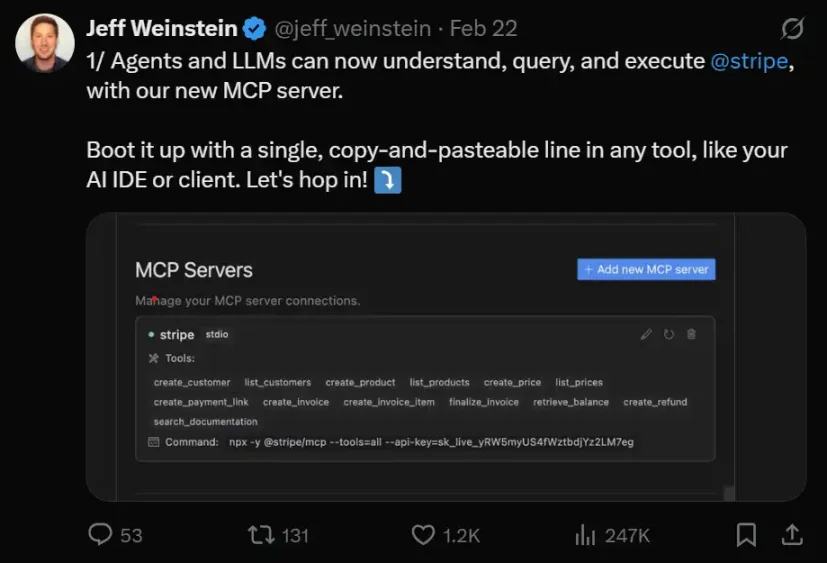
Stripe MCP integration:
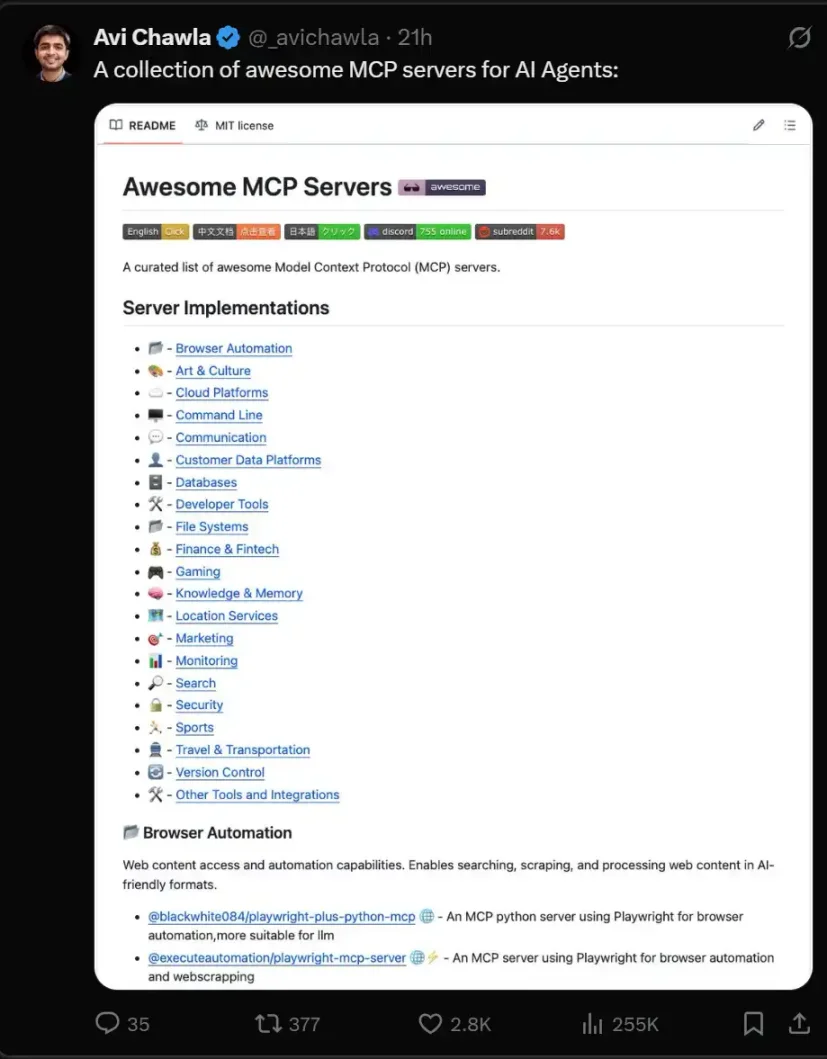
…还有更多的 MCP 服务器正在开发中,旨在让 AI 之间的通信更加无缝:
来自 Anthropic 以外的 CEO 们也在承认 MCP 在推动 AI 代理未来发展中的重要性:
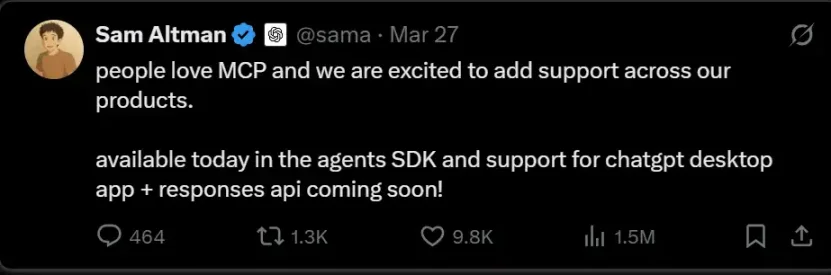
这些举措凸显了一个日益增长的趋势:认识到代理 AI 需要标准化、可扩展的数据集成解决方案。虽然 MCP 凭借其开源特性和广泛的适用性仍然是领先者,但像 xAI、Google 和 Meta 等大玩家的参与,进一步强调了这一领域的重要性。

与传统 AI 集成的关键区别

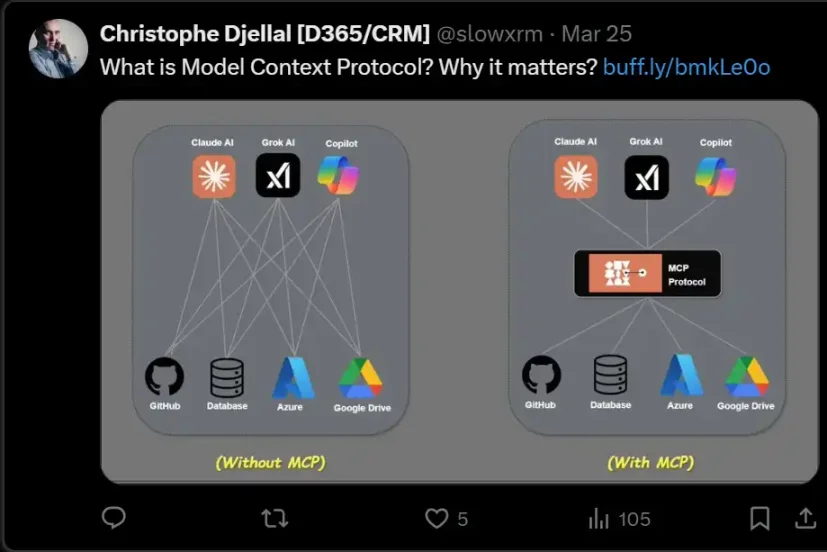
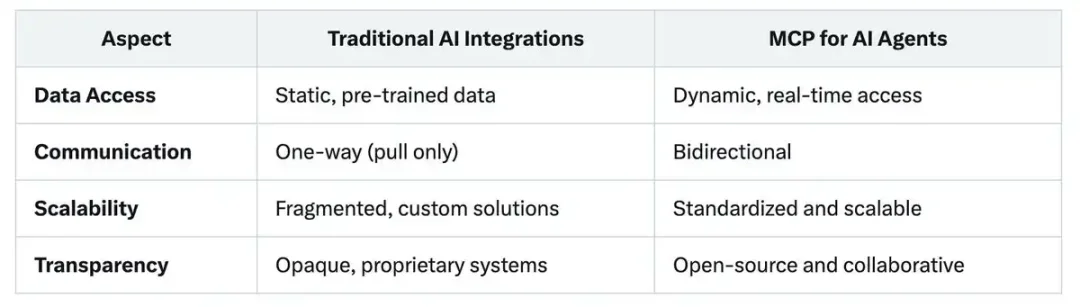
为什么 MCP(及其类似框架)在与传统 AI 集成相比时脱颖而出?传统集成通常涉及定制化 API 或中间件,导致解决方案碎片化,且难以扩展。而 MCP 提供了一个通用标准,降低了复杂性并确保一致性。

以下对比图以一张图清晰展现了两者的区别:
开源协作:

MCP 的开源特性促进了整个行业的协作,与中心化 AI 公司孤立的做法形成鲜明对比。这是加密领域的一大价值主张。

以下是一个简洁的对比:
以下是一些高层次的加密应用示例:
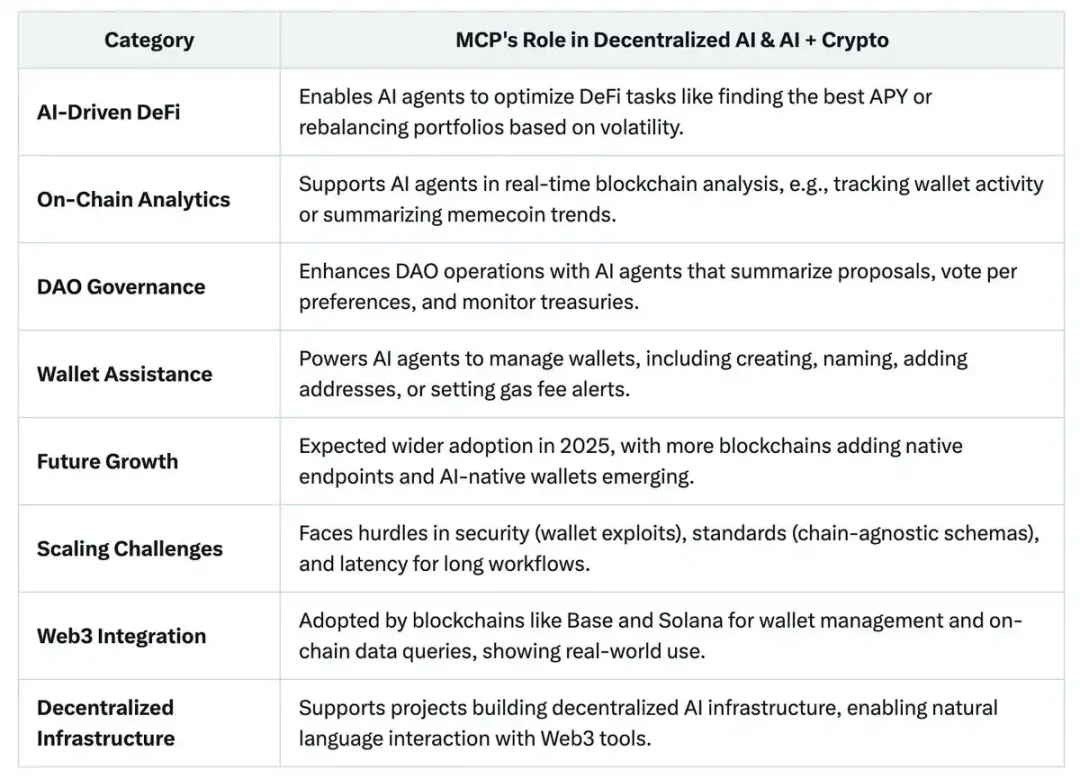
我们已经开始看到在 DeFAI 解决方案方面的推动,例如 @danielesesta 的 @heyanonai、@LimitusIntel 或 @gizatechxyz,以及通过自定义工具如 @aixbt_agent 解决链上分析问题。随着 MCP 在更广泛的加密和 AI 生态系统中的进一步整合,预计会有更多类似的创新出现!

MCP 代表着迈向代理型 AI 未来的重要一步,在这个未来中,自治系统可以与周围的世界无缝互动。通过为 AI 代理提供连接外部数据源的标准化框架,MCP 解决了 AI 开发中的一个关键瓶颈,使得更智能、更加适应和可扩展的解决方案成为可能。

整个行业对 MCP 类似协议的接受标志着朝着代理型愿景的集体推动。然而,仍然存在挑战。MCP 及其类似协议的成功将取决于广泛的采用、协议之间的互操作性以及能够跟上迅速发展的 AI 领域的步伐。

随着我们迈向一个 AI 代理在我们生活中扮演越来越重要角色的未来,像 MCP 这样的框架将成为连接 AI 与现实世界应用的桥梁。无论 MCP 是否成为事实标准,还是仅仅是进一步创新的催化剂,它已经引发了关于代理型 AI 和代理型加密产品所需基础设施的关键讨论。


Criptos en tendencia

Lecturas Relacionadas

Low Investment Isn't Apple's Immunity Pass

While Meta and Google face investor scrutiny over ballooning AI capital expenditures, Apple's minimal AI investment has paradoxically become a strength. Its market cap recently reclaimed the global top spot, surpassing $5 trillion. The irony is deep: Apple's own AI efforts have lagged, with "Apple Intelligence" delayed and core talent lost, forcing reliance on partners like Google Gemini and Alibaba's Qianwen. Its Q3 FY2026 (Q2 CY) earnings initially seemed stellar. Revenue hit $109.4B (up 16% YoY), with iPhone and Mac sales, growing 22% and 29% respectively, driving most of the growth. However, the stock fell over 8% post-earnings. The primary concern was a weaker Q4 revenue growth forecast of 9-11%, below expectations, due to looming supply chain constraints. Apple is feeling the indirect cost of the AI boom. Soaring memory and chip prices, fueled by massive data center investments from Microsoft, Amazon, and others, are forcing Apple to raise Mac and iPad prices significantly. The upcoming iPhone launch is also expected to see substantial price hikes. Despite avoiding heavy AI infrastructure spending—its capital expenditures are actually down 28%—Apple cannot escape the industry-wide supply and cost pressures. While Apple's operating cash flow remains robust, its substantial R&D spending (up 32% YoY) has yet to yield major AI breakthroughs. As Tim Cook prepares to step down as CEO, Apple faces a challenging transition: balancing its premium hardware success against the strategic and cost pressures of the AI era it has so far cautiously navigated.

marsbitHace 3 min(s)

Low Investment Isn't Apple's Immunity Pass

marsbitHace 3 min(s)

PA Graphics Explanation | One Chart to Understand the Major Web3 Events in August 2026

**PANews Crypto Calendar: Key Web3 Events in August 2026** PANews introduces its revamped crypto calendar, featuring comprehensive coverage, flexible filtering, and easy export options. The market in August will be shaped by multiple key events across macroeconomics, regulation, tokenomics, and project developments: * **Macro & Policy:** Key US economic data releases (July Non-Farm Payrolls, CPI), the Federal Reserve meeting minutes, and the Jackson Hole Economic Symposium will be in focus. On the regulatory front, the US Senate plans to release a new draft of the *CLARITY Act*, while the EU's expanded crypto ban against Belarus comes into effect. * **Token Unlocks:** Significant token unlocks are scheduled for assets including ENA, AVAX, CONX, ZRO, and KAITO, which may influence market volatility. * **Project Updates & Shutdowns:** Several services, including Exchange Art, Ctrl Wallet, Zapper, NFTfi, and Summer.fi, are set to cease operations or undergo major adjustments. Users are advised to manage their assets accordingly. * **Corporate Activity:** Q2 earnings reports from companies like SpaceX, Circle, and Nvidia are due. Unitree Robotics will initiate its IPO subscription on the STAR Market, and Moonshot AI plans to begin a Pre-IPO financing round. * **Industry Events:** Major conferences such as Bitcoin Asia 2026 and the 2026 Digital Expo will take place. The overarching market narrative for August will revolve around macroeconomic expectations, regulatory developments, token unlock schedules, and ongoing industry consolidation.

marsbitHace 13 min(s)

PA Graphics Explanation | One Chart to Understand the Major Web3 Events in August 2026

marsbitHace 13 min(s)

Wall Street's Most Famous 'Cassandra' Now Has His Sights Set on Nvidia

Michael Burry, the famed "Big Short" investor, has once again captured Wall Street's attention with a series of short positions against major tech and semiconductor stocks, most notably Nvidia. In late June and July, through his "Cassandra Unchained" newsletter, Burry disclosed short bets against Nvidia, Tesla, Applied Materials, Caterpillar, the SOXX semiconductor ETF, and later, Micron Technology. His core thesis revolves around potential distortions in the AI infrastructure boom, specifically questioning whether extended depreciation schedules (e.g., 6 years vs. a realistic 2-3 years for AI chips) by cloud giants like Microsoft and Google artificially inflate profits. He also raises concerns about possible "off-balance-sheet circular financing," where chip demand might be propped up by vendor-backed funding to clients. Nvidia's stock experienced volatility following these disclosures, briefly dipping but largely holding near Burry's reported entry points, leaving his positions roughly flat or slightly underwater as of late July. This move is part of a pattern for Burry, whose track record since his legendary 2008 bet is mixed. He has faced notable losses, such as on Tesla in 2021, while scoring on broader market turns like the 2020 pandemic crash. His methodology focuses intensely on free cash flow and scrutinizing original financial documents to spot overvaluation and structural risks, but it often struggles with timing the market. The article contrasts Burry's stance with other prominent investors. Steve Eisman, another "Big Short" figure, is not shorting Nvidia, citing strong fundamentals but expressing nervousness about sustainability. Jim Chanos agrees with the broad "accounting mismatch" concern—comparing it to the dot-com bubble—but targets financial leverage in private equity firms rather than the chip stocks themselves. While Nvidia's short interest remains relatively low at 1.3-1.4% of float, the massive stock size means absolute short losses have been significant, exceeding $5 billion earlier this year. The piece concludes that for ordinary investors, the key takeaway is not replicating specific short bets but learning from the critical frameworks these investors use: questioning rosy accounting, identifying structural vulnerabilities, and maintaining skepticism during market euphoria, even if pinpointing the exact catalyst for a downturn remains elusive.

marsbitHace 38 min(s)

Wall Street's Most Famous 'Cassandra' Now Has His Sights Set on Nvidia

marsbitHace 38 min(s)

Weekly Selection丨Epic Stock Market Volatility, Changxin Tech's IPO Reshapes Storage Landscape, Saylor Aims to Re-Anchor STRC Around September 8th

PANews Weekly Digest: Market Turmoil, Tech Breakthroughs, and Crypto Developments. The week saw significant volatility across global markets. South Korea's KOSPI index experienced extreme turbulence, including multiple trading halts, largely driven by sharp declines in AI hardware stocks like SK Hynix. In contrast, China's Changxin Xinqiao (CXC) achieved a landmark IPO with a market cap surpassing 4 trillion yuan, marking a major success for the domestic DRAM industry after a decade of losses. In the crypto and Web3 space, several key narratives emerged. AI is driving demand for new infrastructure, with projects like AI agent wallets and programmable payments gaining traction, attracting interest from firms like Coinbase. The Bitcoin mining sector is pivoting, with companies like MARA focusing on energy management as electricity becomes a core AI-era asset. Meanwhile, the RWA (Real World Assets) sector faces a "utilization puzzle," with hundreds of billions in on-chain assets remaining dormant. Notable market movements included a historic single-day surge of over 17% for the KOSPI index and a significant migration of $16.5 billion in staked ETH within the Lido ecosystem. Michael Saylor announced a target to re-peg the STRC stablecoin around September 8th. Other highlights include discussions on Ethereum's ambitious 2030 roadmap for scaling and privacy, analysis showing high protocol revenues not always translating to token price gains, and warnings from Citi about potential extreme commodity price shocks by late 2026.

marsbitHace 43 min(s)

Weekly Selection丨Epic Stock Market Volatility, Changxin Tech's IPO Reshapes Storage Landscape, Saylor Aims to Re-Anchor STRC Around September 8th

marsbitHace 43 min(s)

When the Market Begins to Question AI Capex: A Full Analysis of Q2 Earnings Reports from Five Tech Giants

In late July 2026, five major US tech giants—Alphabet, Intel, Microsoft, Meta, and Apple—released their Q2 earnings reports. While all companies exceeded revenue and profit expectations, driven by strong AI-related business growth, investor reactions diverged sharply due to concerns over escalating AI capital expenditures (capex) and their impact on free cash flow. Alphabet reported strong revenue growth and a surging cloud business, but its stock fell after announcing a doubled year-on-year capex and negative quarterly free cash flow for the first time. Intel posted its strongest revenue growth in over 15 years, but its stock experienced volatile trading after significantly raising its full-year capex guidance. Microsoft saw its stock surge after beating estimates and, crucially, lowering its capex forecast while projecting positive free cash flow. Meta faced the most severe sell-off as its profits declined despite revenue beats, with free cash flow plunging over 90% and its capex guidance raised. Apple reported record June-quarter results, but its stock plummeted after providing Q4 revenue guidance that fell short of expectations, citing supply chain constraints and forex headwinds. The overall takeaway is that the market's focus has shifted from validating AI demand to scrutinizing the timeline for returns on massive AI investments. Companies demonstrating a clearer path to managing capex and preserving free cash flow, like Microsoft, were rewarded, while those signaling continued aggressive spending faced investor skepticism.

Odaily星球日报Hace 53 min(s)

When the Market Begins to Question AI Capex: A Full Analysis of Q2 Earnings Reports from Five Tech Giants

Odaily星球日报Hace 53 min(s)

Trading

Spot

Artículos destacados

Cómo comprar AIXBT

¡Bienvenido a HTX.com! Hemos hecho que comprar aixbt by Virtuals (AIXBT) sea simple y conveniente. Sigue nuestra guía paso a paso para iniciar tu viaje de criptos.Paso 1: crea tu cuenta HTXUtiliza tu correo electrónico o número de teléfono para registrarte y obtener una cuenta gratuita en HTX. Experimenta un proceso de registro sin complicaciones y desbloquea todas las funciones.Obtener mi cuentaPaso 2: ve a Comprar cripto y elige tu método de pagoTarjeta de crédito/débito: usa tu Visa o Mastercard para comprar aixbt by Virtuals (AIXBT) al instante.Saldo: utiliza fondos del saldo de tu cuenta HTX para tradear sin problemas.Terceros: hemos agregado métodos de pago populares como Google Pay y Apple Pay para mejorar la comodidad.P2P: tradear directamente con otros usuarios en HTX.Over-the-Counter (OTC): ofrecemos servicios personalizados y tipos de cambio competitivos para los traders.Paso 3: guarda tu aixbt by Virtuals (AIXBT)Después de comprar tu aixbt by Virtuals (AIXBT), guárdalo en tu cuenta HTX. Alternativamente, puedes enviarlo a otro lugar mediante transferencia blockchain o utilizarlo para tradear otras criptomonedas.Paso 4: tradear aixbt by Virtuals (AIXBT)Tradear fácilmente con aixbt by Virtuals (AIXBT) en HTX's mercado spot. Simplemente accede a tu cuenta, selecciona tu par de trading, ejecuta tus trades y monitorea en tiempo real. Ofrecemos una experiencia fácil de usar tanto para principiantes como para traders experimentados.

204 Vistas totalesPublicado en 2024.12.30Actualizado en 2026.06.02

Cómo comprar AIXBT

Discusiones

Bienvenido a la comunidad de HTX. Aquí puedes mantenerte informado sobre los últimos desarrollos de la plataforma y acceder a análisis profesionales del mercado. A continuación se presentan las opiniones de los usuarios sobre el precio de AIXBT (AIXBT).

活动图片












