UU Wallet 获美国 MSB 牌照,以安全为核开启全球合规新篇章

链捕手Publicado a 2025-03-19Actualizado a 2025-03-19

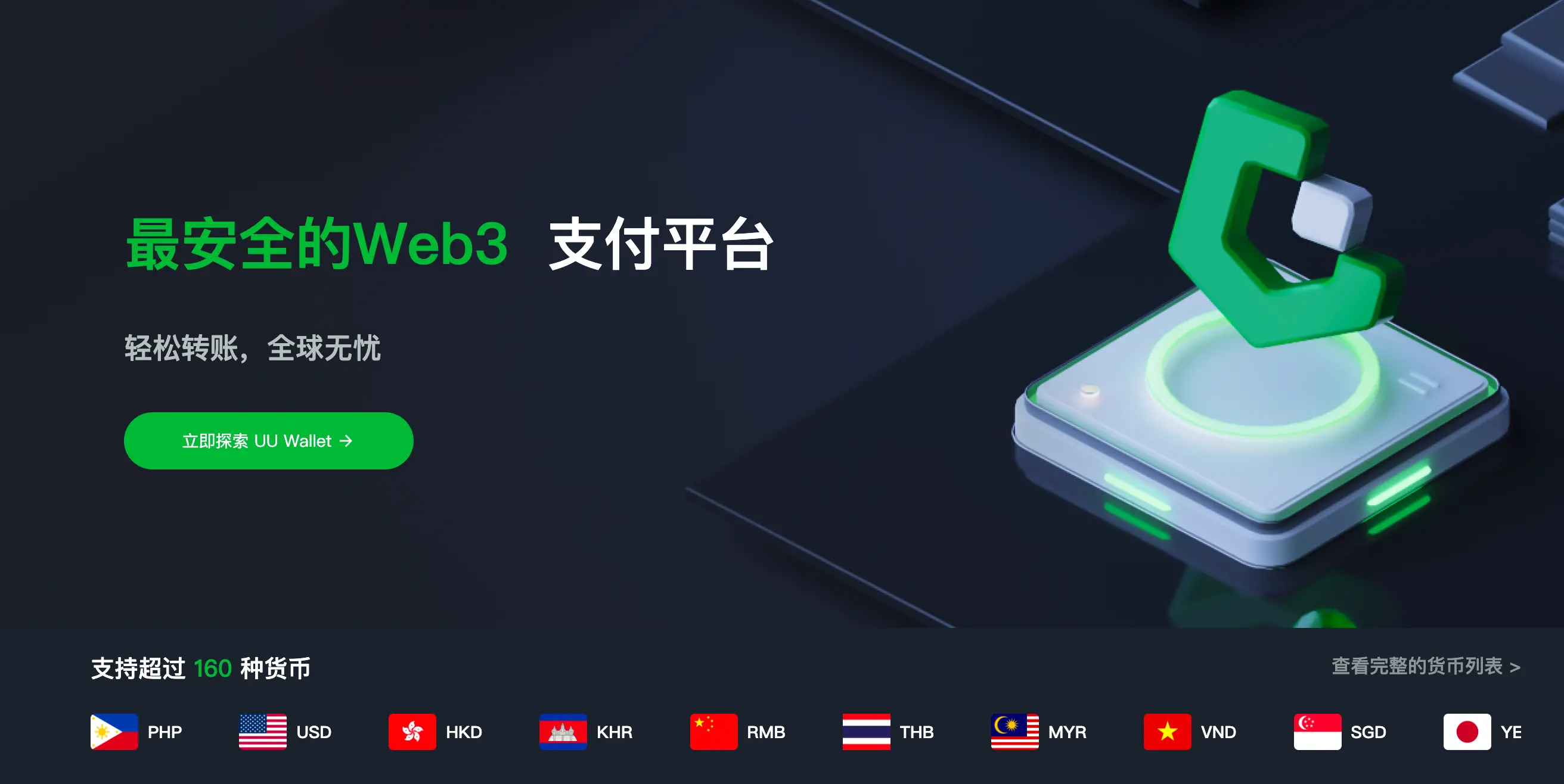
全球领先的Web3支付平台UU Wallet近日宣布正式获得美国货币服务业务牌照(MSB),成为少数兼具安全能力与全球化合规资质的数字金融服务平台。此次牌照获批标志着UU Wallet可在美国监管框架下,合规开展数字资产交易、法币兑换及跨境支付等业务,进一步夯实其“最安全Web3支付平台”的核心定位。
安全合规双驱动,锚定全球化战略

美国MSB牌照由财政部下属FinCEN颁发,是国际金融机构开展货币服务的关键准入门槛。通过该牌照审核,意味着UU Wallet在反洗钱(AML)、风控体系及用户资产保护等维度已满足美国监管的严苛要求。

自2023年成立以来,UU Wallet凭借技术创新与极致安全理念,迅速成长为覆盖超160个国家和地区的Web3支付生态。其团队逾百人,深耕数字货币与法币兑换、预付卡、企业级钱包服务及Web3理财四大核心业务,日均交易额突破2000万美元。

四大核心功能,重构安全支付体验

秒级法币兑换,安全无摩擦
UU Wallet支持菲律宾比索(PHP)、韩元(KRW)、日元(JPY)、USD(美元),hkd(港币)、马来西亚林吉特(MYR)等主流法币与数字货币的即时互转,通过智能路由匹配与多重签名冷钱包技术,用户可在5秒内完成跨境资金划转,全程数据加密且零风险事件记录。

全球预付卡:USDT实时流通,KYC兼顾效率与安全
用户可通过USDT秒速充值预付卡,支持全球160多个国家和地区的线上线下消费场景,同时支持虚拟和实体卡,以及B端客户接入。平台独创“分级KYC”机制,基础消费场景仅需3分钟完成身份核验,而大额交易则通过动态人脸识别、区块链地址追踪等强化风控,在便捷与安全间实现平衡。

企业钱包服务:全链路资金守护
面向Web3企业,UU Wallet提供覆盖50+公链、10,000+代币的支付与资金管理解决方案。通过安全多方计算(MPC)技术、实时风险预警系统及第三方审计机构每月穿透式审查,确保企业资金流向透明可追溯,规避误操作与黑客攻击风险。

Web3资产理财:收益与风控双赢

平台推出活期质押、结构性产品及合规稳定币理财等多元化增值服务,所有产品均通过智能合约自动化执行,并由顶级审计机构验证代码安全性,历史年化收益稳定在3%-15%,实现用户资产“稳中求增”。‌
“安全是金融服务的生命线。”UU Wallet负责人表示,“获得MSB牌照后,我们将加速与全球监管机构及传统金融机构协作,推动Web3支付与主流经济体系深度融合。”

关于UU Wallet

UU Wallet是专注于安全合规的Web3支付基础设施服务商,致力于通过技术创新降低数字资产的使用门槛,已获美国、菲律宾等地金融牌照,并为超50万个人用户、2000家企业提供零安全事故的金融服务。


Lecturas Relacionadas

CLARITY Act Countdown: How Will the Crypto Market Fare If It Doesn't Pass Before the August Recess?

The CLARITY Act, a major US crypto market structure bill, faces a tight deadline before the Senate's August 10 recess. It must overcome final hurdles—negotiations on ethics provisions and law enforcement concerns—to secure the 60 votes needed for passage. Analysts warn that missing this window significantly lowers its chances in 2026, with prediction markets giving only a 40% probability of success this year. If the act fails to pass by the recess, the market is expected to react not with a crash but with continued "slow bleeding," particularly in premium products like ETFs. June saw record net outflows from US Bitcoin spot ETFs, partly attributed to this legislative uncertainty. Assets like XRP, which would receive permanent commodity classification under the act, stand to lose a "regulatory premium" on further delays. Bitcoin and Ethereum, already classified as commodities by regulators, face less direct impact, but DeFi innovation and institutional capital inflows would remain stifled by regulatory ambiguity. The path forward includes passing before the recess (a major catalyst), postponement to 2027 (prolonging uncertainty), or failure, requiring the bill to be reintroduced in the next Congress. Despite the stalled negotiations, the bill's advancement this far signals the US is closer than ever to resolving crypto regulatory clarity.

marsbitHace 14 min(s)

CLARITY Act Countdown: How Will the Crypto Market Fare If It Doesn't Pass Before the August Recess?

marsbitHace 14 min(s)

The Impact of OUSD on Circle, Tether, and Paxos: Not a Simple Negative, but a More Complex Competitive Landscape

OUSD's Impact on Circle, Tether, and Paxos: A Nuanced Competitive Reshuffle The launch of OUSD, a new stablecoin initiative, has complex implications for the stablecoin market. For Circle (CRCL), the initial 15-20% stock drop reflects legitimate competitive concerns but is not a "death sentence." Circle retains deep liquidity, existing integrations, and first-mover advantages. A potential restructuring or termination of its Coinbase partnership could even double its net revenue in the short term, providing more competitive freedom. However, OUSD, backed by Stripe's engineering and product strengths, could become the default stablecoin within the Stripe ecosystem for new adopters, challenging USDC's position. OUSD does not solve the core barrier for corporate adoption: it remains a credit exposure to its issuer (likely a Bridge-related entity), which, like Circle, is not an investment-grade entity. Large banks and asset managers could still capture the most lucrative enterprise use cases. Circle must accelerate its payment/fintech product development and consider defensive M&A. For Tether, OUSD targets a different market segment. Tether will continue focusing on distribution channels not prioritized by Stripe or Circle. Its market share may decline over time, but within a significantly growing total market. Paxos faces the greatest pressure. OUSD undermines the key selling points of its USDG stablecoin, and Paxos's regulatory advantages may diminish as frameworks mature. This poses a more existential challenge, explaining Paxos's recent shift back to its brokerage-as-a-service business.

marsbitHace 18 min(s)

The Impact of OUSD on Circle, Tether, and Paxos: Not a Simple Negative, but a More Complex Competitive Landscape

marsbitHace 18 min(s)

OUSD's Impact on Circle, Tether, and Paxos: Not a Simple Negative, but a More Complex Competitive Reshuffle

This article analyzes the impact of the newly announced stablecoin OUSD, backed by a consortium including Stripe, on major incumbents like Circle (USDC), Tether (USDT), and Paxos (USDG). For Circle, the announcement is not a simple negative. While the initial market reaction was rational, it's not a "death sentence." Circle retains deep liquidity, existing integrations, and first-mover advantage. A potential restructuring or termination of its exclusive revenue-sharing deal with Coinbase could even near-double its net income in the short term, providing more competitive flexibility. However, within the Stripe ecosystem, OUSD, with its strong engineering and product focus, could become the default choice, displacing USDC for new integrations. Circle must accelerate its own fintech product development and consider defensive M&A. OUSD does not directly threaten Tether's core markets, which focus on different distribution channels. Tether's market share may decline over time but within a significantly growing overall market. Paxos faces the greatest pressure. OUSD undermines the primary value proposition of its USDG stablecoin, and Paxos's regulatory advantages may erode as frameworks mature, posing a more existential challenge. This explains Paxos's recent strategic pivot towards brokerage-as-a-service. A fundamental unresolved issue for enterprise adoption remains: if issued by a Bridge-related entity, OUSD, like USDC, still represents a credit exposure to a non-investment-grade issuer, unless a parent company guarantee is provided. Large banks and asset managers entering the space later could still compete for the most lucrative enterprise use cases.

链捕手Hace 19 min(s)

OUSD's Impact on Circle, Tether, and Paxos: Not a Simple Negative, but a More Complex Competitive Reshuffle

链捕手Hace 19 min(s)

Trading

Spot
活动图片