Ripple Co-Founder Suffers $150 Million XRP Loss In LastPass Hack, Crypto Sleuth Finds

bitcoinistPublicado a 2025-03-08Actualizado a 2025-03-09

Resumen

In an interesting turn of events, the January 2024 theft of 283 million XRP (worth approximately $150 million at current...

Trusted Editorial content, reviewed by leading industry experts and seasoned editors. Ad Disclosure

In an interesting turn of events, the January 2024 theft of 283 million XRP (worth approximately $150 million at current market price) from the wallet of Ripple co-founder Chris Larsen has been linked to the security breach of password manager LastPass. This discovery was recently made public by prominent blockchain investigator ZachXBT.

How Did The Ripple Co-Founder Lose His Assets?

On Friday, March 7, ZachXBT took to their Telegram channel to share a screenshot of a forfeiture complaint submitted on Thursday by US law enforcement. According to the crypto sleuth, Larsen’s wallet lost roughly $150 million worth of XRP tokens because the co-founder stored his private keys in a password manager named LastPass.

For context, LastPass suffered significant security incidents and data breaches in late 2022, which led to customer data leaks and password vault exploits. By September 2023, a potential link was established between this security breach and more than $35 million in cryptocurrency stolen from several victims since December 2022. As reported by Bitcoinist, approximately $4.4 million in digital assets were stolen from 85 distinct wallets belonging to 25 LastPass users on October 25, 2023 alone.

In late January 2024, ZachXBT revealed in an online post that Ripple had been exploited for about 213 million XRP (worth roughly $112.5 million at the time). The co-founder later confirmed that there had indeed been “unauthorized access” to his personal XRP wallets — but not Ripple’s.

Ripple

Source: ZachXBT/Telegram

As highlighted in the forfeiture complaint, it seems Larsen’s private wallet keys were compromised in the two major data security breaches that affected a commercial online password manager in 2022. The United States Federal Bureau of Investigation (FBI) discovered that the passwords stolen in these breaches were used to illegally obtain customer data and assets.

The court document read:

From those conversations, law enforcement agents in this case learned that the stolen data and passwords that were stored in several victims’ online password manager accounts were used to illegally, and without authorization, access the victims’ electronic accounts and steal information, cryptocurrency, and other data.

It is worth noting that the forfeiture complaint does not cite LastPass as the online password manager. However, it did mention that one of the victims is a San Francisco resident (Larsen’s LinkedIn location shows that he is based in San Francisco city).

In the message on their Telegram channel, ZachXBT clarified that “up to this point Chris Larsen had not publicly disclosed the cause of the theft.” Recently, the blockchain investigator linked to the Ripple co-founder a series of dormant XRP wallets, with over 2.7 billion XRP (worth around $7.18 billion).

XRP Price Quick Look

As of this writing, the price of XRP stands at around $2.37, reflecting an over 5% in the past 24 hours.

Ripple

The price of XRP on the daily timeframe | Source: XRPUSDT chart on TradingView

Featured image from Medium, chart from TradingView
Editorial Process for bitcoinist is centered on delivering thoroughly researched, accurate, and unbiased content. We uphold strict sourcing standards, and each page undergoes diligent review by our team of top technology experts and seasoned editors. This process ensures the integrity, relevance, and value of our content for our readers.

Opeyemi Sule is a passionate crypto enthusiast, a proficient content writer, and a journalist at Bitcoinist. Opeyemi creates unique pieces unraveling the complexities of blockchain technology and sharing insights on the latest trends in the world of cryptocurrencies. Opeyemi enjoys reading poetry, chatting about politics, and listening to music, in addition to his strong interest in cryptocurrency.

Lecturas Relacionadas

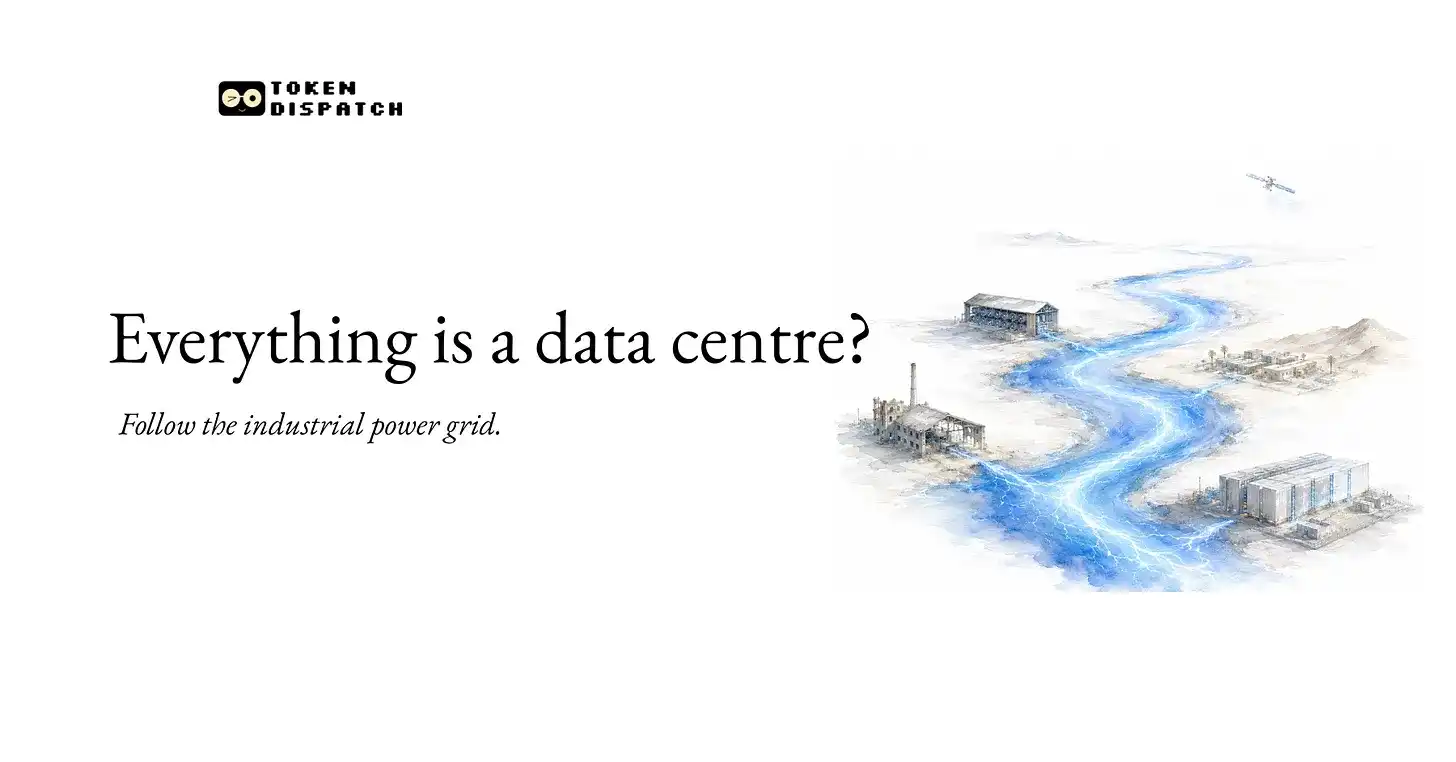
A History of Technological Evolution Powered by Electricity: Aluminum, Bitcoin, and AI

The journey from the Rockdale aluminum smelter in Texas to space-based data centers illustrates a core economic principle: whoever controls the cheapest electricity dictates the use of computing power. The evolution is clear. Old industrial sites with pre-existing, high-capacity power grids are being repurposed. In Rockdale, a former Alcoa plant now houses vast Bitcoin mining rigs, which are increasingly being replaced by AMD chips for AI training. The logic is purely financial: while smelting aluminum yields $0.17–0.27 per kWh and Bitcoin mining $0.05–0.11, AI inference on H100 GPUs generates $1.27–3.67 per kWh. Recent deals confirm the rush for power infrastructure. Riot Platforms leases space to AMD; TeraWulf bought an old Kentucky aluminum plant for its grid; NYDIG secured a New York site for its cheap hydropower to mine Bitcoin. As AI giants like Anthropic, Microsoft, Google, and Amazon aggressively expand, they now directly compete with crypto miners for the same industrial power resources, often outbidding them. This has led to a decline in Bitcoin's global hash rate and a wave of miner conversions to AI data centers. This "digital resource curse" extends globally. Gulf nations, long offering subsidized power to attract heavy industry like aluminum, are now pivoting to become AI and cloud computing hubs—exporting computational power instead of physical commodities. Similarly, Bhutan halted its sovereign Bitcoin mining to sell hydropower directly to India for a steadier return. The frontier is space. Projects like Starcloud plan orbital solar-powered data centers, leveraging constant sunlight and natural cooling, with Bitcoin mining as a secondary use for surplus power. Even consumer brands are transforming; Allbirds shifted from footwear to AI infrastructure, causing its stock to surge. Meanwhile, crypto projects like Bittensor, Render, and Akash propose a decentralized alternative, creating markets to aggregate distributed, idle computing resources from individual hardware. The underlying infrastructure—the power grid—remains constant. As profit margins shift, the facilities built upon it will continue to evolve, from aluminum to Bitcoin to AI and beyond, always chasing the highest yield per kilowatt-hour, whether in Texas, Abu Dhabi, or low Earth orbit.

marsbitHace 5 min(s)

A History of Technological Evolution Powered by Electricity: Aluminum, Bitcoin, and AI

marsbitHace 5 min(s)

Conquering is easy, governing is hard: Polymarket must bow to regulations to plant its flag globally

Polymarket, a decentralized prediction market platform, faces significant regulatory hurdles in its global expansion. Its "permissionless" model, which bypasses traditional identity and financial controls, has led to widespread crackdowns. India recently blocked the site, categorizing it as illegal online gambling under new 2025 laws. Brazil also banned it and similar platforms, though it simultaneously authorized a regulated, investor-only version on its national exchange. Across Europe, countries like France, Portugal, and the Netherlands are enforcing bans based on existing gambling and financial regulations. To enter key markets, Polymarket is adopting a pragmatic, compliant approach. In the U.S., it paid a $1.12 million fine, acquired a CFTC-licensed exchange, and now operates a regulated, KYC-mandatory platform for American users. It also secured a major investment from Intercontinental Exchange (ICE), which will distribute its prediction data to institutional investors. In Japan, where gambling laws are strict, Polymarket has begun a long-term lobbying effort, aiming for legalization by 2030 through building institutional partnerships and community presence. Despite these challenges, the prediction market industry is booming, with global volume projected to surge from $51 billion to potentially $1 trillion by 2030. Polymarket's core dilemma remains: adapting its decentralized, anonymous model to fit within sovereign regulatory frameworks focused on licensing, consumer protection, and anti-money laundering rules. Its survival in each market depends on navigating this complex political and legal landscape.

marsbitHace 8 min(s)

Conquering is easy, governing is hard: Polymarket must bow to regulations to plant its flag globally

marsbitHace 8 min(s)

It's Easier to Conquer than to Govern: Polymarket Must Bend to Every Rule to Plant Its Flag Globally

Polymarket, a decentralized prediction market platform, is facing significant regulatory hurdles as it expands globally, illustrating the tension between permissionless, crypto-native platforms and national legal frameworks. The platform, which allows users to bet on event outcomes, was recently blocked in India under new online gambling laws and faces similar outright bans in Brazil and Ukraine, the latter citing moral objections to wagering on active war events. In Europe, countries like France, the Netherlands, and the UK are restricting access by enforcing existing gambling and financial derivatives regulations, forcing Polymarket to geo-block users or operate in view-only modes. To navigate this complex landscape, Polymarket is adopting a market-by-market, compliant strategy. In the U.S., it paid a $1.4 million CFTC fine, acquired a licensed exchange (QCEX) for $112 million, and now operates a regulated U.S. entity with strict KYC, abandoning anonymity. It also secured a major investment from Intercontinental Exchange (ICE), which will distribute its prediction data to institutional investors. In Japan, a high-potential market, it has begun a long-term lobbying effort aiming for legalization by 2030, acknowledging the country's strict anti-gambling laws and slow regulatory processes. The article concludes that while the global prediction market is growing rapidly—projected to reach $2.4 trillion by 2030—Polymarket's core challenge is transforming its decentralized model to fit sovereign regulatory systems built on licensing, consumer protection, and anti-money laundering rules. Its survival depends on proving its legitimacy in each jurisdiction.

链捕手Hace 12 min(s)

It's Easier to Conquer than to Govern: Polymarket Must Bend to Every Rule to Plant Its Flag Globally

链捕手Hace 12 min(s)

Trading

Spot
Futuros
活动图片