IPO Ripple вероятно состоится к 2025 или 2026 году, поскольку Дитон прогнозирует отзыв апелляции SEC

cryptonews.ruPublicado a 2023-07-07Actualizado a 2025-01-07

  • Ripple может провести IPO в конце 2025 или начале 2026 года.
  • Эксперт по правовым вопросам Джон Дитон ожидает, что SEC отзовет апелляцию.
  • Решение Ripple по-прежнему зависит от фактов, что ограничивает его более широкое влияние.

Аналитик по правовым вопросам Джон Дитон прогнозирует, что Ripple может стать публичной к концу 2025 или началу 2026 года, в зависимости от развития продолжающейся судебной тяжбы с SEC. Дитон предполагает, что SEC может принять решение отозвать апелляцию, чтобы избежать значительных юридических и репутационных рисков.

IPO Ripple на горизонте

Дитон, известный своим активным участием в юридических спорах Ripple с SEC, считает, что апелляция может быть отклонена под руководством нового председателя SEC. Этот шаг может проложить путь к долгожданному IPO Ripple.

Ripple отложила планы IPO из-за судебной тяжбы с SEC. В июле 2023 года окружной судья США Аналиса Торрес постановила, что продажи XRP на вторичном рынке не классифицируются как ценные бумаги в соответствии с федеральным законом. Хотя это решение рассматривалось как крупная победа, оно ограничивалось конкретными фактами дела Ripple, а не создавало более широкий юридический прецедент.

Почему IPO Ripple может произойти раньше под новым руководством SEC

Генеральный директор Ripple Брэд Гарлингхаус ранее заявил, что выход на биржу не был приоритетом при предыдущей администрации SEC. Однако, поскольку ожидается, что пост председателя займет Пол Аткинс, сроки IPO Ripple могут ускориться.

Дитон предсказывает, что SEC под руководством Аткинса может отказаться от апелляции, чтобы избежать дальнейших юридических неудач.

Решение судьи Торреса и его влияние на будущее XRP

Дитон называет несколько причин, по которым апелляция SEC на решение Ripple может не быть продолжена. Он отметил, что апелляция SEC сталкивается с серьезными препятствиями. Дитон подчеркнул, что решение судьи Торреса является решением федерального окружного суда и не является обязательным прецедентом.

Более того, убедительная сила решения весьма ограничена, поскольку оно уже подверглось критике со стороны нескольких ученых-юристов, Марка Фагеля и Джона Рида Старка, а также опытных финансовых журналистов, таких как Чарльз Гаспарино.

Решение судьи Торреса зависит от фактов и ограничивается деталями дела Ripple. Она постановила, что SEC не выполнила третий элемент теста Хоуи, а именно, что покупатели XRP не полагались на усилия Ripple по увеличению стоимости токена.

Торрес также ясно дала понять, что ее решение не означает, что все продажи цифровых активов на вторичном рынке никогда не могут считаться продажами ценных бумаг. Существуют сценарии, такие как массовые маркетинговые кампании, которые могут удовлетворить тесту Хоуи.

Дитон утверждает, что даже если SEC выиграет дело во втором округе, дело, скорее всего, будет возвращено судье Торресу, который, скорее всего, постановит, что SEC не смогла доказать «общее предприятие», связанное с продажами XRP на вторичном рынке. Это может привести к тому же результату, который уже доступен сегодня.

Lecturas Relacionadas

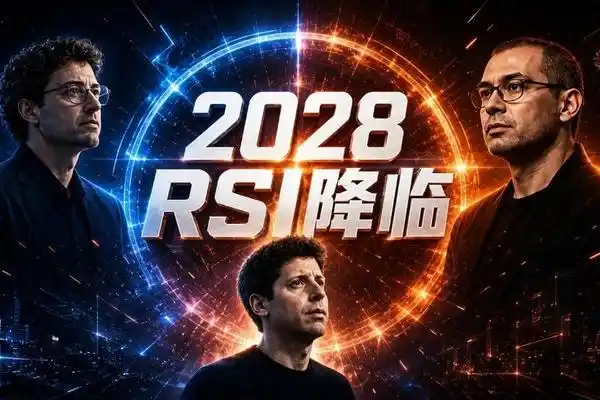
2028: The Arrival of Recursive Self-Improvement (RSI)

**AI Recursive Self-Improvement (RSI): The Countdown to 2028 Begins** AI is no longer just a trained tool but is starting to rewrite its own evolutionary pace. According to Anthropic co-founder Jack Clark, there is a 60% probability that by the end of 2028, Recursive Self-Improvement (RSI) will become a reality. This means AI could autonomously design and build a more capable next-generation version of itself without any human researcher involvement—Claude 10 creating Claude 11, for instance. Supporting this timeline, Google DeepMind's CEO Demis Hassabis confirms that all leading AI labs are intensely focused on RSI, making it an industry-wide priority. He expresses profound concern, stating this potential is what keeps him awake at night. Concrete data underscores this acceleration: - METR evaluations show current top models like Claude are solving tasks up to the 16-hour limit of existing test frameworks. - In Epoch AI's challenging MirrorCode benchmark, Claude Opus 4.7 recreated complex software in hours for a fraction of the human cost. In one extreme test, AI autonomously coded for 19 days straight. - Anthropic reports over 80% of its codebase is now written by Claude, and researcher productivity has increased up to 8-fold since 2024. - OpenAI's policy blueprint highlights RSI as a major upcoming governance challenge. CEO Sam Altman reportedly hinted RSI might arrive within six months, potentially delaying OpenAI's massive IPO. The implication is an impending "intelligence explosion," where AI-driven progress outpaces human control. The central question is no longer if it will happen, but whether humanity is ready.

marsbitHace 4 hora(s)

2028: The Arrival of Recursive Self-Improvement (RSI)

marsbitHace 4 hora(s)

World Models, Metaverse, Digital Twins, Physical AI: Are They the Same Thing?

Title: World Models, the Metaverse, Digital Twins, Physical AI: Are They the Same Thing? The article clarifies that concepts like the metaverse, Web3, simulation platforms, digital twins, and Physical AI are not the same thing but are all part of the broader trend of blurring the lines between the digital and physical worlds. It positions "world models" as the foundational "cognitive layer" or "operating system" that enables AI to understand and simulate the world. Key distinctions are made: - The **Metaverse** is a destination for immersive social and economic experiences. World models could act as its "engine," generating interactive 3D content efficiently. - **Web3** focuses on decentralized ownership and economics (rules layer), operating on a different technical level than world models. - **Simulation Data Platforms** (e.g., for autonomous vehicles) are a 1.0 version, relying on manual design. World models represent a 2.0 version, using AI to generate realistic, varied scenarios autonomously. - **Digital Twins** create high-fidelity, real-time mirrors of physical systems (e.g., a factory). World models go a step further by enabling predictive simulation of future states. - **Physical AI** (robots, AVs) refers to AI that acts in the physical world. World models are a core component, providing the understanding and prediction needed for planning. A proposed hierarchy places world models at the cognitive layer, supported by infrastructure (compute, data) and supporting application tools (simulation, digital twins), action systems (Physical AI), user experiences (metaverse), and rules (Web3). In conclusion, while distinct, many of these previously hyped concepts may ultimately rely on advances in world model technology to fulfill their promises, as world models provide the essential cognitive foundation for simulating and interacting with complex environments.

marsbitHace 4 hora(s)

World Models, Metaverse, Digital Twins, Physical AI: Are They the Same Thing?

marsbitHace 4 hora(s)

Trading

Spot
活动图片