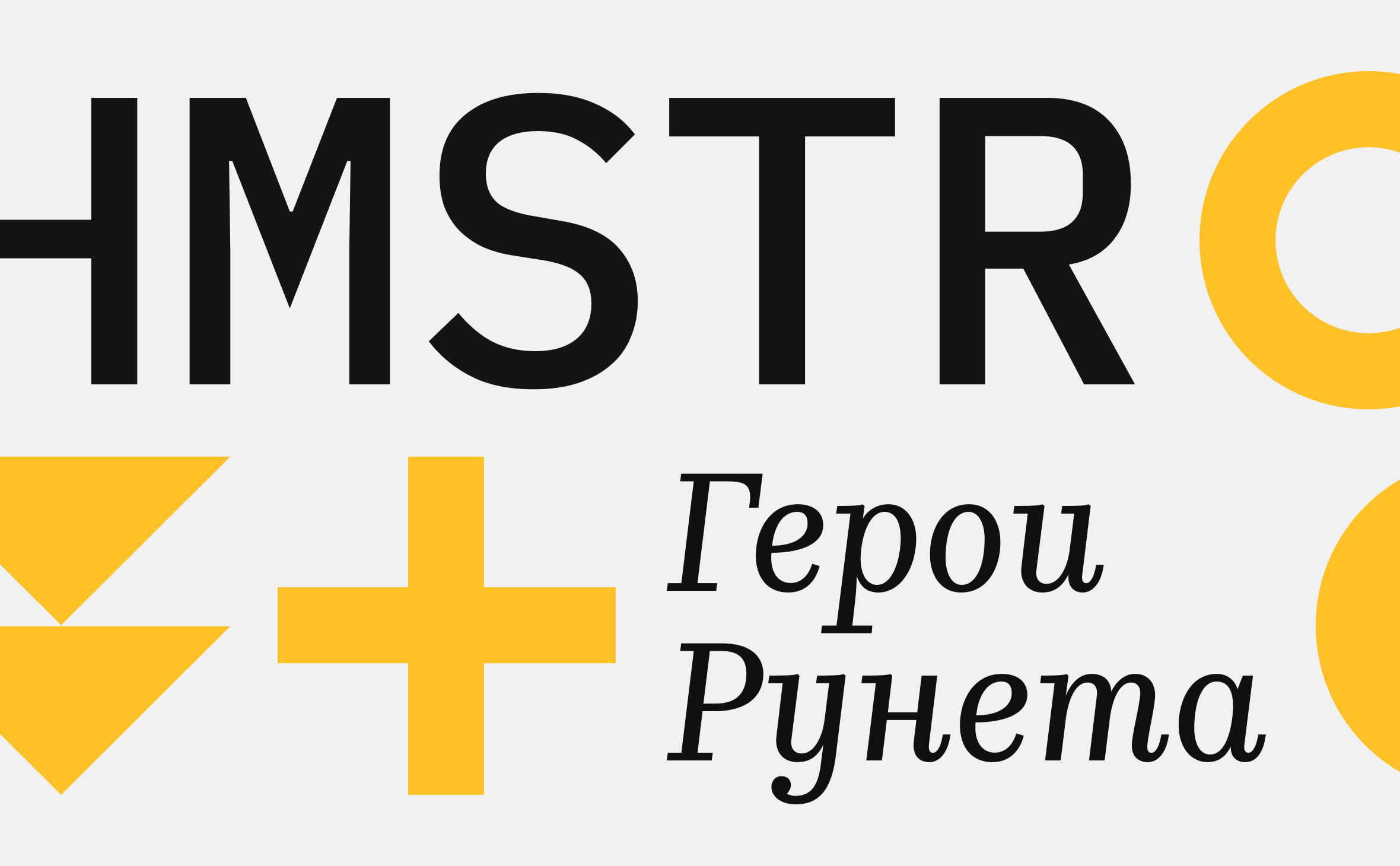
Хомяка из Hamster Kombat выдвинули на премию. Почему символ игры может стать «Героем рунета»

cryptonews.ruPublicado a 2022-11-09Actualizado a 2024-12-09

Игровое приложение в Telegram широко обсуждалось и вовлекло множество пользователей, поэтому организаторы премии посчитали, что символ «тапалки» заслужил общественного признания

В этом году одним из номинантов премии «Герои Рунета» станет хомяк из криптоигры Hamster Kombat. Об этом сообщил «РБК-Крипто» источник в организующем премию Региональном общественном центре интернет-технологий (РОЦИТ).

Hamster Kombat — игровое мини-приложение в мессенджере Telegram. В игре можно было «зарабатывать» монеты, нажимая на хомяка и выполняя другие задания. В конце сентября команда Hamster Kombat провела эирдроп токенов HMSTR.

Судя по отзывам сообщества, «тапальщики» рассчитывали, что получат больше, чем им было в итоге начислено. Игру с тех пор покинули примерно 276 млн игроков. По данным на 9 декабря, мини-приложение в Telegram насчитывает около 23,5 млн активных пользователей, а в августе, по информации разработчиков, их было 300 млн.

rbc.group

Источник в РОЦИТ затруднился сообщить, кто именно получит награду, но сказал, что безусловным критерием отбора хомяка стал тот факт, что эта история широко обсуждалась в Рунете и вовлекла множество пользователей. Также источник сообщил, что героями Рунета в этом году станут несколько мемов и других ярких персонажей.

На мероприятии 11 декабря будут подведены итоги развития Рунета в 2024 году, названы главные события, проекты и люди, стоящие за ними. По словам организаторов, премия «Герои Рунета» — это не мероприятие с целью продвижения проектов, а событие, которое «фиксируют общественное признание, констатируют факты, которые невозможно смоделировать».

Лауреатами конкурса в прошлом, 2023 году, стали создатель Telegram Павел Дуров, блогер Раиль Арсланов, тувинская этно-рок-группа «Ят-ха», видеоигра Atomic Heart, нейросети «Шедеврум» и GigaChat.

Ранее на игру Hamster Kombat обратили внимание в Банке России. По словам руководителя службы по защите прав потребителей и обеспечению доступности финансовых услуг ЦБ Михаила Мамуты, регулятор ожидал жалоб от недовольных игроков, и готов рассказать про риски инвестиций пользователям «тапалок».


Lecturas Relacionadas

STRC 跌破面值,比特币财库实验进入下半场

The price of STRC, Strategy's dividend-paying preferred stock, has fallen below its $100 face value, triggering a re-evaluation of the "bitcoin treasury" corporate model. This highlights a critical tension: the company's asset base consists of high-volatility, non-cash-flow-generating Bitcoin, while its capital structure requires continuous cash payouts for dividends and interest. The decline of STRC signals that market pressure is shifting from asset price volatility to the pricing of the company's financing tools. Strategy's core model involves a three-step conversion: turning equity into Bitcoin exposure, converting Bitcoin holdings into capital market credit, and packaging non-yielding BTC into cash-paying securities like STRC. While Strategy holds a massive 847,363 BTC, the focus is now on cash flow mismatches. The company faces annual preferred stock dividend obligations of approximately $1.7 billion, far exceeding the cash flow from its legacy software business. Its ability to meet these obligations relies on continued access to capital markets. The market is now scrutinizing which of three potential costs becomes untenable first: rising dividend costs to attract investors, dilution costs from issuing more common stock, or the reputational cost of selling BTC—a move contrary to its "hodl" narrative. For the broader crypto market, a constrained Strategy means the potential loss of a predictable, narrative-driven marginal buyer for Bitcoin. The STRC discount serves as a reminder that the longevity of such models depends not just on Bitcoin's price, but also on financing windows, cash reserves, and investor willingness to pay a "trust premium" for the structure.

marsbitHace 26 min(s)

STRC 跌破面值,比特币财库实验进入下半场

marsbitHace 26 min(s)

Standard Chartered Bank’s 50-Fold Fantasy: Predicting AAVE to Reach $3,500

Standard Chartered Bank has issued an optimistic research report predicting that the AAVE token could surge 50-fold to $3,500 by 2030. This forecast is based on the projection that the total value locked (TVL) in DeFi will grow 37x to approximately $2.7 trillion, driven by stablecoin expansion and the tokenization of real-world assets (RWA). The bank's model links Aave's potential valuation directly to its protocol revenue, which is primarily driven by net interest margins. The report highlights Aave's current dominant position, noting it captures over 80% of the net earnings ("protocol retained earnings") in the lending sector while holding only about half of its TVL. It also points to the recent launch of the Aave V4 architecture and a healthy revenue stream of $142 million in 2025 as positive fundamentals. Grayscale's separate analysis, applying traditional valuation metrics like DCF, concluded AAVE is currently undervalued. However, the article notes significant challenges. Aave's peer-to-pool lending model suffers from inherent capital inefficiency, with an estimated $52 million annual "deadweight loss" due to idle funds needed for liquidity buffers. This structural flaw was exposed during the April KelpDAO exploit, which locked a WETH pool at 100% utilization for days. Emerging protocols like Morpho, with more efficient point-to-point models, are cited as growing competitive threats. In summary, while institutional forecasts paint a macro picture of massive growth fueled by RWA adoption, Aave's path forward hinges on addressing its core structural limitations and competitive pressures within the evolving DeFi lending landscape.

链捕手Hace 1 hora(s)

Standard Chartered Bank’s 50-Fold Fantasy: Predicting AAVE to Reach $3,500

链捕手Hace 1 hora(s)

Tidal Investment: We Remain Bullish on the AI Industry Chain, But the Reasons Have Changed

Tidal Investment remains optimistic about the AI industry chain, but the rationale has shifted. The market narrative has changed. While recent large-scale IPOs (e.g., SpaceX) and major fundraising plans by tech giants like Alphabet and Meta have caused some nervousness, this isn't a sign of an AI peak. The focus has moved from the initial question of AI's viability to the sustainability of massive investment cycles. The key players—primarily the major cloud providers—are not slowing down; their capital expenditure (Capex) guidance for 2026 has been increased across the board (e.g., Alphabet to $180B, Amazon to $200B). This investment cycle is proving resilient and difficult to stop. Unlike traditional hardware cycles, current AI Capex is distributed across multiple physical layers—computing, memory, networking, and critically, power infrastructure. Bottlenecks are shifting from chips to elements like electricity, transformers, and cooling systems, which have much longer lead times and cannot be easily pre-built like fiber optics during the dot-com bubble. Supply chain data (e.g., Eaton's 240% YoY data center orders) confirms this broad-based, project-driven expansion. Market concerns are acknowledged but viewed differently. First, while Capex growth currently outpaces revenue growth, raising ROI questions, this mirrors the early scaling phase of cloud computing itself. A change in view would require concrete signals like downward Capex revisions or missed AI product targets, which haven't materialized by mid-2026. Second, comparisons to the 2000 dot-com bust are flawed. That crash was driven by a massive, parallel oversupply of cheap capacity (fiber). The current cycle faces *supply constraints* in critical, capital-intensive physical infrastructure that cannot be overbuilt as easily. In conclusion, the wave of fundraising reflects the next, more complex act of the AI story. Physical bottlenecks and sustained high Capex plans suggest this is not the finale but an ongoing, capital-intensive build-out phase. The script has changed, but the play is far from over.

marsbitHace 2 hora(s)

Tidal Investment: We Remain Bullish on the AI Industry Chain, But the Reasons Have Changed

marsbitHace 2 hora(s)

Tidal Investment: We Remain Bullish on the AI Industry Chain, But for Different Reasons Now

Tidal Investments remains optimistic about the AI industry chain, but the rationale has shifted. The market is concerned about massive concurrent fundraising by tech giants like SpaceX, OpenAI, Alphabet, and Meta, fearing an AI peak. However, the authors argue this signals the next act of AI development, not its end. Capital expenditure (Capex) from major cloud providers (Alphabet, Amazon, Meta, Microsoft, Oracle) continues to surge aggressively into 2026. This investment cycle is more resilient than past hardware cycles due to its scale and complexity. Bottlenecks have shifted from chips to critical physical infrastructure like power grids, transformers, cooling, and data center construction—areas with long lead times and limited capacity for rapid expansion. Supply chain data (e.g., Eaton's orders) confirms substantial, tangible progress. Key market concerns are addressed: 1. **ROI vs. Capex Growth**: While Capex growth outpaces revenue, the authors note cloud giants have historically overcome similar phases through scale. The cycle will only be in danger if Capex guidance is cut, orders are canceled, or AI product demand falters—none of which are currently observed. 2. **Comparison to the 2000 Dot-com Bubble**: Unlike the telecom bubble, where cheap, oversupplied fiber crashed prices, AI infrastructure (especially power) is constrained, customized, and subject to lengthy approvals, making a similar supply glut and crash unlikely. In conclusion, the wave of fundraising reflects the immense, ongoing capital needs for AI's next phase, constrained by slow-moving physical bottlenecks. The AI cycle is not over; the script has simply changed.

链捕手Hace 2 hora(s)

Tidal Investment: We Remain Bullish on the AI Industry Chain, But for Different Reasons Now

链捕手Hace 2 hora(s)

Trading

Spot
Futuros
活动图片