После дебатов Дональд Трамп утратил лидерство на Polymarket

investing.ruPublicado a 2024-09-11Actualizado a 2024-09-11

Happycoin.club - Вопреки ожиданиям криптоинвесторов, первые дебаты между Дональдом Трампом и Камалой Харрис прошли без упоминания цифровых активов, даже когда обсуждение касалось экономики. Кандидаты в президенты США сосредоточились на традиционных темах, таких как внешняя политика, иммиграция и право на аборты.

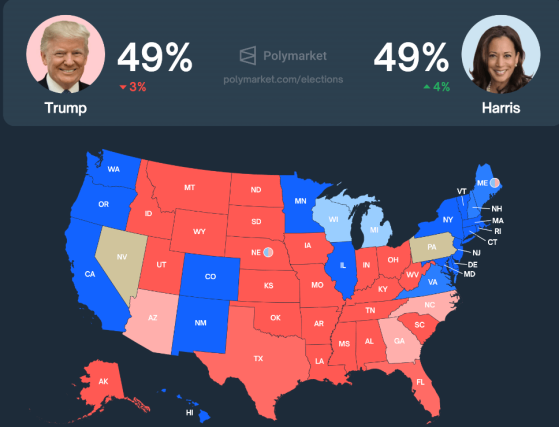
До дебатов Дональд Трамп немного лидировал на рынках прогнозов. Например, на Polymarket его шансы составляли 53% по сравнению с 46% у Харрис. Однако после дебатов показатели обоих кандидата сравнялись до 49%.

На другой платформе прогнозирования PredictIt разница оказалась более заметной: после дебатов шансы Харриса выросли до 56%, а Трампа упали до 47%. Харрис также немного лидирует на традиционных букмекерских сайтах.

Сами дебаты, по-видимому, не очень хорошо повлияли на цену биткоина. После их окончания стоимость флагманского актива упала примерно на 3% с почти $58 000 до $56 600.

С другой стороны, цена биткоина не всегда зависит от ситуации с выборами в США и самим Дональдом Трампом, который активно поддерживает криптоиндустрию. Так, 6 сентября актив упал на 8%, хотя в то время кандидат-республиканец имел высокие шансы на победу (данные платформы Polymarket).

Читайте оригинальную статью на сайте Happycoin.club
Lecturas Relacionadas

From Transaction Fees to Stablecoins: The Revenue Drivers and Economic Moats Behind Web3 Business Models

"From Transaction Fees to Stablecoins: Revenue Drivers and Moats in Verified Web3 Business Models" This analysis explores five established Web3 revenue models, examining their drivers and long-term sustainability. 1. **Transaction Fees**: This model is highly cyclical, with income tied to market activity and user risk appetite (formula: volume × fee rate). Growth depends on expanding the market, gaining market share, and maintaining stable fees amid intense competition. 2. **Stablecoin Reserve Yield**: Revenue stems from the scale of issued stablecoins and the interest earned on their underlying reserves (like US Treasuries). While predictable with strong moats (high user migration costs), growth is tied to adoption as on-chain dollar infrastructure and is sensitive to interest rate cycles. 3. **Funding Rate Arbitrage & Lending Spreads**: Protocols like Aave and Ethena profit from capital supply-demand imbalances. Similar to transaction fees, this model is cyclical and driven by user leverage demand during bullish market phases. 4. **Block Space Sales**: Chains sell computational resources (formula: demand × gas price). A key challenge is the ongoing decline in gas fees due to technological advances and competition among L1s and L2s. Future viability hinges on whether demand growth can offset falling unit prices. 5. **Protocol-Level Service Fees**: Similar to SaaS, this model involves charging other protocols for essential services (e.g., oracles like Chainlink). Revenue scales with ecosystem adoption. The primary moat is high switching costs once integrated, making market leadership crucial. In summary: Transaction fees and funding spreads are highly cyclical. Stablecoin yields and protocol services build strong, durable moats. Block space sales face the structural challenge of perpetually declining unit revenue despite growing demand.

marsbitHace 1 hora(s)

From Transaction Fees to Stablecoins: The Revenue Drivers and Economic Moats Behind Web3 Business Models

marsbitHace 1 hora(s)

Trading

Spot
活动图片