2024年加密影响者看好 50 倍收益的三大山寨币

marsbitPublicado a 2024-09-02Actualizado a 2024-09-03

加密领域的影响者在加密货币领域中是至关重要的利益相关者,因为他们通常会影响社区对特定山寨币的接受度。他们再次看好三种山寨币在2024年获得50倍的收益,并大举买入这些山寨币——ETFSwap(ETFS)、LayerZero(ZRO)和PEPE。因此,加密投资专家和市场量化分析师已经发出零售和巨鲸购买这些山寨币的警报,预计它们将在2024年市场周期中表现强劲。

加密影响者看好 ETFSwap (ETFS) 在 2024 年获得 50 倍收益

ETFSwap (ETFS) 被认为是2024年最受加密领域影响者青睐的加密项目,主要加密影响者预测它将在2024年市场周期中引领50倍的价格飙升。ETFSwap (ETFS) 已经吸引了Web3领域主要加密影响者和利益相关者的关注,其突破性的生态系统为ETF交易设定了新的标准。ETFSwap (ETFS) 是第一个提供无许可访问主要机构ETF并在区块链上进行交易的去中心化协议。

ETFSwap (ETFS) 团队致力于将盈利丰厚的现实世界资产(如黄金、白银、煤炭和石油)的代币化版本进行民主化和透明化的交易访问。团队成员均通过了SolidProof KYC认证,以促进生态系统的问责性和透明性。因此,难怪加密社区期待着ETFSwap的测试平台上线。测试平台的推出将包括ETF筛选器和追踪器功能,预计将彻底改变ETF交易的模式。

原生的ETF筛选器和追踪器是由人工智能驱动的大数据聚合工具,为用户提供鲸鱼和主要市场做市商交易的精准市场分析。该算法使用预测性和情感分析来追踪这些资产的价格走势,为交易者提供准确的市场入场点。因此,ETFSwap (ETFS) 的交易者相较于其他交易者具有领先优势,可以获得赢得市场的入场点并实现持续盈利。此外,ETFSwap (ETFS) 上的杠杆ETF选项通过金融衍生品为交易者提供高达100倍的放大倍率。

ETFSwap (ETFS) 在50倍上涨的过程中已经领先于其他山寨币,其正在进行的预售活动取得了突破性成果,已筹集超过400万美元。您仍然可以加入,尽早赶上这波50倍的价格涨势,目前价格仍然低至$0.01831。

PEPE 是MEME 中的热门之选

PEPE 成为顶级加密影响者的首选之一,因为它在即将到来的加密市场周期中准备创造新一批百万富翁。PEPE 曾达到历史最高价 $0.00001717,从上市价开始飙升了1,716,900%。在当前的市场环境下,加密影响者再次将 PEPE 代币选为2024年可能获得50倍收益的币种。

PEPE 生态系统已经从最初的模因理念演变,融入了 GameFi 创新和其他 APR 产出农业机制。难怪主要加密影响者正在大量购买 PEPE 代币,以赶上即将到来的生态系统繁荣。

LayerZero (ZRO) 走向主流

LayerZero (ZRO) 正受到主流关注,加密影响者已经购买了 ZRO 代币,预计在 2024 年实现 50 倍的收益。LayerZero (ZRO) 正在推动一个生态系统,支持不同区块链之间的无缝交易和通信,建立一个数据和数字资产可以自由互动的基础设施。LayerZero (ZRO) 将当代 DeFi 技术与强大的安全性结合起来,以推进这一 DeFi 解决方案,Web3 开发人员已经开始采用其原生的 ZRO 山寨币。

主要价格行为分析师预计,LayerZero (ZRO) 将通过其区块链互动解决方案达到 10 美元的目标,鲸鱼分析师也在发出投资警报。因此,随着 Web3 开发人员的逐步采用,LayerZero (ZRO) 价格飙升可能只是时间问题。

结论

ETFSwap (ETFS)、LayerZero (ZRO) 和 PEPE 都具备现代化的 DeFi 解决方案,并且正在获得主要利益相关者的广泛采用。因此,加密领域的影响者们纷纷买入这些原生山寨币,期待在2024年实现50倍的收益。

加密影响者尤其看好 ETFS 代币,因为它有更大的上涨空间,价格可能飙升高达20,000%。在 $0.01831 的预售优惠结束前,加入加密影响者的行列,为2024年实现改变人生的财富做好准备。


Lecturas Relacionadas

Silicon Valley AI Landscape Shifts: Karpathy Jumps Ship, Musk Steps In, Son Left Holding the Fort

Silicon Valley's AI landscape is shifting as key talent moves and financial pressures mount. Andrej Karpathy, a prominent AI researcher and former OpenAI co-founder, has announced he is joining competitor Anthropic full-time. His departure highlights a talent drain at OpenAI, where most of the original founders have now left. Karpathy, known for his engineering work at Tesla, is expected to help Anthropic develop more efficient model training methods using its Claude AI, challenging OpenAI's current compute-intensive approach. The move coincides with diverging financial paths for the two AI giants. Anthropic is reportedly on track to post its first quarterly profit with $10.9B in sales, while OpenAI, despite a massive $852B valuation and a recent $122B funding round led by SoftBank's Masayoshi Son, faces significant compute costs and potential heavy losses as it pushes for a rapid IPO. Son has invested over $60B in OpenAI, a concentrated bet that has drawn internal criticism over its risk, reminiscent of SoftBank's past losses on WeWork. Elon Musk, an OpenAI co-founder turned rival, is also influencing the dynamic. After losing a lawsuit against OpenAI, Musk's SpaceX leased its massive "Colossus 1" computing center, equipped with over 220,000 Nvidia GPUs, to Anthropic in a deal worth $40-45B. This provides Anthropic with crucial computational resources while pressuring OpenAI. The developments signal a consolidation where only well-capitalized players can compete in foundation model training. The focus is shifting from pure research to commercial viability, cost-efficient engineering, and strategic resource allocation, with companies like Anthropic finding success by focusing on profitable enterprise applications like code generation.

marsbitHace 4 min(s)

Silicon Valley AI Landscape Shifts: Karpathy Jumps Ship, Musk Steps In, Son Left Holding the Fort

marsbitHace 4 min(s)

In-Depth Research Report on U.S. Crypto Equity Market in 2026 — Opportunities, Risks, and Portfolio Allocation Framework

Since the U.S. Securities and Exchange Commission (SEC) historically approved spot Bitcoin ETFs in January 2024, the U.S. crypto investment landscape has undergone a profound maturation process. In 2026, investors can participate in the crypto market through four primary channels: spot ETFs, crypto-related public equities (including miners and treasury companies), leveraged and inverse ETFs, and blockchain-themed funds. As of March 30, 2026, U.S. spot Bitcoin ETFs collectively held approximately 1.29 million BTC, representing roughly $86.9 billion in assets under management (AUM), while spot Ethereum ETFs reached approximately $18 billion in AUM. Notably, the rise of the Ethereum treasury company model is reshaping the logic of institutional participation. Exemplified by Bitmine Immersion Technologies (BMNR), these firms generate native on-chain yield annually through ETH staking, creating a fundamentally different business resilience model compared with traditional Bitcoin treasury companies. On the regulatory front, the 2025 GENIUS Act established the first federal stablecoin framework in the United States. The U.S. Strategic Bitcoin Reserve has been officially established, banks have been authorized to provide crypto custody services, and major compliance bottlenecks have been definitively removed. Nevertheless, the high volatility of leveraged ETFs, the balance-sheet risks embedded in treasury-company financing structures, and the slashing risk of staked assets continue to pose investment obstacles that cannot be overlooked. For investors seeking exposure to this sector, building a tiered portfolio comprising core holdings, sector beta exposure, and high-risk tactical position may be the most viable path of participation.

HTX LearnHace 31 min(s)

In-Depth Research Report on U.S. Crypto Equity Market in 2026  — Opportunities, Risks, and Portfolio Allocation Framework

HTX LearnHace 31 min(s)

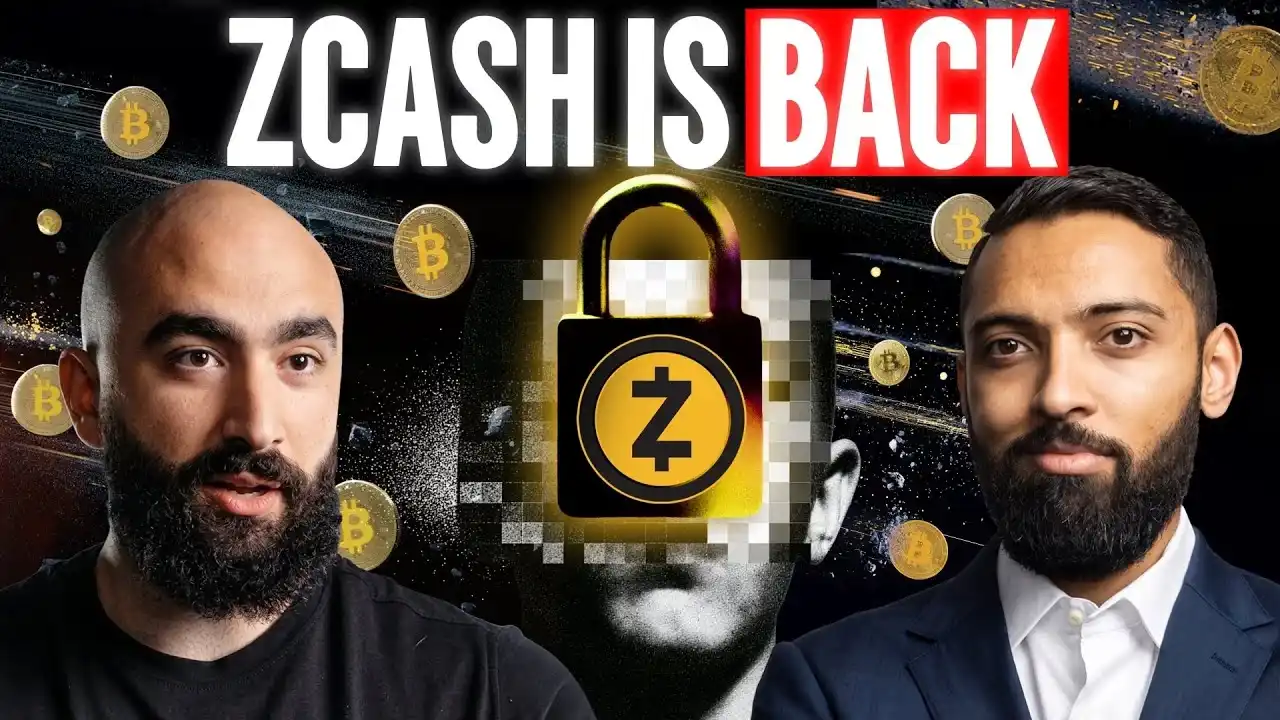
Viewpoint: After Surviving the Death Cycle, Why Has Privacy Pioneer Zcash Returned to the Mainstream Spotlight?

Zcash, the pioneering privacy-focused cryptocurrency built with zero-knowledge proof (ZK) technology, is re-emerging as a major narrative. Having survived a "death cycle" and proven its resilient community, Zcash is now positioned at a unique convergence of factors driving renewed institutional and retail interest. Key catalysts include the increasing institutionalization of crypto (e.g., BlackRock's ETF), which creates a "Trojan horse" for privacy adoption through Zcash's transparent mode. The rise of AI-powered on-chain surveillance makes financial privacy a critical necessity, not just for niche users but for mainstream wealth preservation against overreach. ZK technology has finally matured to enable practical, user-friendly private transactions, a core advantage over older "obfuscation" methods like Monero's ring signatures. Zcash’s narrative as "private Bitcoin"—a fork with the same 2100M cap and PoW—is simple and powerful. It competes in the store-of-value arena, offering cryptographic privacy as a fundamental human right. Its development roadmap is robust, featuring a soon-to-be-complete quantum resistance upgrade for its shielded pool, faster block times, and improved wallet support (e.g., from Ledger). With backing from major funds and a growing developer ecosystem, Zcash is seen as leading the crucial reintegration of privacy into the crypto landscape, fulfilling the original cypherpunk vision.

marsbitHace 39 min(s)

Viewpoint: After Surviving the Death Cycle, Why Has Privacy Pioneer Zcash Returned to the Mainstream Spotlight?

marsbitHace 39 min(s)

Trading

Spot
Futuros
活动图片