解读 2024 年 Web3 游戏:发展、趋势和市场动态

链捕手Publicado a 2024-08-26Actualizado a 2024-08-26


作者:Elsa

翻译:白话区块链 

Web3 游戏行业自成立以来经历了显著的演变。最初由“边玩边赚”(P2E)模式驱动,如今该行业正转向更平衡的“边玩边赚”方式,优先考虑游戏的吸引力和赚钱的潜力。这种转变解决了纯 P2E 模式的可持续性问题,尤其是在游戏公会起着关键作用的发展中国家。

当我们审视 2024 年 Web3 游戏的发展状况时,这些基础性的转变为我们分析当前市场趋势、玩家行为和经济影响奠定了基础…

1、玩家基础动态

自 2023 年以来,Web3 游戏的玩家数量逐渐下降。玩家基础从 2023 年的 603 万人缩减到目前大约 100 万月活跃用户。

2024 年 1 月是上半年玩家数量最多的月份,约有 173 万玩家。值得注意的是,与 2021 年 11 月行业峰值时的约 2100 万玩家相比,现在的玩家数量是当时的二十分之一。

2、玩家分类和活动情况

当前数据显示,绝大多数游戏地址处于不活跃状态。只有 1,970 个地址被归类为活跃地址,而 1,450 个则被归类为不活跃的投资者地址。值得注意的是,只有 14 个地址在所有 Web3 游戏中被认定为铁杆玩家。这种分布描绘出一个只有少量核心高参与度用户的市场。

3、游戏合约的区块链分布

在活跃的游戏智能合约数量方面,Polygon 以约 12,400 个合约领先。BNB Chain 紧随其后,但合约数量仅为 Polygon 的十分之一左右。以太坊和 Avalanche 落后较多,每个区块链上仅有几百个游戏合约。这种分布的原因包括交易成本、速度和生态系统支持等因素。

4、游戏中的Token标准

在所有游戏合约地址中,ERC20 Token最为常见,其数量是 ERC721 Token的三倍多。ERC1155 Token则最少,约有 1,890 万个实例。

5、游戏表现和用户参与度

在过去的六个月里,一些游戏表现非常出色,例如 Matr1x、Cellula 和 Yuliverse。它们的活跃独立钱包数量名列前茅,用户参与度非常高。

6、游戏中的资产铸造情况

CryptoMines 在资产铸造量方面领先,约有 2,480 万个 NFT,其次是 Bomb Crypto 和 Flowerpatch。

新的游戏资产铸造量每月波动,2023 年 12 月达到高峰,约有 318,000 个新资产。

尽管 2024 年初的牛市推动了资产价格上涨,但链上数据显示,游戏行业仍处于冷却期,没有显著的实际增长。

7、游戏活动模式

对游戏活动的分析显示,在 UTC 时区的下午时段参与度最高,交易频率超过 9500 万次。这一时间段对应美国的早晨和亚洲的晚上。活动量在 UTC 夜间最低,下降到峰值水平的约三分之二。
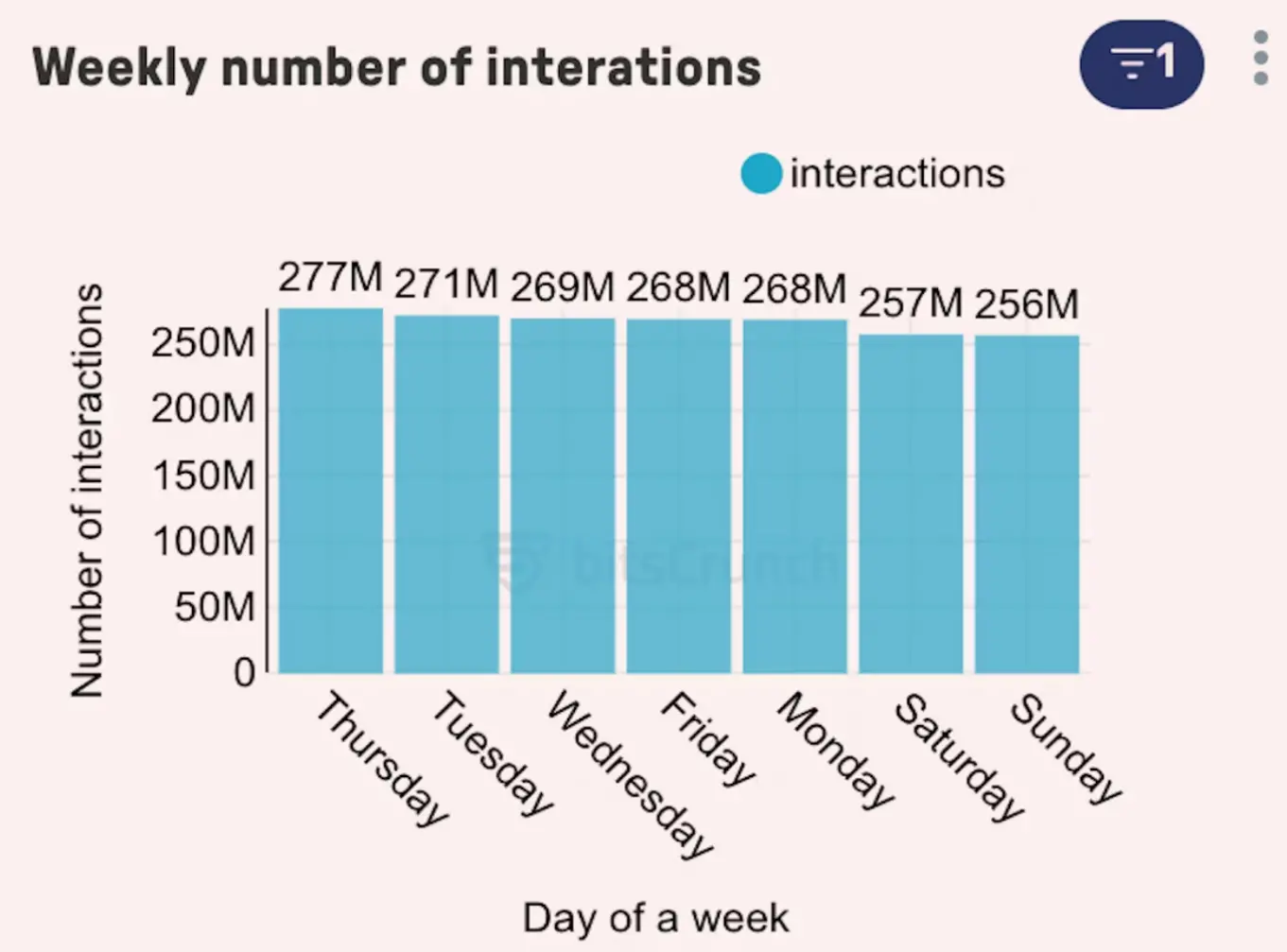
每周的模式显示,星期四是链上交易最活跃的日子,平均约为 2.77 亿次,其次是星期二和星期三。周末的活动明显较低。

注:本文图片来源:bitsCrunch

Lecturas Relacionadas

When Hyperliquid Steals Solana's 'Internet Capital Market' Script

The article "When Hyperliquid Steals Solana's 'Internet Capital Markets' Playbook" discusses Solana's struggles to maintain its "internet capital markets" narrative by 2026. Despite its initial success as a high-performance "Ethereum killer," SOL's price has underperformed, dropping significantly compared to other major cryptocurrencies. Solana's vision of a global, on-chain trading network for all assets is being challenged not primarily by Ethereum, but by Hyperliquid. Hyperliquid, evolving from a perpetual contracts platform into a dedicated financial infrastructure Layer 1, has become a major beneficiary of the shift of derivatives trading from centralized exchanges to on-chain. The article argues that for high-frequency financial trading, a specialized, performance-focused chain like Hyperliquid may be more suitable than a general-purpose ecosystem like Solana. Further compounding Solana's issues was a major $200+ million exploit on its key perpetual protocol, Drift, in April, which damaged market confidence. In response, Solana founder Anatoly Yakovenko heavily promoted the protocol Phoenix as a replacement, boosting its visibility but not its trading volume, which remains far behind leading platforms. Solana supporters have launched a public critique of Hyperliquid's decentralization, pointing to its limited validators and closed-source code. Critics, however, note Solana's own declining validator count and centralization metrics. This strategy has also caused internal friction, with developers of other Solana protocols expressing discontent over the foundation's perceived favoritism towards Phoenix. The conclusion is that Hyperliquid's rise represents a challenge to the "general-purpose blockchain" narrative, proving that the core of a capital market might be a specialized trading engine rather than a broad ecosystem. If Solana cannot regain dominance in derivatives, it risks remaining a "meme coin paradise" while its grand "internet capital markets" ambition slips away.

marsbitHace 12 min(s)

When Hyperliquid Steals Solana's 'Internet Capital Market' Script

marsbitHace 12 min(s)

When Hyperliquid Steals Solana's 'Internet Capital Markets' Playbook

The article discusses how Solana's grand vision of becoming an "Internet Capital Markets" platform is facing significant challenges in 2026, primarily from the unexpected rise of Hyperliquid. Solana's performance has weakened, with its token SOL experiencing the largest price decline among major cryptocurrencies. Its core narrative of building a global, chain-based marketplace for all assets is under pressure both internally and externally. Hyperliquid, originally a perpetual futures exchange, has evolved into a dedicated Layer 1 financial infrastructure network. Its focused, trading-centric approach is attracting capital and challenging the assumption that a "general-purpose" ecosystem like Solana is necessary for a capital market. Hyperliquid's success suggests that for high-frequency trading, superior performance, liquidity, and user experience may be more critical than a broad application ecosystem. Internally, Solana's strategy suffered a blow from a major hack on the Drift Protocol in April, resulting in over $200 million in losses. In response, Solana founder Anatoly Yakovenko has heavily promoted Phoenix as a new decentralized perpetual futures platform on Solana. While this boosted Phoenix's visibility, its trading volume remains far behind leading platforms. Solana's community has launched a rhetorical attack against Hyperliquid, questioning its decentralization due to its limited validator set and closed-source code. Critics, however, point out Solana's own decreasing validator count and increasing centralization of stake. This focus on "decentralization metrics" has also caused internal friction, with other Solana ecosystem developers expressing discontent over the foundation's perceived favoritism towards Phoenix. The article concludes that the rise of Hyperliquid represents a challenge to the "general-purpose blockchain" narrative, proving that an efficient trading engine might be more central to a capital market than a vast ecosystem. If Solana cannot regain dominance in the derivatives space, it risks remaining a "meme coin paradise" rather than achieving its ambition of hosting global assets.

链捕手Hace 19 min(s)

When Hyperliquid Steals Solana's 'Internet Capital Markets' Playbook

链捕手Hace 19 min(s)

Samsung Bets on Mobile HBM: AI Moves from Cloud to Palm, a New Frontier in Semiconductor Investment?

Samsung is betting on bringing high-bandwidth memory (HBM) technology from servers to mobile devices, aiming to enable powerful on-device AI features in smartphones and tablets. This move is driven by the booming AI market, where HBM demand from data centers has fueled Samsung's record profits, with HBM4 already in mass production. By integrating mobile HBM, Samsung seeks to transform user AI experiences—making tasks like image generation and real-time translation faster, seamless, and more private by processing data locally. Strategically, this allows Samsung to leverage its vertical integration in memory, advanced packaging, and Exynos processors to differentiate its Galaxy devices against competitors like Apple and Qualcomm. It also opens a new consumer growth avenue, reducing reliance on volatile server HBM demand alone. The initiative is expected to benefit the broader supply chain, boosting demand for advanced packaging materials, thermal solutions, and other components. While promising, risks include potential delays in mobile HBM mass production beyond 2027, high initial costs, and the cyclical nature of the memory market. Nonetheless, Samsung's push signals a broader industry shift toward hybrid cloud-edge AI computing, positioning it as a key player in defining the future of AI-powered devices and presenting a potential long-term investment theme in semiconductors.

marsbitHace 30 min(s)

Samsung Bets on Mobile HBM: AI Moves from Cloud to Palm, a New Frontier in Semiconductor Investment?

marsbitHace 30 min(s)

Trillion-Dollar Banking Giant Adjusts Portfolio: Buys XRP Heavily, Clears Out Solana

In a significant portfolio rebalancing move, Italian banking giant Intesa Sanpaolo, with $1.1 trillion in assets, has made a notable shift in its cryptocurrency holdings. According to disclosures from Q4 2025 to Q1 2026, the bank's total crypto exposure surged from $100 million to approximately $235 million. The most striking action was its first-time establishment of an XRP position, investing around $18 million through the Grayscale XRP Trust. This marks a milestone as one of the first major European banks to adopt XRP via a regulated investment vehicle. This move is part of a broader, systematic digital asset strategy. The bank also substantially increased its Bitcoin exposure via ETFs and initiated its first Ethereum investment through a staking trust. In a contrasting strategic pivot, Intesa Sanpaolo drastically reduced its Solana holdings by over 99%, nearly exiting its position in a Bitwise Solana staking ETF. This shift is interpreted as reflecting a institutional preference for assets perceived with lower regulatory and operational risk, especially following Solana's network stability issues and improved clarity for XRP after its legal settlements. The bank's actions highlight key drivers for institutional adoption: clearer regulations, the availability of compliant ETF products, and the search for portfolio diversification. This trend signifies crypto's evolving status from a niche experiment to a recognized component of mainstream asset allocation, with institutions favoring gradual, regulated entry points over direct token ownership.

marsbitHace 1 hora(s)

Trillion-Dollar Banking Giant Adjusts Portfolio: Buys XRP Heavily, Clears Out Solana

marsbitHace 1 hora(s)

Base Native Leveraged Prediction Market OmenX Officially Launches on Mainnet

Base-native leveraged prediction market platform OmenX has officially launched on mainnet. It currently supports up to 5x leverage, with plans to increase to 10x based on platform liquidity and market conditions. Unlike traditional prediction markets where users fully collateralize YES/NO positions and wait for settlement, OmenX aims to create a trading platform-like experience. Users can open leveraged positions on event outcomes, and actively trade, adjust, or hedge these positions before the event concludes for greater capital efficiency. Alongside the mainnet launch, OmenX introduced a "Hedge-to-Earn" campaign targeting existing users of other prediction markets (initially Polymarket). This initiative allows users to claim incentives or hedging benefits on OmenX based on their existing positions, aiming to introduce them to leveraged trading and active risk management. OmenX positions itself as a derivatives trading platform for prediction market assets. The team believes that as platforms like Polymarket mainstream prediction markets, event outcomes are becoming a new tradable asset class. The next phase of demand will focus on leverage, liquidity, and advanced trading tools. Post-launch, OmenX plans to expand supported market types, optimize liquidity, and develop APIs and additional trading tools. The team is also in discussions with investors and partners to secure resources for further development.

链捕手Hace 1 hora(s)

Base Native Leveraged Prediction Market OmenX Officially Launches on Mainnet

链捕手Hace 1 hora(s)

Trading

Spot
Futuros
活动图片