6月非农就业数据解读:拯救骑虎难下的美联储于水火之中

币界网Publicado a 2024-07-26Actualizado a 2024-07-26

币界网报道:

一、非农数据(Non-farm Payroll)的概念

美国非农就业数据是美国劳工统计局(Bureau of Labor Statistics,简称BLS)发布的一项重要经济指标,它衡量的是美国在农业以外的行业就业情况。这个数据通常在每个月的第一个星期五公布,是投资者、政策制定者、经济学家以及市场分析师密切关注的指标之一,因为它能够提供关于美国经济健康状况的重要指标。

非农就业数据包括就业人数变化、失业率、平均时薪、劳动参与率等多项数据。

二、非农数据的具体计算口径

BLS基于一系列详细的调查和统计方法编制非农数据。以下是计算非农就业数据的一些关键步骤和方法:

  • 样本调查:BLS通过家庭调查(Current Population Survey,CPS)和企业调查(Current Employment Statistics,CES)来收集数据。家庭调查主要用来计算失业率和劳动参与率,而企业调查则用来计算就业人数和平均时薪。

  • 家庭调查(CPS):CPS是一个月度调查,覆盖大约60,000个家庭,旨在收集有关就业、失业和劳动力参与的信息。通过CPS,BLS能够计算出失业率、劳动参与率等指标。

  • 企业调查(CES):CES是一项于企业样本的调查,旨在收集非农业部门的就业、工时和工资数据。BLS根据该调查计算就业人数的变化和平均时薪。

  • 行业分类:非农就业数据将就业分为不同的行业类别,如制造业、建筑业、服务业等,以便更细致地分析各行业的就业情况。

  • 数据调整:为了确保数据的准确性,BLS会对数据进行季节性调整,以消除季节性因素对就业数据的影响。

三、2024年6月非农数据总结

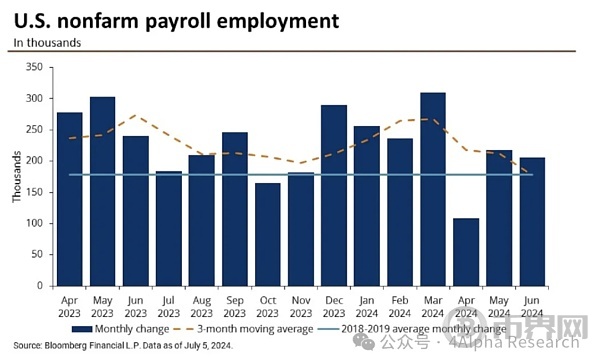
6月非农数据显示,劳动力市场保持稳定,但略有放松。6月美国新增了206,000个工作岗位,符合预期。五月的非农就业人数增长被向下修正,调整为218,000个,而四月份的非农就业人数增长也被向下修正,调整为108,000个。

6月非农就业增长使得三个月的平均就业岗位数增长达到177,000,录得自2021年1月以来的最低增幅。这凸显了美联储紧缩的货币政策正在减缓就业增长的步伐。
m3iKSQhWe0.png

6月非农数据增长主要集中在少数几个领域,政府和医疗保健行业的就业增长几乎占据了总增长的四分之三。政府职位的强劲增长(+70,000)主要由州和地方政府职位的增加(+65,000)所驱动。

私营部门的工资增长在六月份继续放缓,从五月的193,000降至136,000,其中医疗保健和社会援助行业占据了其中的82,000个职位。深入细节来看,六月份商品生产行业的就业人数增加了19,000,建筑行业的强劲增长抵消了制造业就业人数的下降。服务行业在六月份也出现疲软,就业人数增加了117,000,低于五月的181,000。尽管医疗保健行业在六月份取得了强劲增长,但大多数其他服务行业就业增长开始转负。这说明就业市场已经开始温和回调

四、2024年6月非农数据对美联储未来政策影响预期

6月非农就业报告符合美联储的预期目标,即在保证就业市场软着陆和温和降温的前提下维持高利率对通胀的压制,明确2%通胀锚定目标水平和长期预期管理,避免通胀反弹。结合6月CPI超预期降温情形,市场分析业界和衍生品从业员普遍加强了对于9月FOMC美联储降息的预期。

美联储在对待就业数据的态度上一向十分谨慎,由于就业市场冷却会导致国内局势不稳定、民众生活水平降低、消费水平降低,而就业市场过高的热度又会在菲利普斯曲线层面造成通胀压力,美联储在就业议题上常常陷入骑虎难下的两难境地,这也是美联储货币政策调整主要的难点之一。在物价水平全面缓和的背景下,就业市场的温和回调给了美联储更充分的结束高息压制的信心,也给了美联储更多的政策余地。

如果就业市场的冷却更迅速,美联储可能会被迫提前降息以挽救非农和失业率,美国经济已经忍受一年以上的痛苦高息环境可能会由于过早结束,导致美联储压制YCC的努力变为徒劳,无论是美国政界还是美联储都无法接受这样的结局,结合近期回升的能源价格,美国经济未来可能会陷入滞涨的死亡螺旋;

如果非农数据指示就业市场持续火热,对于美联储来说可能也会非常难以处理,可能还要继续延长高利率政策并继续延迟预期的降息时间,导致美元指数持续处于高位,进一步加剧美国政府国债利息支付压力。由于目前处于总统选举期间,美国财政无法采取过激的缩表措施,必须保证拜登政府关于医保、学贷、基建等方面的承诺至少在选举周期内落实。因此,从财政压力的角度,6月非农数据也给了美联储喘息之机,提供了减弱鹰派预期、降息正式提上日程的基础。

END

本文内容仅用于信息分享,不对任何经营与投资行为进行推广与背书,请读者严格遵守所在地区法律法规,不参与任何非法金融行为。不为任何虚拟货币、数字藏品相关的发行、交易与融资等提供交易入口、指引、发行渠道引导等。

4Alpha Research内容未经许可,禁止进行转载、复制等,违者将追究法律责任。

Lecturas Relacionadas

You Bet on the News, the Pros Read the Rules: The True Cognitive Gap in Losing Money on Polymarket

The article explains that the key to profiting on Polymarket, a prediction market platform, lies not just predicting real-world events correctly, but in meticulously understanding the specific rules that govern how each market will be resolved. It illustrates this with examples, such as a market on Venezuela's 2026 leader, where the official rules defining "officially holds" the office overruled the intuitive answer of who was in practical control. Other examples include debates over the definition of a "token" or what constitutes an "agreement." The core argument is that a "reality vs. rules" gap creates pricing discrepancies that savvy traders ("车头" or "whales") exploit. The platform has a formal dispute resolution process managed by UMA token holders to settle ambiguous outcomes. This process involves proposal submission, a challenge window, a discussion period, and a final vote. However, the article highlights a critical flaw in this system compared to a traditional court: the lack of separation between the arbiters (UMA voters) and the interested parties (traders with financial stakes in the outcome). This conflict of interest undermines the discussion phase, leads to herd mentality, and results in opaque final decisions without explanatory rulings. Consequently, the system lacks a body of precedent, making it difficult for users to learn from past disputes. The ultimate takeaway is that success on Polymarket requires a lawyer-like scrutiny of the rules to identify and capitalize on the cognitive gap between how events appear and how they are contractually defined for settlement.

marsbitHace 9 min(s)

You Bet on the News, the Pros Read the Rules: The True Cognitive Gap in Losing Money on Polymarket

marsbitHace 9 min(s)

Will the Fed Still Cut Interest Rates? Tonight's Data Is Crucial

The core debate surrounding the Federal Reserve's potential interest rate cuts is intensifying amid geopolitical conflict and rebounding inflation. The key question is whether high energy prices will cause persistent inflation or weaken consumer demand enough to force the Fed to cut rates. Citigroup presents a bullish case for cuts, arguing that oil supply disruptions from the Strait of Hormuz are temporary and will not lead to lasting inflationary pressure. They point to receding bond yields and oil prices as evidence the market is pricing in a short-lived shock. Citi's data also shows tightening financial conditions, a stabilizing labor market, and healthy tax returns, supporting their view that the path to lower rates remains open. Conversely, Deutsche Bank offers a starkly contrasting, more hawkish outlook. They argue the Fed's current policy is already neutral and expect rates to remain unchanged indefinitely. Their view is based on stalled disinflation progress and a shift toward more hawkish rhetoric from key Fed officials like Waller, who cited risks from prolonged Middle East conflict and tariffs. Other officials, including Williams and Hammack, signaled rates would likely stay on hold for a "considerable time." The market pricing has shifted dramatically, now forecasting zero cuts in 2026. The imminent release of the March retail sales "control group" data is highlighted as a critical test. This metric, which excludes gas station sales, will reveal if high gasoline prices are eroding consumer spending in other areas. A weak reading could support the case for imminent rate cuts, while a strong one would bolster the argument for the Fed to hold steady. This data is pivotal for determining the near-term policy path.

marsbitHace 30 min(s)

Will the Fed Still Cut Interest Rates? Tonight's Data Is Crucial

marsbitHace 30 min(s)

The Second Half of Macro Influencer Fu Peng's Career

Fu Peng, a prominent Chinese macroeconomist and former chief economist of Northeast Securities, has joined Hong Kong-based digital asset management firm Bitfire Group (formerly New Huo Group) as its chief economist. This move, announced in April 2026, triggered an 11% surge in Bitfire's stock price. Fu, known for his accessible macroeconomic commentary and large social media following, will focus on integrating digital assets into global asset allocation frameworks, particularly combining FICC (fixed income, currencies, and commodities) with cryptocurrencies for institutional clients. His career includes roles at Lehman Brothers and Solomon International, with significant influence gained through public communication. However, in late 2024, Fu faced temporary social media bans after a controversial private speech at HSBC on China's economic challenges, though he denied regulatory sanctions. He later left Northeast Securities citing health reasons. Bitfire, a licensed virtual asset manager serving high-net-worth clients, seeks to build trust and attract traditional capital through Fu’s expertise and credibility. The partnership represents a strategic shift for both: Fu enters the crypto sector after a traditional finance peak, while Bitfire aims to leverage his macro framework for institutional adoption. Outcomes remain uncertain regarding capital inflows and compatibility within corporate structure.

marsbitHace 1 hora(s)

The Second Half of Macro Influencer Fu Peng's Career

marsbitHace 1 hora(s)

Trading

Spot
Futuros
活动图片