数据解读:9张图表剖析Blast发展之路

Odaily星球日报Publicado a 2024-06-27Actualizado a 2024-06-27

Resumen

Blast是最快达到20亿美元TVL的链。

原文作者: 1912212.eth,Foresight News
Blast 姗姗来迟,原本定于 5 月末发布空投,近日才正式公布治理代币方案。总供应量为 1000 亿枚,其中 50% 空投给社区,初始空投量为 170 亿枚。此外, 25.5% 分配给核心贡献者, 16.5% 分配给投资者, 8% 分配给 Blast 基金会。作为向去中心化治理结构过渡的一部分,官方表示项目 Twitter、网站和 Blast 协议的治理正在转向基金会控制。
OP 与 Arbitrum 因空投而被受关注,而 ZKsync 则成了「负面典型」。 Blast 自开放其空投申领后,社区口碑也表现得不尽人意。据 Bitget 行情显示,BLAST 现报价 0.025 美元。
Blast 从一开始受到万众瞩目,到如今冷冷清清,一路走来到底发展得怎么样? 9 张数据图为你剖析。
总参与用户数超 156 万,日活已超 15 万
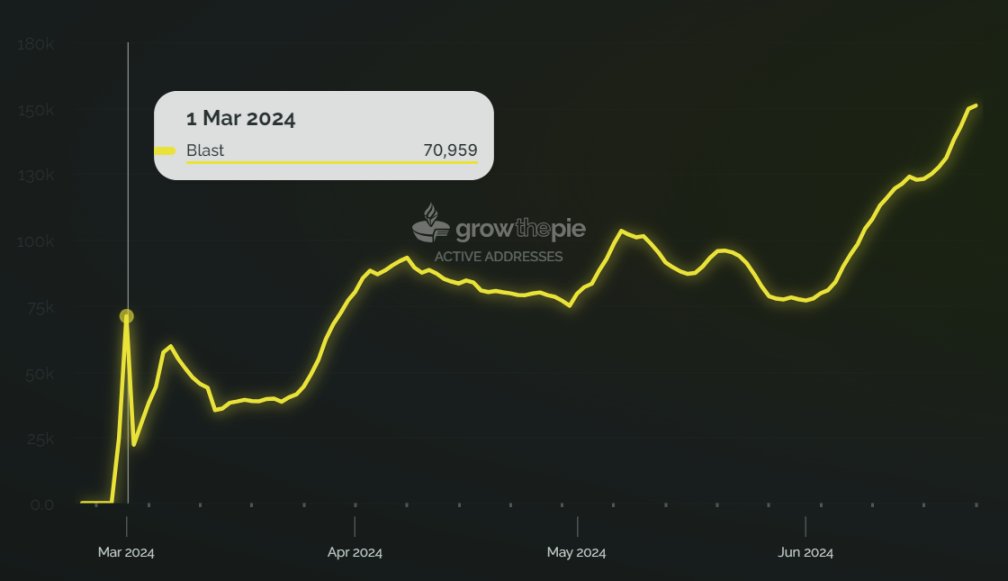
Blast 于今年 1 月中旬上线测试网, 3 月 1 日正式启动主网。据其官网数据显示,现总用户已达到 156 万。
数据解读:9张图表剖析Blast发展之路


在其主网上线当天的日活数,就已超 7 万人次,随后迅速下滑。不过很快便在各类积分活动等激励下,不断往上抬升。6 月 24 日,其日活用户已达 15 万人,超主网上线时的日活人数 2 倍。
总 TVL 创下 34.6 亿美元历史高点
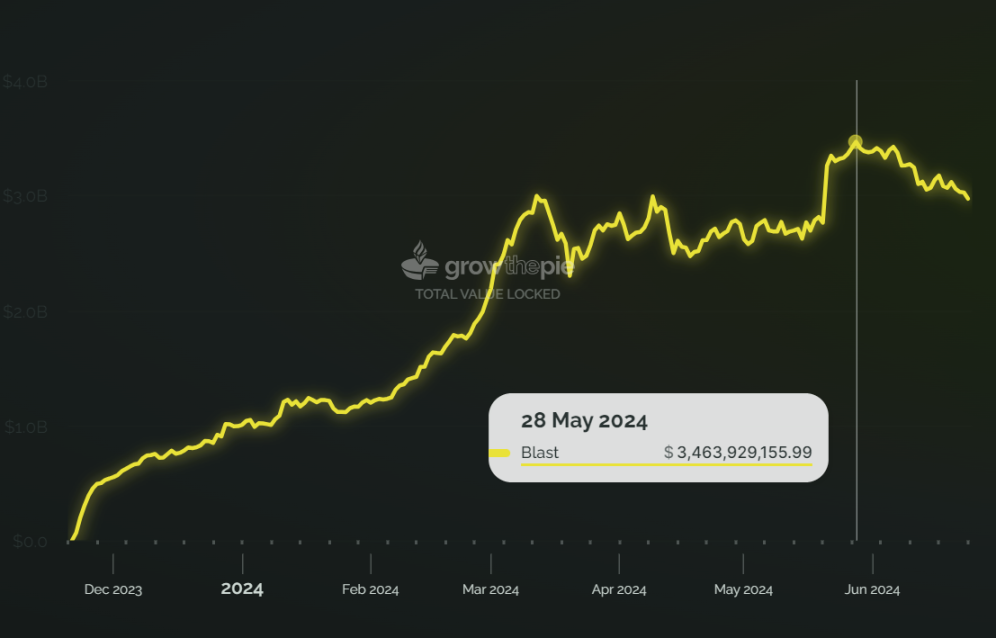
虽然 Blast 测试网在今年 1 月上线,但是其开放质押却是在去年 11 月 21 日,第二日便突破 1 亿美元 TVL, 11 月 24 日即突破 4 亿美元, 12 月 2 日以超 6.67 亿美元成为第三大以太坊 L2,仅次于 Arbitrum 与 OP。12 月 26 日,其 TVL 突破 10 亿美元。
数据解读:9张图表剖析Blast发展之路


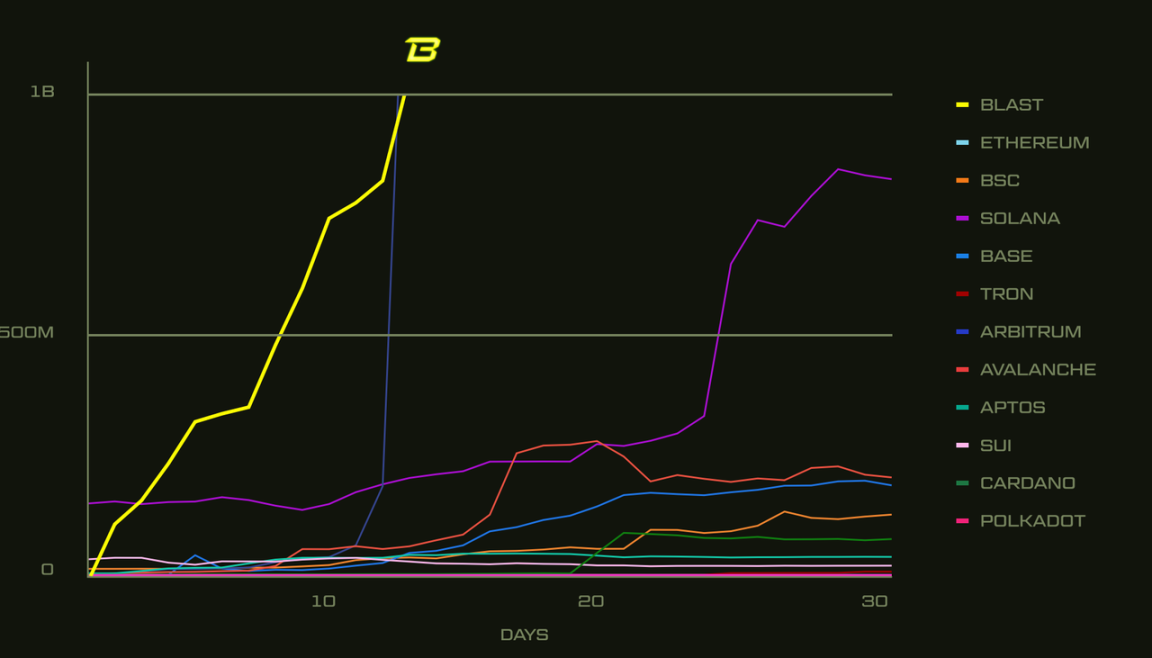
值得一提的是,今年 2 月 25 日 TVL 突破 20 亿,Blast 成为最快达到 20 亿美元 TVL 的链。5 月创下超 34 亿美元的巅峰数值。
数据解读:9张图表剖析Blast发展之路


跨链以太坊超 47.9 万枚
据 Dune 数据显示,自主网上线之后,其通过跨链桥的 ETH 数量达到 479709 枚,占跨链总量的 62.25% ,stETH 占比达 26.81% ,而 USDC、USDT 与 DAI 总占比占 10.94% 。
开放以太坊质押以及主网启动时活跃用户数最多
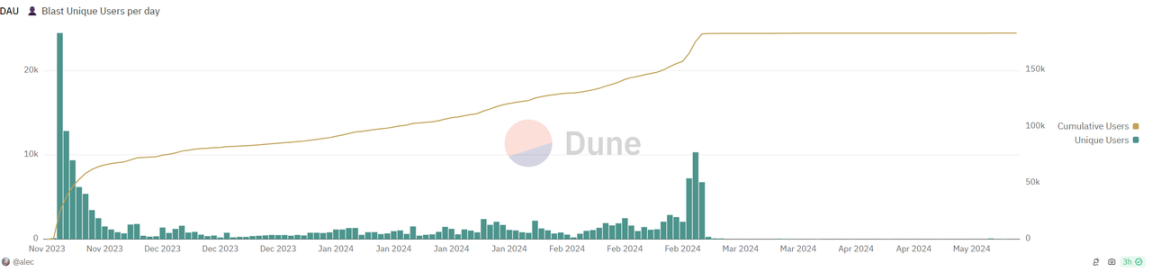
独立用户数在去年年末自开放质押以太坊,以及 2024 年 2 月上线主网后,其活跃数和增量较多。
数据解读:9张图表剖析Blast发展之路


而在主网上线后的累积新用户数则很快达到顶峰。
TOP 10 钱包地址占据总资金的 20.87% 
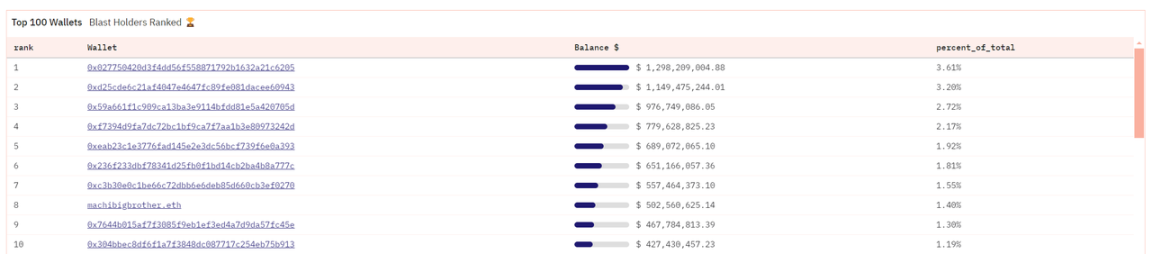
加密世界中,明牌的空投活动总少不了大户的身影。排在第一位的 Blast 大户,单个钱包地址即占 Blast Holder 资金体量的 3.61% 。而排名前 10 的 Blast 持有者代币数量,占总 Blast holder 的 20.87% 。
数据解读:9张图表剖析Blast发展之路


USDB 已成使用量第五,用户持有量第四的稳定币
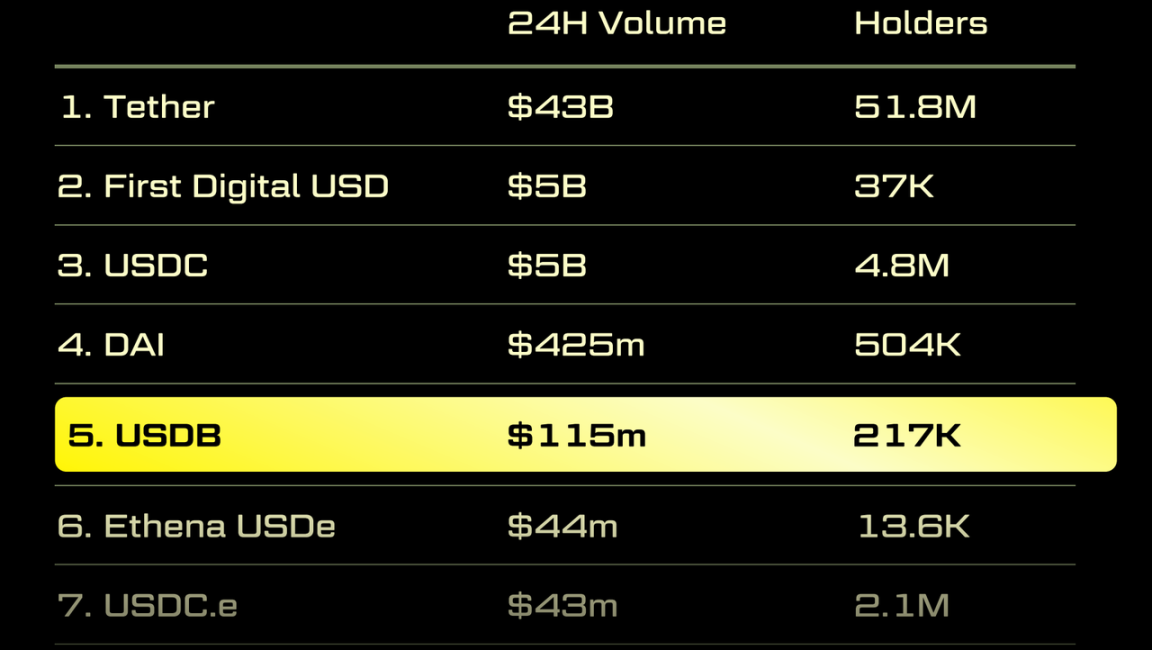
Blast 是有原生稳定币的链,据 6 月 21 日数据显示,USDB 的 24 小时成交额达到 1.15 亿美元,持有数达 21.7 万人,按照活跃度排名第 5 ,其总市值已超 4 亿美元。
数据解读:9张图表剖析Blast发展之路


USDB 与 WETH 收益率排名前三
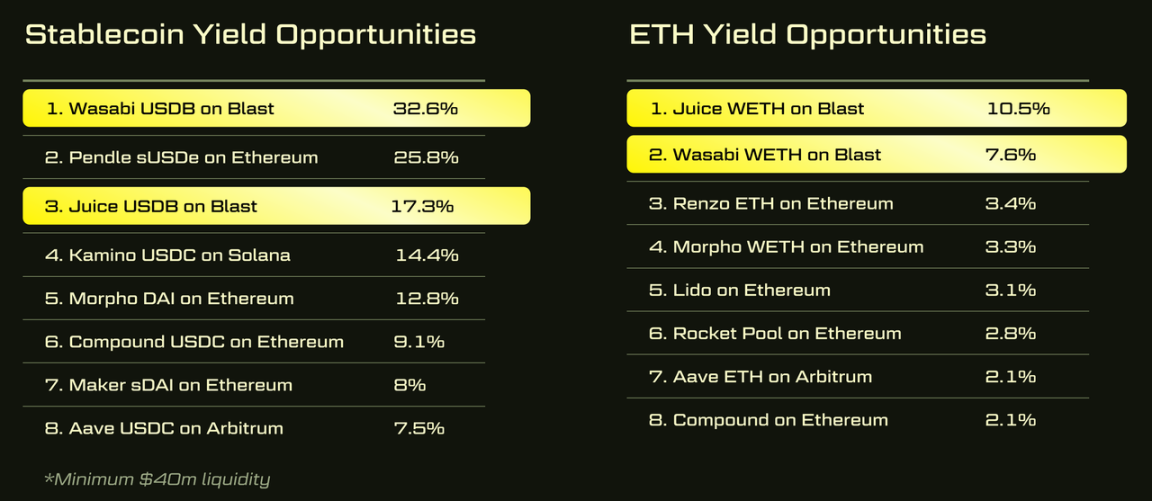
4000 万美元以上的流动性池中,USDB 可在 Blast 收益率达到 17.3 ~ 32.6% 。WETH 则可在 Blast 获取 7.6 ~ 10.5% 的收益率。
数据解读:9张图表剖析Blast发展之路


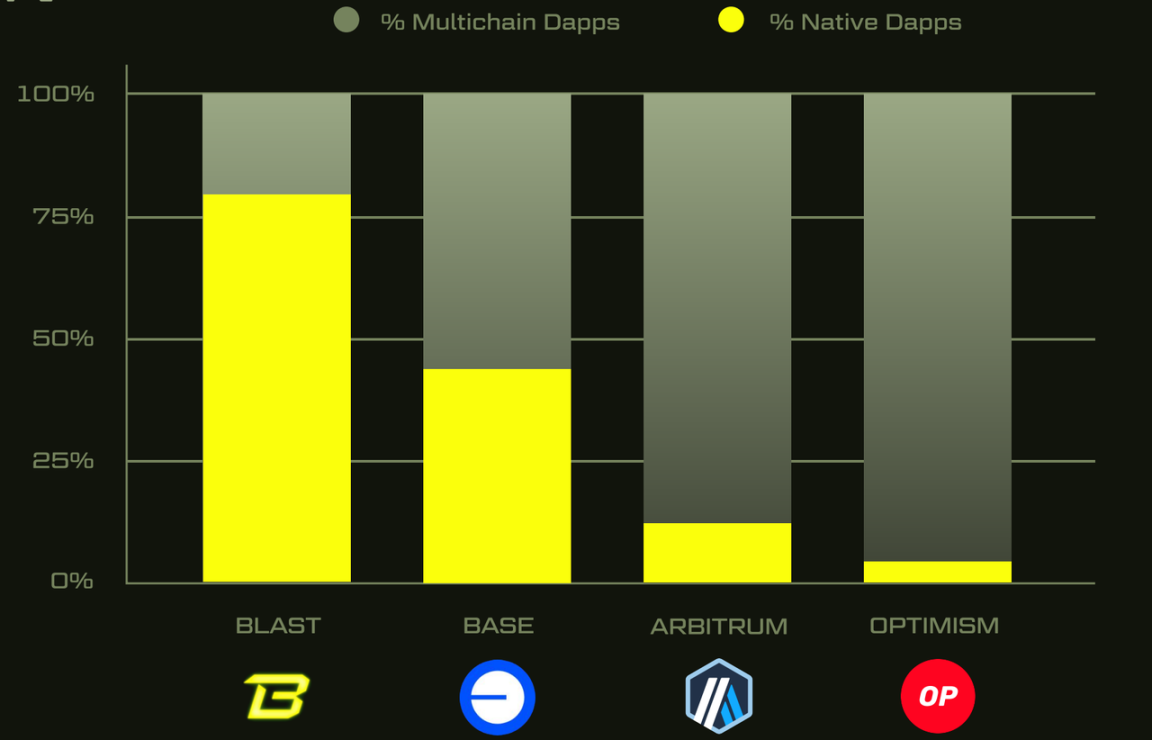
原生 DApp 数量占比数超 75% 
大多 EVM 链中都充斥类似应用,但是 Blast 因为提供原生收益率与 Gas 费用收入分享,其原生 DApp 的数量占比超 75% ,远远多余其他三大 L2。
数据解读:9张图表剖析Blast发展之路


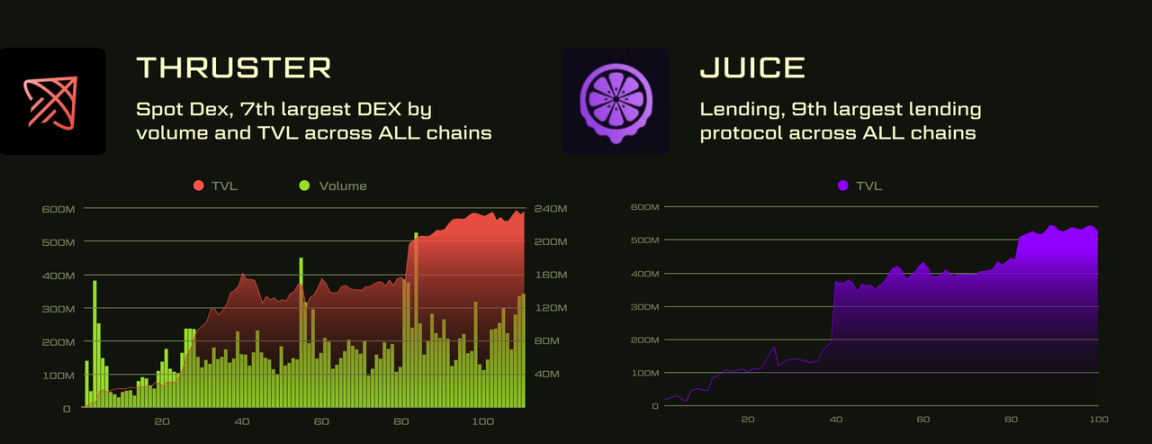
借贷与现货交易两大产品 4 个月内即达到 5 亿美元 TVL
现货交易协议 Thruster 已成第 7 大 DEX 协议,在主网启动 80 天左右其 TVL 就超过 5 亿美元,而另一借贷产品 Juice 则同样在相同时间里达到 5 亿美元,现已成为第 9 大借贷协议。
数据解读:9张图表剖析Blast发展之路


原文链接

Criptos en tendencia

Lecturas Relacionadas

Veterans of the 'Little Smart' Era Return, This Time Leading a Robot Company in a Sprint to an IPO

UTStarcom Veteran Returns: Robot Maker Rushes for IPO On August 24, UDI Robot passed the listing hearing for the Hong Kong Stock Exchange main board. Known for its delivery robots in hotels and KTVs, the company was founded in 2013 by Lu Ying, former CEO of the once-dominant "PHS" phone maker UTStarcom, and other ex-colleagues. UDI has five main product series, including indoor delivery, outdoor delivery, and cleaning robots. Significantly, its business model is shifting from hardware sales to recurring service revenue. In 2025, AI vision model solutions contributed 37.5% of its total revenue of ~318 million RMB, while robot product sales accounted for 42.5%. However, its overall business remains unprofitable, with a cumulative net loss of 5.44 billion RMB from 2023 to Q1 2026. A key challenge is low hardware毛利率 (gross margin for robot products was 8.3% in 2025). Despite losses common in the robotics sector, UDI's deficit is narrowing. It has raised ~989 million RMB over 13 pre-IPO rounds from investors including Alibaba (Ele.me, Yunfeng Capital), Legend Capital, SenseTime, and hotel chains like Huazhu. The founding team, largely from UTStarcom, collectively controls 33.40% of the company. UDI ranks as China's third-largest commercial service robotics company with an 8.9% market share in 2025. Its IPO, sought via Hong Kong's special tech chapter 18C, aims to fund R&D, expansion, and working capital, marking a comeback attempt for the "PHS" veterans in a new technological era.

marsbitHace 1 min(s)

Veterans of the 'Little Smart' Era Return, This Time Leading a Robot Company in a Sprint to an IPO

marsbitHace 1 min(s)

Zuck refuses to give up, secretly develops one of his own called 'Hatch', but the model uses Claude...

Meta, led by Mark Zuckerberg, is developing a new AI agent platform called "Hatch" after its reported unsuccessful attempt to acquire Manus. Described as a "consumer version of OpenClaw," Hatch aims to automate tasks across various digital services. The platform is trained on simulated versions of services like DoorDash, Etsy, Reddit, Yelp, and Outlook, and is deeply integrated with Meta's own ecosystem, including Instagram, Facebook, and WhatsApp. Its goal is to enable end-to-end task completion, such as identifying a product in a social media post, comparing prices, and facilitating purchases. During development, Hatch is reportedly relying on Anthropic's Claude model. However, Meta plans to transition to its proprietary model, Muse Spark, for the official launch, with a newer model named Watermelon expected in October. This phased migration highlights potential technical challenges, as switching core models can affect performance and user experience. Priced at up to $199.99 per month, Hatch targets consumers willing to pay for significant time savings. Its key advantage is default distribution within Meta's vast suite of apps, potentially giving it access to rich user context. However, it faces major hurdles in real-world reliability, needing to handle complex, dynamic web environments, authentication changes, and anti-bot measures that differ from its controlled training simulations. The move represents Meta's strategic push to monetize AI directly beyond its core advertising business.

marsbitHace 3 min(s)

Zuck refuses to give up, secretly develops one of his own called 'Hatch', but the model uses Claude...

marsbitHace 3 min(s)

IOSG: U.S. Bonds, AI, and Inflation Can't All Be Had. Which Side Should BTC Bet On?

**Title: IOSG: Can't Have It All – Treasury Bonds, AI, and Inflation. Where Should BTC Bet?** **Core Thesis:** Washington is likely to prioritize stabilizing the Treasury market and sustaining the AI investment cycle, accepting higher inflation for longer as the trade-off. This creates sustained tailwinds for both gold and Bitcoin by injecting liquidity and shifting duration risk away from private balance sheets. **Key Issue:** The critical macro price is no longer the Fed funds rate, but the yield investors demand to hold long-term US Treasuries. Recent surges in 10-year and 30-year yields stem from a combination of persistent inflation risks, heavy fiscal supply, thinning demand for duration, and new competition for capital from massive AI infrastructure investments. **The Trilemma:** The US faces a difficult choice between controlling inflation, maintaining Treasury market stability, and fostering the AI growth cycle. Political pressure suggests inflation control is the most likely sacrifice. **Treasury's Response:** Measures by Treasury Secretary Besant focus on defending the bond market: supporting the Yen to prevent forced Japanese Treasury sales, increasing long-end liquidity via repos (effectively shortening government debt maturity), and a potential shift toward more short-term bill issuance. This could generate significant liquidity, reigniting "currency debasement" trades. **Gold's Role:** Gold's ~90% surge since mid-2024 is not just an inflation hedge but a bet on monetary debasement as a politically viable path out of the debt cycle, driven by declining dollar trust. **Bitcoin's Positioning:** Bitcoin has historically failed to correlate with gold during "debasement" rallies. However, its recent strong performance alongside Treasury's liquidity actions suggests the market may be treating it as a "stealth QE" trade—a scenario where crypto assets typically thrive amid expanding global liquidity. For BTC to firmly join the "debasement hedge" category, this correlation needs to persist. **Conclusion & Risks:** The framework suggests that preserving market stability and the AI cycle will likely mean shorter debt maturity,常态化 liquidity backstops, and tolerance for higher inflation—favorable for gold and BTC. This outlook would be undermined if inflation falls toward 2%, a credible fiscal path emerges, AI becomes self-funding, or private demand absorbs debt without higher term premiums. The key question is which corner of the trilemma breaks first; accelerated "duration transfer" by the Treasury would mean a longer tailwind for Bitcoin.

marsbitHace 18 min(s)

IOSG: U.S. Bonds, AI, and Inflation Can't All Be Had. Which Side Should BTC Bet On?

marsbitHace 18 min(s)

How 5G Will Be Launched in Russia: The Digital Ministry's Proposal and the Roadmap to 2035

Russia's Ministry of Digital Development has proposed a plan for launching 5G networks. It allows the "Big Four" mobile operators (Beeline, Megafon, MTS, T2) to deploy 5G on existing 4G/LTE base stations and frequencies, and will allocate them the new 4.63–4.99 GHz band. A key element is "technological neutrality," permitting the use of foreign equipment until September 2026. The new 4.63–4.99 GHz band is intended for more advanced services and industrial applications. However, a phased transition to Russian-made base stations will begin in 2027, with a target of at least 50% domestic equipment by 2030. The rollout timeline aims for 5G in cities with over 1 million people by the end of 2027, expanding to 84 cities by 2035. Initial "5G Ready" service, operating over existing infrastructure, will offer minimal speed improvements. Significant speed gains (4-10x over LTE) will require the new band and corresponding equipment. The plan addresses long-standing regulatory delays, including the military's hold on the global standard 3.4–3.8 GHz band. This forced Russia to adopt the 4.63–4.99 GHz range, overlapping with a Chinese band, making Chinese equipment a potential transitional solution. The success of the rollout will depend on equipment supply and the pace of production localization, while a challenge lies in smartphone compatibility with this non-standard frequency band.

cryptonews.ruHace 2 hora(s)

How 5G Will Be Launched in Russia: The Digital Ministry's Proposal and the Roadmap to 2035

cryptonews.ruHace 2 hora(s)

The Federal Reserve Bank of Dallas Announces a Colossal $700 Billion Allocation! How Will This Affect Bitcoin?

The Federal Reserve Bank of Dallas warns that the growing adoption of tokenized deposits in the banking sector could pose unforeseen risks to the financial system. Tokenized deposits, which transfer traditional bank deposits to blockchain infrastructure, offer features like instant settlement and programmable payments. While issued by regulated banks and maintaining deposit characteristics, they could enable customers to move funds between banks much faster in search of higher yields. This would significantly weaken banks' liquidity management and lending capacity. The Fed's analysis estimates that an increase in deposit interest rate sensitivity by 10% could reduce the interest rate risk banks can bear by approximately $700 billion over ten years. Similarly, a 10% shortening of the average deposit maturity could reduce the banking system's capacity to convert deposits into loans by about $580 billion. This acceleration of deposit movement could force banks to rely on more expensive wholesale funding, increasing borrowing costs for consumers and businesses and potentially making traditional banks resemble non-bank financial institutions. While the report does not directly address Bitcoin, the described shifts could have long-term implications. Firstly, the tokenization of deposits by banks could promote institutional adoption of blockchain-based financial infrastructure, indirectly legitimizing digital asset classes like Bitcoin. Secondly, faster-moving deposits and resulting higher funding costs could increase the price of liquidity in the financial system. This could create near-term headwinds for risk assets, including Bitcoin, due to tighter financial conditions and potential selling pressure. The report concludes that widespread adoption of this technology could impact many areas, from payment systems to monetary policy transmission mechanisms.

cryptonews.ruHace 3 hora(s)

The Federal Reserve Bank of Dallas Announces a Colossal $700 Billion Allocation! How Will This Affect Bitcoin?

cryptonews.ruHace 3 hora(s)

Trading

Spot

Artículos destacados

Cómo comprar BLAST

¡Bienvenido a HTX.com! Hemos hecho que comprar Blast (BLAST) sea simple y conveniente. Sigue nuestra guía paso a paso para iniciar tu viaje de criptos.Paso 1: crea tu cuenta HTXUtiliza tu correo electrónico o número de teléfono para registrarte y obtener una cuenta gratuita en HTX. Experimenta un proceso de registro sin complicaciones y desbloquea todas las funciones.Obtener mi cuentaPaso 2: ve a Comprar cripto y elige tu método de pagoTarjeta de crédito/débito: usa tu Visa o Mastercard para comprar Blast (BLAST) al instante.Saldo: utiliza fondos del saldo de tu cuenta HTX para tradear sin problemas.Terceros: hemos agregado métodos de pago populares como Google Pay y Apple Pay para mejorar la comodidad.P2P: tradear directamente con otros usuarios en HTX.Over-the-Counter (OTC): ofrecemos servicios personalizados y tipos de cambio competitivos para los traders.Paso 3: guarda tu Blast (BLAST)Después de comprar tu Blast (BLAST), guárdalo en tu cuenta HTX. Alternativamente, puedes enviarlo a otro lugar mediante transferencia blockchain o utilizarlo para tradear otras criptomonedas.Paso 4: tradear Blast (BLAST)Tradear fácilmente con Blast (BLAST) en HTX's mercado spot. Simplemente accede a tu cuenta, selecciona tu par de trading, ejecuta tus trades y monitorea en tiempo real. Ofrecemos una experiencia fácil de usar tanto para principiantes como para traders experimentados.

170 Vistas totalesPublicado en 2024.12.11Actualizado en 2026.06.02

Cómo comprar BLAST

Discusiones

Bienvenido a la comunidad de HTX. Aquí puedes mantenerte informado sobre los últimos desarrollos de la plataforma y acceder a análisis profesionales del mercado. A continuación se presentan las opiniones de los usuarios sobre el precio de BLAST (BLAST).

活动图片