2026 Opening with Millions in Profit: 'God of War' Vida Reviews the Entire Trading Process of the BROCCOLI714 Incident

比推Publicado a 2026-01-01Actualizado a 2026-01-01

Resumen

In January 2026, crypto trader Vida profited over $1 million during the BROCCOLI714 incident, which involved a suspected hacked market maker account on Binance. Vida’s pre-existing $200,000 long position in BROCCOLI714 and a $500,000 funding rate arbitrage position were already in place. Alert systems triggered when the token’s price surged abnormally and a massive spot-contract price gap emerged. Recognizing the order book showed a highly unusual $26 million in buy orders—indicating a hack or system error rather than legitimate market activity—Vida quickly closed his arbitrage positions for a $300,000 gain. He then capitalized on the volatility by adding long positions in Binance perpetual contracts during a brief “reduce-only” lift and later selling his holdings for $1.5 million as signs of the attacker’s withdrawal emerged. Anticipating a crash once Binance risk controls intervened, Vida opened $400,000 in short positions around $0.065 and closed near $0.02, further boosting profits. Key factors included his automated alert systems, real-time order book analysis, collaboration with other traders, and correctly predicting the attacker’s exit strategy.

Vida : Born after 2000, founder of Equation News, skilled in program trading. He has shared stories of making tens of millions of dollars in the crypto market.

Preliminary Context: At 01:23 AM Beijing Time on January 1, 2026, Equation News monitored: A market maker's Binance account was highly suspected to be compromised. The potential attacker was疑似 using approximately $10 million to $20 million from the account to集中 pump the price of the BROCCOLI714-USDT trading pair on the Binance spot market.

Below is the full text by Vida:

《Review: Making $1 Million in the Recent BROCCOLI714 Hack Incident》

Preconditions and Infrastructure:

- I had a long-term accumulated position of $200,000 in BROCCOLI714 at a cost of 0.016, purchased around early November this year. It included both spot and contract holdings. After buying, I was trapped and too afraid to even look at it.

- The market maker's manipulation style in October-November was to rapidly pump the price within a few hours and then immediately dump with a large bearish candle. So, I set up an alert for my small-cap holdings that would wake me up if the price increased by over 30% within 1800 seconds.

- I also had a Binance perpetual contract funding rate arbitrage position for BROCCOLI714USDT with an average entry price of around 0.015 and a size of $500,000.

When the huge spot-contract price disparity occurred: My short-term surge alert program and my spot-contract spread alert program were both疯狂 alarming > prompting me to focus fully and rush to my computer to start working.

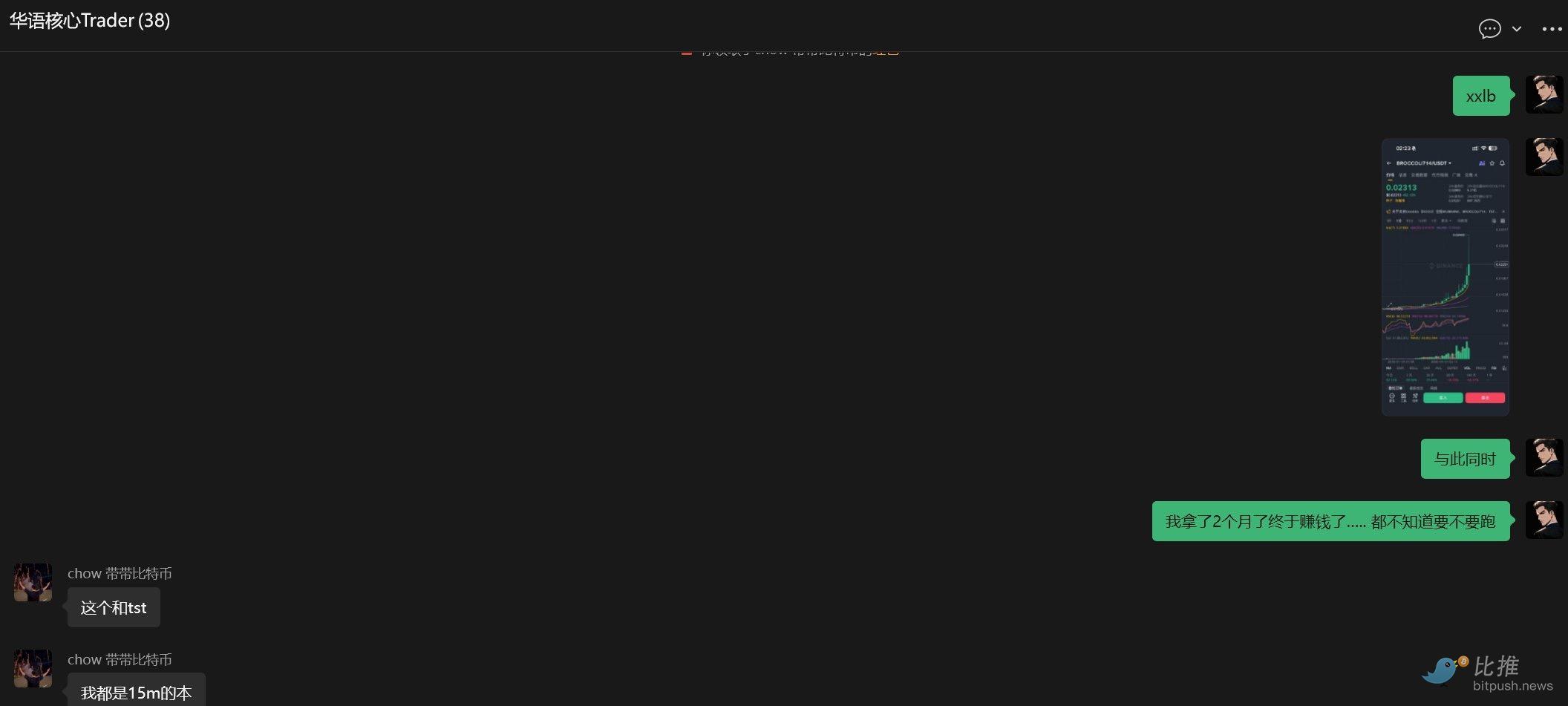
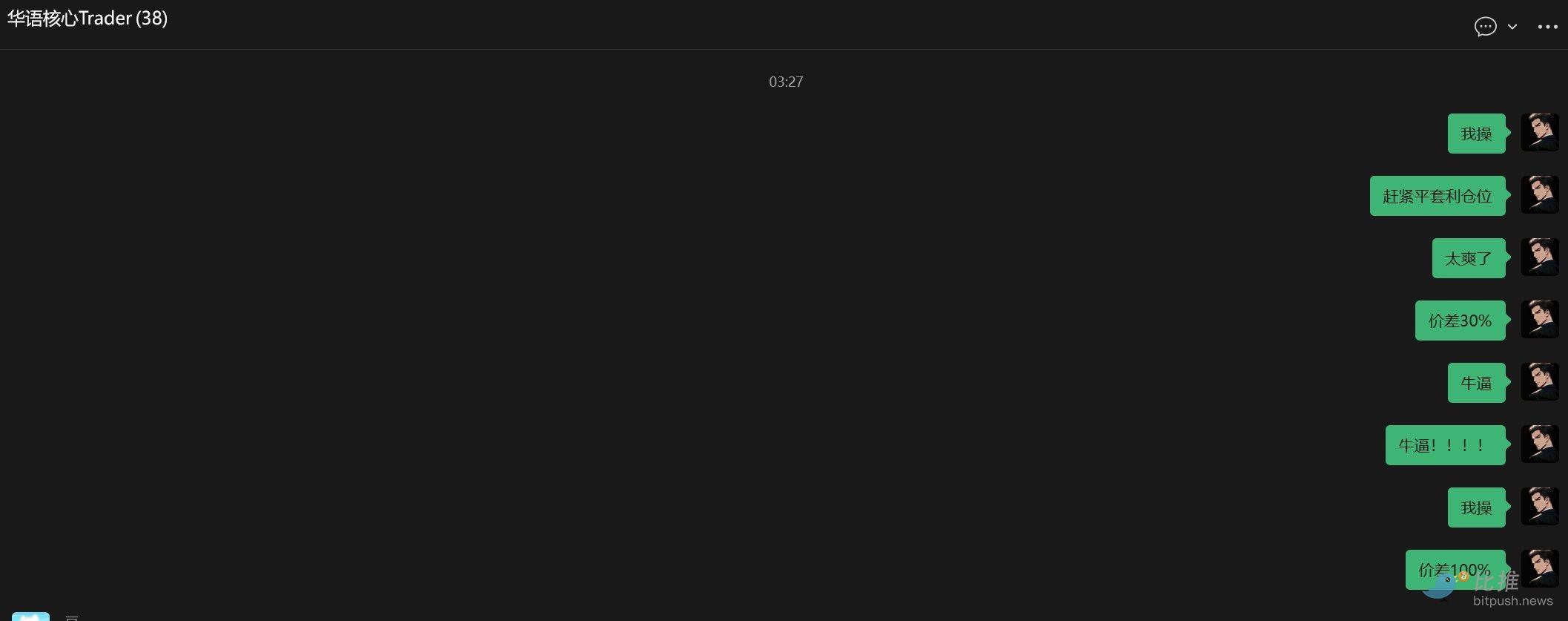
I第一时间 mentioned this situation in a core Chinese group on带带:

- My first reaction was to quickly close my funding rate arbitrage position. Because my original $500,000 arbitrage hedge position had become $800,000 in spot value and $500,000 in contracts. I immediately closed all arbitrage positions to lock in a profit of $300,000.

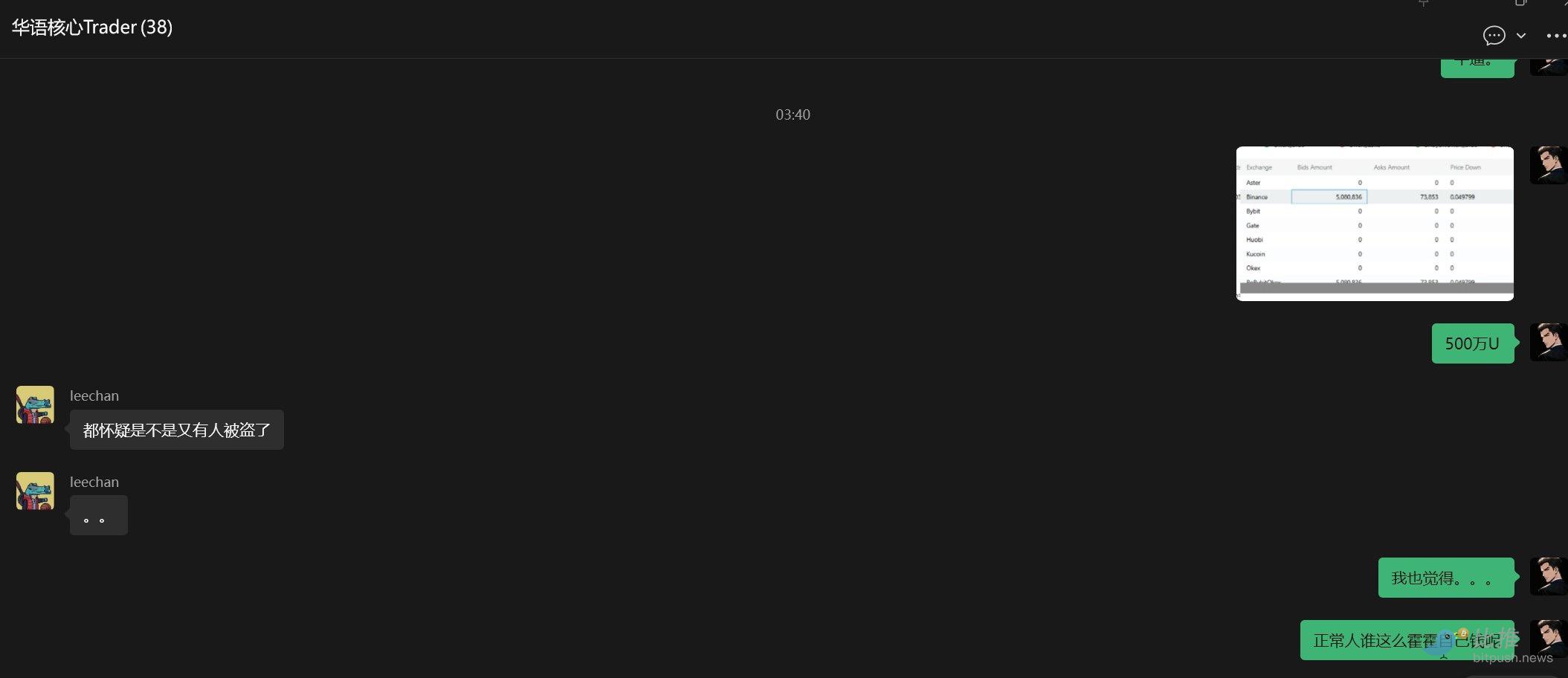
– But upon second thought, it felt very反常 because historically, no market maker would pump the spot market so violently regardless of the spread. I took a look at the order book depth and was震惊 to find that the bid-side 10% depth on Binance spot had $5 million in buy orders, while the contract side's bid 10% depth was only $50,000. Someone suggested a suspected Binance account hack, which I also found reasonable.

– I looked at the order book on the Binance main site again and was shocked to find that for BROCCOLI714, a coin with a market cap of $40m at the time, there were $26 million in bid orders. From this, I inferred that it must be either a hacked account or a market maker program bug, because no market maker would be foolish enough to play charity like this in the spot market.
- Seeing that the hacker had $26 million in ammunition on the spot order book, I knew his goal was to pump the spot market > lift the contract price > exit his position on the contracts.

So I monitored the changes in Binance's order book on one screen. I knew that as long as the hacker didn't withdraw the $20 million in buy orders on the spot market, the price of BROCCOLI714 would keep rising.

My first thought at this point was to go long on Binance contracts, but I found that the Binance contracts had already triggered the "circuit breaker protection mechanism" (reduce-only mode).

At that time, BROCCOLI spot was already at 0.07, while Binance contracts were capped at 0.038 by the circuit breaker mechanism, and Bybit contracts had risen to 0.055. So I chose to attempt a long position on the Binance BROCCOLI714USDT perpetual contract every 5-10 seconds on my trading terminal. If the order succeeded, it meant the circuit breaker period was over, meaning the Binance contract would pump.

I successfully蹲守到 this opportunity and added approximately $200,000 in long positions at a contract entry cost of 0.046.
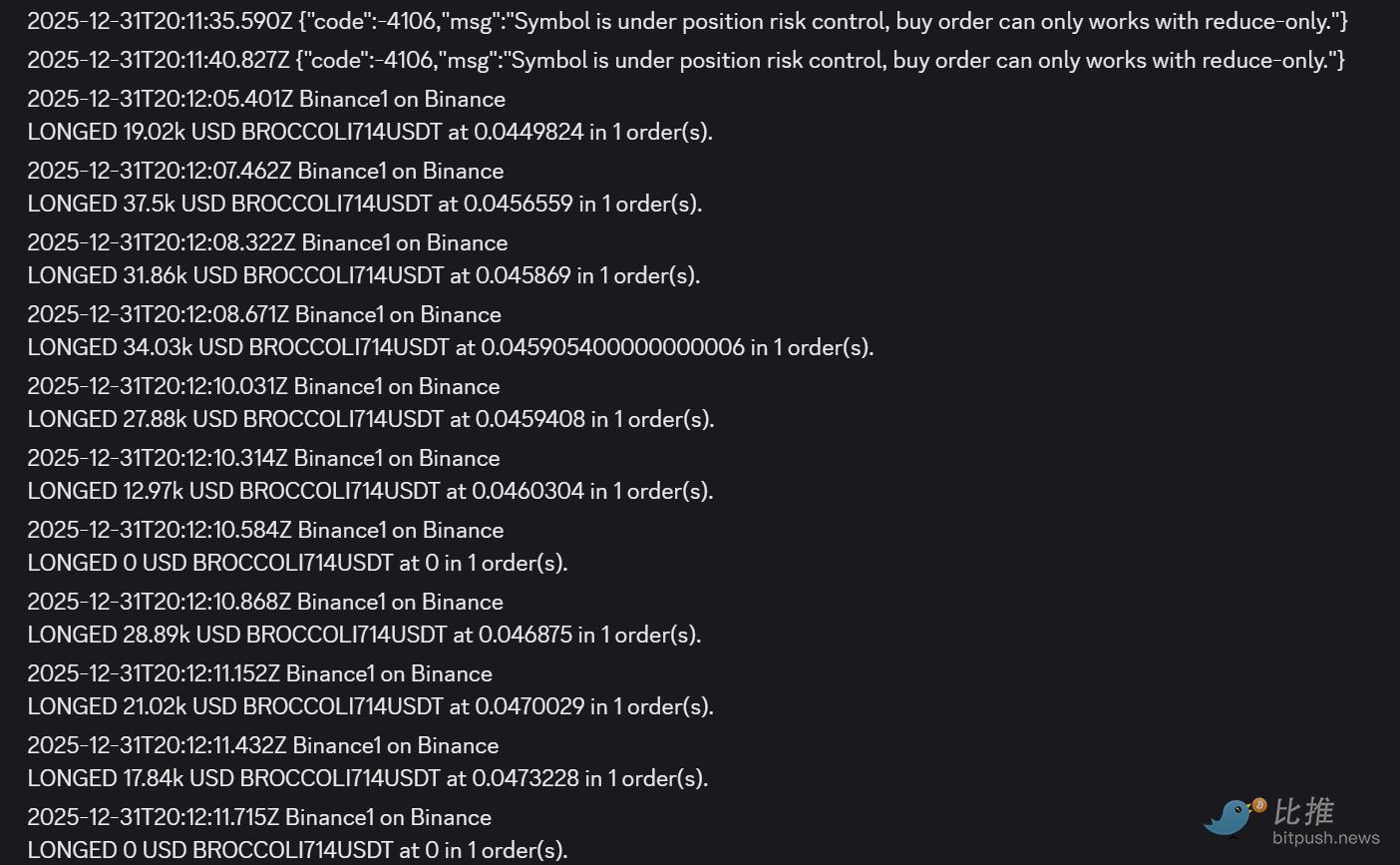
- I knew this incident was必然 caused by a hacker or a market maker program bug, and the short-term surge was too high. The final outcome would inevitably be a complete mess.

So I kept watching the Binance spot order book.

The hacker withdrew his orders once midway, leading me to believe he had been sanctioned by Binance's risk control department. So, at Beijing Time 2026-01-01 04:20:52.732, I started using my trading program to疯狂 sell > liquidate all my previously held + later added long BROCCOLI714 spot and contract positions regardless of cost.

My original $200,000 accumulated position + the later added $200,000 roughly cashed out to $1.5 million. (A lot of the original accumulated position was opened in the contract market, so I didn't capture as much premium)

After being scared off by the hacker's withdrawal of buy orders at 4:21, the不讲武德 hacker挂回 the buy orders about 1 minute later and directly pumped the price to 0.15.

But I knew he would eventually be sanctioned by Binance's risk control department. And once his account was risk-controlled > bids withdrawn > broccoli would crash, it was just that the staff might be lazy at 1.1 AM so he hadn't been risk-controlled yet.

So I kept a close eye on the order book.

Later, at 4:31, I noticed the hacker really withdrew all the bids. At 4:32, they were completely withdrawn. And this time, they didn't reappear for a long time + group friends said someone probably contacted Binance tech, and he was likely sanctioned.

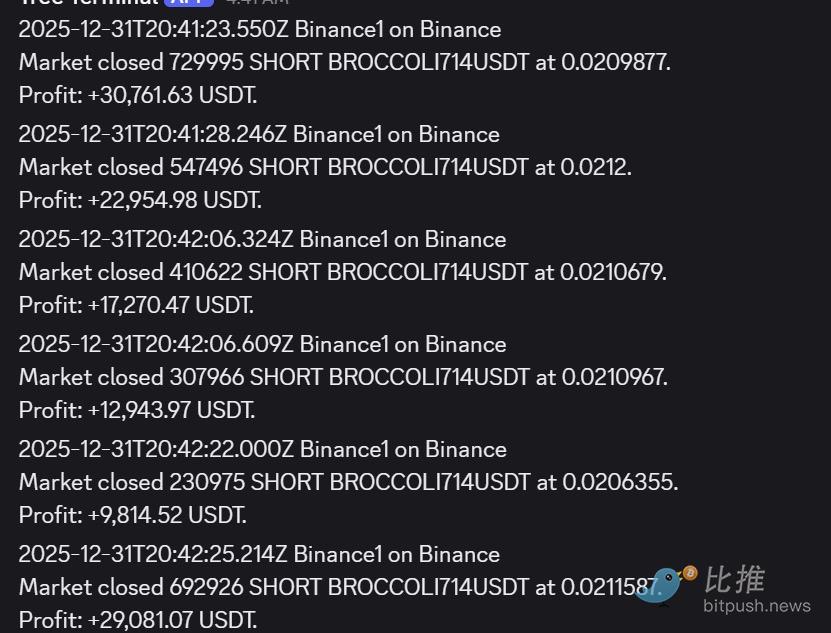
So I started shorting. I opened roughly $400,000 in short positions on Binance contracts at an average cost of around 0.065. The final closing price was approximately 0.02.
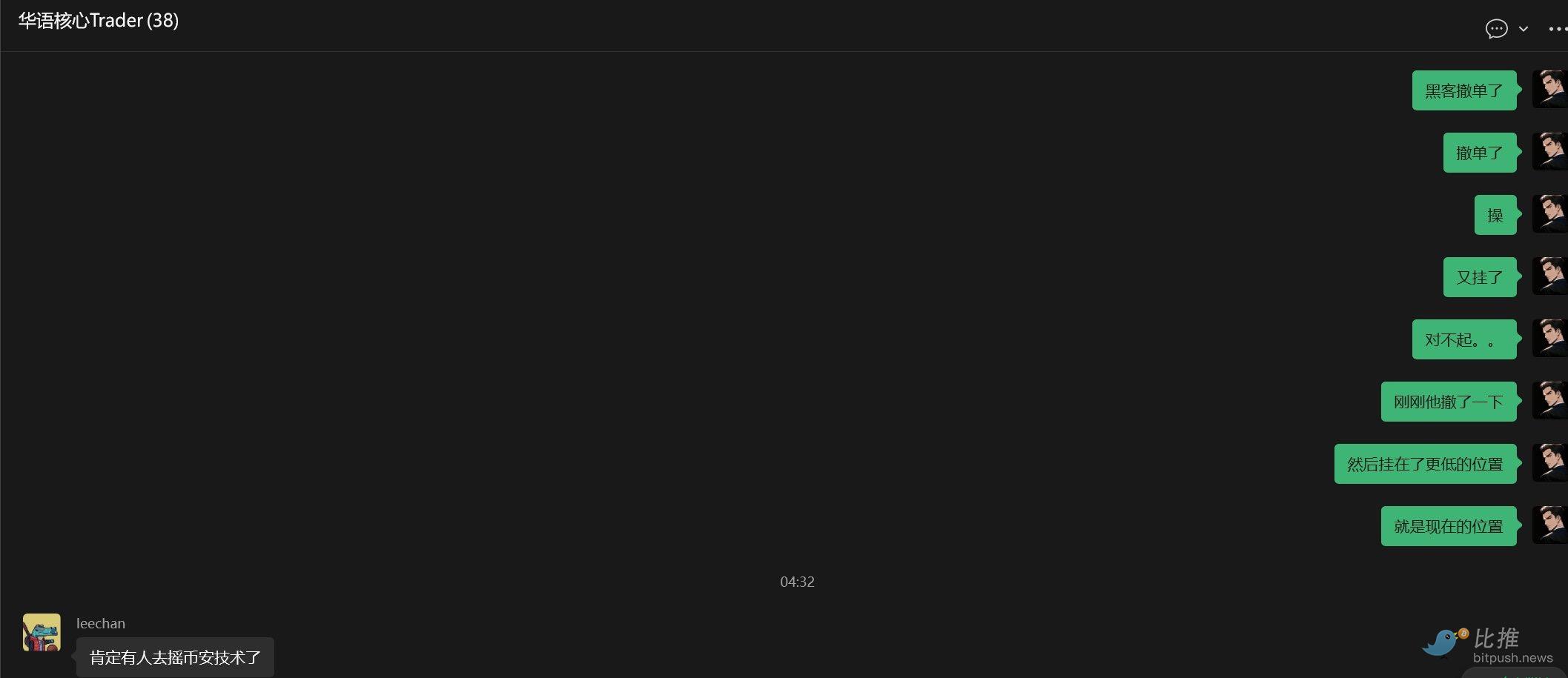
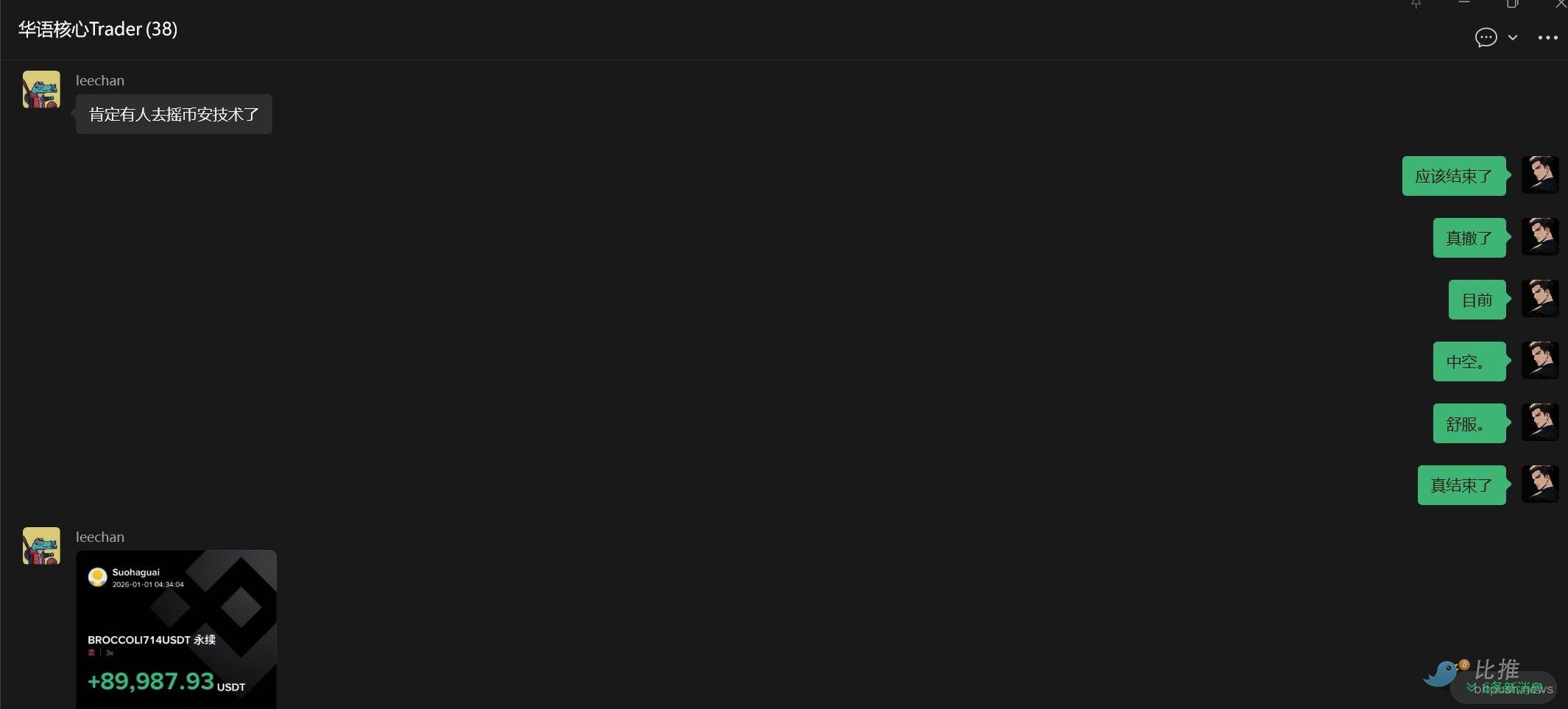
Revisiting why I was able to seize this opportunity:

1. Price anomaly alerts for small-cap strategies
- I set up short-term price surge alerts for small-cap strategies. As long as a held small-cap coin experiences an ultra-large price increase in a short time, it triggers a mandatory alert, 100% guaranteed to wake me up. – In the funding rate arbitrage strategy, I also set up monitoring: once a huge spread between spot and contract is detected, it triggers a mandatory alert.

2. Identifying反常 price action and verifying the order book
When I saw clearly反常 price action, the first thing I did was look at the order book to judge how much ammunition the "market maker" actually had. The result: For a coin with only a $30 million market cap, there were $20 million USDT in bids on the Binance spot side. From this, I judged this couldn't be normal market maker manipulation, but more like hacker behavior or a market maker's system bug (no market maker would pump the spot so recklessly and foolishly regardless of cost).

3. Still need to communicate more with experts. Brainstorming among several experts often helps figure out the entire剧本玩法 in the first moment.

4. I was very clear about the second phase玩法:
Wait for the hacker to be sanctioned by Binance's risk control department and withdraw the bid orders, then蹲守 this opportunity to short. So after completing the first phase of selling, I kept staring at the order book, waiting for this opportunity to appear. I waited over ten minutes and really managed to蹲守到 it.

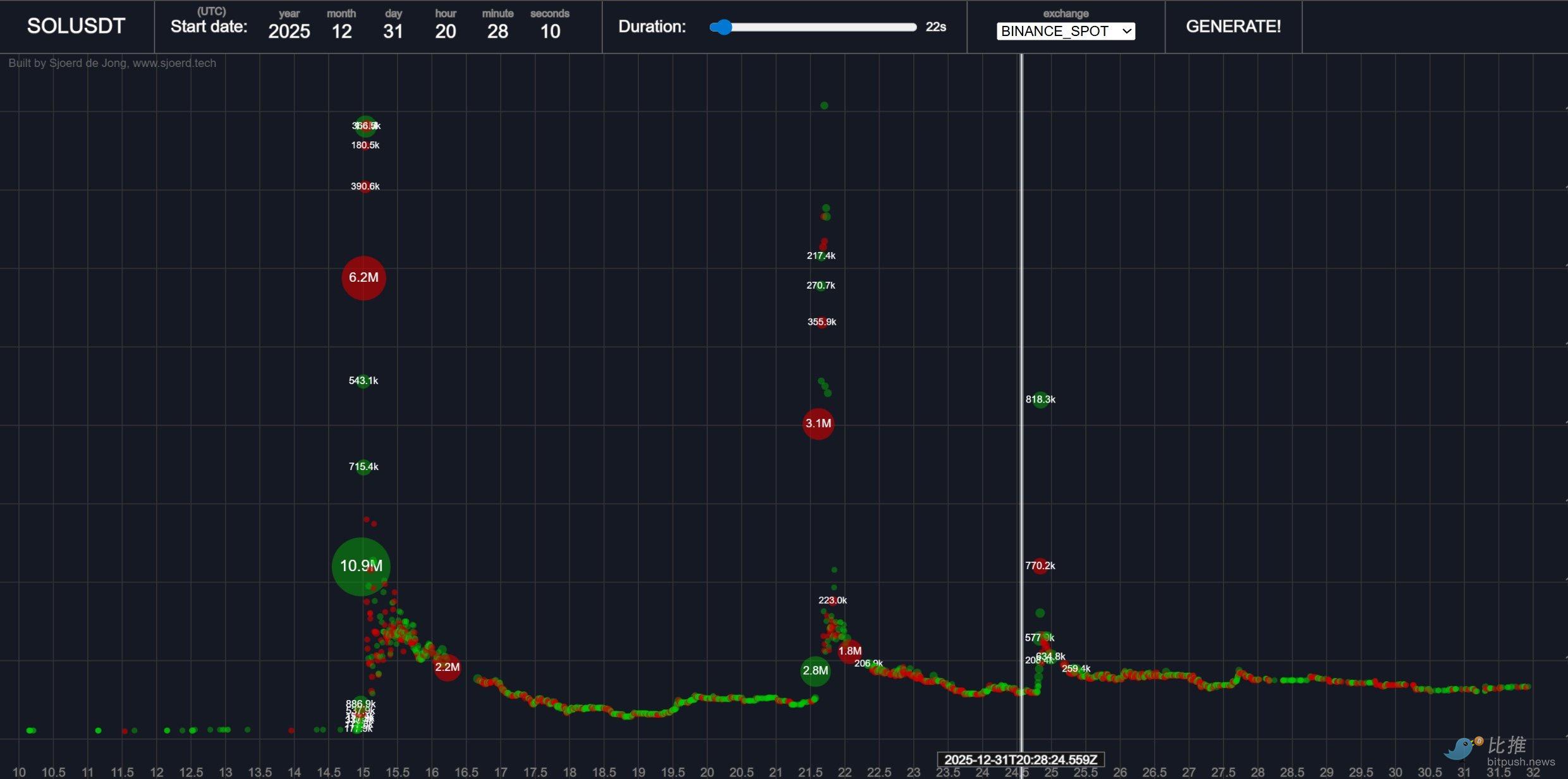
One behavior made me guess the BROCCOLI714 hacker was probably wrapping up, because at Beijing Time 4:28:15, he不计成本 bought SOLUSDT spot, pumping it by about 5% >>> which triggered my pre-set alert again, letting me know.

I guessed that his account might have been partially restricted by Binance from placing new orders in the BROCCOLI714 market, so he狗急跳墙 and bought SOL instead.

结果真的 (Sure enough), 3 minutes later the BROCCOLI price collapsed.

Twitter:https://twitter.com/BitpushNewsCN

Bitpush TG Discussion Group:https://t.me/BitPushCommunity

Bitpush TG Subscription: https://t.me/bitpush

Original article link:https://www.bitpush.news/articles/7599510

Preguntas relacionadas

QWhat was the initial position and cost basis of Vida's long-term BROCCOLI714 holdings?

AVida had a long-term BROCCOLI714 position with a cost basis of $0.016, totaling $200,000, which was accumulated in early November.

QWhat two types of alerts did Vida have set up that helped him detect the unusual market activity?

AHe had two alerts: one for a price increase of over 30% within 1800 seconds for his small-cap holdings, and another for a significant spot-contract price difference in his funding rate arbitrage strategy.

QWhat observation in the order book led Vida to conclude this was not normal market maker activity but likely a hack or bug?

AHe observed that for a coin with a market cap of around $40 million, there was an unusually large bid of $26 million USDT on the Binance spot order book, which no rational market maker would place.

QWhy did Vida decide to short BROCCOLI714 after initially selling his long positions?

AHe anticipated that the hacker's buy orders would eventually be withdrawn after being sanctioned by Binance's risk control department, causing the price to crash, which would create an opportunity to profit from a short position.

QWhat final clue suggested to Vida that the hacker was being restricted and that the BROCCOLI714 price was about to collapse?

AThe hacker made an irrational large purchase of SOLUSDT, spiking its price by 5%, which Vida interpreted as the hacker being blocked from trading BROCCOLI714 and acting out of desperation. The price of BROCCOLI714 collapsed shortly after.

Lecturas Relacionadas

The AI Agent Era Accelerates Its Arrival: Questflow Defines a New Paradigm of Financial Intelligence with On-Chain AI Brokerage

The AI Agent era is accelerating, with the CB Insights AI 100 list highlighting global investment confidence. The focus has shifted from whether AI works to its speed of deployment and ability to manage complex workflows, with autonomous AI Agents driving this transformation. At the forefront is Questflow, a Singapore-based startup redefining financial intelligence through its on-chain AI brokerage. Unlike tools that merely provide data dashboards, Questflow deploys AI Agents that proactively scan markets, form judgments, and execute trades via a conversational interface—operating 24/7 without requiring manual confirmation for each decision. This embodies the new AI paradigm of agents capable of executing multi-step workflows autonomously. Questflow's mission is to democratize institutional-grade trading intelligence. Historically reserved for the ultra-wealthy, this capability is now accessible starting from just $1 through Questflow's "AI Clone + Copy Trade" model. The platform charges only a 1% execution fee, aligning its incentives directly with users and eliminating traditional management or performance fees. The timing is opportune, aligning with key trends identified by CB Insights: the scalable deployment of AI Agents, accelerated AI adoption in financial services, and the maturation of on-chain infrastructure. With robust liquidity on platforms like Hyperliquid and Polymarket, alongside advancements in AI reasoning and non-custodial wallet security, Questflow is positioned to merge the roles of broker, fund, and exchange into a single, accessible platform for millions.

链捕手Hace 17 min(s)

The AI Agent Era Accelerates Its Arrival: Questflow Defines a New Paradigm of Financial Intelligence with On-Chain AI Brokerage

链捕手Hace 17 min(s)

Why Pricing Social Interactions is Doomed to Fail?

Titled "Why Putting a Price on Social Interaction Is Doomed to Fail," this article critiques attempts to monetize social networks directly through SocialFi models, arguing their inevitable failure stems from a fundamental misunderstanding of media dynamics. Using Marshall McLuhan's theory of "hot" and "cold" media, the author posits that social networks are inherently "cold" media. Their value isn't contained in individual posts but is co-created through user participation, interpretation, and fragmented, ongoing interaction (e.g., replies, shares). This ambiguity and need for user involvement are core to their function. The article asserts that SocialFi projects like Friend.tech failed because introducing real-time, tradable financial pricing (a definitive "hot" signal) into this "cold" environment doesn't add a layer—it replaces the medium's essence. The unambiguous price signal overshadows and nullifies the nuanced, participatory social signal. Users become traders, not participants, and when speculative profits vanish, the underlying social ecosystem—never genuinely cultivated—collapses entirely. This principle extends beyond crypto. The author argues platforms like Twitter have gradually "heated up" through metrics (likes, retweets counts, algorithmically defined value), shifting users from participants to performers and eroding organic engagement. The solution isn't to abandon capital but to manage its entry point. Successful models like Substack, Patreon, or Bandcamp allow capital to "condense" at specific, isolated nodes (e.g., subscriptions, one-time payments) without permeating and "heating" every social interaction. They preserve the core "cold," participatory medium while enabling monetization at designated boundaries. The NFT boom and bust serves as a stark parallel: the ancient "cold" medium of collecting (valued for story, community, gradual accumulation) was rapidly destroyed by platforms that introduced real-time floor prices, rarity scores, and trading dashboards, transforming collectors into speculators and vaporizing cultural value when prices fell. The core lesson: "Liquidity equals heat." Injecting high liquidity and definitive pricing into a "cold" participatory medium doesn't optimize it; it fundamentally alters and destroys its value-creating mechanism. The future lies not in pricing every social gesture but in finding precise, non-invasive points for capital to condense without overheating the entire ecosystem.

marsbitHace 25 min(s)

Why Pricing Social Interactions is Doomed to Fail?

marsbitHace 25 min(s)

Jensen Huang's CMU Speech: In the AI Era, Don't Just Watch, Build

Jensen Huang, CEO of NVIDIA and a first-generation immigrant, delivered the commencement address to Carnegie Mellon University's class of 2026. He shared his personal journey from a humble background to founding NVIDIA, emphasizing resilience, learning from failure, and the responsibility that comes with leadership. Huang framed the present moment as the dawn of the AI revolution, a shift he believes is more profound than previous computing waves. He described AI as fundamentally resetting computing—moving from human-written software to machines that understand, reason, and use tools. This will create a new industry for generating intelligence and transform every sector. While acknowledging AI's potential to automate tasks and displace some jobs, Huang distinguished between the *tasks* of a job and its core *purpose*. He argued AI will augment human capability, not replace humans. The real risk, he stated, is not AI itself, but people being left behind by those who effectively use AI. He presented AI as a generational opportunity for massive infrastructure investment—in chip factories, data centers, energy grids, and advanced manufacturing—that could re-industrialize nations like the U.S. and bridge the digital divide by making computing and intelligent tools accessible to all. Huang called for a balanced approach: advancing AI safely and responsibly, establishing prudent policies, ensuring broad access, and encouraging universal participation. He urged the graduates not to fear the future but to engage with optimism and ambition, reminding them of CMU's motto, "My heart is in the work." His core message was clear: this is their moment to actively build and shape the AI-powered future, not merely observe it.

marsbitHace 1 hora(s)

Jensen Huang's CMU Speech: In the AI Era, Don't Just Watch, Build

marsbitHace 1 hora(s)

Trading

Spot
Futuros
活动图片