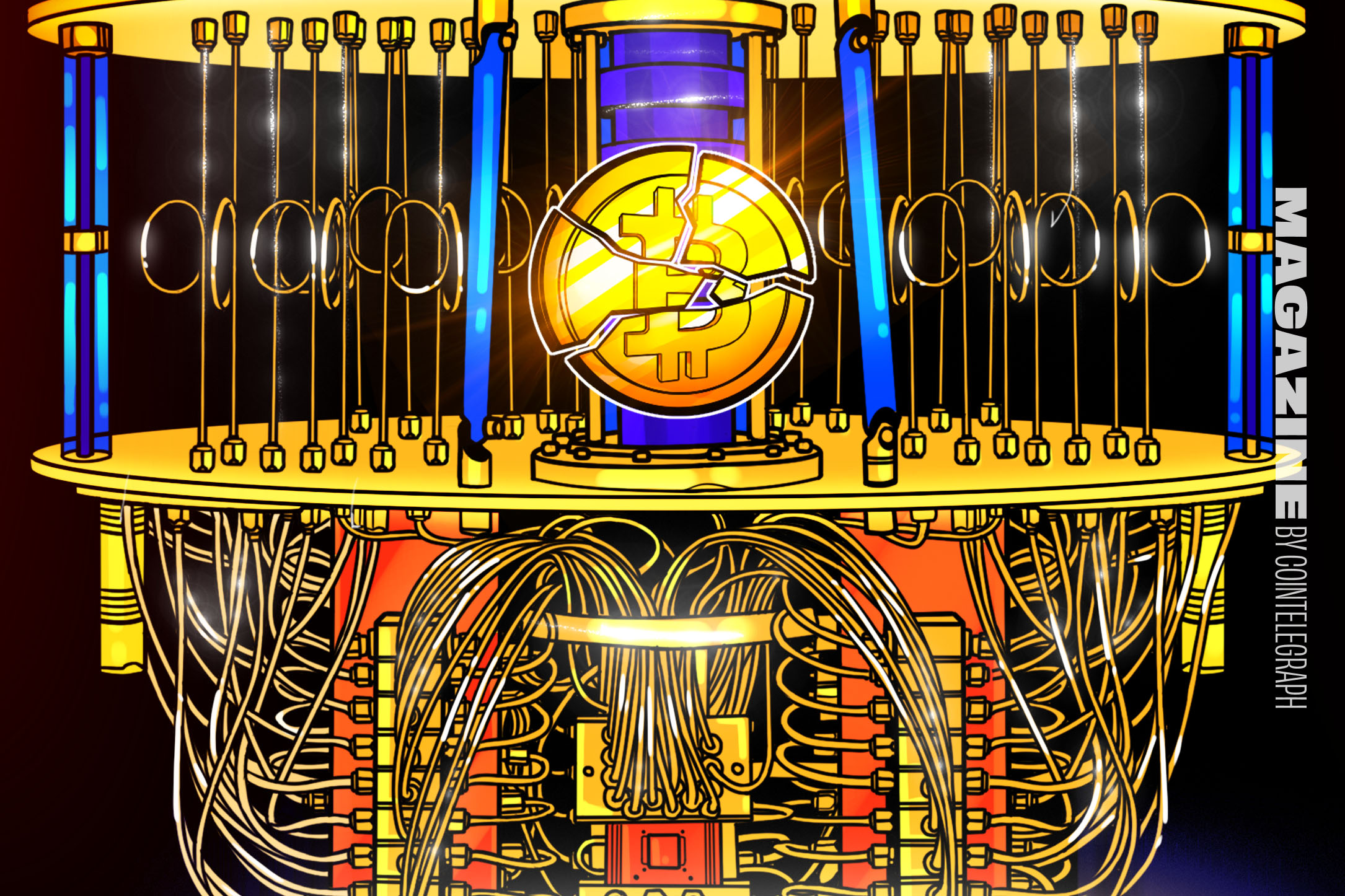
UK Regulator Welcomes Fund Tokenization Plan Proposed by Industry Leaders

CoinDeskPolicyPublicado a 2023-11-26Actualizado a 2023-11-27

Resumen

The Financial Conduct Authority (FCA) is currently exploring whether it could determine money laundering registration applications more quickly for firms already authorized, t...

  • A report by the U.K.'s Technology Working Group is setting the stage for implementing tokenization of funds.
  • Firms wishing to provide tokenized funds should ensure they are authorized and the U.K. needs to establish regulatory clarity, the report said.
15.2K
Binance to Pay $4B to Settle U.S. Criminal Case; Changpeng 'CZ' Zhao Resigns as CEO, Pleads Guilty

A group of industry experts on Friday published a report on implementing tokenization of funds that a U.K. regulator welcomed.

The Technology Working Group - which was set up by the Economic Secretary to the Treasury’s Asset Management Taskforce - said firms should ensure their funds are authorized by U.K. regulators, that they hold traditional assets and should be interoperable with future technology.

Tokenized funds offer tokenized shares that represent investors' interest in them and are traded and recorded on distributed ledger technology. Interoperability refers to the ability to transfer tokens between different blockchain networks.

Advertisement
Advertisement

There are several models of fund tokenization that already exist in Europe. Private bank-owned Meltzer Asset Management issued tokens for its domiciled sustainable growth fund in a pilot this year. Archax, a crypto exchange and custody provider, created a tokenized representation of its abrdn money market fund and the company plans to launch a regulated exchange for tokenized assets this year CoinDesk reported last month.

The Financial Conduct Authority is an observer of the group and has supported it, Sarah Pritchard executive director of markets and international at the U.K.'s FCA said in the report.

"This is an exciting milestone and paves the way for exploring more transformative use cases in the future," Pritchard said.

For firms to successfully launch tokenized funds, there needs to be regulatory certainty. Plus, in some cases, firms wishing to use DLT will need to be registered with the FCA and comply with its money laundering rules (MLR) and the FCA is currently exploring whether it could determine MLR applications more quickly for firms already authorized.

The group also said that some tokenization service providers have been unable to obtain banking services and urged the government to consider whether further action needs to be taken.

Advertisement
Advertisement

The Technology Working Group will explore how to further develop its fund tokenization model by the end of the year and will work with regulators to consider impacts on legislation within a year.
Edited by Omkar Godbole.

Lecturas Relacionadas

US Stock Market Trends (Aug 27): PCE Exceeds Expectations, Pressures Broader Market; Nvidia Rises 4% After-Hours, Nasdaq Futures Up 1%

U.S. Market Trends (Aug 27): PCE Data Weighs on Indices, Nvidia Rises 4% After-Hours, Nasdaq Futures Up 1% U.S. stocks closed slightly lower on Wednesday amid narrow trading. The S&P 500, Nasdaq, and Dow Jones all edged down, ending the Dow's two-day winning streak. The key pressure came from July's PCE inflation data, which showed a 3.7% year-over-year increase, exceeding expectations. While the core PCE met forecasts at 3.3%, the hot headline number boosted Treasury yields and the dollar, dampening hopes for imminent Fed rate cuts. Gold fell below $4,600/oz. Oil prices continued to weaken despite mixed geopolitical signals. The market's real focus was after the close. Nvidia reported Q2 revenue of $96.2 billion, beating estimates, guided for current-quarter revenue to surpass $100 billion for the first time, and projected 70% revenue growth for the next fiscal year. Its shares rose approximately 4% after-hours, lifting Nasdaq futures by about 1%. Amazon's announcement to deploy an additional 2 million GPUs further validated the data center demand narrative for Nvidia. In other sectors, chip stocks like Western Digital and Arm gained. Among the "Magnificent Seven," moves were mixed. Salesforce surged on strong guidance and an expanded partnership with Anthropic. Meta settled a youth addiction case with 29 U.S. states for up to $18 billion, a figure seen as favorable compared to earlier fears. Bitcoin retreated from recent highs, while industrial metals like copper extended their rally. The core market tension remains between inflation concerns pressuring the broader market and strong AI earnings providing sector-specific momentum, setting the tone for early September trading.

marsbitHace 50 min(s)

US Stock Market Trends (Aug 27): PCE Exceeds Expectations, Pressures Broader Market; Nvidia Rises 4% After-Hours, Nasdaq Futures Up 1%

marsbitHace 50 min(s)

A Record $70 Billion Inflow in 5 Days! Investors Are No Longer Choosy, Buying Gold and Bitcoin Together

Investors are moving beyond "either/or" choices and are simultaneously pouring money into both gold and bitcoin ETFs. Over the past five trading sessions, ETFs tracking these assets attracted a record $7 billion in combined inflows, pushing some of the largest gold and bitcoin funds to the top of the U.S. weekly ETF inflow rankings. This surge was triggered by U.S. Treasury Secretary's announcement to at least double long-term bond buybacks, which initially pressured Treasury yields and the dollar, boosting prices for both assets. Gold has risen about 13% this month, while bitcoin reclaimed the $80,000 level. The synchronized rally signals the return of the "monetary debasement trade." Amid growing concerns over fiscal sustainability and easing financial conditions, investors are seeking scarce assets perceived as outside direct government control. Gold benefits from its traditional safe-haven role, while bitcoin's fixed supply of 21 million coins positions it as a potential hedge. The SPDR Gold ETF (GLD) attracted nearly $3.4 billion, and the iShares Bitcoin Trust (IBIT) saw $1.5 billion in inflows, both ranking in the weekly top ten. Analysts note the momentum behind the flows is as significant as the volume, indicating investors are aggressively adjusting previously underweight positions. While the narrative of hedging against fiscal stress and currency debasement is gaining traction, some analysts question its sustainability, suggesting equities might be a more reliable hedge in the long run.

华尔街日报Hace 55 min(s)

A Record $70 Billion Inflow in 5 Days! Investors Are No Longer Choosy, Buying Gold and Bitcoin Together

华尔街日报Hace 55 min(s)

Yangtze Memory: Is It the Second ChangXin?

The largest IPO in the history of the STAR Market is approaching. Yangtze Memory Technologies (YMTC) has filed for a listing on the Shanghai Stock Exchange's STAR Market, aiming to raise 33 billion yuan. This surpasses the previous record set by competitor ChangXin Memory Technologies (CXMT), which raised 29.5 billion yuan and saw its market capitalization surge on its debut. Despite both being leading Chinese memory chipmakers founded in 2016 and operating under the IDM model, the two companies are fundamentally different. CXMT focuses on DRAM, the memory used for temporary data processing, while YMTC specializes in NAND Flash, used for long-term data storage. Industry reports indicate the global DRAM market is significantly larger and more concentrated among three major players, where CXMT ranks as the fourth-largest supplier. The NAND Flash market is more fragmented, with YMTC ranking third globally by shipment volume in Q2 2026, though fifth by revenue due to a stronger focus on consumer-grade products. Experts are divided on whether YMTC can replicate CXMT's explosive market debut. Some analysts believe it is highly unlikely, citing a cooler market environment and YMTC's perceived lower strategic scarcity within the AI supply chain compared to DRAM/HBM-focused companies. They warn that aggressive IPO pricing could lead to downward pressure post-listing. Industry forecasts suggest the DRAM market may remain tight, while the NAND Flash market could face price corrections due to new capacity and weaker demand. Other experts argue that while short-term market sentiment differs, the long-term investment value of both companies is comparable, hinging on future performance and potential breakthroughs in areas like HBM. They believe YMTC's IPO is unlikely to face significant cooling given still-elevated market interest in the semiconductor sector.

marsbitHace 1 hora(s)

Yangtze Memory: Is It the Second ChangXin?

marsbitHace 1 hora(s)

Trading

Spot
活动图片