Bitwu看RWA:DeFi未来之水,无限流动性

MarsBitPublicado a 2023-04-28Actualizado a 2023-04-28

Resumen

币安高盛都在布局的RWA 能否成为DeFi下一个增长引擎?

币安高盛都在布局的RWA 能否成为DeFi下一个增长引擎?

近期币安研究院发布RWA 相关研究文案,嫁接TradFi与DeFi的桥梁,老吴觉得RWA 的叙述对于虚拟资产市场尤其值得注意,特别是对Defi的影响,Thread包括:

1 RWA是什么

2 RWA可能对DeFi的潜在影响

3 RWA的发展和挑战

4 RWA赛道推荐布局的5类代币
1.RWA是什么?

简单来说,就是把现实世界资产的价值代币化,价值映射到链上并交易,比如最早主打“资产上链”的BTM比原链,干的就是RWA,RWA可以是有形或无形资产,比如地产、债券、股票、货币、甚至汽车、棉花

币圈目前最成功的RWA就是USDT、USDC,也就是把美元映射到链上并代币化

2.RWA对DeFi产生的潜在影响

最核心的影响就是打通传统金融和加密金融,增加外部性,目前DeFi是一个相对封闭的系统,收益来自内生系统,如DEX手续费、借贷费用、以及链的质押通胀收益等,这更像是一个空转的封闭金融系统。

1)打破地域条件限制,全球资产流通

而RWA可以将现实资产上链,通过代币化进入链上,DeFi就会多一层更广阔的收益源头,也让这些资产打破地域限制,让更多人可以低门槛接触这些资产,比如美元稳定币USDC,国内像换成美元避险,会有各种限制因素,而美元稳定币则打破了这些限制。

2)扩张DeFi收益源头,提供持续性动力

在谈DeFi收益源,现在Crv、AAVE这些DeFi的稳健性收益率是非常低的,只有2%以下,而美债收益率却有5%,而两者的风险对比,甚至美债更低。从现有的RWA生态来看,MakerDAO的大部分RWA抵押品(约5亿美元)是以由Monetalis管理的美国国债形式出现,贡献超过58%的收入。RWA有效增加DeFi协议收入已被MakerDAO给验证了,而收益是DeFi协议的核心竞争力,更重要的是这个收益是吸收自真实世界的收益。

3)DeFi未来之水,无限流动性

我们都知道资本市场的繁荣离不开放水,但这个水怎么进入加密圈,则是我们需要思考的点,在上轮,这个水是通过稳定币,中心化稳定币确实打通了这个通道,如果没有USDT、USDC的出现,加密圈的繁荣将大打折扣。

而稳定币远远不够,DeFi需要更多的水,老吴认为RWA很大可能是下轮DeFi之水,大量的国债上链、房地产上链,为DeFi提供了现实世界真实收益率外,更重要的带来了外部的水。

3.RWA的生态和发展

RWA并不是新概念,我们常用的USDT、USDC就是RWA,它并不是来自原生,而是现实美元在链上的映射投影,因此RWA在币圈并不是新生儿,而是被验证了很久。

除了稳定币外,RWA最被欢迎的资产类型就是美国国债、房地产、碳信用、以及股票。以国债为例,MakerDAO的RWA业务规模超过6.8亿美元,其中5亿美元的RWA抵押品就是美国国债,另外法国兴业银行从MakerDAO借了700万美元,其头寸由价值4000万欧元的AAA级债券作为OFH代币的支持。

房地产领域,RealT房地产 RWA 通过将房地产代币化可以解决房地产资产的流动性和交易成本问题。

比如原本需要按套买卖的房产可以碎片化出售,让普通的投资者以持有部分所有权的形式参与投资 以及之前火热过的美股上Uniswap,但这个严格上并不属于RWA,Uniswap上的美股代币只是链上单纯模拟出股票价格,并没有对应的链下确权和真实股票抵押,广义上姑且也纳入RWA范畴

目前整体而言,RWA的应用还只是初期,规模相比整个DeFi还非常小,大众接触最多的RWA只有稳定币,像其他资产类型,比如链上美债,市场参与度还非常低,很多人甚至都不知道有这个东西,需要更多的市场普及和应用推动。

4.RWA发展的最大掣肘

合规、意识形态对抗

还是先回到稳定币,USDT最大的诟病是啥,表面是中心化,内核是由中心化带来的资产不透明,大家怀疑1USDT背后是不是有1美元的价值作为支撑。

后续合规化稳定币USDC出现,由当局或强大的中心化主体来背书来保证安全性。这就是RWA发展的问题,因为是现实资产上链,怎么上链,怎么保持资产真实性,这必须由强大且有信任背书的中心化主体来参与、监管,以明确资产的价值、资产所有权、资产权益的法律保障等。

一句话,就是得合规化才能推动RWA的大规模发展

而且这个合规化的推进远比大家想的更复杂,比如RWA资产相关的借贷DeFi,一旦涉及清算就非常麻烦,因为RWA资产不是简单的ERC20代币,清算得涉及链下,也就是真实世界得配一套相关的法律执行机制,这远比大家想象的困难。

另外RWA发展也会带来一个更深层次的问题——意识形态的对抗

以龙卷风TORN为例,被美帝制裁后,USDC目公司直接把相关地址拉黑,这与加密圈的价值观发生了严重的冲突对抗,中心化和去中心化两者意识形态会突然水火不容。

RWA的发展也逃脱不了这种意识形态的对抗,繁荣时期,相互成就你好我也好,出事了,就立马阵营分裂,所以RWA的发展要平衡这两者的对抗是一个非常棘手的难题。

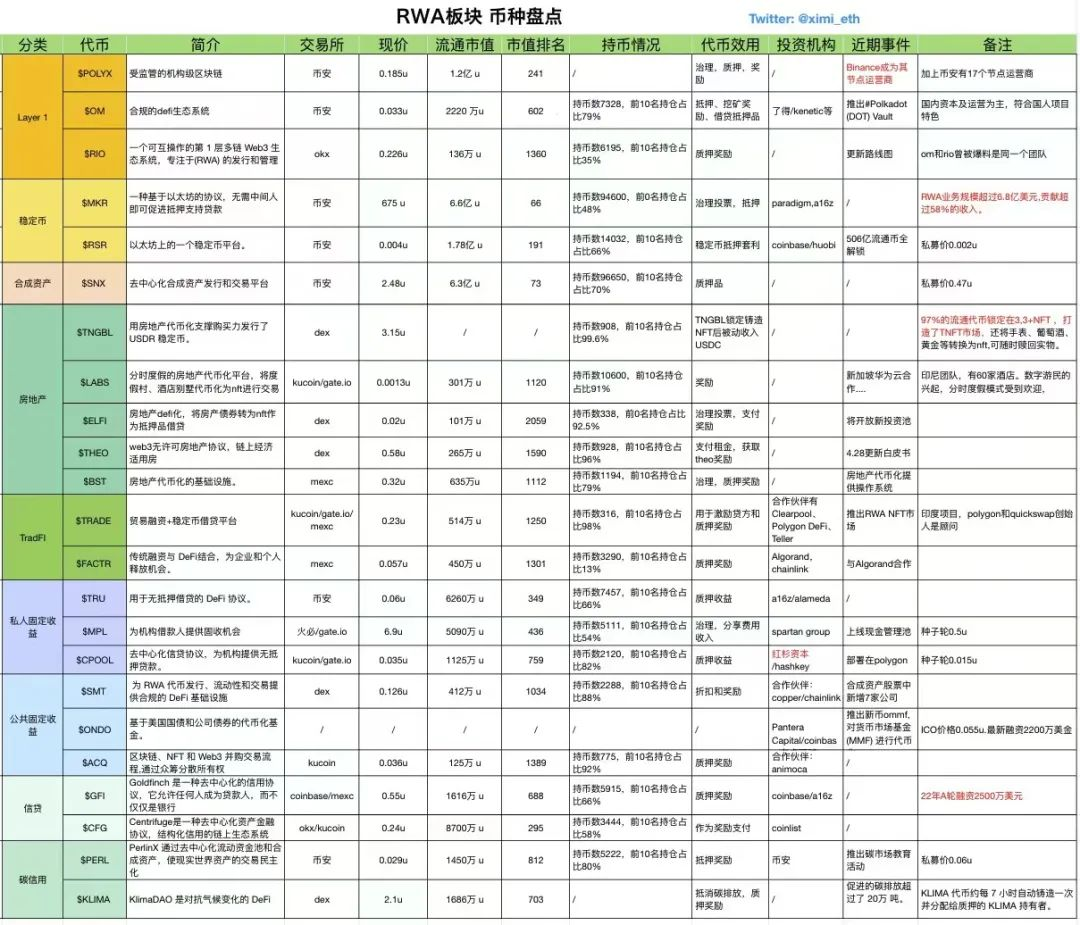
5.RWA赛道的相关代币

美债概念:MakerDAO(MKR)、Ondo Finance、Maple Finance(MPL) 地产概念:RealT

碳信用概念:Toucan、Flowcarbon、Regen Network RWA

垂直公链:Polymesh(POLYX)
Lecturas Relacionadas

SEC Pushes for All-Day Trading in US Stocks, Will RWA's Biggest Advantage Disappear?

**Summary: SEC Advances Towards 24-Hour U.S. Stock Trading, Impact on Crypto RWA Tokens** The U.S. Securities and Exchange Commission (SEC) has announced a public roundtable for September 17th to discuss preparations for moving the U.S. equity markets towards 24-hour trading. This signals a potential substantive shift from the traditional 9:30 AM to 4:00 PM ET trading day to a near 24/5 model (23 hours a day, 5 days a week) by late 2026 or early 2027, pending regulatory approval and infrastructure alignment. Key exchanges like NYSE Arca and Nasdaq are planning extended hours, and critical clearing infrastructure from DTCC already supports 24/5 operations. For the crypto industry, particularly the Real World Asset (RWA) tokenization sector, this development directly challenges a core narrative: that tokenized assets offer superior, round-the-clock trading access compared to traditional markets. As U.S. stocks become tradable for most of the global day, the simple advantage of "24/7 availability" for tokenized equities diminishes. This may pressure RWA platforms that relied heavily on this differentiation. However, the shift also presents opportunities for deeper integration. True 7x24 trading including weekends, near-instant atomic settlement on-chain, and programmable features like automated dividends remain inherent blockchain advantages. The regulatory environment is evolving in parallel, with the SEC including tokenized securities in its agenda, potentially creating clearer pathways for compliant RWA markets. Platforms are already innovating, such as Backpack offering 24/7 access to real stocks for international users and Ondo's tokenized products linked to traditional liquidity. Ultimately, the competitive edge for RWA is shifting from trading hours to other value propositions: settlement finality, global accessibility, DeFi composability, and interoperability with traditional finance. Tokenization of private credit, real estate, and other alternative assets may benefit from increased acceptance of the model. The key challenge will be managing risks like low overnight liquidity and navigating an evolving regulatory landscape that may favor compliant, asset-backed tokens over synthetic derivatives.

Foresight NewsHace 1 min(s)

SEC Pushes for All-Day Trading in US Stocks, Will RWA's Biggest Advantage Disappear?

Foresight NewsHace 1 min(s)

Tokenized Stocks Are Gaining Momentum, But Traditional Market Infrastructure Faces Severe Challenges

Tokenized stocks are rapidly moving from pilot tests to live trading, but the core infrastructure underpinning traditional equity markets—corporate action processing, entitlement distribution, reference data maintenance, and settlement mechanisms—is not prepared for these new assets designed for multi-venue, continuous trading. While platforms like Nasdaq and NYSE have received SEC approval to list tokenized versions of major stocks and ETFs, and the DTCC has launched a pilot, significant challenges remain. Regulatory paths diverge: one ties tokenized shares directly to the underlying traditional shares (using the same CUSIP, following T+1 settlement), while a potential "innovative exemption" could allow crypto-native platforms to list price-tracking tokens without issuer consent. This raises critical questions about whether such tokens truly replicate all shareholder rights, such as dividends, voting, and corporate actions. The real complexity lies in replicating a stock's full attributes—far beyond price feeds—across potentially dozens of blockchains operating 24/7. This strains systems built for centralized, fixed-hour trading. Fragmentation is a key systemic risk: without unified standards, multiple unconnected platforms issuing tokens for the same stock could lead to fractured price discovery, information asymmetry, and liquidity splits. Ultimately, tokenized stocks represent a broader infrastructure transformation. The next phase will be led by those who can integrate disparate tokenized venues into a coherent market system, ensuring consistent investor rights, reliable corporate action handling, and trustworthy settlement—regardless of the settlement "rail." Success requires close collaboration between tech providers, traditional players, and regulators to harness blockchain's efficiency while upholding investor protection.

Foresight NewsHace 6 min(s)

Tokenized Stocks Are Gaining Momentum, But Traditional Market Infrastructure Faces Severe Challenges

Foresight NewsHace 6 min(s)

Trading

Spot
活动图片