$100M in crypto shifted by BlackRock – Panic move or just some rebalancing?

ambcryptoPublicado a 2026-03-20Actualizado a 2026-03-20

Resumen

BlackRock's transfer of $100M in Bitcoin and Ethereum to Coinbase is not a panic-driven sell-off but part of routine ETF operations to manage inflows, outflows, and rebalancing. While such large moves can cause short-term price pressure and market fear, they reflect standard institutional practices. The market remains cautious, with volatility driven by emotional trading and ETF flow patterns. If sustained outflows continue, selling pressure may persist, but isolated transfers alone are not a major concern. The focus should be on ETF withdrawal trends rather than interpreting single moves as bearish signals.

When BlackRock moved nearly $100M in Bitcoin [BTC] and Ethereum [ETH] to Coinbase, the immediate reaction was fear of a sell-off. However, it’s not that straightforward.

The firm deposited 930 BTC worth $65.48M and 12,687 ETH worth $27.75M into Coinbase, with more deposits likely.
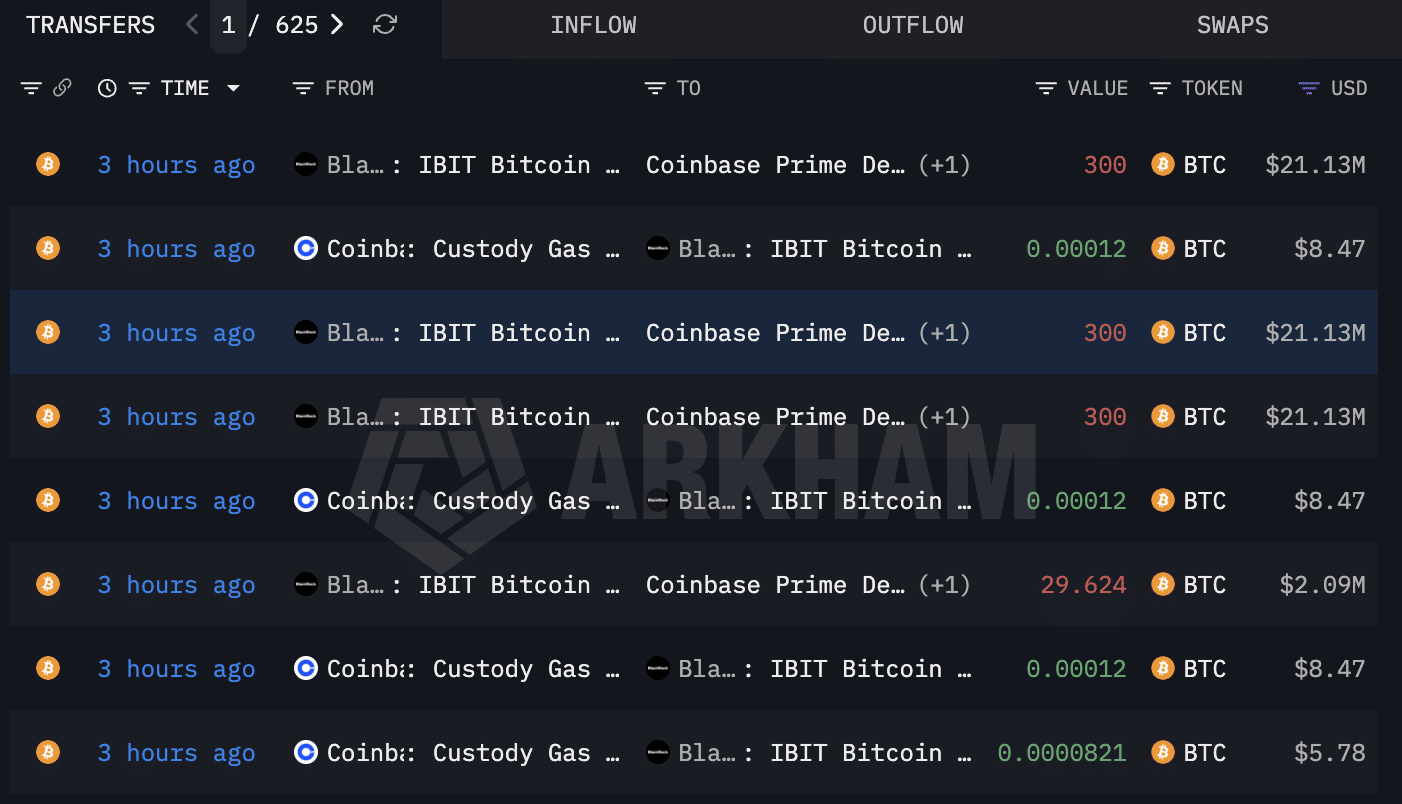
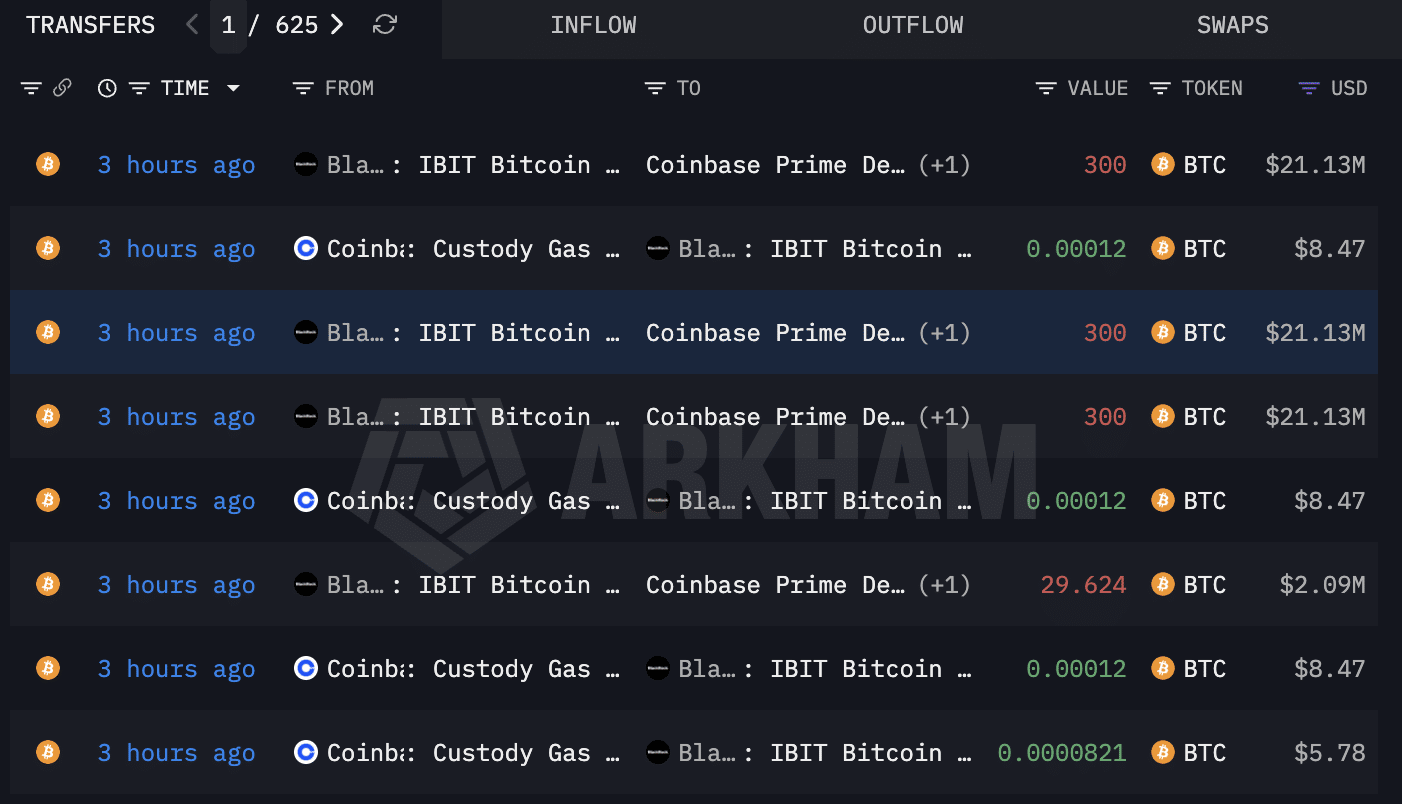
Source: Onchain Lens/X

However, these transfers are most likely part of ETF operations, where assets are routinely shifted between cold storage and exchanges to manage inflows, outflows, and rebalancing.

Rather than signaling a dump, this reflects how large institutions operate in crypto today.

However, even if the intention isn’t bearish, the effect can still be negative in the short term. When large amounts of crypto are moved to exchanges like Coinbase Prime, it increases the chances of selling.

This adds pressure on prices and can trigger panic or quick drops, especially if the market is already in the “Extreme Fear” zone.
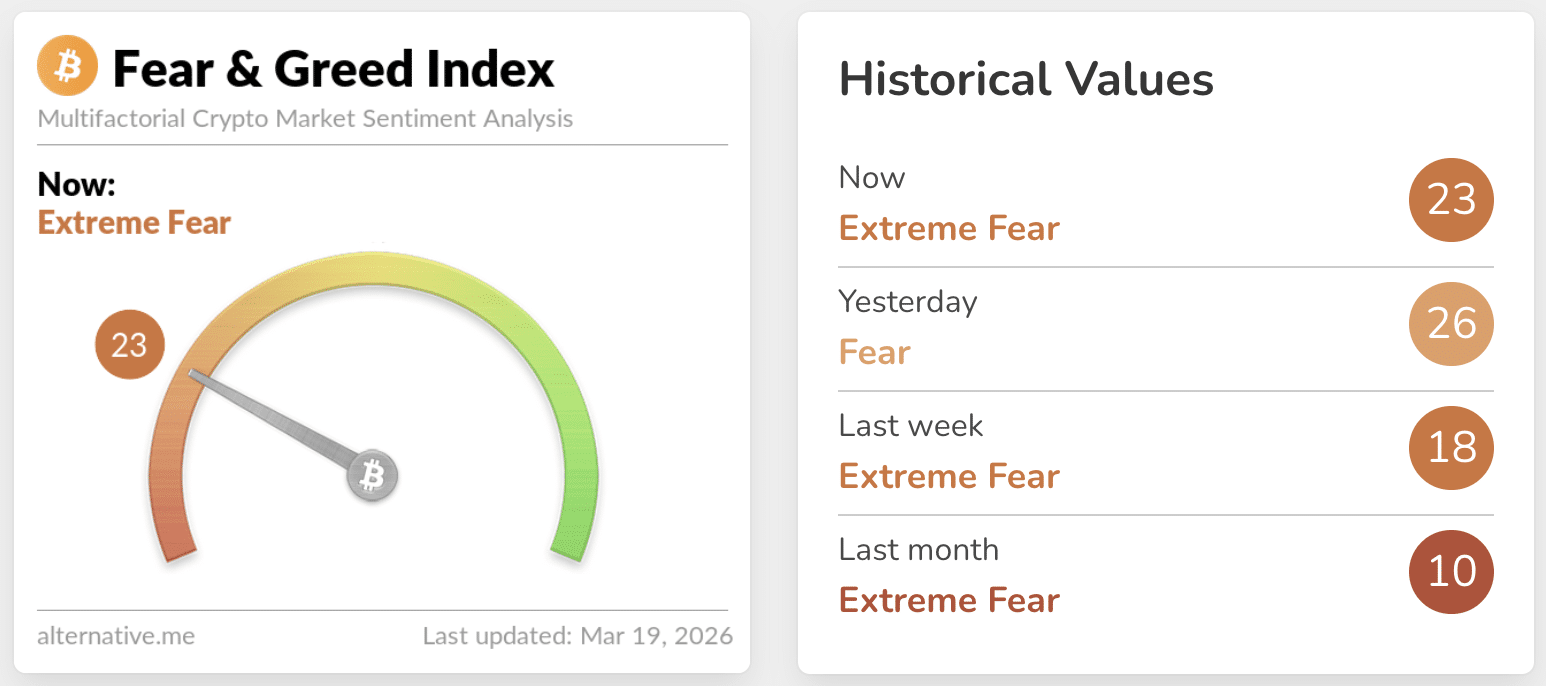
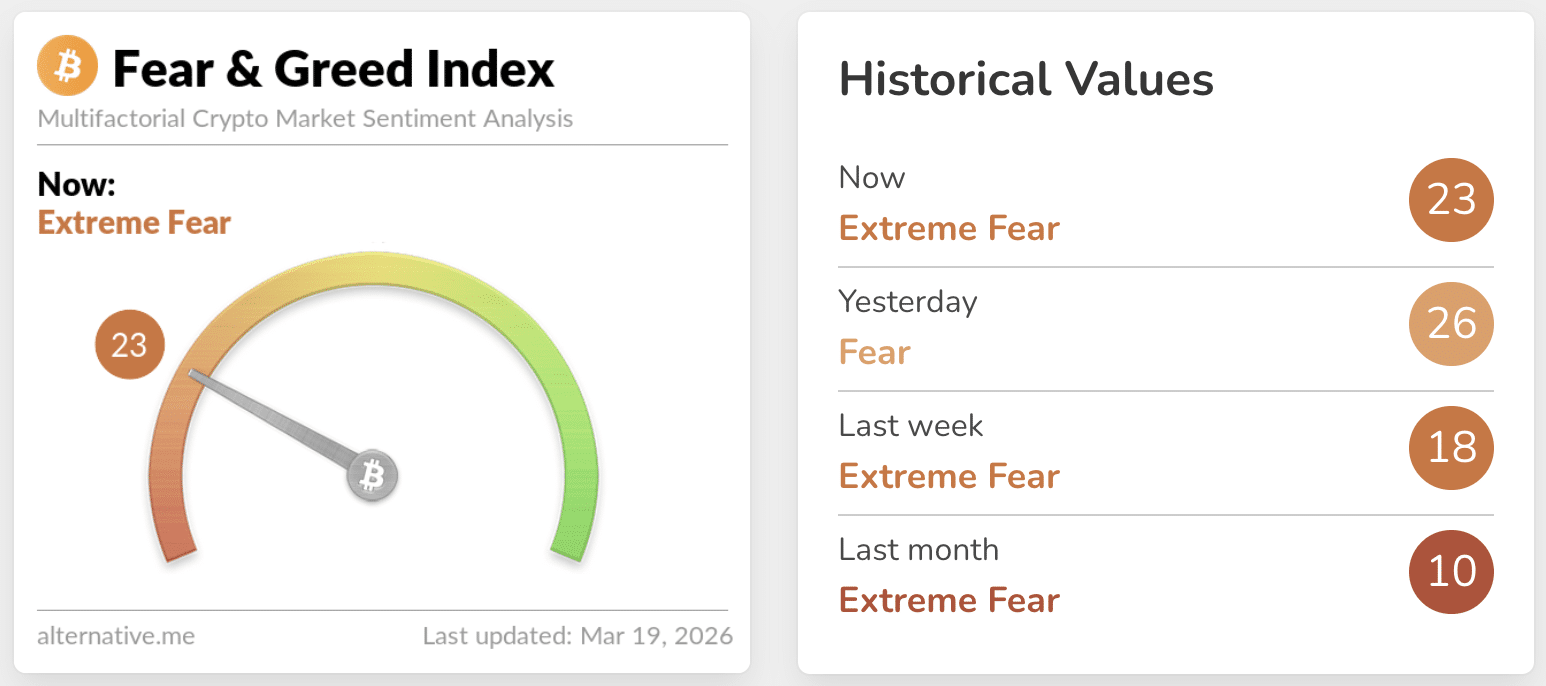
Source: Alternative

When should you actually worry?

Needless to say, one transfer alone isn’t a major red flag, but it becomes concerning if a pattern forms. This pattern includes repeated large deposits, consistent ETF outflows, and prices falling on high volume.

If these signals appear together, it could point to real institutional selling pressure. Simply put, for now, the market might just be cautious, not panicked.

Institutions like BlackRock are adjusting their positions, while retail traders are reacting quickly to price moves, creating an unstable market.

Market trends are difficult and all over the place

Even though BlackRock’s stock is strong, crypto prices have been falling. At the time of writing, Bitcoin was down about 4%, with Ethereum down even more.

In fact, prices are moving quickly up and down, evidence of emotional, short-term trading rather than long-term confidence.

Ethereum, in particular, has been seeing sharp swings due to leveraged trades. Indicators like RSI show that small rallies don’t last long either.
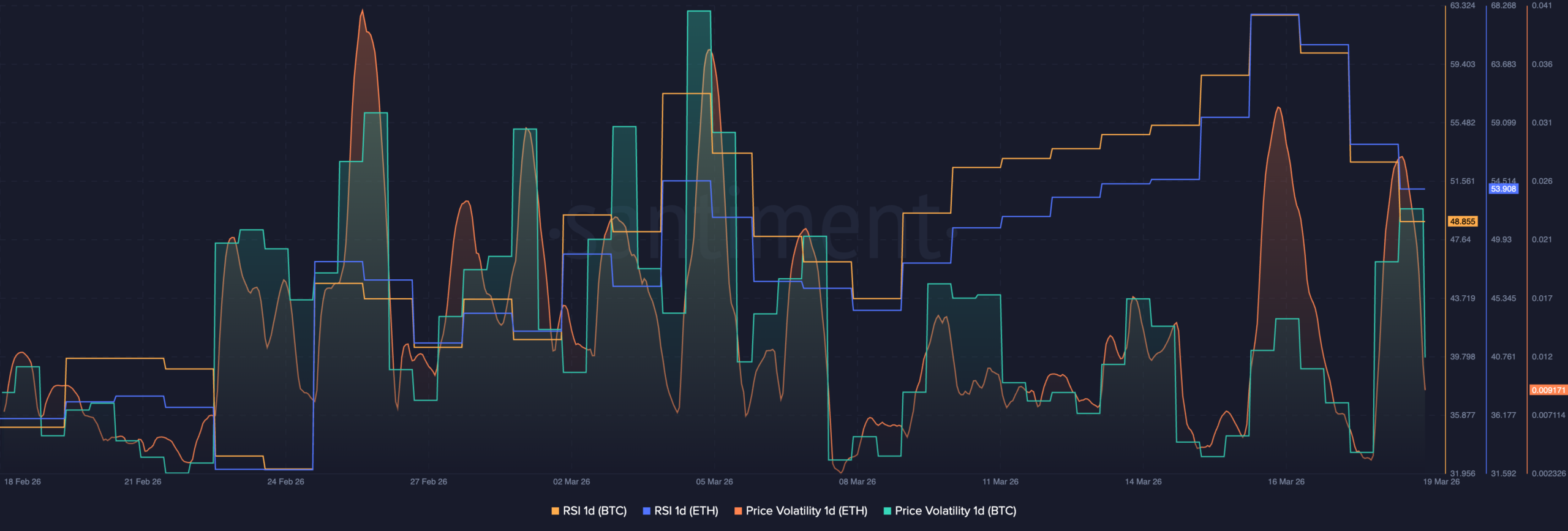
Source: Santiment

Additionally, the MVRV ratio revealed the market was stuck in a cycle, with prices rising briefly, traders taking profits, and prices falling again. In fact, neither buyers nor sellers seemed to be in control.
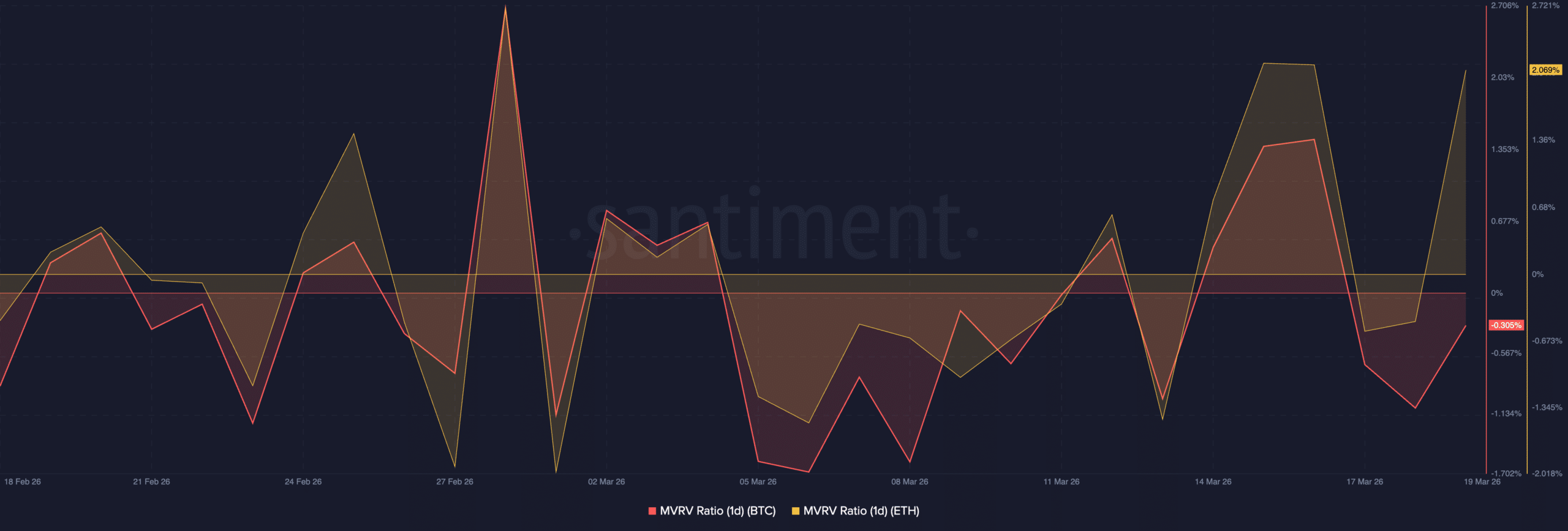
Source: Santiment

Moreover, on 18 March, BlackRock’s Bitcoin ETF (IBIT) saw $33.9 million in outflows, ending a 7-day inflow streak, while its Ethereum ETF (ETHA) recorded a smaller $1.3 million outflow.

These amounts may seem small, but they likely explain why BlackRock moved assets to Coinbase to sell and meet investor withdrawals.

Not the first time...

This isn’t new. A similar move happened in December 2025 when over $125 million in Bitcoin was sent to Coinbase under the same conditions. So, this isn’t panic selling, it’s simply a response to investors pulling money out.

Instead of guessing whether BlackRock is bullish or bearish, the key thing to watch is ETF outflows. If withdrawals continue, selling pressure in the market is likely to persist.


Final Summary

  • BlackRock’s $100M transfer isn’t panic selling, but a market move driven by ETF inflows and outflows.
  • Until demand returns, ETF-driven selling pressure is likely to keep markets under stress.

Preguntas relacionadas

QWhat was the immediate market reaction to BlackRock moving $100M in crypto to Coinbase, and why is the situation more complex?

AThe immediate reaction was fear of a sell-off. However, it's more complex because these transfers are likely part of standard ETF operations for managing inflows, outflows, and rebalancing, not necessarily a sign of panic selling.

QAccording to the article, what combination of factors would signal real institutional selling pressure rather than routine operations?

AA pattern of repeated large deposits to exchanges, consistent ETF outflows, and prices falling on high volume appearing together would point to real institutional selling pressure.

QHow did the article characterize the current state of the crypto market in terms of price action and trader behavior?

AThe market was characterized by quick price swings up and down, evidence of emotional, short-term trading rather than long-term confidence, with neither buyers nor sellers in full control.

QWhat specific event on March 18th related to BlackRock's ETFs likely explains why the assets were moved to Coinbase?

ABlackRock's Bitcoin ETF (IBIT) saw $33.9 million in outflows, ending a 7-day inflow streak, which likely required the firm to move assets to Coinbase to sell and meet these investor withdrawals.

QWhat historical precedent does the article cite to argue that this is not a new or panic-driven event?

AThe article cites a similar move in December 2025 when over $125 million in Bitcoin was sent to Coinbase under the same conditions, concluding it is a response to investor withdrawals rather than panic selling.

Lecturas Relacionadas

Second Only to GPUs and Memory: MLCCs Are Becoming the Next Billion-Dollar Windfall for AI Computing Power

After GPU and memory, MLCC (Multi-Layer Ceramic Capacitors) is emerging as the next critical component in AI compute, potentially a multi-billion-dollar market. The article highlights a significant, industry-wide price increase for MLCCs, driven not by inventory cycles but by a fundamental, structural demand surge from AI and automotive sectors. AI servers require exponentially more MLCCs than traditional servers—from 2,000 to over 350,000 units per high-end AI rack—primarily to stabilize power for increasingly powerful, low-voltage GPUs. A key AI server's MLCC cost can reach thousands of dollars, making it the third-largest cost component after GPUs and memory. This demand is compounded by the automotive shift to EVs and advanced ADAS. Supply, however, struggles to keep up. Manufacturing high-end MLCCs involves extreme precision and faces six major barriers: proprietary technology, long customer certification cycles (12-18 months for AI), high capital intensity, patent thickets, specialized talent, and massive scale. Industry capacity grows at only ~10% annually, creating a persistent supply-demand gap projected to last until 2030. Three companies dominate this high-end market. **Murata** (40% global share) is the stable leader. **Samsung Electro-Mechanics** offers the highest growth elasticity with aggressive expansion. **Taiyo Yuden** is the purest MLCC play. While their current P/E ratios appear high, they are expected to compress rapidly as earnings surge, powered by significant pricing power and operational leverage. Key risks include a potential slowdown in AI capex, high valuations, competition from Chinese manufacturers in lower tiers, yen appreciation, and consumer electronics weakness. The article concludes that MLCCs are transforming from a commoditized component into a strategic, capacity-constrained asset essential for the AI-powered future.

marsbitHace 31 min(s)

Second Only to GPUs and Memory: MLCCs Are Becoming the Next Billion-Dollar Windfall for AI Computing Power

marsbitHace 31 min(s)

The First to Bring an AI OS to 1.4 Billion People Might Actually Be WeChat?

WeChat has introduced a significant AI update, allowing mini-program developers to integrate their services with WeChat AI. Developers can choose an "automatic mode," where WeChat AI autonomously analyzes and operates mini-programs without additional coding, or a "development mode" for creating customized skills. This move effectively transforms WeChat's vast ecosystem—including millions of mini-programs, WeChat Pay, and official accounts—into an execution layer for AI. The technical documentation reveals that WeChat's approach aligns with industry standards like MCP (Model Context Protocol) and incorporates practical lessons from AI-agent development. Key design principles include a clear "attention weight" system for API calls and a "fact + action" response structure to ensure reliable operations. Unlike Apple's Siri, which struggles with third-party app integration, WeChat's centralized control over mini-program code provides a "God's-eye view," enabling seamless AI orchestration across services. This development revives the concept of "WeChat OS," where the app could function as a natural-language-operated platform for daily tasks—from booking flights to ordering food—all within a chat interface. While challenges remain in areas like payment security and user trust, WeChat's existing service network and massive user base position it uniquely to advance AI agents from conversation to actionable assistance, potentially making complex tasks feel effortless for its 1.432 billion monthly active users.

marsbitHace 1 hora(s)

The First to Bring an AI OS to 1.4 Billion People Might Actually Be WeChat?

marsbitHace 1 hora(s)

Trading

Spot
Futuros

Artículos destacados

Cómo comprar MOVE

¡Bienvenido a HTX.com! Hemos hecho que comprar Movement (MOVE) sea simple y conveniente. Sigue nuestra guía paso a paso para iniciar tu viaje de criptos.Paso 1: crea tu cuenta HTXUtiliza tu correo electrónico o número de teléfono para registrarte y obtener una cuenta gratuita en HTX. Experimenta un proceso de registro sin complicaciones y desbloquea todas las funciones.Obtener mi cuentaPaso 2: ve a Comprar cripto y elige tu método de pagoTarjeta de crédito/débito: usa tu Visa o Mastercard para comprar Movement (MOVE) al instante.Saldo: utiliza fondos del saldo de tu cuenta HTX para tradear sin problemas.Terceros: hemos agregado métodos de pago populares como Google Pay y Apple Pay para mejorar la comodidad.P2P: tradear directamente con otros usuarios en HTX.Over-the-Counter (OTC): ofrecemos servicios personalizados y tipos de cambio competitivos para los traders.Paso 3: guarda tu Movement (MOVE)Después de comprar tu Movement (MOVE), guárdalo en tu cuenta HTX. Alternativamente, puedes enviarlo a otro lugar mediante transferencia blockchain o utilizarlo para tradear otras criptomonedas.Paso 4: tradear Movement (MOVE)Tradear fácilmente con Movement (MOVE) en HTX's mercado spot. Simplemente accede a tu cuenta, selecciona tu par de trading, ejecuta tus trades y monitorea en tiempo real. Ofrecemos una experiencia fácil de usar tanto para principiantes como para traders experimentados.

266 Vistas totalesPublicado en 2024.12.13Actualizado en 2026.06.02

Cómo comprar MOVE

Discusiones

Bienvenido a la comunidad de HTX. Aquí puedes mantenerte informado sobre los últimos desarrollos de la plataforma y acceder a análisis profesionales del mercado. A continuación se presentan las opiniones de los usuarios sobre el precio de MOVE (MOVE).

活动图片













