Will zkEVM be the Savior of Ethereum?

Huobi ResearchPublicado a 2022-02-18Actualizado a 2022-02-18

Resumen

This article compares the features of two mainstream Rollup solutions and points out that zkRollup has better performance but poor compatibility, thus limiting its application scope. zkRollup needs to include zkEVM's to be able to run all kinds of general-purpose smart contracts in order to address the above shortcomings. The main points of zkEVM and the characteristics of two different technical routes are then described, and the mainstream projects of zkEVM are introduced. Finally, it is envisioned that ZKEVM will act as a savior for Ethereum in the near future to help expand the capacity of Ethereum, and has the possibility to play a role on other public chains in the longer term.

No doubt that Ethereum has become the superstar public chain that runs thousands of smart contracts on it. However, the traffic is so busy that “traffic jams” could often been spotted, even a “highway” like Ethereum must confront a long queue of transactions to be packed and sent, even though the toll (gas fee) could be enormous. The network congestion was not beyond expectation. An earlier incidence dating back to 2018 , a game named Crypto Kitten, had the privilege to bring about the weakness of Ethereum in handling mass transactions, let alone the number of users and Dapps have soared to several times of those in 2018. Ethereum has bear the burden of being the avant-garde, dragging it slower and slower as time goes by ; an update to alleviate the congestion cannot wait. not dropped significantly; when denominated in US dollars, the handling fee has risen to a certain extent due to the increase in the price of ETH.

What if there is a Layer 2 solution that could offer fast and secure transaction with low gas fee, highly compatible with vast majority of smart contracts and Dapps yet private enough without the controversial week-long waiting time, would you make it in your wish list? In fact, this nearly perfect Layer 2 solution could probably be live in the market in the near future.

What could Layer 2 and Rollup Do?

The most well-known ETH 2.0 is like a massive renovation of “the highway”; the process will eventually be slow since the renovation is naturally difficult to implement and benefits of various parties are involved. If it were to exempt a direct renovation on “the highway” by implementing ETH 2.0, a Layer 2 solution is more or less an indirect solution that it creates overpasses above “the highway” in order to achieve scaling. The mainstream Layer 2 scaling technique is Rollup: it handles more transactions without taking up space by compiling data. In other words, larger data packs could commute like a bus on " the highway" instead of cars with limited capacity, thus more passengers, data, in this case, could be transported.

Rollup could be classified by whether it interacts with proofs submitted to Layer 1. There are 2 Rollup technical tracks. One is the Interactive Rollup. For short, we identify one-round interaction and multi-round interaction as Optimistic Rollup (OP Rollup), Arbitrum, Boba Network and Optimism are some outstanding projects in this category: the number of projects in the ecosystem and TVL skyrocket in this year, and the TVL of this three projects occupied almost 70% of the whole Layer 2 market. The other is Non-interactive, also know as ZK Rollup; exemplary projects in this track are dYdX, Loopring and zkSync. They have a comparatively smaller market share.
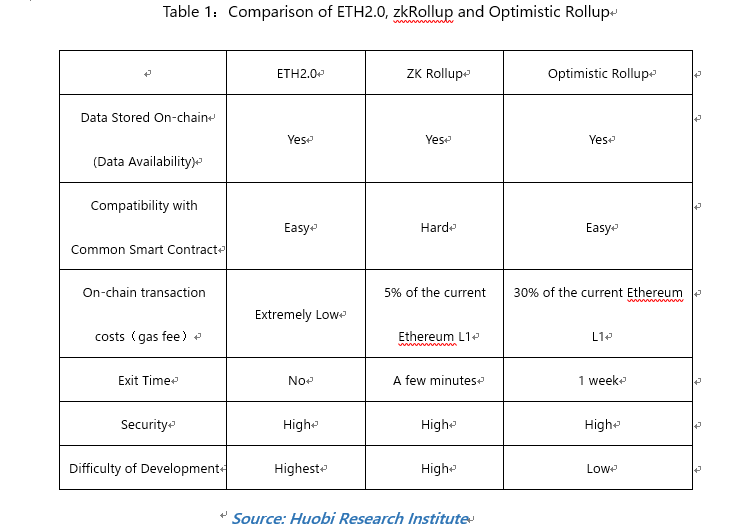
If Optimistic Rollup were the innocent and romantic Juliet girl, longing for a love fairy tale with Romeo in a perfect world, ZK Rollup would be more like a considerate office lady, tact and neat. For immature ideas from an innocent girl would consume a large amount of time to be proven, and the result would not be necessarily right. Just as how it performs in Optimistic Rollup: the fraud proof could still be flawed even after a week-long verification period. However, the neat office lady, ZK Rollup, prefers a much faster and result-driven “state proof”. As the nature of verification differs, ZK Rollup outperforms OP Rollup with better performance, lower transaction fee and unconstrained exit time.

Defects of ZK Rollup

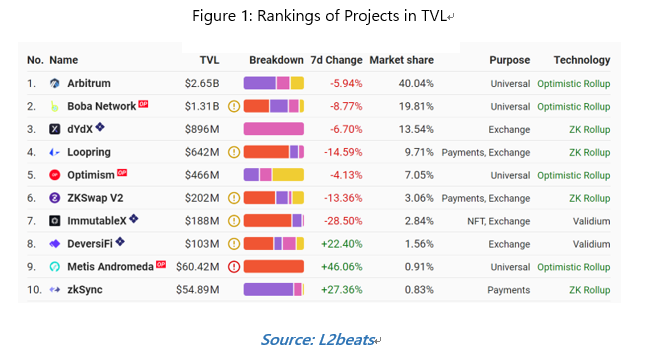
Compatibility is the main defect of ZK Rollup compared to OP Rollup. As illustrated in the below, ZK Rollup is only compatible with payment and transaction types of applications, while OP Rollup supports a variety more, lacking appropriate development of ZK Rollup, which leads to the mere 3.6% market share of Layer 2 in the whole Ethereum in terms of TVL.
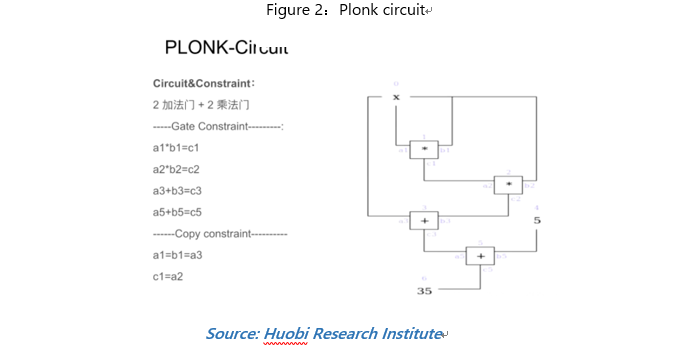
ZK Rollup submits Zero Knowledge Proof to Ethereum mainnet as an effective proof; the inherent complexity of generating Zero Knowledge Proof triggers low compatibility with most applications. In the intricate process, logic of codes must be first converted to a mathematical circuit, not only including basic calculations such as plus or minus, and also accompanied with convoluted logic such as “and”, “or”, “Not”, Hash, bit operation,and other operations on smart contracts. Moreover, this diagram could only support plus and multiplication calculations, and Ethereum opcode is not Zero Knowledge Proof friendly as it was not designed to do so. Furthermore, the most frequently deployed Hashing method, such as AEW-128 or SHA-256, consist of enormous bit operations(“and” and “or” commands); it would be extremely complicated and substantial when converted to gate constraints in the cir.

We need ZK EVM

The current ZK Rollup has constructed a parallel path above the Ethereum boulevard. However, it is more like a bike trail that could only carries out simple transactions, whereas loaded trucks like smart contracts are too heavy to pass. In this case, should ZK Rollup conquer a larger market share by running smart contracts and produce proofs on Layer 2 in order that verification on mainnet could pass faster, a special virtual machine, ZK EVM, must be in place.

There are two key requirements under this circumstance. First, ZK EVM could be compatible with current EVM that codes on Layer 1 could be executed immediately on Layer 2. Second, ZK EVM must be capable of producing proofs for various operations while consuming less computation and storage resources.

Luckily, thanks to the vast development of Zero Knowledge Proof, a new algorism, “Plonk Zero Knowledge Proof”, has come to earth that accelerates the landing of ZK EVM. “Plonk Zero Knowledge Proof” does not produce the proof by calculating the whole circuit from head to toe; instead, it only verifies constraints in the circuit. That is to say, two points make a line, and to draw a line only need two points. Just as shown in the following chart, as long as the gate constraint and the copy constraint are verified, the whole circuit could be verified. In addition, the new algorism sets a trust mark to the whole unit instead of partially trusted, the verification process thus speeds up.
Tech Tracks of zEVM

There are two mainstream tech tracks:First, EVM friendly projects which embed Zero Knowledge Proof in current EVM. It aims to provide further support to native EVM opcode that codes are still executed in EVM and completely compatible with solidity commands. Applied ZKP and Hermez draw the most attention in this track.

Second, Zero Knowledge Proof friendly projects that build EVM with the foundation on Zero Knowledge Proof friendly opcode. This track focuses on the redesign of virtual machine that codes executed here could generate Zero Knowledge Proof much easier. That is to say, the original Zero Knowledge Proof unfriendly codes would be modified, adapting EVM developer tools in order to maintain compatibility with solidity.
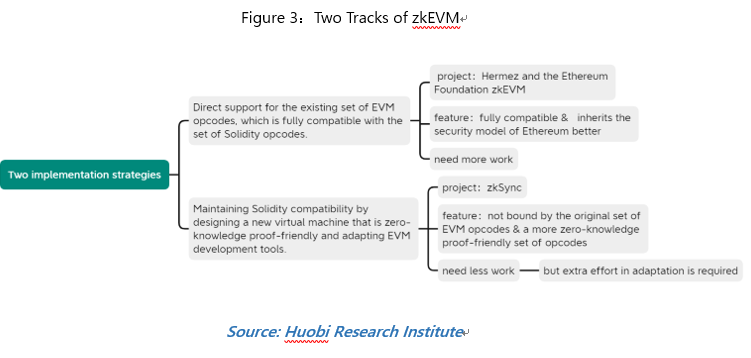
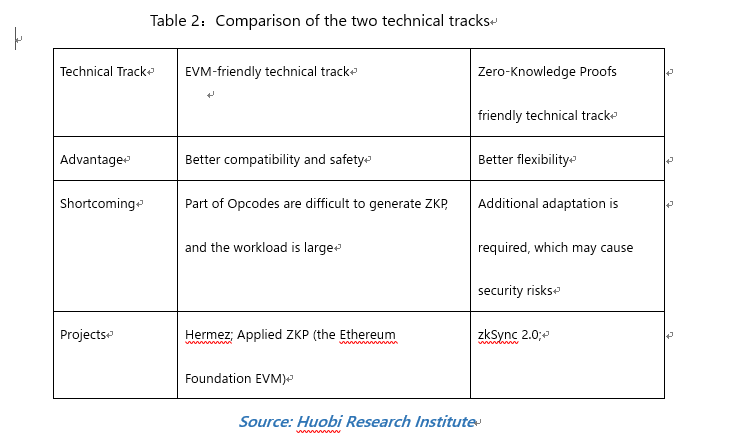
The appealing point of EVM friendly track is compatibility. It is completely compatible with current ecosystem and developer tools, well inherited the credited security model from Ethereum. From the overview of Ethereum ecosystem, this kind of update would be so gradual that current projects could be transferred smoothly before anyone could notice once succeeded. However, as mentioned above, Zero Knowledge Proof will also be generated for those commands deviating from the generation of proofs, which may consume enormous resource along the way. Ethereum. From the overview of Ethereum ecosystem, this kind of update would be so gradual that current projects could be transferred smoothly before anyone could notice once succeeded. However, as mentioned above, Zero Knowledge Proof will also be generated for those commands deviating from the generation of proofs, which may consume enormous resource along the way.

Zero Knowledge Proof friendly track wins over in terms of flexibility. It does not strictly generate proofs for every single command, and code to a set of commands that is more Zero Knowledge Proof friendly instead. Throughout the transformation of codes, Zero Knowledge Proofs are generated while the functions of smart contract are sustained. As a result, it could potentially prevail that avant-garde projects are more likely to be attracted to participate by the tempting benefits of considerately smaller workload and less difficulties to be encountered. However, extra workload may be conducted to transform EVM codes to intermediary codes, especially in the case of replacing the most frequently deployed Keccak Hash functions with other functions. It remains mysterious that if the process of this transformation could be flawless that comes with extra security and compatibility problems.

Table 2:Advantages, shortcoming and outstanding projects of the two zkEVM technology tracks
Typical projects

zkSync 2.0

ZkSync 2.0 is a representative project in the second track mentioned above. Which is Zero Knowledge Proof friendly. The updated version of zkSync 1.0, zkSync 2.0, would be a much better solution that is EVM compatible. Matter Lab explored various technical implementation plans, including TinyRam, Optimized Special Ops, Recursive TinyRam is a simple and traditional random browser for R1SC circuit (a commonly used circuit in Zero Knowledge Proof). It processes logic from smart contract and generate circuit for common opcodes. However, the consumption could be tremendous: The amount of gates in TinyRam could be thousand times more than that in normal fixed circuit. In other words, in a normal fixed circuit, an “add” calculation could be done via merely one gate, whereas 1000 gates must be involved in TinyRam; the more gates, the higher the gas fee. Even though TinyRam is somewhat inefficient, it has minor influence on the whole consumption structure because a rather small percentage is reserved in dealing with logic. This is a tradeoff between efficiency and compatibility, which the latter weighs more for ZKEVM.

Except, there are some longer commands in EVM, such as CALL, DATACOPY, EXP, CREATE, and so on. These commands are naturally unfriendly to circuit proof. For these special commands, zkEVM of zkSync inserted Optimized Special Ops accordingly in order to facilitate the expression of these longer commands in EVM via specially designed codes as intermediary.

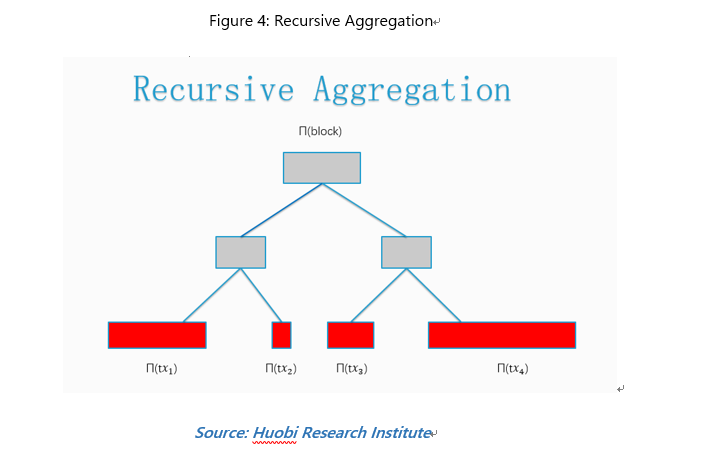
To enhance verification efficiency, EVM added Recursive Aggregation. Through Recursive Aggregation, those proofs, which originally must undergo the verification process separately, only need to be transformed a binary tree as root proof and verified; it is sufficient enough to verify that all proofs from leaf nodes are correct. Thus, verification efficiency is elevated.
As mentioned above, Zero Knowledge Proof friendly tech track employs the method of recreating a set of opcode to support Zero Knowledge Proof, which is much less impracticable that ZkSync 2.0 might be the first mature product in the market. Matter Labs has already launched closed beta for zkSync 2.0 that runs Uniswap V2; a trial experience to the Testnet is recommended if more relevant information is desired. The team has not announced the official schedule for the mainnet launch; it is likely that more tests must be conducted in order to confirm the security settings for this typical zkEVM.

Hermez

Hermez devoted to obtain full compatibility to Dapps of Ethereum by exploiting nativeommand set of EVM. It enables an optimized implementation from existing tools and ecosystem on Ethereum with higher security.

However, some native EVM commands are reluctant to Zero Knowledge Proof. The team alter the tough codes to some intermediary codes, micro opcode, to express the same logic that could be accepted. This kind of intermediary codes are customized and optimized; Zero Knowledge Proof is more likely to be generated in this case. Therefore, a balance is more likely to be achieved between maximizing Zero Knowledge Proof generation and optimizing compatibility of EVM, in the middle between the two tracks.

As native opcode of EVM requires executing environment, intermediary opcode is subject to a typical environment-uVM. UVM is composed by ROM and Main SM, and Main SM consists of various SM that could handle multiple functions.

Let’s dive into how Hermez produces proofs according to the program logic. A program has to be executed step by step no matter how complicated the logic is. For instance, extracting a number, completing a calculation, responding to a condition, jumping to another string, etc, the program reiterates various execution of commands until an ending condition is encountered. Although the trace, which represents the pathway of execution and number of executions, could be random, the result would be still within a certain scope of possible outcomes. That is to say, even though the program could not determine the specific route to go through, it would proceed on one of the Hermez stores these certain intermediary opcode in ROM, and configures responding codes according to different storage locations and commands characteristics, namely rom(x). During the process of program execution, a real opcode would be generated according to each operation, namely instTrace(x). Plookup algorism could be utilized in the process of verifying instTrace(x) is a subset of rom(x).
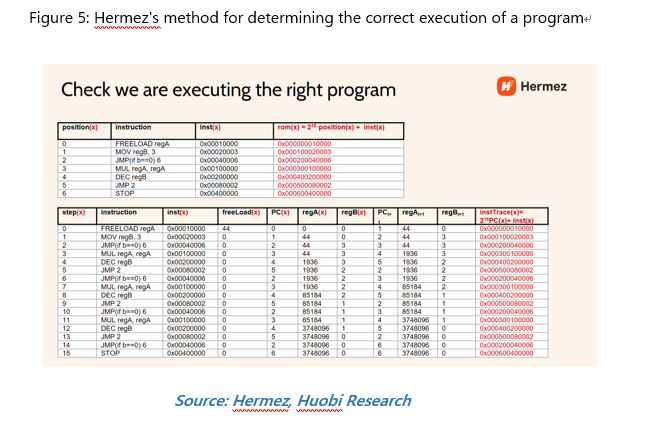
One could not identify a song if he or she could not hear the melody that belongs to the typical song. The same thing applies when identifying a program: A program is determined to be falsely executed if codes being executed are not genetically part of the program.

An assumption was made earlier by someone anonymous: It would be irrational to consider a program is correctly executed if it follows certain paths but in misplaced order. From my perspective, it is controversial to conclude the status of program execution merely by how it is executed. ZkEVM need, and only need to verify the exact codes of smart contract to be executed on Layer 2. Other possible glitch or the order of codes execution should not be part of zkEVM verification; developers who write and deploy the smart contract should be concerned.

In terms of proving the consistency of storage, Hermez utilize the prove of correlation for key-values. Compared to Applied ZKP, Hermez introduced Hash and Merkle Tree; a considerable amount of hash computations exist. However, the consumption for generating Zero Knowledge Proof by Hashing could be enormous, Hermez has not declared any official treatments in this case. From my own perspective, and consistent with the logic mentioned earlier this article, as long as the fixed logic is executed and verified, the degree of completion is entirely beyond concern.

The next proofs from SM could be integrated as a whole to be sent and verified by the verifiers.

Last but not least, Hermez employs a large amount of polynomial promises: the proof being generated is zk-STARK instead of zk-SNARK. Zk-STARK constitute a large proportion of storage, deviating from the principle that Rollup is born to minimize the amount of data submitted to Layer 1. As a result, Hermez proposed that a proof could be synthesized for a typical proof: A STARK proof could be generated first, PLONK or Groth 16 coule then come to play the role in synthesizing a shorter proof. It is commensurate with two separated compilation that directly reduce the consumption of the verifier and save unnecessary occupation of Layer 1 storage, achieving the function of scaling.

Hermez team prepares to launch Testnet in Q4 2021, and Mainnet in Q2 2022. Stay

AppliedZKP

Except zkSync 2.0 and Hermez, the construction of the “overpass” cannot be whole without AppliedZKP. An interesting topic is first spotted on AppliedZKP: Bus Mapping.

The inherent logic of Bus Mapping is to deal with storage and computation independently. When corresponding data is correctly read by a group of codes, executed in a preset order and intervened the account status, it would be considered as an effective execution. They categorized proof to “Status Proof” and “EVM Proof”. “Status Proof” is the final outcome that operations of status/storage/stacks are correctly executed, while EVM confirms the correct codes are executed within certain time range. With these two proofs in appearance, Ethereum Mainnet would be capable of authenticating whether programs are being executed on Layer 2.

To be more specific, “Status Proof” must match the status of operations related to storage completed in the EVM. An EVM storage is composed by 3 parts: Storage, Memory and Stack. “Status Proof” has to provide proof to each part respectively. Bus Mapping plays a role as a gateway transporting data between computation module and storage module. “Status Proof” would be the one to communicate with the computation module that data transported in Bus Mapping is consistent with that in the storage module.
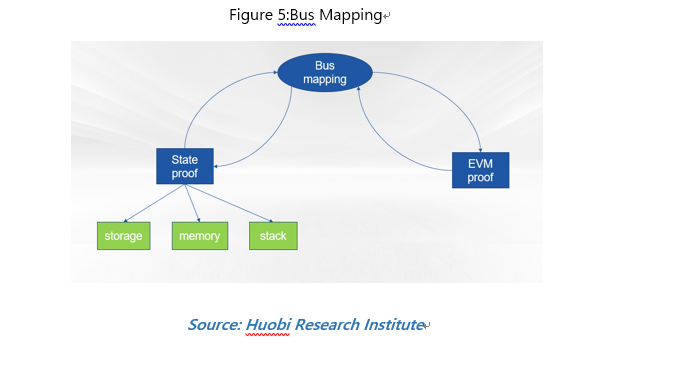
The reflection of Bus Mapping includes two operations according to status. One is to read the old status, the other is to rewrite a new status. Storage status (applicable for Storage, Memory and Stack) is organized by sorts of key-values , a confirmation of receiving the correct data is equal to a confirmation that data transported by Bus Mapping match the data in storage status. Furthermore, plookup algorism would be employed to verify that the keys and values transported by Bus Mapping are inside the source being read; keys and values match each other. Thus, plookup finishes the verification process, in other words, academically, a relationship of subset between two data sets is confirmed.

Plookup first transforms the proof of bit operation to the verification that if input and output match the default setting in the lookup table, and then to the summary of whether the group of vectors is inclusive of another. By doing so, the number of Gate Constraints could be reduced, therefore efficiency levels up.

Proof of EVM need to confirm every single operation in the program, including calculation (plus, minus, multiplication and division), logic operation (“and” , “or” and “not”), program redirect (call), etc.. Each step requires to undergo an entire process of realizing opcode, defining constraints and EVM execution result, confirming elements of execution step in order to complete the EVM circuit.

Summary and Expectations

For Ethereum, the well-known “highway”, ZK Rollup has increased total transaction volume over 500 times, boosting TPS to 2000, which is on the par with current VISA payment system. After vast development of ZKEVM, ZK Rollup would be capable of handling more cases and providing comprehensive support for various applications, thus stands out to be a pioneer in the Rollup market.

Pressure of traffic on Ethereum could be enormously alleviated thanks to faster transportation of data. On one hand, in this case, Ethereum stands a better chance in the fierce competition of newly emerged public chains, such as Solana, Avalanche, Fantom, etc.. As a result, these public chains lost comparative advantage in terms of performance so that they have to differentiate from each other and employ more innovative strategies in order to attract users and grow their ecosystem. On the other hand, more newly launched projects could deploy on Ethereum with a lower cost and still benefit from the mature and powerful Ethereum ecosystem. In all, ZKEVM is the key. We believe that the development of technology would eventually make everything mentioned above true. Perhaps, the discussion of ZKEVM should not be in the scale of “whether ZKEVM would come” any more, but “when ZKEVM would come” instead.

Besides, ZKEVM is not the finish line of Rollup. The future of Rollup could way beyond our imagination rather than a temporary transition. According to Vitalik, for Ethereum, Rollups are more than likely to be the sole scalable solution without trust in the short run, or even long term. The volume of Rollup could be optimized by the reduction of gas fee for the calldata part in the block, cutting more than 5 times cost down, which is less than 1% of that in Layer 1; when Sharding is successful, scalability of Rollup could be amplified exponentially that further curtails the transaction fee to negligibly low.

Rollup could prevail among all public chains other than Ethereum. A newly developed district would be sparsely populated because very few could perceive and embrace the advanced philosophy of design; traffic jam might not be an issue at this time. So are the public chains. However, traffic would be eventually accumulated to a certain level that may cause traffic jam, an “overpass” is necessary sooner or later to sooth the situation. Rollup remains indispensable considering possible consequences that may appear in the future, and ZKEVM would play a vital role in the challenges yet to come.

Lecturas Relacionadas

Desde el IDE hasta la terminal: Un manual práctico de ingeniería de agentes

De la interfaz a la terminal: Un manual práctico de ingeniería de agentes Matt Van Horn desató un debate en marzo de 2026 al afirmar que desarrollaba sin abrir un IDE gráfico, usando solo la terminal y un archivo `plan.md`. Su método, recopilado luego por Meng Shao, se basa en un ciclo de "Research → Plan → Work" y 22 técnicas prácticas. Este flujo de trabajo reemplaza la edición manual y la retroalimentación visual del IDE (resaltado, depuración) por un modelo de "delegación por lotes". La persona se centra en definir la dirección y revisar planes, mientras los agentes ejecutan. El archivo `plan.md` es clave: no es documentación para humanos, sino un "contrato" externo y persistente para guiar y restringir a los agentes, evitando la "corrupción del contexto" en conversaciones largas. La fase de **Research** usa herramientas como `last30days-skill` para que el agente analice información comunitaria antes de actuar. En la fase de **Plan**, se genera y revisa minuciosamente el `plan.md` con `ce:plan`, inyectando conocimiento experto. La fase de **Work**, con `ce:work`, delega la ejecución a sub-agentes paralelos. Se enfatiza dedicar el 80% del tiempo a planificar/revisar y solo el 20% a ejecutar. Se destacan seis técnicas: generar planes inmediatamente sin pre-pensar en exceso; hacer que el agente resuma los planes largos; usar múltiples terminales en paralelo; usar entrada por voz para diseños complejos; activar tareas asíncronas por correo; y cargar "skills" comunitarios para ampliar capacidades. Las críticas señalan que este flujo requiere experiencia en diseño de sistemas y prompt engineering, y no es apto para aprendices que dependen de la retroalimentación visual del IDE. Concentra el riesgo en la fase de revisión del plan: un error allí se amplifica. Además, existe el riesgo de "psicosis de IA", donde optimizar el flujo de trabajo se convierte en un fin en sí mismo. En resumen, este enfoque es un amplificador de eficacia para quienes ya saben lo que necesitan construir, no una herramienta de aprendizaje. Sus componentes principales (CLIs, plugins como Compound Engineering, skills) evolucionan rápidamente, definiendo una ventana temprana para la experimentación.

marsbitHace 45 min(s)

Desde el IDE hasta la terminal: Un manual práctico de ingeniería de agentes

marsbitHace 45 min(s)

"Xiaomei" y Yuanbao se interconectan, ¿están preparando el camino para los Agentes Inteligentes de WeChat?

El CEO de Meituan, Wang Xing, anunció tras los resultados del primer trimestre de 2026 que su asistente de IA "Xiaomei" se integrará con "Yuanbao" de Tencent. Esta colaboración permitirá a los usuarios solicitar servicios de vida local en Yuanbao y desencadenar automáticamente una comunicación entre agentes para acceder a pedidos de comida a domicilio y otros servicios de Meituan. El artículo analiza este movimiento como una respuesta estratégica de Meituan frente a la creciente competencia. Mientras plataformas como Doubao (ByteDance) y Qianwen (Alibaba) están construyendo ecosistemas cerrados ("jardines amurallados") integrando sus asistentes de IA con sus propios servicios comerciales, Meituan carece de un gran portal de IA independiente. La alianza con Yuanbao le permite a Meituan utilizar un punto de entrada conversacional de IA a cambio de proporcionar su infraestructura de servicios y datos de vida local, una relación vista como complementaria. Sin embargo, la colaboración enfrenta desafíos: la limitada experiencia del usuario debido a la arquitectura "Agente a Agente", la compleja distribución de beneficios comerciales y la necesidad de una integración fluida entre dos empresas diferentes. El artículo sitúa esta asociación en un contexto más amplio, vinculándola con los informes sobre el desarrollo de un "Agente de IA" nativo en WeChat. La cooperación entre Meituan y Yuanbao se interpreta como una prueba piloto o un modelo para futuras integraciones de alto nivel ("Agente a Agente") dentro del ecosistema de WeChat. Su éxito podría sentar un precedente crucial para atraer a otras grandes plataformas a la futura red de agentes de inteligencia artificial de Tencent, determinando en última instancia el alcance de dicho ecosistema.

marsbitHace 2 hora(s)

"Xiaomei" y Yuanbao se interconectan, ¿están preparando el camino para los Agentes Inteligentes de WeChat?

marsbitHace 2 hora(s)

Morningstar valora SpaceX en sólo 780.000 millones, menos de la mitad del objetivo de la OPI, ¿la OPI más grande de la historia está sobrevalorada?

La firma de investigación Morningstar ha emitido un informe sobre la valoración de SpaceX antes de su salida a bolsa, estableciendo su valor justo en 780 mil millones de dólares, un 45% del objetivo de 1.75 billones que persigue la empresa. La valoración de Morningstar separa su negocio central de lanzamientos y Starlink (611 mil millones) de las operaciones de IA, como xAI, que reciben una valoración ponderada de solo 170 mil millones. A pesar de esta crítica, la analista reconoce que factores como la baja oferta inicial de acciones, la fuerte demanda por empresas de infraestructura de IA y la posible inclusión rápida en el índice Nasdaq 100 podrían impulsar el precio a corto plazo tras la OPV. No obstante, advierte sobre presiones de venta a medio plazo debido a un calendario escalonado de desbloqueo de acciones para empleados e inversores internos. Elon Musk respondió a las dudas sobre la valoración sugiriendo que el mercado juzgará, en referencia al éxito de Tesla. Morningstar también destaca riesgos como la refinanciación de un préstamo puente de 200 mil millones de dólares y cuestiones de gobierno corporativo, incluida la estructura de control de voto de Musk y la adquisición reciente de xAI. La OPV, la más grande de la historia, está prevista para la segunda semana de junio.

marsbitHace 2 hora(s)

Morningstar valora SpaceX en sólo 780.000 millones, menos de la mitad del objetivo de la OPI, ¿la OPI más grande de la historia está sobrevalorada?

marsbitHace 2 hora(s)

a16z: Por qué los mercados de predicción serán la infraestructura de las "probabilidades futuras"

Los mercados de predicción, al convertir eventos futuros en contratos comercializables, permiten a los participantes expresar juicios con dinero real y agregar información dispersa en tiempo real, generando una probabilidad aproximada a través del precio. A diferencia de encuestas o predicciones de expertos, su ventaja radica en el incentivo económico para que participen quienes poseen información relevante. Estos mercados no son máquinas de profecía, sino una aplicación directa de la capacidad de los mercados para agregar información. Permiten abordar cuestiones específicas, desde geopolítica hasta el rendimiento de modelos de IA, que los activos financieros tradicionales no pueden expresar. Sin embargo, su eficacia no es automática. Depende de quién comercia, del diseño de los contratos, de la determinación de resultados y de la resistencia a la manipulación por parte de actores internos o interesados. Sin una participación informada, los precios son ruido; con información privilegiada, se pierde equidad. Por tanto, el siguiente paso no es solo escalar, sino construir una infraestructura más confiable: reglas de participación transparentes, diseño de contratos claro, mecanismos de liquidación auditables y restricciones contra la manipulación. Su verdadero valor reside en proporcionar una nueva señal de probabilidad pública en entornos de alta incertidumbre.

marsbitHace 2 hora(s)

a16z: Por qué los mercados de predicción serán la infraestructura de las "probabilidades futuras"

marsbitHace 2 hora(s)

Trading

Spot
Futuros

Artículos destacados

Qué es ETH 2.0

ETH 2.0: Una Nueva Era para Ethereum Introducción ETH 2.0, conocido ampliamente como Ethereum 2.0, marca una actualización monumental de la blockchain de Ethereum. Esta transición no es solo un cambio de imagen; busca mejorar fundamentalmente la escalabilidad, seguridad y sostenibilidad de la red. Con un cambio del mecanismo de consenso intensivo en energía Prueba de Trabajo (PoW) a una Prueba de Participación (PoS) más eficiente, ETH 2.0 promete un enfoque transformador para el ecosistema de blockchain. ¿Qué es ETH 2.0? ETH 2.0 es un conjunto de actualizaciones distintivas e interconectadas centradas en optimizar las capacidades y el rendimiento de Ethereum. La remodelación está diseñada para abordar desafíos críticos que el mecanismo de Ethereum existente ha enfrentado, particularmente en relación con la velocidad de transacción y la congestión de la red. Objetivos de ETH 2.0 Los objetivos principales de ETH 2.0 giran en torno a mejorar tres aspectos fundamentales: Escalabilidad: Con el objetivo de mejorar significativamente la cantidad de transacciones que la red puede manejar por segundo, ETH 2.0 busca superar la actual limitación de aproximadamente 15 transacciones por segundo, potencialmente alcanzando miles. Seguridad: Las medidas de seguridad mejoradas son fundamentales para ETH 2.0, particularmente a través de una mayor resistencia contra ciberataques y la preservación del ethos descentralizado de Ethereum. Sostenibilidad: El nuevo mecanismo de PoS está diseñado no solo para mejorar la eficiencia, sino también para reducir drásticamente el consumo de energía, alineando el marco operativo de Ethereum con consideraciones medioambientales. ¿Quién es el Creador de ETH 2.0? La creación de ETH 2.0 se puede atribuir a la Fundación Ethereum. Esta organización sin fines de lucro, que desempeña un papel crucial en el apoyo al desarrollo de Ethereum, está liderada por el notable cofundador Vitalik Buterin. Su visión de un Ethereum más escalable y sostenible ha sido la fuerza impulsora detrás de esta actualización, involucrando contribuciones de una comunidad global de desarrolladores y entusiastas dedicados a mejorar el protocolo. ¿Quiénes son los Inversores de ETH 2.0? Aunque los detalles sobre los inversores de ETH 2.0 no se han hecho públicos, se sabe que la Fundación Ethereum recibe apoyo de varias organizaciones e individuos en el ámbito de blockchain y tecnología. Estos socios incluyen firmas de capital de riesgo, empresas tecnológicas y organizaciones filantrópicas que comparten un interés mutuo en apoyar el desarrollo de tecnologías descentralizadas e infraestructura de blockchain. ¿Cómo Funciona ETH 2.0? ETH 2.0 es notable por introducir una serie de características clave que lo diferencian de su predecesor. Prueba de Participación (PoS) La transición a un mecanismo de consenso PoS es uno de los cambios más destacados de ETH 2.0. A diferencia de PoW, que depende de la minería intensiva en energía para la verificación de transacciones, PoS permite a los usuarios validar transacciones y crear nuevos bloques de acuerdo con la cantidad de ETH que apuestan en la red. Esto conduce a una mayor eficiencia energética, reduciendo el consumo en aproximadamente un 99.95%, convirtiendo Ethereum 2.0 en una alternativa considerablemente más ecológica. Cadenas Shard Las cadenas shard son otra innovación crítica de ETH 2.0. Estas cadenas más pequeñas operan en paralelo con la cadena principal de Ethereum, lo que permite procesar múltiples transacciones simultáneamente. Este enfoque mejora la capacidad general de la red, abordando las preocupaciones de escalabilidad que han plagado a Ethereum. Cadena Beacon En el núcleo de ETH 2.0 se encuentra la Cadena Beacon, que coordina la red y gestiona el protocolo PoS. Actúa como una especie de organizador: supervisa a los validadores, asegura que los shards permanezcan conectados a la red y monitorea la salud general del ecosistema blockchain. Cronología de ETH 2.0 El viaje de ETH 2.0 ha estado marcado por varios hitos clave que trazan la evolución de esta significativa actualización: Diciembre 2020: El lanzamiento de la Cadena Beacon marcó la introducción de PoS, preparando el escenario para la migración a ETH 2.0. Septiembre 2022: La finalización de “La Fusión” representa un momento pivotal donde la red Ethereum transicionó exitosamente de un marco PoW a un marco PoS, anunciando una nueva era para Ethereum. 2023: Se espera el lanzamiento de cadenas shard con el fin de mejorar aún más la escalabilidad de la red Ethereum, consolidando ETH 2.0 como una plataforma robusta para aplicaciones y servicios descentralizados. Características Clave y Beneficios Escalabilidad Mejorada Una de las ventajas más significativas de ETH 2.0 es su escalabilidad mejorada. La combinación de PoS y cadenas shard permite a la red expandir su capacidad, permitiendo acomodar un volumen de transacciones muy mayor en comparación con el sistema legado. Eficiencia Energética La implementación de PoS representa un gran paso hacia la eficiencia energética en la tecnología blockchain. Al reducir drásticamente el consumo de energía, ETH 2.0 no solo reduce los costos operativos, sino que también se alinea más estrechamente con los objetivos globales de sostenibilidad. Seguridad Mejorada Los mecanismos actualizados de ETH 2.0 contribuyen a una mayor seguridad en toda la red. El despliegue de PoS, junto con medidas de control innovadoras establecidas a través de las cadenas shard y la Cadena Beacon, asegura un mayor grado de protección contra posibles amenazas. Costos Más Bajos para los Usuarios A medida que la escalabilidad mejora, los efectos sobre los costos de transacción también serán evidentes. Se espera que la mayor capacidad y la reducción de la congestión se traduzcan en tarifas más bajas para los usuarios, haciendo de Ethereum una opción más accesible para transacciones diarias. Conclusión ETH 2.0 marca una evolución significativa en el ecosistema de la blockchain de Ethereum. Al abordar cuestiones clave como la escalabilidad, el consumo de energía, la eficiencia en las transacciones y la seguridad en general, la importancia de esta actualización no puede subestimarse. El cambio a Prueba de Participación, la introducción de cadenas shard y el trabajo fundamental de la Cadena Beacon son indicativos de un futuro donde Ethereum puede satisfacer las crecientes demandas del mercado descentralizado. En una industria impulsada por la innovación y el progreso, ETH 2.0 se erige como un testimonio de las capacidades de la tecnología blockchain para allanar el camino hacia una economía digital más sostenible y eficiente.

217 Vistas totalesPublicado en 2024.04.04Actualizado en 2024.12.03

Qué es ETH 2.0

Qué es ETH 3.0

ETH3.0 y $eth 3.0: Un Examen en Profundidad del Futuro de Ethereum Introducción En el paisaje en rápida evolución de las criptomonedas y la tecnología blockchain, ETH3.0, a menudo denotado como $eth 3.0, ha emergido como un tema de considerable interés y especulación. El término abarca dos conceptos principales que merecen clarificación: Ethereum 3.0: Esto representa una posible actualización futura destinada a aumentar las capacidades de la blockchain de Ethereum existente, centrándose particularmente en mejorar la escalabilidad y el rendimiento. ETH3.0 Meme Token: Este proyecto de criptomoneda distinto busca aprovechar la blockchain de Ethereum para crear un ecosistema centrado en memes, promoviendo la participación dentro de la comunidad de criptomonedas. Entender estos aspectos de ETH3.0 es esencial no solo para los entusiastas de las criptomonedas, sino también para aquellos que observan tendencias tecnológicas más amplias en el espacio digital. ¿Qué es ETH3.0? Ethereum 3.0 Ethereum 3.0 se presenta como una actualización propuesta a la red Ethereum ya establecida, que ha sido la columna vertebral de muchas aplicaciones descentralizadas (dApps) y contratos inteligentes desde su inicio. Las mejoras previstas se concentran principalmente en la escalabilidad, integrando tecnologías avanzadas como el sharding y las pruebas de conocimiento cero (zk-proofs). Estas innovaciones tecnológicas tienen como objetivo facilitar un número sin precedentes de transacciones por segundo (TPS), que podría alcanzar millones, abordando así una de las limitaciones más significativas que enfrenta la tecnología blockchain actual. La mejora no es meramente técnica, sino también estratégica; está destinada a preparar la red Ethereum para una adopción y utilidad generalizada en un futuro marcado por una mayor demanda de soluciones descentralizadas. ETH3.0 Meme Token En contraste con Ethereum 3.0, el ETH3.0 Meme Token se aventura en un dominio más ligero y juguetón al combinar la cultura de memes de internet con la dinámica de las criptomonedas. Este proyecto permite a los usuarios comprar, vender e intercambiar memes en la blockchain de Ethereum, proporcionando una plataforma que fomenta la participación comunitaria a través de la creatividad y los intereses compartidos. El ETH3.0 Meme Token tiene como objetivo demostrar cómo la tecnología blockchain puede intersecarse con la cultura digital, creando casos de uso que son tanto entretenidos como financieramente viables. ¿Quién es el Creador de ETH3.0? Ethereum 3.0 La iniciativa hacia Ethereum 3.0 es impulsada principalmente por un consorcio de desarrolladores e investigadores dentro de la comunidad Ethereum, destacando a Justin Drake. Conocido por sus ideas y contribuciones a la evolución de Ethereum, Drake ha sido una figura prominente en las discusiones sobre la transición de Ethereum a una nueva capa de consenso, conocida como la “Beam Chain.” Este enfoque colaborativo en el desarrollo significa que Ethereum 3.0 no es el producto de un creador singular, sino más bien una manifestación de la ingenio colectivo centrado en avanzar en la tecnología blockchain. ETH3.0 Meme Token Los detalles sobre el creador del ETH3.0 Meme Token son actualmente indetectables. La naturaleza de los tokens de memes a menudo conduce a una estructura más descentralizada y guiada por la comunidad, lo que podría explicar la falta de atribución específica. Esto se alinea con la ética de la mayor comunidad cripto, donde la innovación a menudo surge de esfuerzos colaborativos en lugar de individuales. ¿Quiénes son los Inversores de ETH3.0? Ethereum 3.0 El apoyo a Ethereum 3.0 proviene principalmente de la Fundación Ethereum junto a una entusiasta comunidad de desarrolladores e inversores. Esta asociación fundacional proporciona un grado significativo de legitimidad y mejora la perspectiva de implementación exitosa, ya que aprovecha la confianza y la credibilidad construidas a lo largo de años de operaciones de la red. En el clima cambiante de las criptomonedas, el apoyo de la comunidad juega un papel crucial en impulsar el desarrollo y la adopción, posicionando a Ethereum 3.0 como un serio competidor para los futuros avances en blockchain. ETH3.0 Meme Token Si bien las fuentes actualmente disponibles no brindan información explícita sobre las fundaciones de inversión u organizaciones que respaldan el ETH3.0 Meme Token, es indicativo del modelo de financiamiento típico para los tokens de memes, que a menudo se basa en el apoyo de base y la participación comunitaria. Los inversores en tales proyectos suelen consistir en individuos motivados por el potencial de innovación impulsada por la comunidad y el espíritu de cooperación que se encuentra en la comunidad cripto. ¿Cómo Funciona ETH3.0? Ethereum 3.0 Las características distintivas de Ethereum 3.0 radican en su propuesta implementación de la tecnología de sharding y zk-proof. El sharding es un método de particionamiento de la blockchain en partes más pequeñas y manejables o “shards,” que pueden procesar transacciones de manera concurrente en lugar de secuencial. Esta descentralización del procesamiento ayuda a prevenir la congestión y asegura que la red se mantenga receptiva incluso bajo una carga pesada. La tecnología de prueba de conocimiento cero (zk-proof) añade otra capa de sofisticación al permitir la validación de transacciones sin revelar los datos subyacentes involucrados. Este aspecto no solo mejora la privacidad, sino que también aumenta la eficiencia general de la red. También se habla de incorporar una Máquina Virtual de Ethereum de conocimiento cero (zkEVM) en esta actualización, ampliando aún más las capacidades y la utilidad de la red. ETH3.0 Meme Token El ETH3.0 Meme Token se distingue al capitalizar sobre la popularidad de la cultura de memes. Establece un mercado para que los usuarios participen en el intercambio de memes, no solo por entretenimiento sino también por el potencial de ganancia económica. Al integrar características como staking, provisión de liquidez y mecanismos de gobernanza, el proyecto fomenta un entorno que incentiva la interacción y participación de la comunidad. Al ofrecer una mezcla única de entretenimiento y oportunidad económica, el ETH3.0 Meme Token tiene como objetivo atraer a una audiencia diversa, desde entusiastas de las criptomonedas hasta conocedores de memes casuales. Cronología de ETH3.0 Ethereum 3.0 11 de noviembre de 2024: Justin Drake insinúa la próxima actualización ETH 3.0, centrada en las mejoras de escalabilidad. Este anuncio significa el inicio de discusiones formales sobre la futura arquitectura de Ethereum. 12 de noviembre de 2024: Se espera que la propuesta anticipada para Ethereum 3.0 sea revelada en Devcon en Bangkok, estableciendo el escenario para comentarios más amplios de la comunidad y potenciales próximos pasos en el desarrollo. ETH3.0 Meme Token 21 de marzo de 2024: El ETH3.0 Meme Token se lista oficialmente en CoinMarketCap, marcando su incursión en el dominio público de las criptomonedas y aumentando la visibilidad de su ecosistema basado en memes. Puntos Clave En conclusión, Ethereum 3.0 representa una evolución significativa dentro de la red Ethereum, enfocándose en superar limitaciones relacionadas con la escalabilidad y el rendimiento a través de tecnologías avanzadas. Sus actualizaciones propuestas reflejan un enfoque proactivo hacia las futuras demandas y la usabilidad. Por otro lado, el ETH3.0 Meme Token encapsula la esencia de la cultura impulsada por la comunidad en el espacio de las criptomonedas, aprovechando la cultura de memes para crear plataformas atractivas que fomenten la creatividad y participación de los usuarios. Entender los distintos propósitos y funcionalidades de ETH3.0 y $eth 3.0 es fundamental para cualquier persona interesada en los desarrollos en curso dentro del espacio cripto. Con ambas iniciativas abriendo caminos únicos, subrayan colectivamente la naturaleza dinámica y multifacética de la innovación blockchain.

229 Vistas totalesPublicado en 2024.04.04Actualizado en 2024.12.03

Qué es ETH 3.0

Cómo comprar ETH

¡Bienvenido a HTX.com! Hemos hecho que comprar Ethereum (ETH) sea simple y conveniente. Sigue nuestra guía paso a paso para iniciar tu viaje de criptos.Paso 1: crea tu cuenta HTXUtiliza tu correo electrónico o número de teléfono para registrarte y obtener una cuenta gratuita en HTX. Experimenta un proceso de registro sin complicaciones y desbloquea todas las funciones.Obtener mi cuentaPaso 2: ve a Comprar cripto y elige tu método de pagoTarjeta de crédito/débito: usa tu Visa o Mastercard para comprar Ethereum (ETH) al instante.Saldo: utiliza fondos del saldo de tu cuenta HTX para tradear sin problemas.Terceros: hemos agregado métodos de pago populares como Google Pay y Apple Pay para mejorar la comodidad.P2P: tradear directamente con otros usuarios en HTX.Over-the-Counter (OTC): ofrecemos servicios personalizados y tipos de cambio competitivos para los traders.Paso 3: guarda tu Ethereum (ETH)Después de comprar tu Ethereum (ETH), guárdalo en tu cuenta HTX. Alternativamente, puedes enviarlo a otro lugar mediante transferencia blockchain o utilizarlo para tradear otras criptomonedas.Paso 4: tradear Ethereum (ETH)Tradear fácilmente con Ethereum (ETH) en HTX's mercado spot. Simplemente accede a tu cuenta, selecciona tu par de trading, ejecuta tus trades y monitorea en tiempo real. Ofrecemos una experiencia fácil de usar tanto para principiantes como para traders experimentados.

4.7k Vistas totalesPublicado en 2024.12.10Actualizado en 2026.06.02

Cómo comprar ETH

Discusiones

Bienvenido a la comunidad de HTX. Aquí puedes mantenerte informado sobre los últimos desarrollos de la plataforma y acceder a análisis profesionales del mercado. A continuación se presentan las opiniones de los usuarios sobre el precio de ETH (ETH).

活动图片