The S&P 500 and the Nasdaq Composite index suffered their worst weekly performance since June as investors remain concerned that the Federal Reserve will have to continue with its aggressive monetary policy to curb inflation and that could lead to a recession in the United States.
Bitcoin (BTC) remains closely correlated to the S&P 500 and is on track to fall more than 9% this week. If this correlation continues, it could bring more pain to the cryptocurrency markets because Goldman Sachs strategist Sharon Bell cautioned that aggressive rate hikes could trigger a 26% fall in the S&P 500.
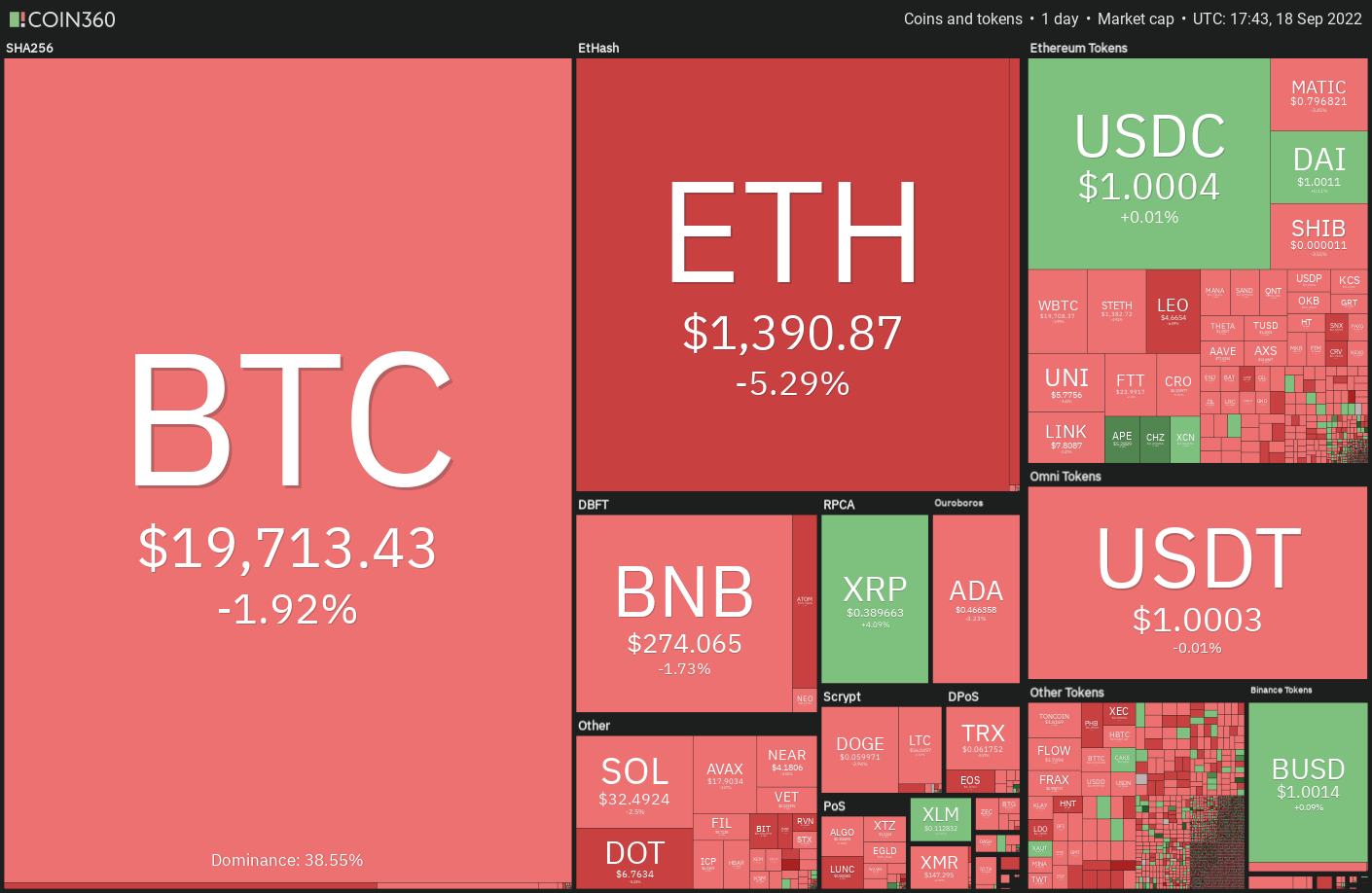
Crypto market data daily view. Source: Coin360The majority expect the Fed to hike rates by 75 basis points in the next meeting on Sept. 20 to Sept. 21 but the FedWatch Tool shows an 18% probability of a 100 basis point rate hike. This uncertainty could keep traders on the edge, resulting in heightened short-term volatility.
If the Fed’s rate hike is in line with market expectations, select cryptocurrencies could attract buyers. Let’s study the charts of five cryptocurrencies that are positive in the near term.
BTC/USDT
Bitcoin recovered from $19,320 on Sept. 16 and rallied above $20,000 on Sept. 17 but the bulls are struggling to sustain the higher levels. This suggests that bears are active at higher levels.
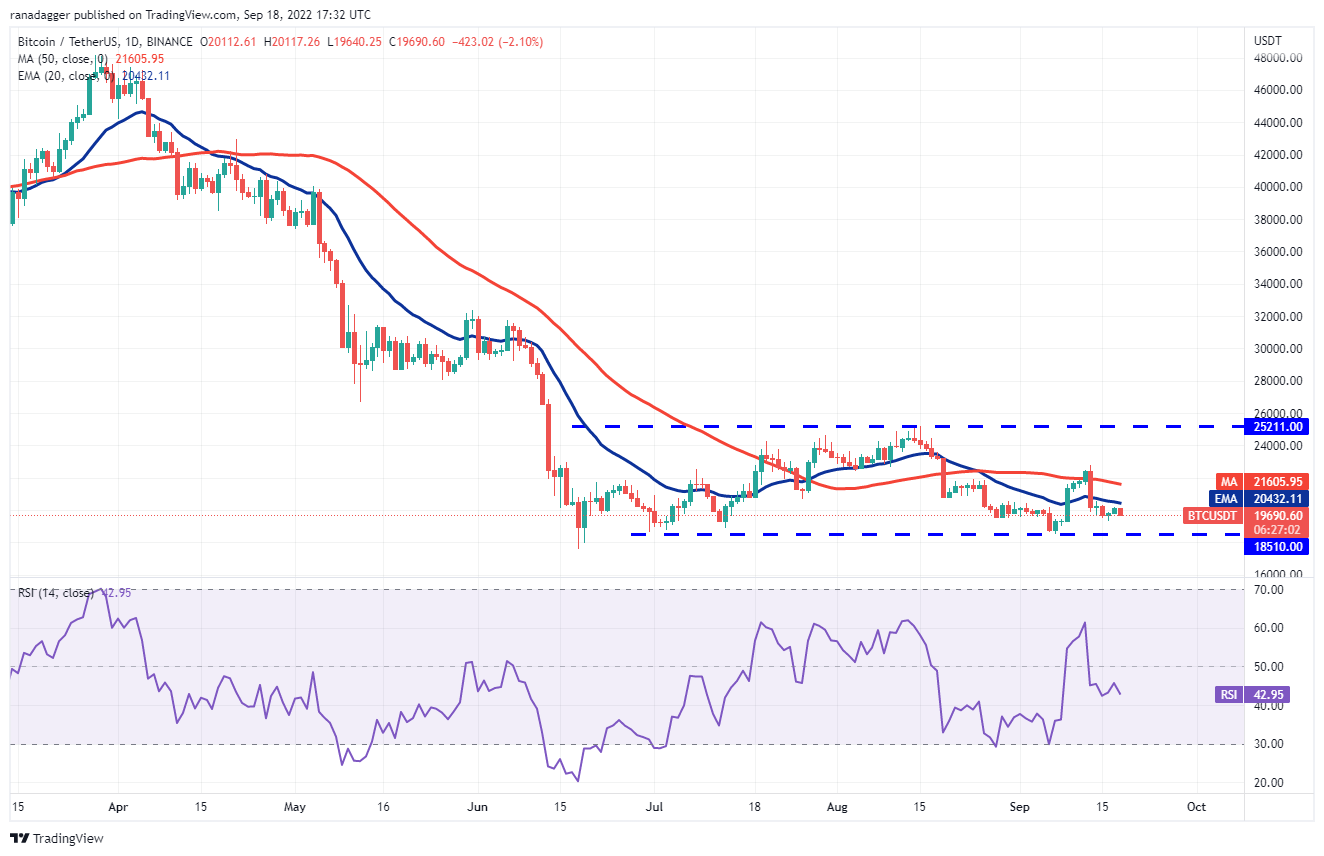
BTC/USDT daily chart. Source: TradingViewThe 20-day exponential moving average ($20,432) has turned down gradually and the relative strength index (RSI) is in the negative zone, suggesting that the sentiment remains negative and traders are selling near overhead resistance levels.
If the price continues lower and breaks below $19,320, the BTC/USDT pair could decline to $18,510. Buyers are expected to defend this level with vigor.
On the upside, the 50-day simple moving average ($21,605) is the key level to keep an eye on. If bulls push the price above it, the pair could rally to $25,211. A break and close above this resistance could indicate the start of a new uptrend.
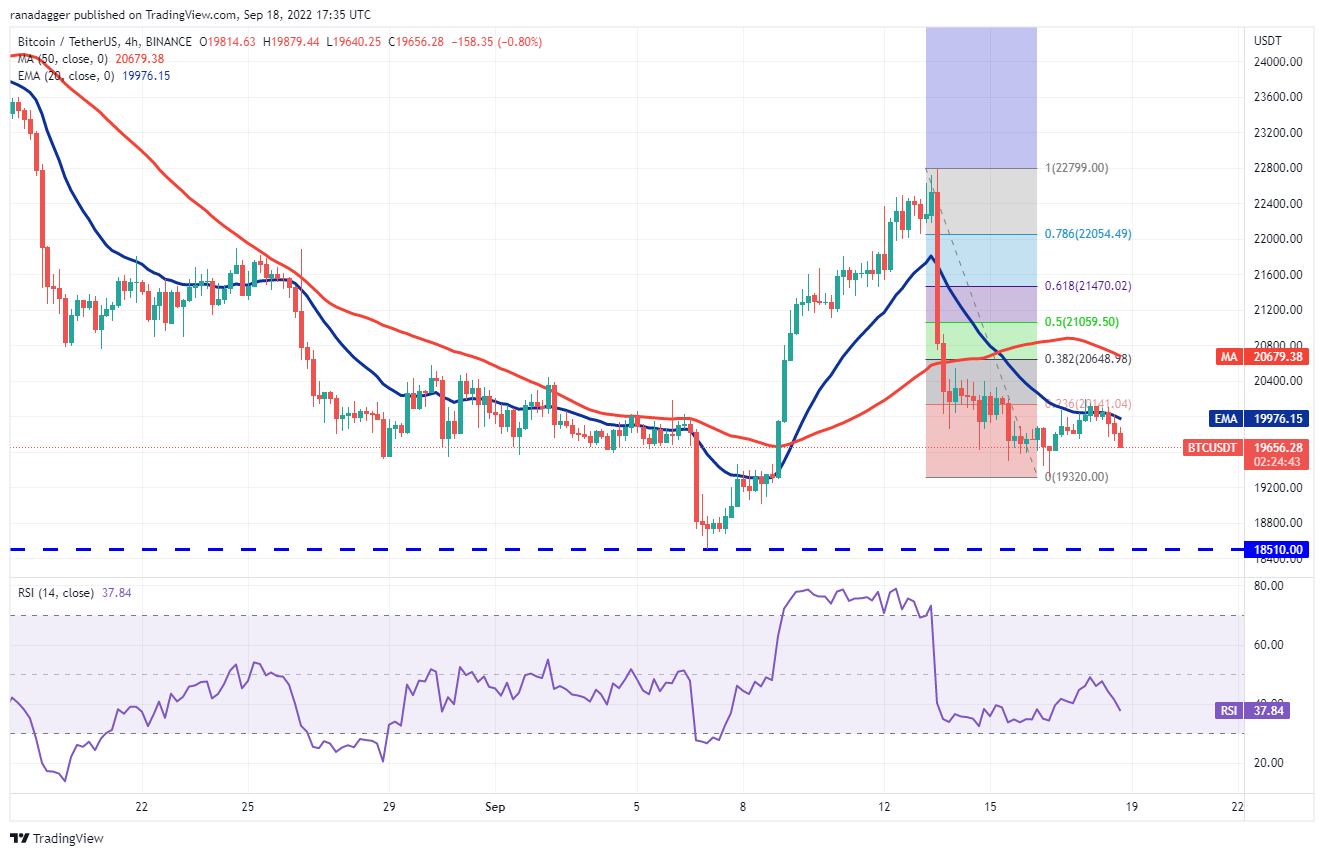
BTC/USDT 4-hour chart. Source: TradingViewThe 4-hour chart shows that the sellers are trying to stall the recovery at the 20-EMA. This indicates that the bears are in no mood to surrender their advantage. If the weakness persists and the price breaks below $19,320, the pair could slide to $18,510.
Conversely, if the price turns up from the current level and breaks above the 20-EMA, the recovery could extend to the 50-SMA. This level may again act as a resistance but if this obstacle is cleared, the next stop could be the 61.8% Fibonacci retracement level of $21,470.
XRP/USDT
Ripple (XRP) has been stuck inside a range between $0.30 and $0.39 for many days. The price has reached the resistance of the range and if bulls clear this hurdle, it could signal the start of a new uptrend.
XRP/USDT daily chart. Source: TradingViewIn a range, traders usually buy near the support and sell close to the resistance. If the price turns down sharply from the current level and breaks below the moving averages, it will indicate that the XRP/USDT pair may extend its consolidation for a few more days.
Although the moving averages are criss-crossing each other, the RSI has jumped into positive territory, indicating that bulls have a slight edge. If buyers drive and sustain the price above $0.39, the pair could rally to $0.48.
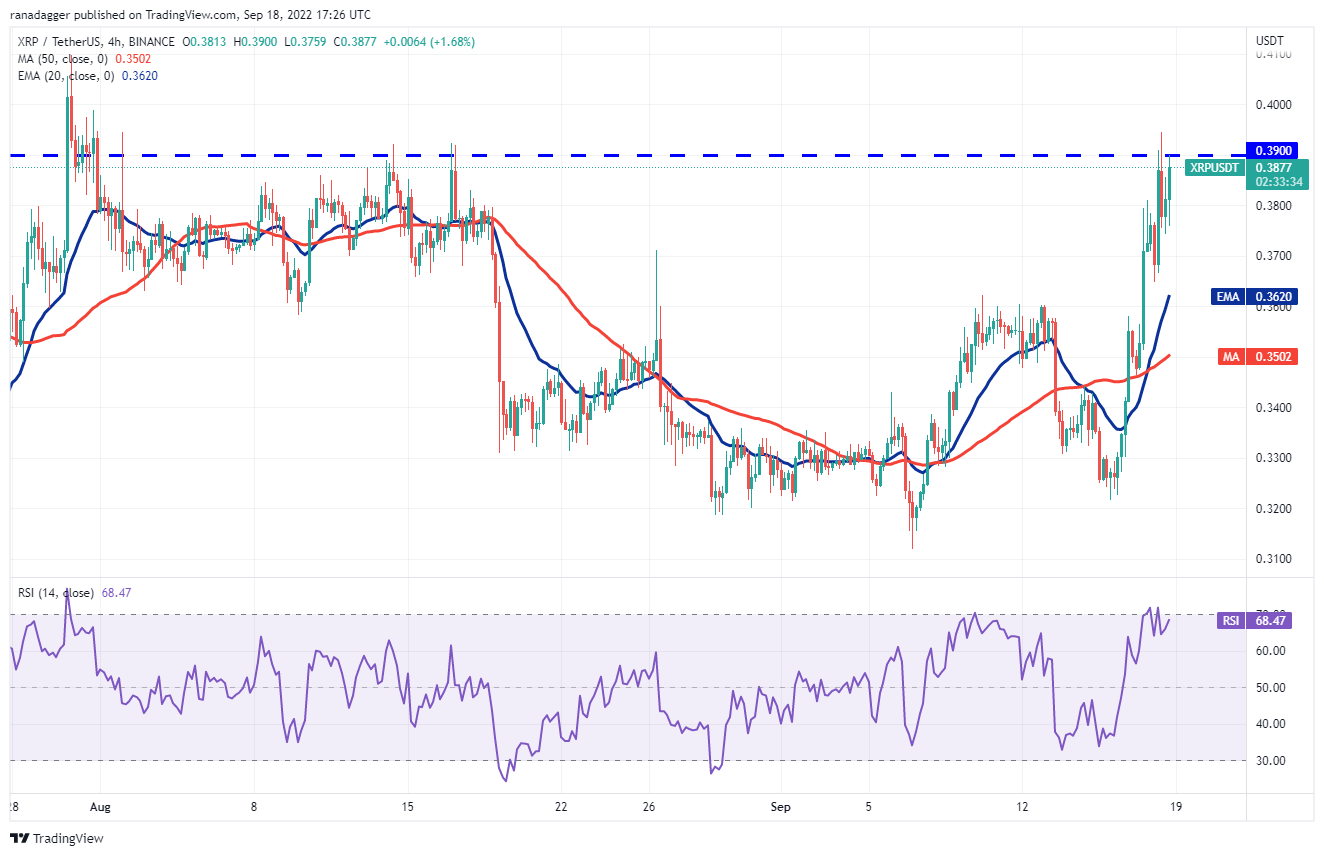
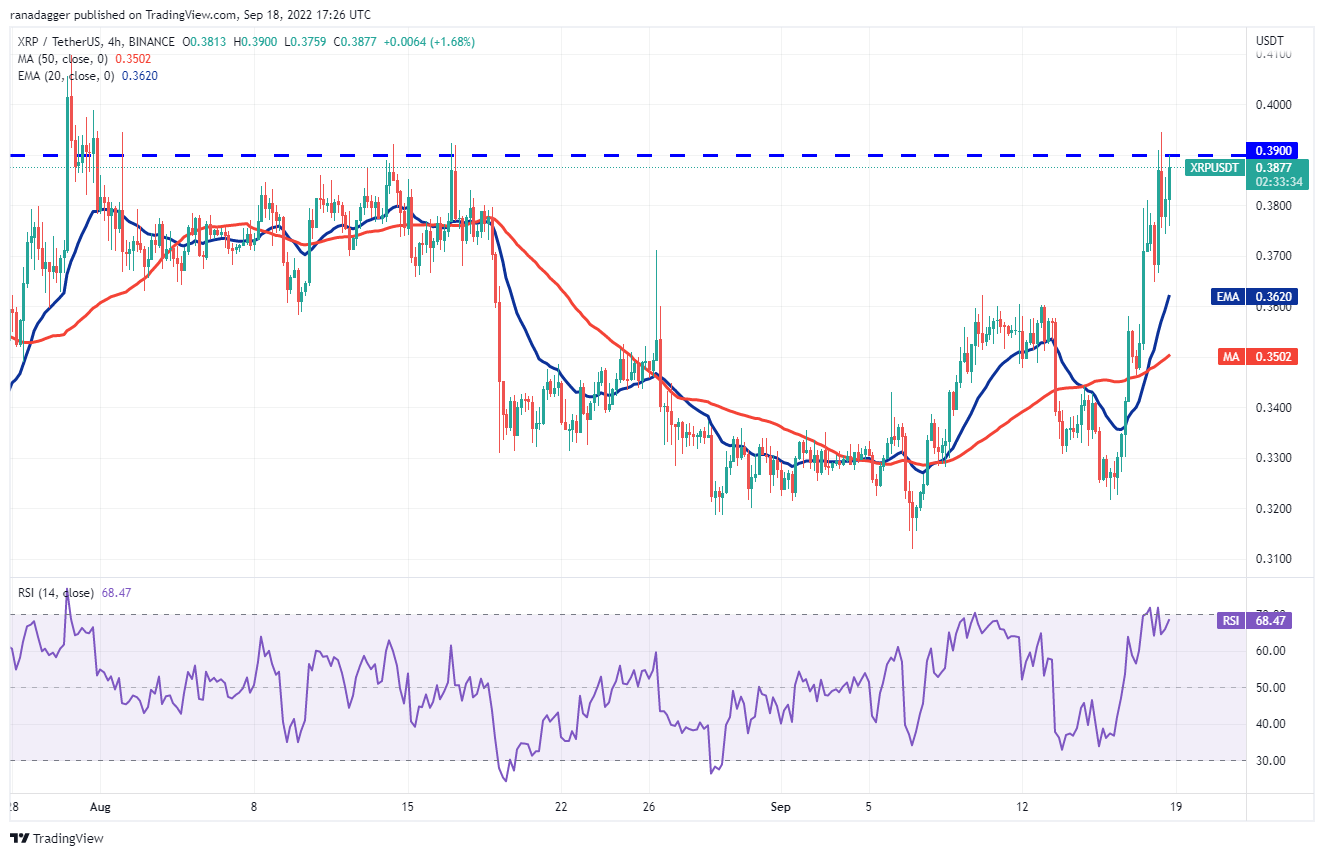
XRP/USDT 4-hour chart. Source: TradingViewThe pair rallied sharply from $0.32 to $0.39, indicating strong buying by the bulls. The 20-EMA has turned up and the RSI is in the positive zone, suggesting that the path of least resistance is to the upside.
If the price continues higher and breaks above $0.39, the bullish momentum could pick up and the pair could rally to $0.41. This level may act as a resistance but if buyers flip the $0.39 level into support, the up-move could resume.
LINK/USDT
Chainlink (LINK) has been stuck inside a large range between $5.50 and $9.50 for the past several weeks, indicating that buyers are attempting to form a bottom. The bulls pushed the price above the moving averages and the RSI jumped into positive territory, indicating that the positive momentum could be improving.
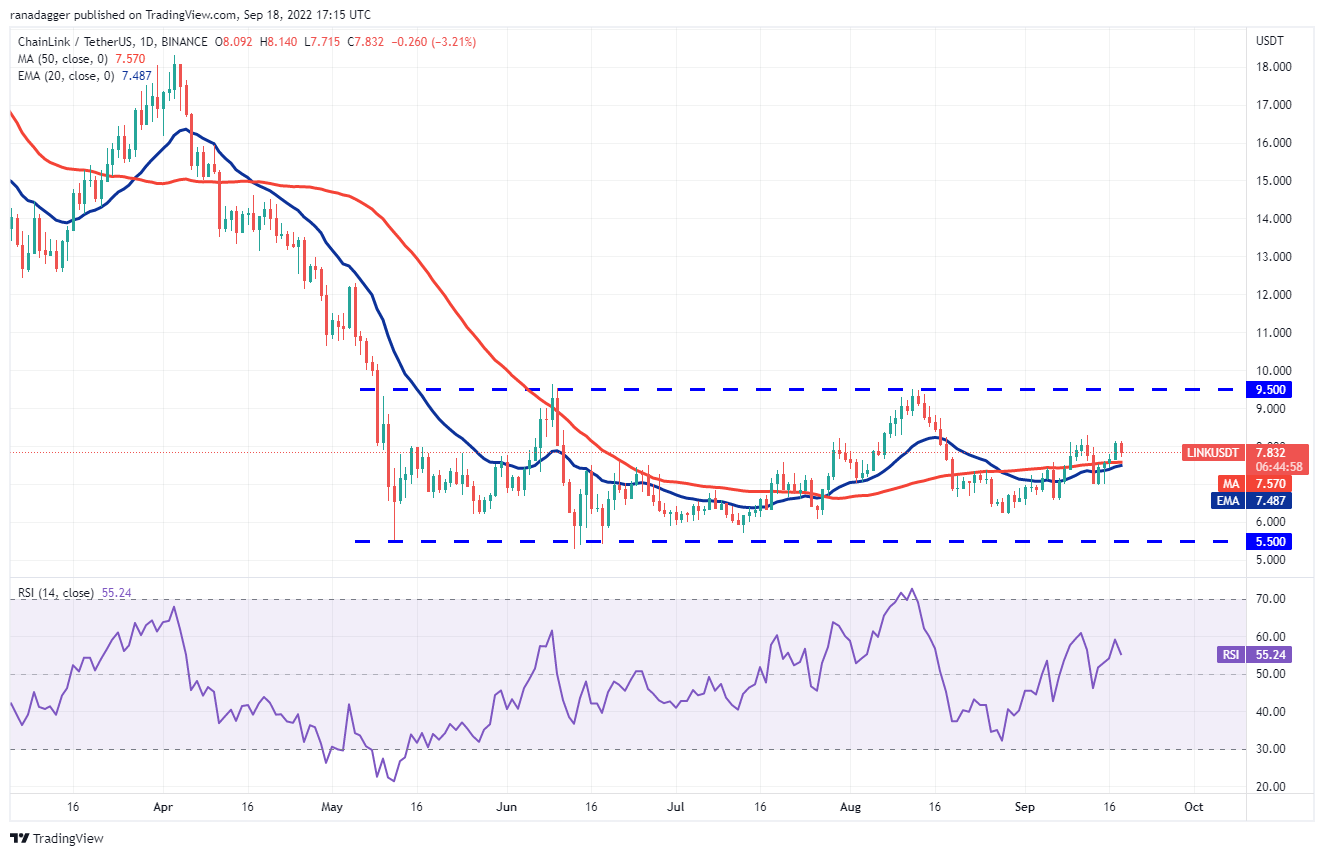
LINK/USDT daily chart. Source: TradingViewThere is a minor resistance at $8.30 and if bulls push the price above it, the LINK/USDT pair could rally to the stiff resistance at $9.50. This level is likely to attract aggressive selling by the bears but if bulls pierce through the barrier, it could indicate the start of a new uptrend.
The moving averages are the important support to watch for on the downside because if they give way, the selling pressure may pick up. That could start a decline to $7 and thereafter to $6.20.
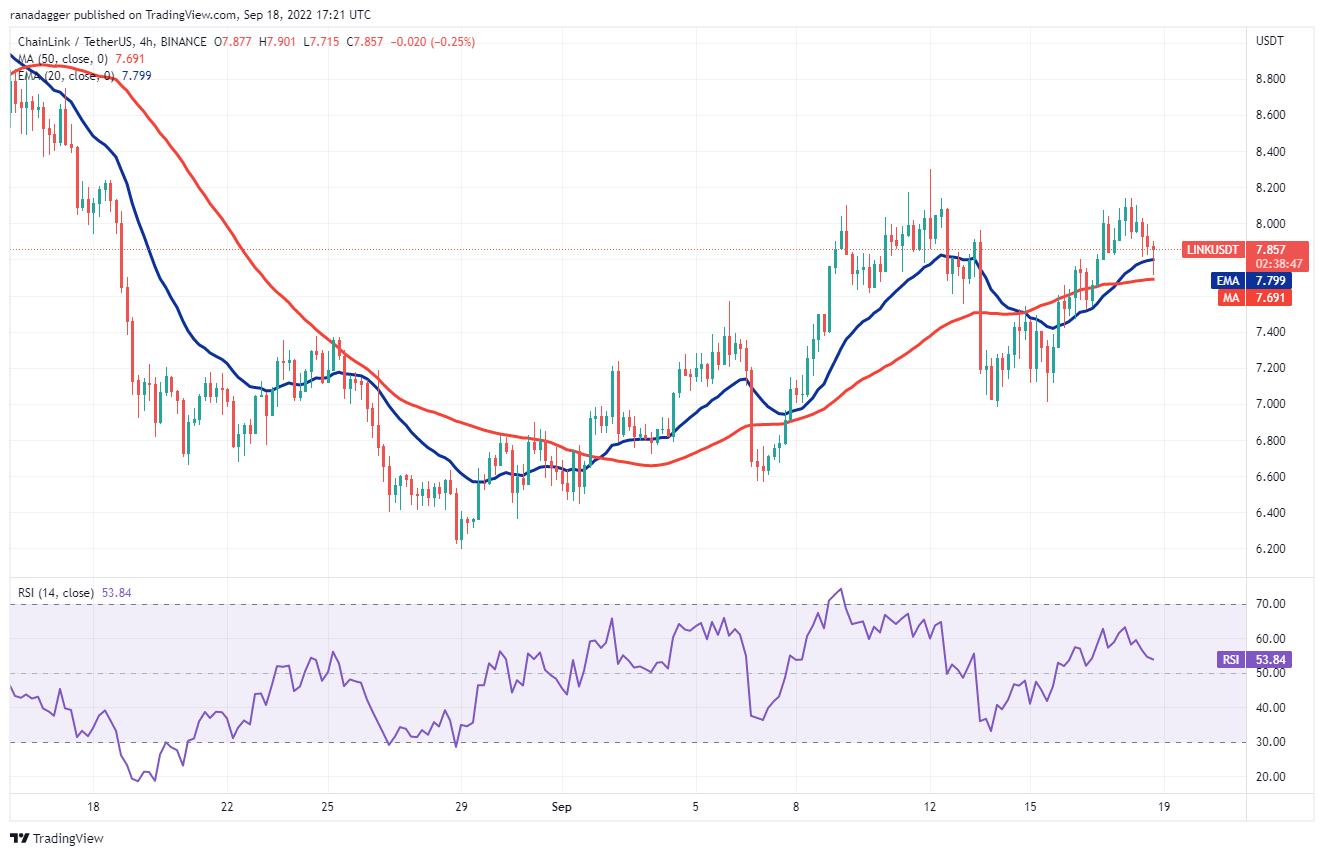
LINK/USDT 4-hour chart. Source: TradingViewBuyers are attempting to defend the moving averages on the 4-hour chart. That could start a recovery toward the overhead resistance at $8.20. If the price rises above this overhead resistance, the pair could rally to $9.
If bulls fail to push the price above $8.20, the bears may fancy their chances and try to sink the pair below the moving averages. That may tilt the advantage in favor of the bears. The pair could first decline to $7.50 and then to $7.
EOS/USDT
The bears pulled EOS below the 50-day SMA ($1.44) on Sept. 15 but they could not break the support at $1.34. This suggests that bulls are buying on dips and are attempting to form a low near $1.34.
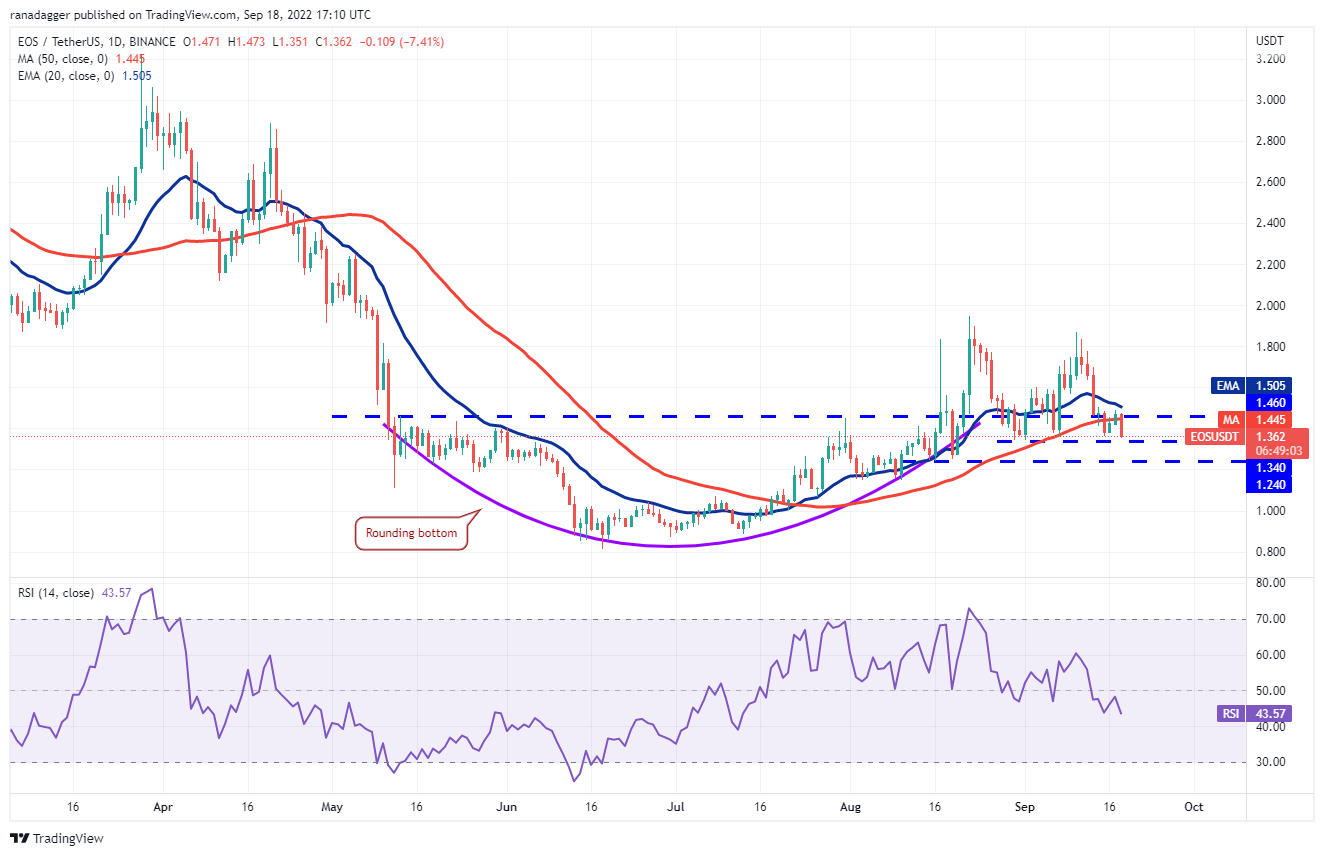
A minor negative is that bulls are facing strong resistance at the 20-day EMA ($1.50). This indicates that the bears have not given up and are attempting to wrest control. This tussle between the bulls and the bears is likely to resolve with a strong breakout.
If the price breaks above the 20-day EMA, the bullish momentum could pick up and the EOS/USDT pair could rally to $1.86. Alternatively, if the price turns down and breaks below $1.34, the pair could decline to $1.24. A break below this support could sink the pair to $1.
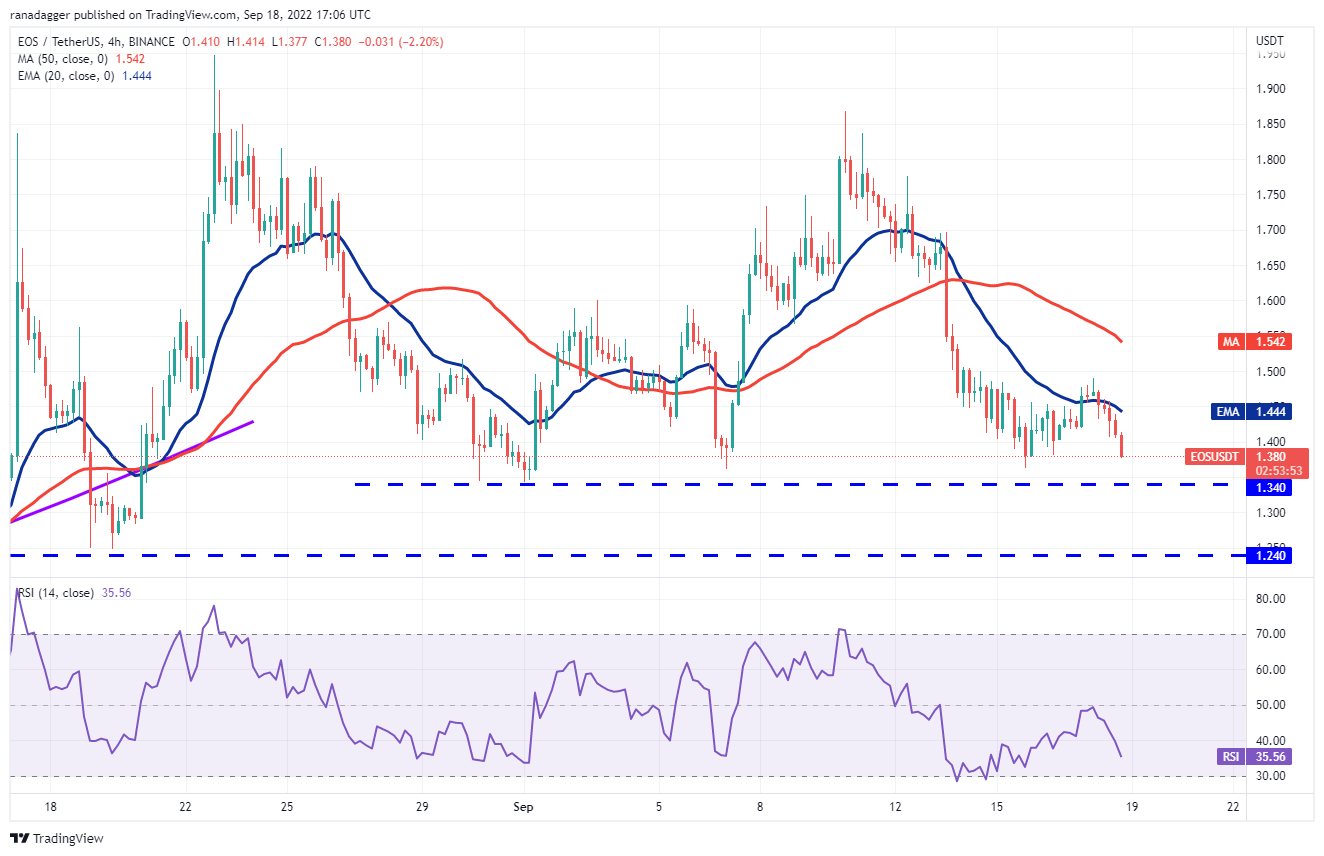
EOS/USDT 4-hour chart. Source: TradingViewThe recovery faltered near $1.50, indicating that bears continue to sell on rallies. The bears will try to further cement their edge by pulling the price below the strong support of $1.34, but that may not be that easy.
Buyers have defended the $1.34 level on three occasions and will again try to do so. If the price rebounds off $1.34, the bulls may again attempt a rally above the overhead resistance of $1.50. If they manage to do that, a rally to $1.70 and later to $1.86 is possible.
XTZ/USDT
Tezos (XTZ) broke below the 20-day EMA ($1.57) on Sept. 13 but the bears could not pull the price to the support line of the symmetrical triangle. This indicates that buyers are accumulating on dips and not waiting for a deeper correction to make an entry. This increases the likelihood of a recovery in the near term.
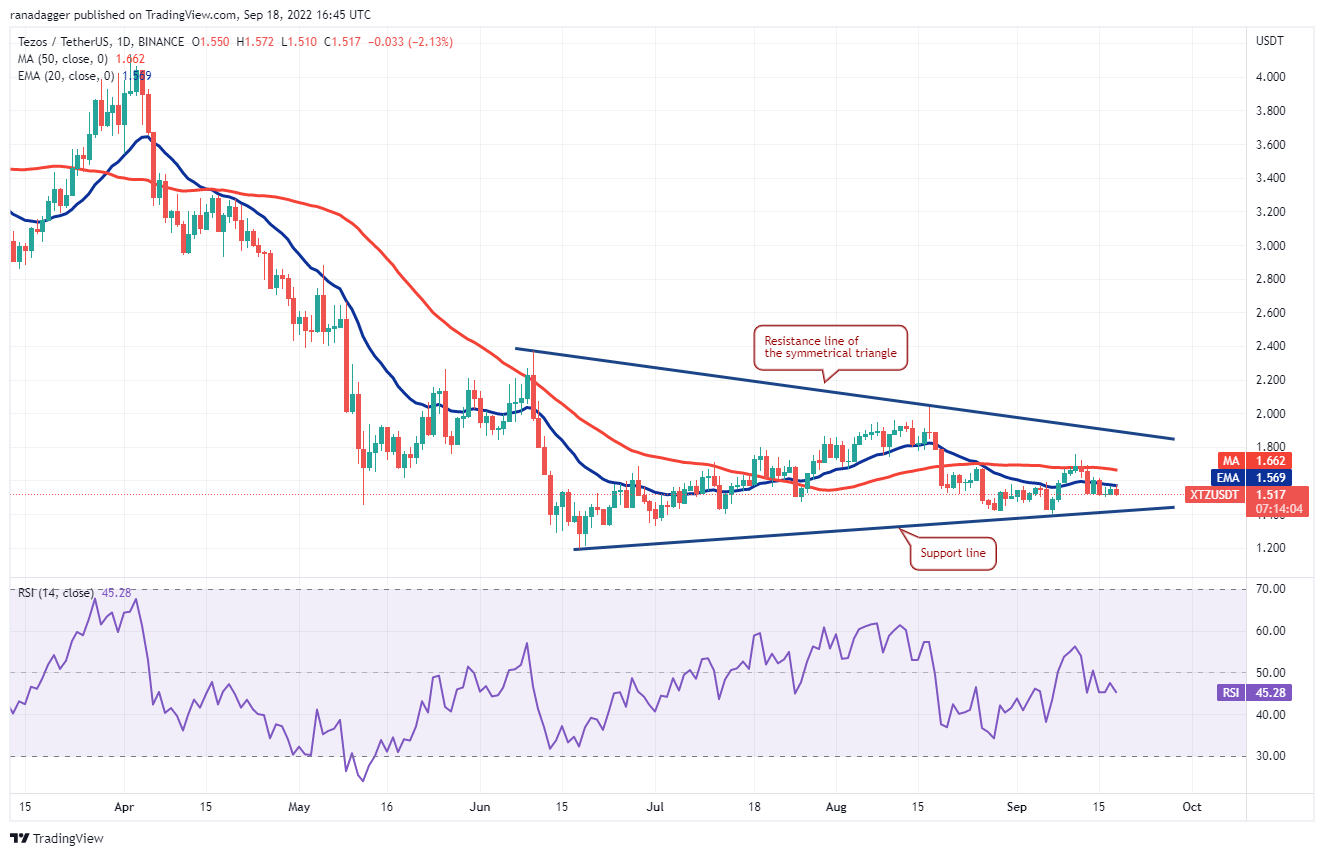
XTZ/USDT daily chart. Source: TradingViewIf the price breaks above the 20-day EMA, the XTZ/USDT pair could rise to the 50-day SMA ($1.66). This level has acted as a strong resistance on two previous occasions, hence it is an important level to keep an eye on. If bulls overcome this barrier, the pair could attempt a rally to the resistance line of the triangle.
A break above the triangle will signal a potential trend change. The pair could then rise to $2 and later to $2.36.
Meanwhile, the bears are likely to have other plans. They will try to stall the recovery at the moving averages. If the price turns down from the current level and slips below the $1.50 to $1.40 support zone, the June low at $1.20 may be revisited.
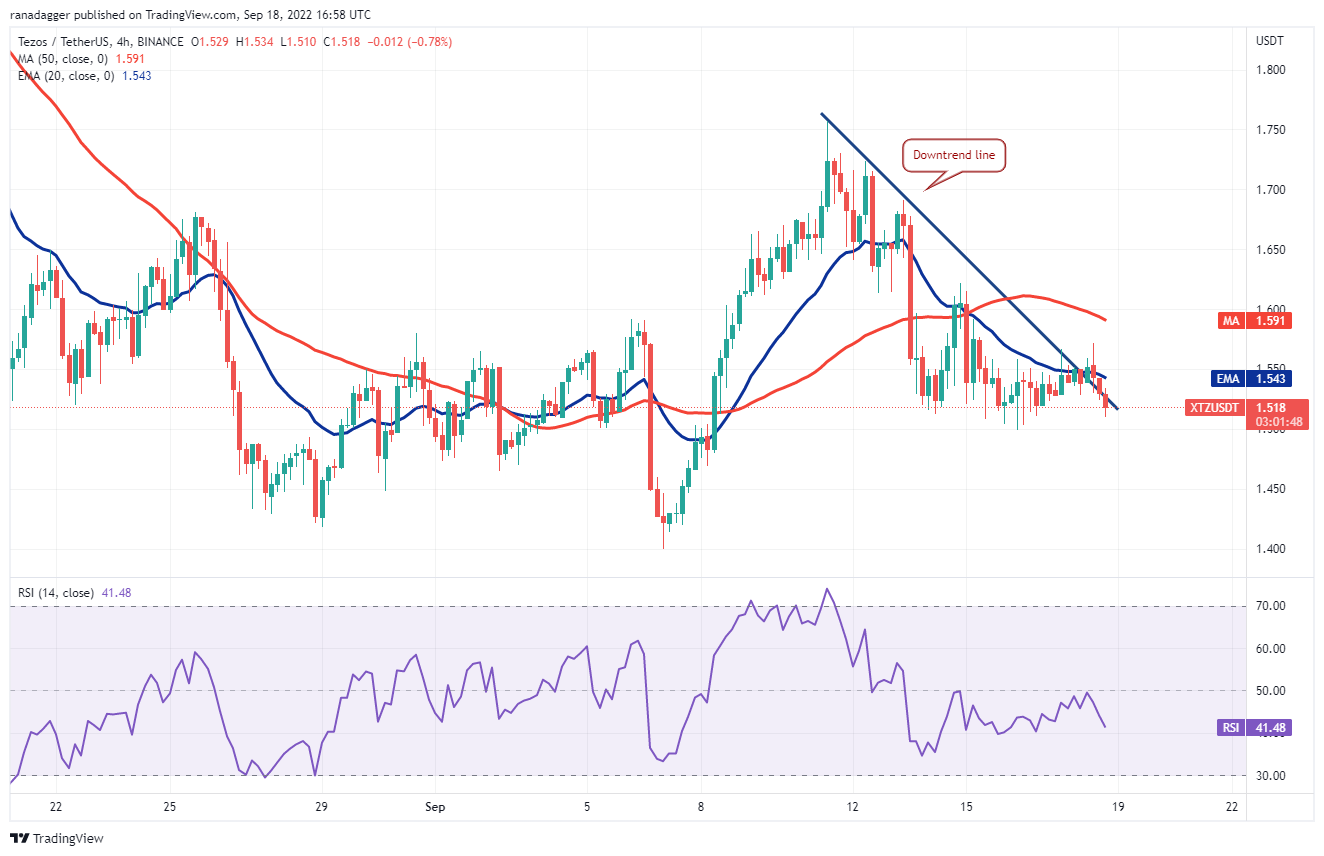
XTZ/USDT 4-hour chart. Source: TradingViewThe 4-hour chart shows that the bulls defended the support at $1.50 and pushed the price above the downtrend line but they could not sustain the higher levels. If bears sink the price below $1.50, the pair could decline to $1.40.
On the other hand, if the price rebounds off the $1.50 support once again, it will suggest that lower levels continue to attract buyers. The bulls will then try to push the price above the moving averages and challenge the resistance at $1.62. If this level gives way, the up-move could reach $1.70.