[Key interpretation] BTC has accumulated momentum of breaking down, and EOS has mainly increased its holdings in hard bifurcated markets

HuobiPublicado a 2022-08-26Actualizado a 2022-08-29

Resumen

The loss is large. BTC plans to break the position and fall at the weekend. EOS will increase its holdings and wait for the hard fork price to soar.

1. BTC seeks a breakthrough during sideways Trading

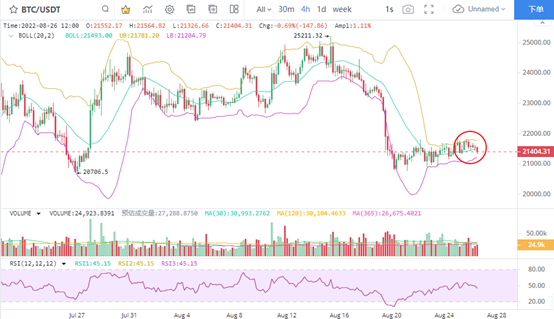
In the 4-hour K-line diagram, during the horizontal operation stage of BTC, the price fluctuation space is very limited. It is generally limited to the distance between the middle rail of the Bollinger line and the rail of the Bollinger line, with a span of only US $350. At the same time, the longer the sideways time, there are signs that BTC will further fall below the middle rail of the brin line. The corresponding point of the middle rail of brin line is 21492 US dollars. At present, the trading volume continues to shrink, and the possibility of the price choosing the direction in the short term is increased. Pay attention to the falling signal after the weekend change.
2. BTC does not realize high loss operation

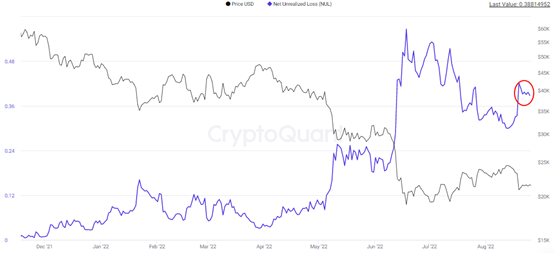
The unrealized loss of BTC remained at a high level, which indicates that the loss of investors will not be reduced during the period of price sideways adjustment. With the completion of the downward falling signal of BTC price during the horizontal trading period, the impact of unrealized losses on the market remains unchanged. On the premise that the unrealized loss has not significantly decreased, it is more likely that BTC will further adjust. Recently, the chain and spot trading volume have remained stable, which has formed a certain support for the BTC price. However, the buying does not seem to be strong, and the real direction can be confirmed after the BTC fluctuation strengthens.
3. EOS short line 2nd pulse

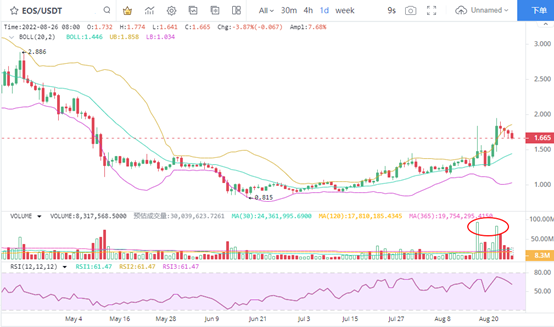
After the EOS short-term pulse volume rose for two times in a row, the price rose to below $2 and then fell. Due to the short release time, the price fluctuation space of EOS is weakened. After falling for three consecutive trading days recently, there are obvious signs of continued decline. In terms of indicators, the RSI index on the 12th rebounded to the highest 74 and then retreated. Although there was no overbought article reaching 80, it still suggested that the short-term high level appeared and the position reduction signal was formed. In terms of growth, after the EOS hit the bottom from the low of US $0.815, it reached US $1.958, up 140%. In terms of trading volume, the peak volume did not significantly exceed the previous high, and attention should be paid to adjusting the risk.
4. EOS main currency holding growth

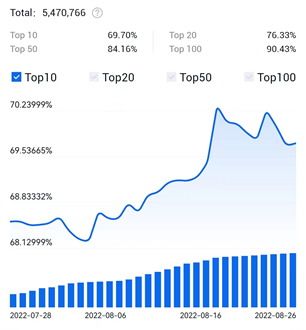
Among the top 10 main holders of EOS, the number of coins held by EOS also increased as the price fluctuated upward. In terms of specific value, it rebounded from 68.16% on August 4 to 69.62% on August 25, and the recovery space reached 1.46 percentage points. In terms of price increase, the EOS price rose from the closing price of US $1.118 on August 4 to US $1.732 on August 25, with an increase of 54%. The trend of main positions increased in synchronization with the price increase.
5. Message side

On August 17, Yves la rose, CEO of EOS network foundation, announced the launch of a new forked public chain antelope to replace EOS on social media. According to the introduction, antelope is an open framework for building the next generation of Web3 products and services. Its community run code base supports the fastest and safest user-friendly blockchain.

At the time point, on September 21, EOS will hard fork and activate its v3.1 consensus upgrade (hardwork). EOS EVM (trustevm) will soon be available on the EOS network.

Previously, Yves La Rose said that trust EVM launched by EOS might become the preferred L2 solution for Ethereum. Trust EVM is the official EOS EVM platform with deterministic gas computing, EVM compatibility at instruction set level and full RPC compatibility. It will soon be launched on the EOS main network

In fact, the hard fork is EOS foundation and block In the process of one seizing power, the hard bifurcation news can indeed attract investors to enter the market for trading, but the duration of the heat should be vigilant. At the same time, the ecological development after the hard bifurcation is the most noteworthy place. As for the time of speculation, there is still half a month to go before the hard bifurcation. In the near future, we can pay attention to the low-income opportunities.
Lecturas Relacionadas

El Trilema de la Escalabilidad es un Falso Problema

Autor: Billy Gao Traducción: Jiahuan, ChainCatcher El sistema criptográfico más potente de la historia no puede proteger la privacidad de tus fondos. Cada transacción y cada posición se emiten públicamente en la cadena de bloques. La cadena de bloques es esencialmente una computadora compartida, lenta, costosa y sin propietario. Su principal ventaja es que nadie puede evitar que la uses ni engañarte sobre los resultados. La "trilema" tradicional —descentralización, escalabilidad, seguridad— ha sido en gran medida superada, pero no es el principal obstáculo. El problema real son dos defectos de diseño: la legitimidad y la falta de privacidad. La transparencia total en las cadenas públicas no es una característica positiva, es un impuesto que se paga en forma de MEV, front-running y exposición financiera. Los fondos (como las monedas estables) son el caso de uso ideal para la cadena, ya que el registro en el libro mayor es el activo en sí mismo. Sin embargo, el capital institucional y los grandes patrimonios no participan porque no exponen públicamente sus balances. La legitimidad está mejorando con marcos regulatorios, pero la privacidad sigue siendo la gran barrera. La privacidad con cumplimiento normativo demostrable, basada en pruebas criptográficas de conocimiento cero, es la solución. Permite verificar hechos (solvencia, KYC) sin revelar datos subyacentes, combinando privacidad y transparencia necesaria. Esto representa una mejora pura respecto al modelo actual y es el puente para atraer billones en capital hacia la cadena.

链捕手Hace 5 hora(s)

El Trilema de la Escalabilidad es un Falso Problema

链捕手Hace 5 hora(s)

Las stablecoins finalmente encuentran rendimientos reales: Un análisis detallado del reaseguro en cadena Re | Diálogo con el fundador de Re, Karan Saroya

Establemente las monedas finalmente encuentran rendimientos reales: Re, una plataforma de reaseguro en cadena, absorbe monedas estables de DeFi y las utiliza como garantía para respaldar a aseguradoras estadounidenses, devolviendo las primas obtenidas a los depositantes en cadena. Actualmente respalda a 35 aseguradoras, con un negocio suscrito de 5 mil millones de dólares, y planea superar los 10 mil millones en siete meses. **Puntos clave:** 1. **Fuente de rendimiento real:** Ofrece a los tenedores de monedas estables un rendimiento anual del 12%-14% o más, proveniente del mercado de reaseguro (un billón de dólares), no correlacionado con los mercados tradicionales. 2. **Eficiencia operativa:** Los contratos inteligentes reemplazan los costosos procesos tradicionales de captación de capital, permitiendo a un equipo pequeño competir con gigantes del sector. 3. **Apalancamiento regulatorio:** Por cada 1 dólar de garantía, se pueden respaldar 5-7 dólares en primas, multiplicando los rendimientos. 4. **Integración con DeFi:** Los depositantes reciben un token que puede reutilizarse en protocolos como Morpho para aumentar aún más el rendimiento. 5. **Token de gobernanza RE:** Inspirado en Lloyd's of London, permite a los poseedores gobernar la dirección del capital y los parámetros del sistema. Re representa un punto de inflexión, conectando el capital en cadena con la economía real y proporcionando la demanda necesaria para la infraestructura DeFi existente. Su arquitectura combina un frente regulado con un backend descentralizado eficiente.

链捕手Hace 8 hora(s)

Las stablecoins finalmente encuentran rendimientos reales: Un análisis detallado del reaseguro en cadena Re | Diálogo con el fundador de Re, Karan Saroya

链捕手Hace 8 hora(s)

¿1996 o 1999? La primera prueba de Walsh es 'cómo ver la IA'

El nuevo presidente de la Reserva Federal, Wash, enfrenta su primera gran prueba: determinar si el auge actual de la IA se asemeja más al escenario económico de 1996 o al de 1999. Esta decisión definirá la política monetaria y su legado. Por un lado, está la visión optimista, que asemeja a 1996, donde un crecimiento impulsado por ganancias de productividad permitiría a la Fed mantenerse paciente mientras la inflación retrocede. Wash ha mostrado simpatía por esta narrativa, advirtiendo contra el error de sofocar prematuramente un boom de productividad. Por otro lado, la visión cautelosa, similar a 1999, sostiene que la demanda ya se está calentando y esperar datos concluyentes de productividad podría forzar subidas de tasas más agresivas después. Chicago Fed's Goolsbee argumenta que, al ser un boom ampliamente anticipado, la IA podría inflar la demanda antes de materializar la oferta, presionando la inflación. Wash opera en un contexto más difícil que el de Greenspan en los 90, con presión arancelaria, alto déficit fiscal y menos ventajas globales. Un dilema adicional es su deseo de eliminar la "guía anticipada" de la Fed, un mecanismo creado precisamente en 1999 para gestionar expectativas. Si la economía se recalienta, podría verse forzado a usarlo o arriesgar volatilidad en los mercados. La respuesta a la pregunta central —¿1996 o 1999?— resolverá este y otros dilemas.

marsbitHace 10 hora(s)

¿1996 o 1999? La primera prueba de Walsh es 'cómo ver la IA'

marsbitHace 10 hora(s)

Trading

Spot
Futuros
活动图片