Stablecoin Laws ‘Coming This Month,’ FDIC Acting Chair Reveals

bitcoinistPublicado a 2025-12-02Actualizado a 2025-12-03

Resumen

According to prepared testimony from Acting FDIC Chair Travis Hill, the agency expects to publish a proposed rule that lays...

Trusted Editorial content, reviewed by leading industry experts and seasoned editors. Ad Disclosure

According to prepared testimony from Acting FDIC Chair Travis Hill, the agency expects to publish a proposed rule that lays out how stablecoin issuers will apply for federal oversight before the end of December 2025.

What The Draft Will Cover

Based on reports, the initial proposal will focus on the “application framework” — the paperwork, disclosures and standards firms must meet to seek approval as regulated stablecoin issuers.

The proposal is not the final set of bank-level rules; it will outline the process, while a second proposal that spells out capital, liquidity and reserve requirements is slated for early next year.

Market Reaction And Immediate Impact

Reports have disclosed that the GENIUS Act, the law behind this process, named the FDIC as a lead regulator for bank-related stablecoins and set deadlines for implementing agencies to act.
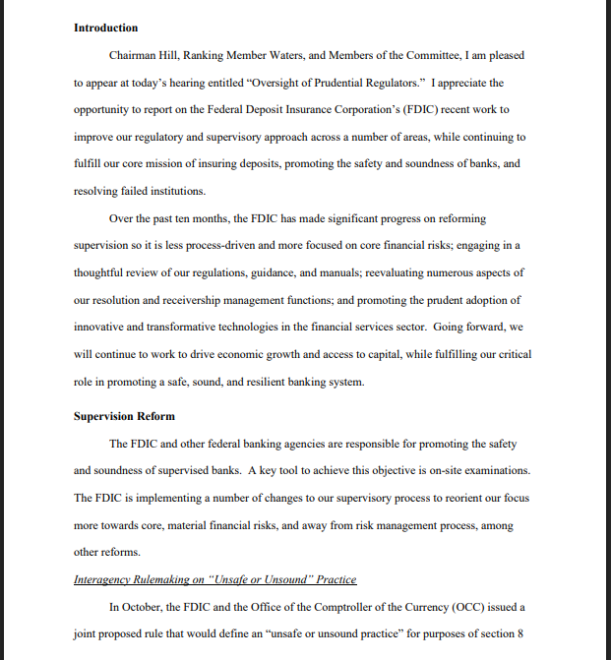
Statement by Travis Hill, acting FDIC chairman.

The move is expected to provide clearer guidance for firms that want to issue USD-pegged coins under federal supervision. Some firms could alter their timelines or pause launches until the rules are final.

Stablecoin: How The Law Got Here

The GENIUS Act was passed by Congress in mid-2025 and signed into law by US President Donald Trump on July 18, 2025. The Senate approved the bill by a 68–30 vote and the House backed it 308–122.

The statute lays out which agencies do what, and it requires a sequence of rulemakings, such as capital and liquidity standards, that regulators must implement.

BTCUSD currently trading at $86,844. Chart: TradingView

Public Comment Period

Officials say the FDIC’s first proposed rule will be followed by a public comment period, giving industry groups, banks and nonbank firms a chance to respond.

After that, prudential measures aimed at FDIC-supervised issuers — the rules that set minimum capital cushions and reserve asset standards — will be proposed early next year.

Analysts and industry observers will be watching closely to see whether the FDIC limits its oversight mainly to bank-sponsored stablecoins or seeks a broader scope.

They will also pay attention to how strict the capital and liquidity requirements will be when the rules are proposed in early 2026.

Coordination with other regulatory agencies will be another key focus, since the GENIUS Act assigns responsibilities across several federal regulators.

Featured image from Unsplash, chart from TradingView

Editorial Process for bitcoinist is centered on delivering thoroughly researched, accurate, and unbiased content. We uphold strict sourcing standards, and each page undergoes diligent review by our team of top technology experts and seasoned editors. This process ensures the integrity, relevance, and value of our content for our readers.

Christian, a journalist and editor with leadership roles in Philippine and Canadian media, is fueled by his love for writing and cryptocurrency. Off-screen, he's a cook and cinephile who's constantly intrigued by the size of the universe.

Lecturas Relacionadas

Bajando las expectativas para el próximo ciclo alcista de BTC

**Resumen del artículo: "Bajar las expectativas para el próximo ciclo alcista de BTC" por Alex Xu** El autor, que tenía a Bitcoin como su mayor activo, ha reducido progresivamente su exposición durante el actual ciclo alcista: eliminó el apalancamiento a 70k y redujo su posición de un 100% a un 30% entre 100k-120k. Recientemente, vendió más a 78k-79k, argumentando una revisión a la baja de las expectativas para el próximo máximo alcista. Las razones principales son: 1. **Narrativa de adopción agotada:** El impulso de adopción masiva (de minorista a institucional vía ETFs) parece agotado. El siguiente paso, la adopción por bancos centrales o fondos soberanos importantes, se ve muy difícil a corto plazo. 2. **Coste de oportunidad:** El autor ha identificado otras oportunidades de inversión en empresas atractivas. 3. **Contracción del ecosistema crypto:** La mayoría de modelos de negocio Web3 (SocialFi, GameFi, DePIN) no han funcionado. Solo DeFi genera valor, pero se contrae por la falta de activos nativos de calidad, lo que reduce la base de usuarios y holders de BTC. 4. **Problemas del mayor comprador:** MicroStrategy, el mayor tenedor corporativo, enfrenta un coste de financiación creciente (11.5% para su préstamo perpetuo), lo que podría ralentizar su ritmo de compra y ejercer presión vendedora. 5. **Competencia del oro tokenizado:** El oro tokenizado ha cerrado la brecha en portabilidad y divisibilidad, erosionando la ventaja competitiva de BTC como "oro digital". 6. **Problema de seguridad:** La reducción de la recompensa por minado (halving) amenaza la seguridad de la red, ya que las nuevas fuentes de ingresos por fees (como las inscripciones) no han podido dar solución. Conclusión: El autor mantiene una posición significativa en BTC y espera que suba, pero es menos optimista sobre su potencial alcista. Vender en la reciente subida fue una decisión táctica. Si sus razones para ser bajista se invalidan, estaría abierto a recomprar, aceptando si se equivoca y el precio sube.

marsbit04/27 02:49

Bajando las expectativas para el próximo ciclo alcista de BTC

marsbit04/27 02:49

Trading

Spot
Futuros
活动图片