
princesshoor
08/21 05:54Alcista
Will NSE’s Self-Trading Plan Boost BSE IPO Volume
#HTX Creation Challenge — Post and Win 1,500U #HTX 13th-Anniversary Carnival
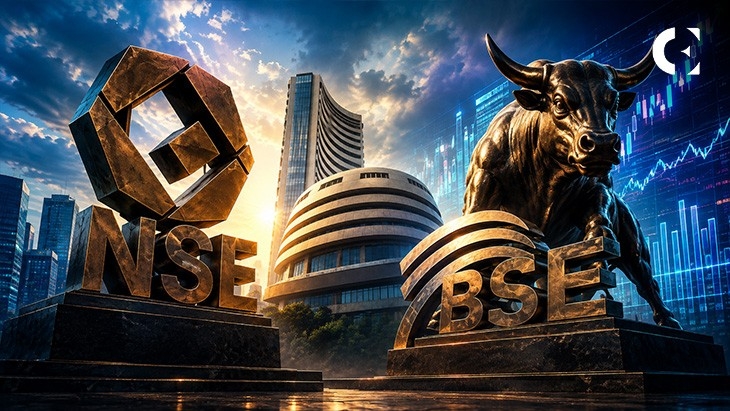
Will NSE’s Self-Trading Plan Boost BSE IPO Volume as Investors Expect?
The National Stock Exchange’s (NSE) upcoming IPO is one of the most closely watched events in India’s market sector. NSE has been preparing for a listing that could be worth around ₹1.5-1.8 lakh crore (roughly $15.67 billion to $18.81 billion), expected to move forward after SEBI (Securities and Exchange Board of India) gives the green light.
It was anticipated that NSE shares would be listed on BSE (Bombay Stock Exchange), bringing a big new wave of trading to it. However, the latest report that NSE might use the PTT (Permitted to Trade) mechanism to trade its shares on its own platform changes the picture entirely.
Why BSE Shares Reacted
The reason the above matters is because BSE investors have already been counting on at least some upside from NSE’s IPO.
If NSE shares end up being traded mostly or partly on NSE itself, some of the extra trading volume that investors thought would go to BSE might never leave NSE’s ecosystem.
This doesn’t mean BSE is about to lose its existing business, but it does mean the extra upside from the IPO has the potential to be smaller than investors originally thought.
How NSE Could Capture Trading Activity On Its Own Platform
The PTT mechanism is notable because it lets securities trade on an exchange without necessarily being formally listed there. Additionally, the NSE’s existing PTT framework doesn’t require a separate listing agreement or additional listing fees, although trading remains subject to surveillance and regulatory requirements.
Me gustaCompartir
Todos los comentarios0Lo más recientePopular