I. Select the Cross or Isolated Margin Mode

- Getting Started
- Margin Trading Guide

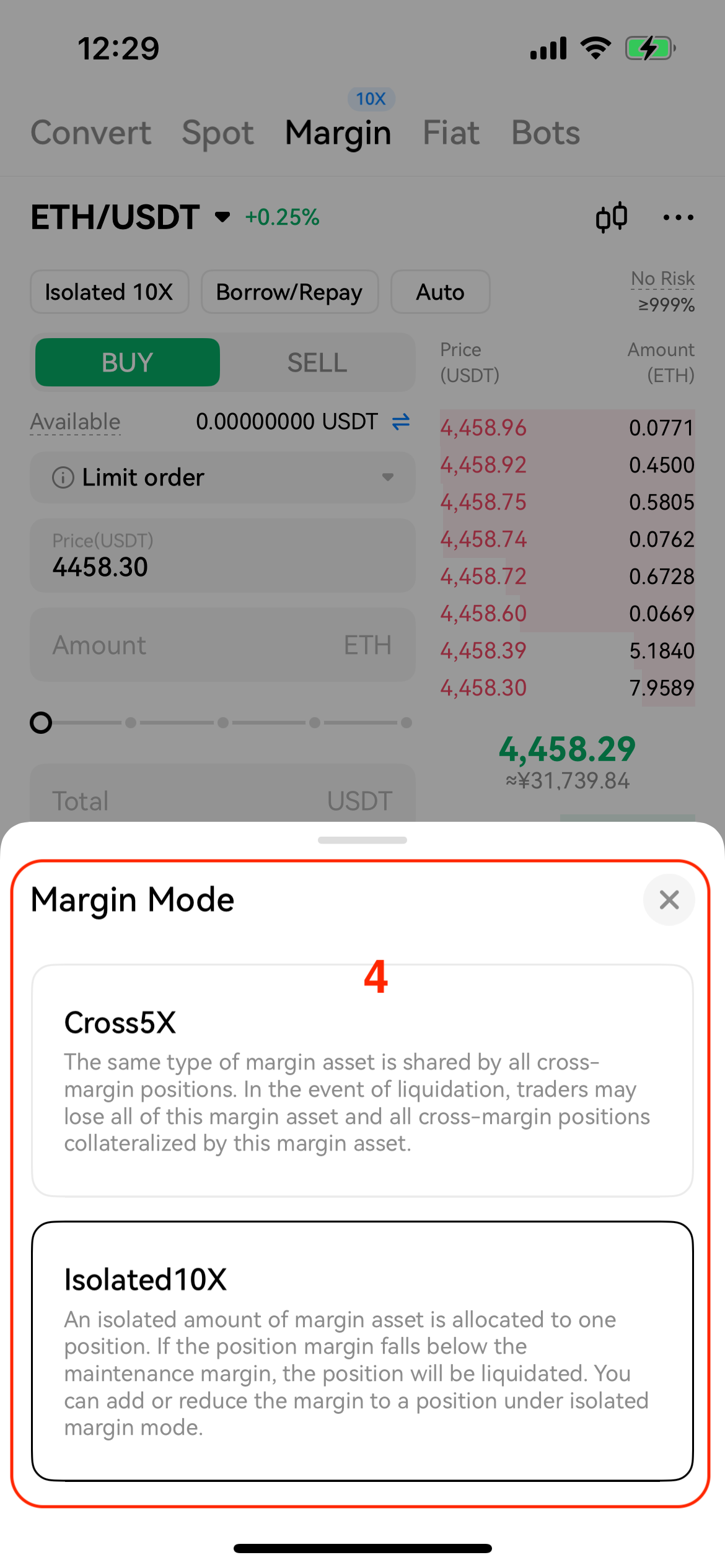
On the HTX homepage, go to Trade > Margin, then choose either Cross or Isolated.
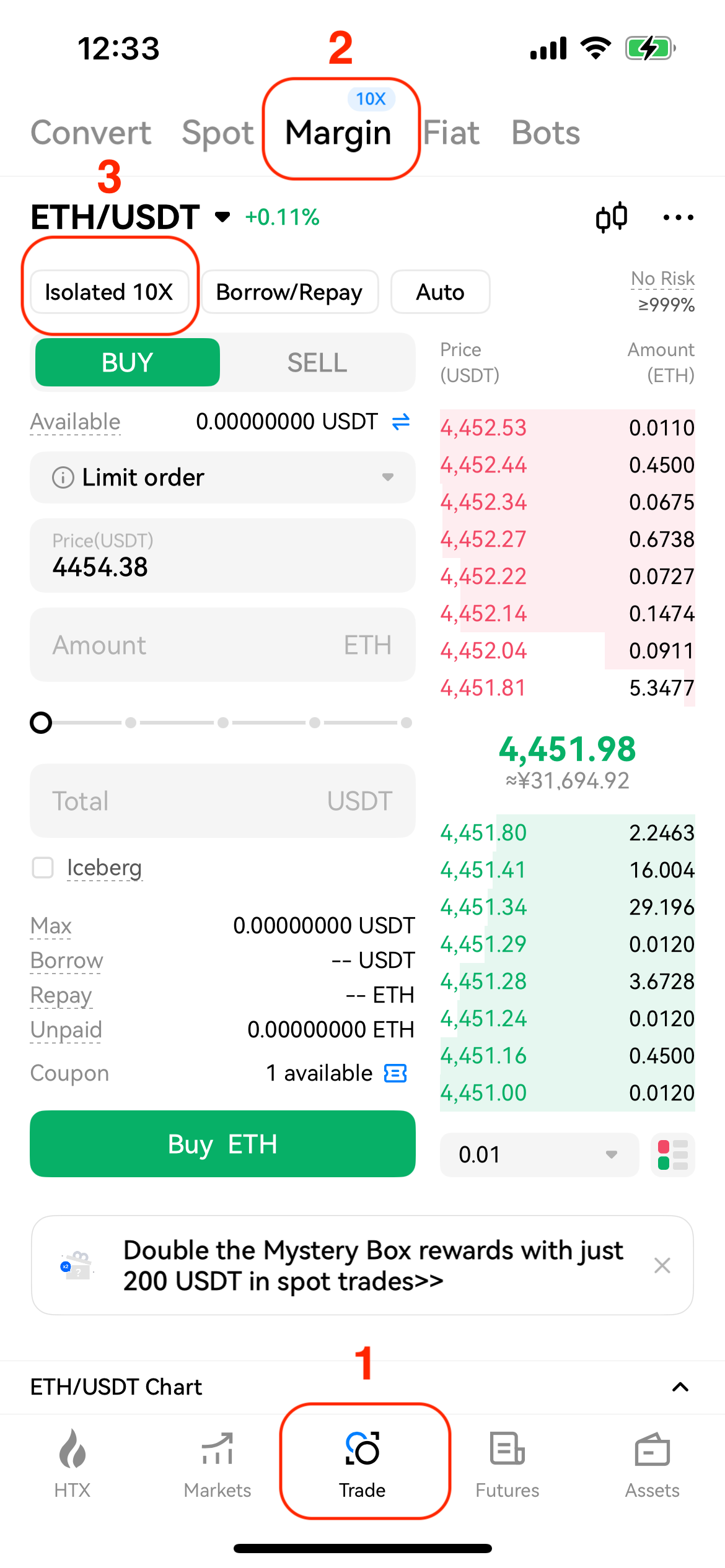
Q1: What is the core difference between margin trading and spot trading?
A1: The core difference is that margin trading allows users to borrow funds, while in spot trading the only way to make profits is by buying at low prices and selling at high prices in an upward-trending market. Traders have two more ways to make profits in margin trading.
- Short: Traders can borrow to sell at high prices first and buy back at lower prices when the market declines.
- Amplify Earnings: With borrowed funds, traders can increase profits to levels higher than what their own assets allow in buy-low-sell-high trades.
Q2: What is the difference between margin trading and futures trading?
A2: Margin trading amplifies a spot position by borrowing funds, typically based on assets actually held. It enhances capital efficiency and is suited for users who seek high-risk, high-return investing with small capital. Futures trading provides more flexible ways to profit under various market conditions. Currently, margin trading allows up to 10× leverage in isolated mode and up to 5× leverage in cross mode, which is relatively conservative compared to futures trading.
Q3: What are the strengths of margin trading?
- Compared to spot trading, margin trading offers two key advantages: it allows users to open short positions by borrowing assets, and its leverage increases capital utilization, enabling higher returns from smaller amounts of capital. Concurrently, margin trading uses leverage to enlarge user trade volume, thereby improving liquidity in the spot market.
- Unlike futures trading, margin trading is based on the spot market, so it has a lower learning curve and operational threshold, making it more beginner-friendly. From a risk perspective, spot markets exhibit lower volatility than futures markets, and margin trading typically employs lower leverage, so risks are relatively more controllable.
Q4: What are the differences between cross margin and isolated margin? How to choose? Which mode is more suitable for me?
A4:
- Cross Margin: This mode allows all available assets within the account, including multiple cryptos, to be used as collateral. Since risk isolation is limited, it is better suited for trading in markets characterized by low volatility. The maximum leverage available for cross margin is 5×.
- Isolated Margin: Each trading pair functions as an independent sub-account, and assets in different isolated accounts do not affect one another. This provides strong risk isolation, making it suitable for high-risk or high-volatility assets. The maximum leverage for isolated margin is 10×. When liquidation occurs in an isolated margin account, the impact is limited to that account without affecting other isolated or cross margin accounts.


