YZi Labs Invests of Tens of Millions, CZ as Advisor: How to Earn Genius Points?

Odaily星球日报Published on 2026-01-14Last updated on 2026-01-14

Abstract

An article titled "YZi Labs Invests Tens of Millions, CZ as Advisor: How to Earn Genius Points?" reports on a major investment in the decentralized exchange Genius. YZi Labs has invested tens of millions of dollars, and former Binance CEO CZ will serve as an advisor. Genius is a privacy-focused DEX supporting spot, perpetual contracts, and copy trading across over 10 blockchains, including BNB Chain and Solana. It aims to offer a CEX-like experience with self-custody and has processed over $60 million in testnet volume. CZ and Genius's team clarified that Genius is not a direct competitor to Aster, another YZi Labs portfolio project, but rather a trading terminal that enables cross-chain token access with privacy features. The article provides a step-by-step guide for users to interact with the platform and earn GP points through trading and referrals. A recommended "low-cost points strategy" involves trading the USDC-USDT pair to minimize volatility impact, executing larger trades to reduce gas fee ratios, and spinning a daily bonus wheel after reaching $10,000 in trading volume. Users can also earn additional rewards through referrals and social tasks. The platform is currently in a test phase, with a public testnet for its privacy protocol planned for Q2 2026.

Original | Odaily Planet Daily (@OdailyChina)

Author | Asher (@Asher_ 0210)
Last night, a blockbuster news rocked the community—YZi Labs has invested "tens of millions of dollars" in DEX Genius, and CZ will also personally join as an advisor.

Odaily Planet Daily is here to give you the first look at Genius, a step-by-step guide to interacting with Genius, and the current interaction strategy based on personal testing.

Project Introduction
Genius is a privacy-centric decentralized exchange (DEX) offering spot, perpetual contracts, and copy trading, supporting over 10 public chains including BNB Chain and Solana. Its goal is to become an on-chain alternative to Binance—bringing the speed, liquidity, and privacy experience of a CEX on-chain while remaining fully self-custodial and non-custodial (users hold their private keys). The platform has already processed over $60 million in trading volume during its testing phase and plans to launch a public test of its privacy protocol in Q2 2026. Back in October 2024, Genius announced the completion of a $6 million seed funding round led by CMCC Global, with participation from Cadenza Ventures, AVA Labs, Arca, Flow Traders, and other institutions.

In response to the community's view that "YZi Labs' investment in Genius is bearish for Aster," CZ posted on X, stating, "Genius is a trading terminal connected to exchanges, not a competitor to Aster."

Additionally, Genius's CMO Ryan also addressed a similar question in the community—"What's the difference between Aster and Genius? Why would YZi Labs invest in another project doing Perp DEX?" Ryan stated, "I think both are important; Aster is a very important perpetual exchange. I believe YZi Labs' motivation for investing in Genius is to enable everyone to access any token on any chain (and soon, privately)."
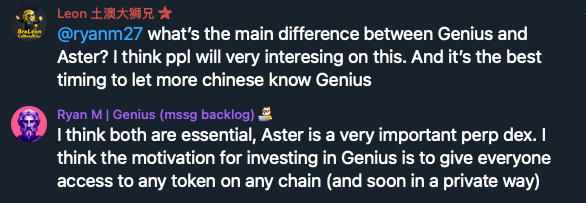
Genius CMO Ryan discusses the relationship between Aster and Genius

It's clear that both CZ and the Genius team believe Genius and Aster have different positioning and are not in direct competition.

Step-by-Step Guide

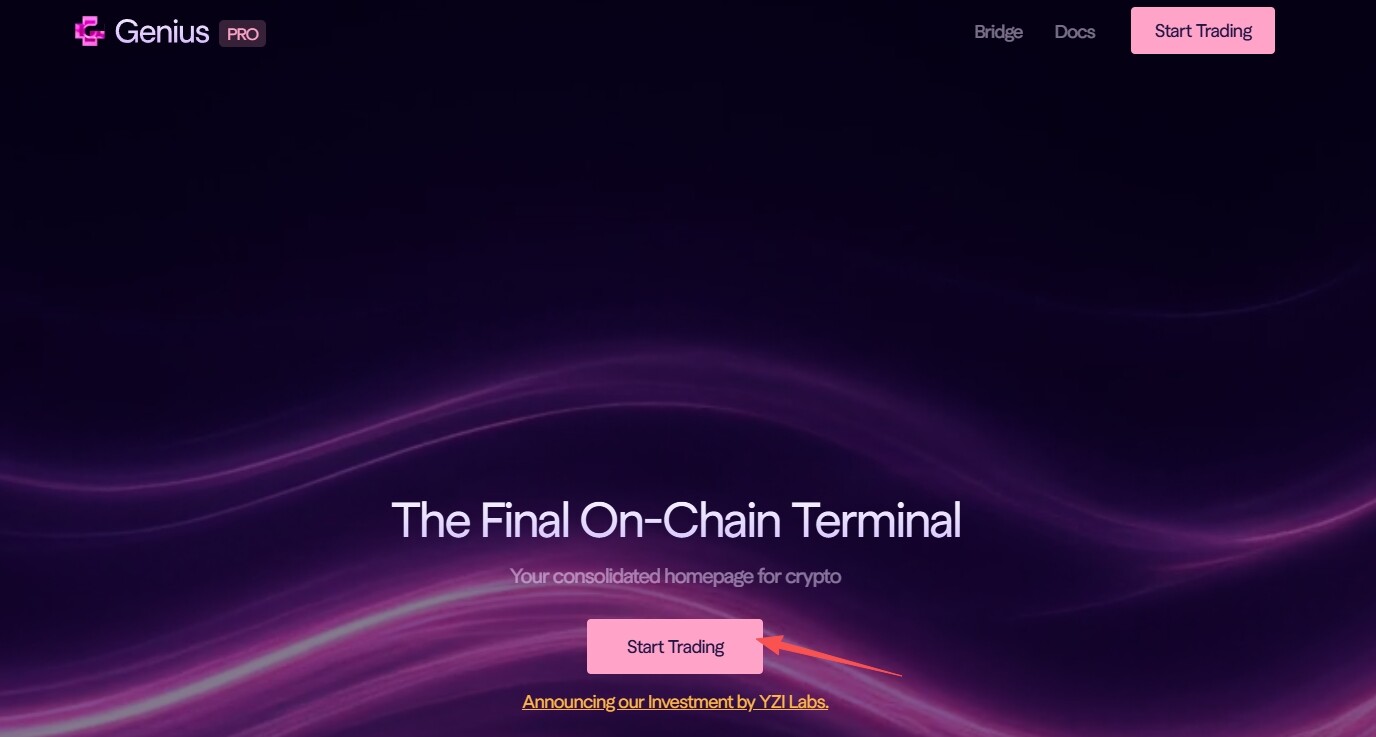
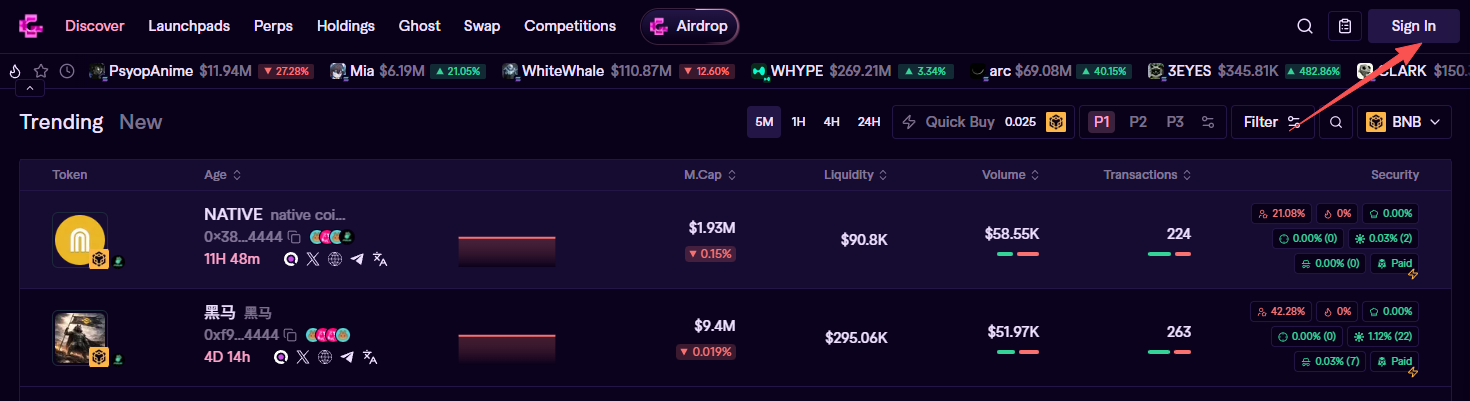
STEP 1. Go to the official website (Link: https://www.tradegenius.com/ref/NY8SYH). Using this referral link gives you 500 GP points. Click "Start Trading," then click "Sign In" at the top to log in with your wallet.
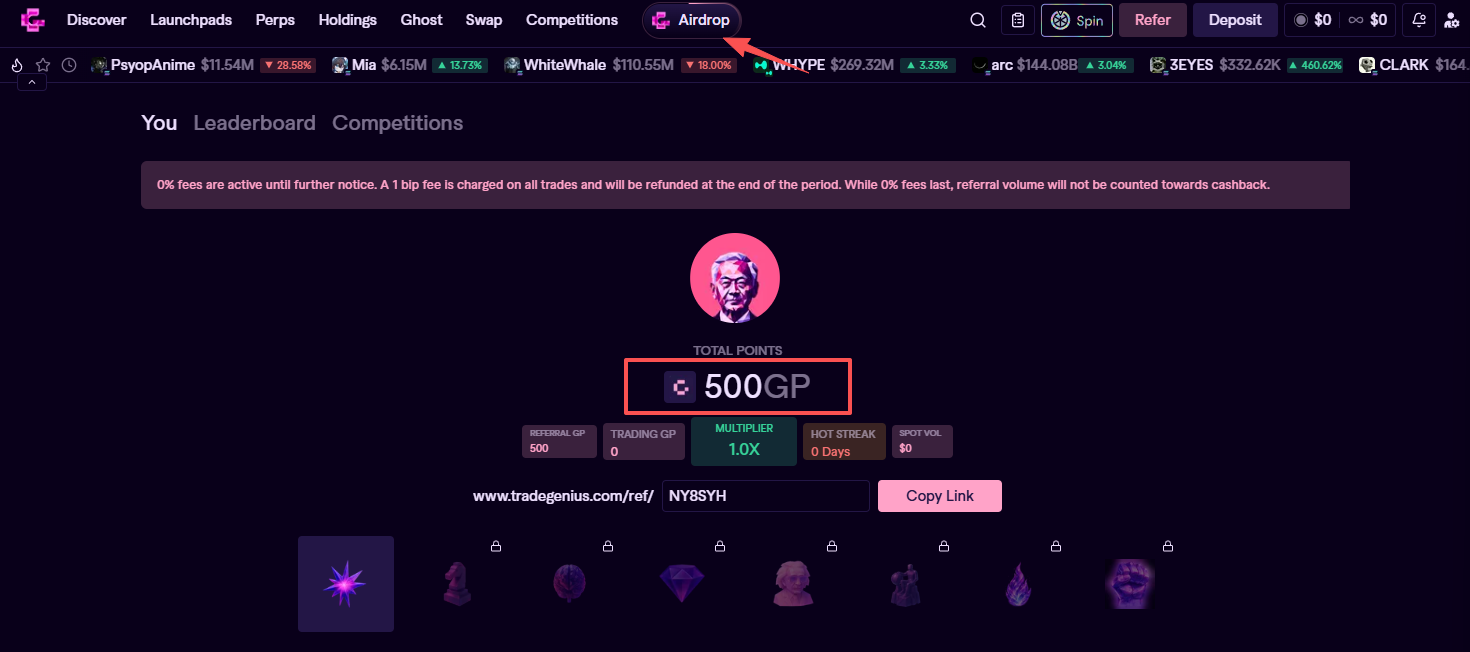
STEP 2. Click on "Airdrop" at the top to see your current GP points and personal referral link.
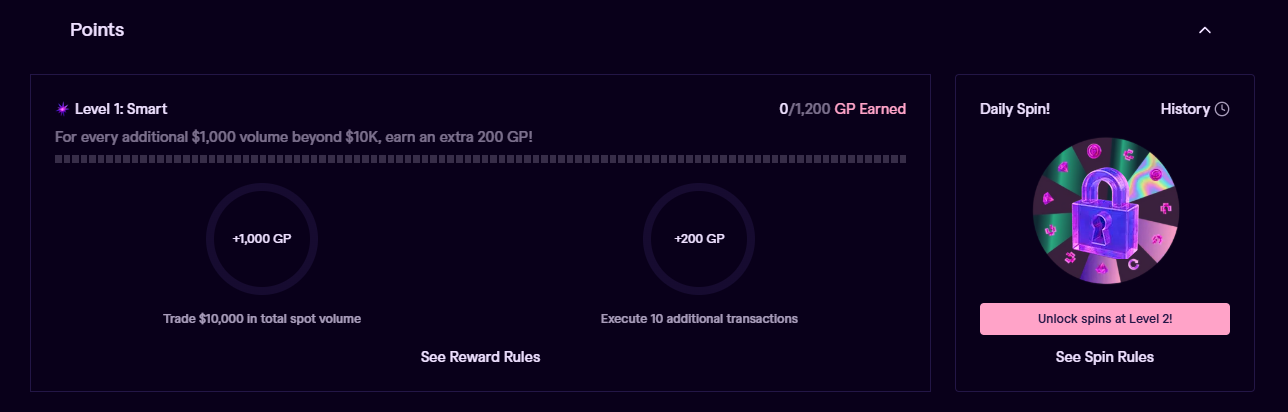
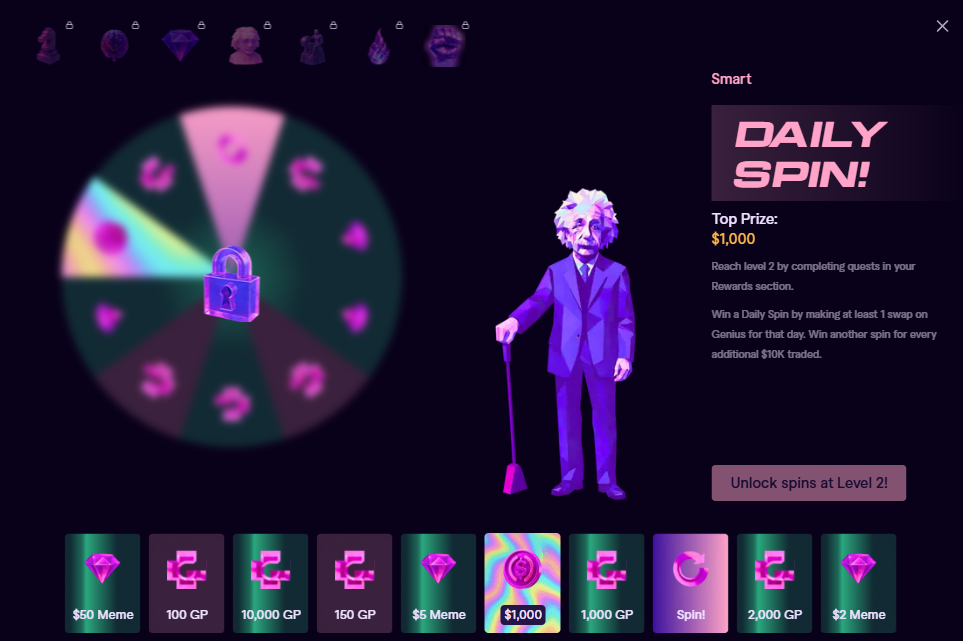
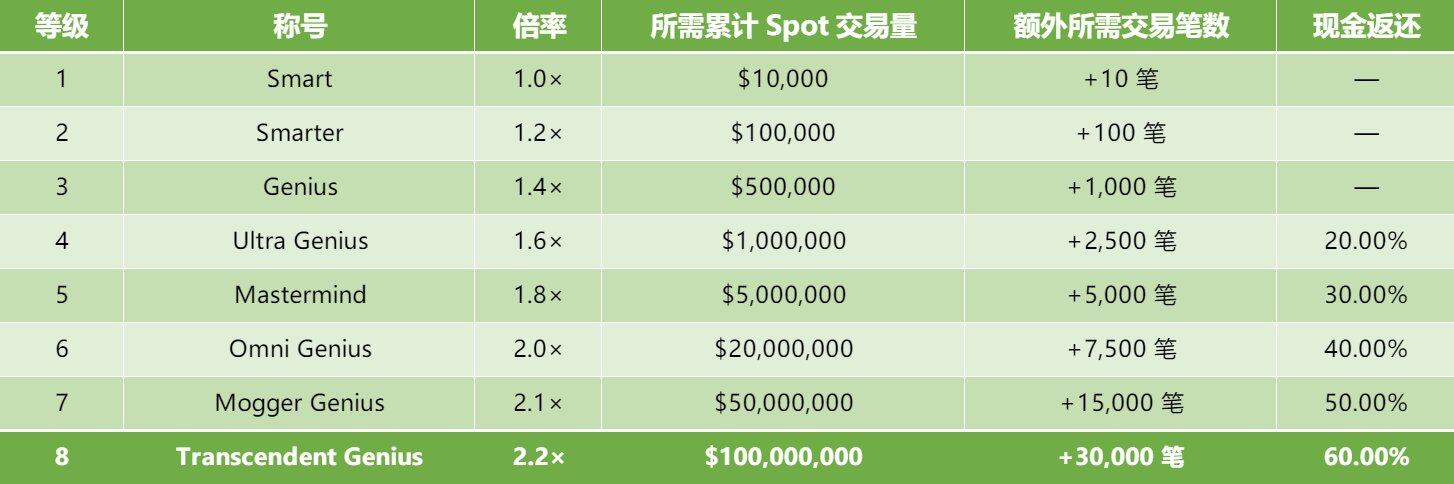
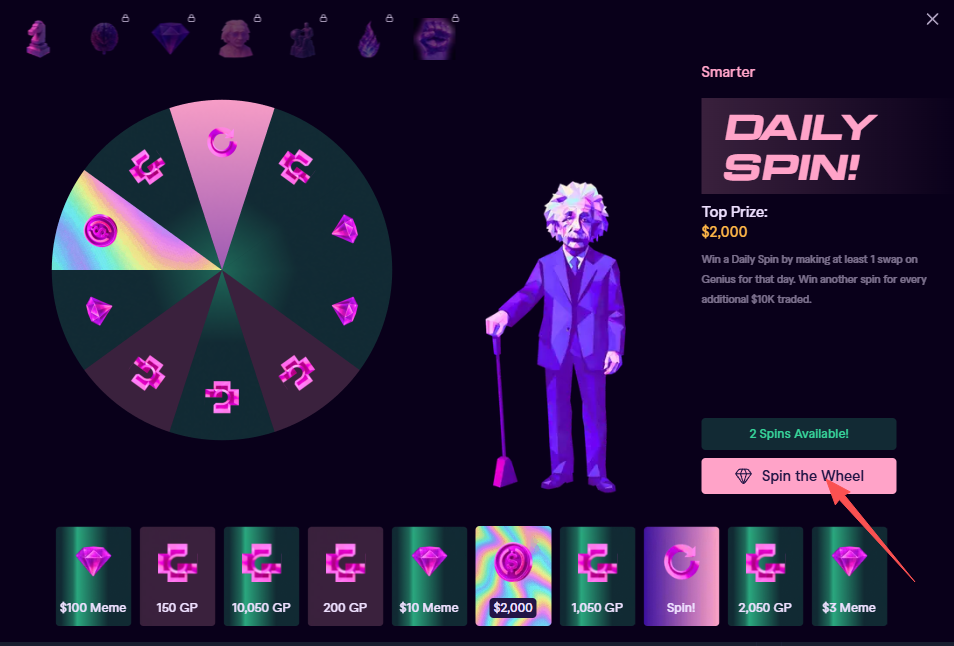
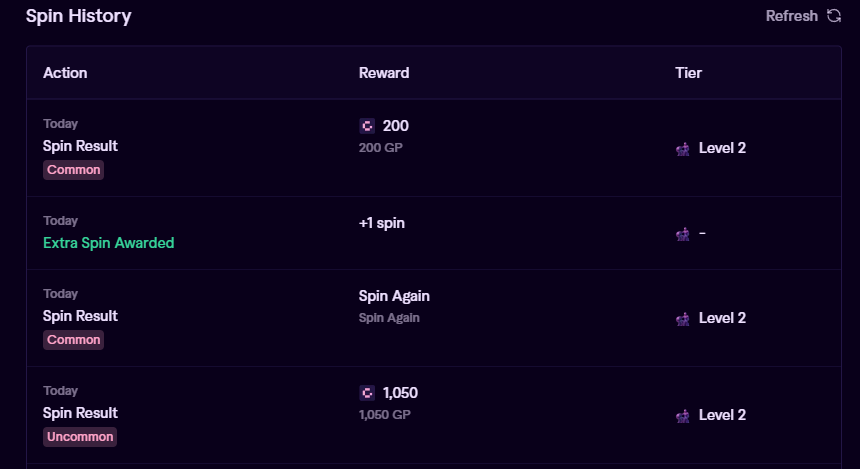
STEP 3. Under the "Airdrop" section, first is "Points." Accumulate $10,000 in trading volume to get 1200 GP points. After exceeding $10,000, every additional $1000 in trading volume earns 200 GP points. Additionally, trading at least once daily gives you one free spin on the wheel. Every additional $10,000 in trading volume grants an extra spin, with no upper limit.
Other rules for earning points through trading:

  • Users earn 1 GP point for every $100 in spot trading volume / $1000 in perpetual contract trading volume;
  • Trade consecutively for 7 days to earn a win streak multiplier (resets after one day without trading);
  • Base multiplier and win streak multiplier apply to user's spot and perpetual contract trading (referral points not included).
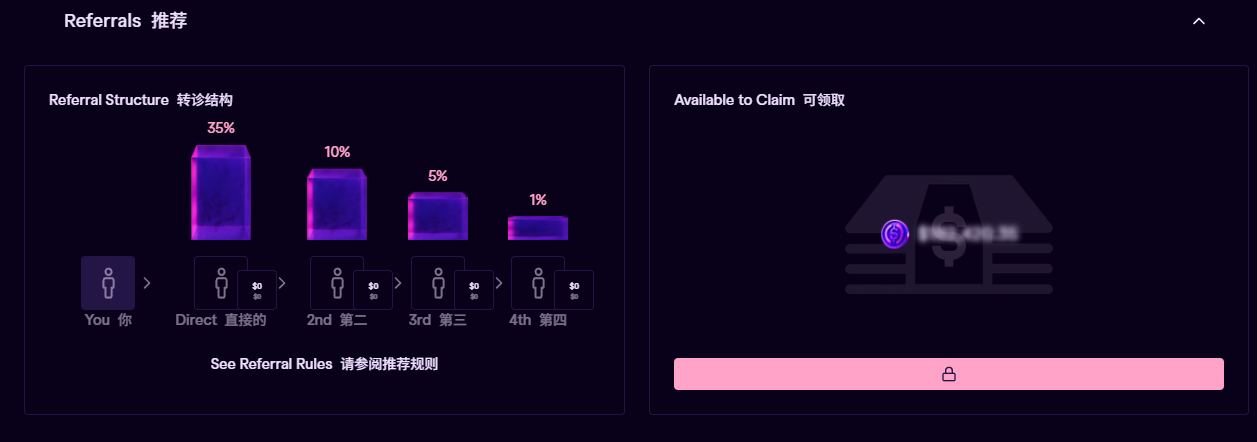
STEP 4. Under the "Airdrop" section, next is "Referrals." Invite friends to earn more GP points.
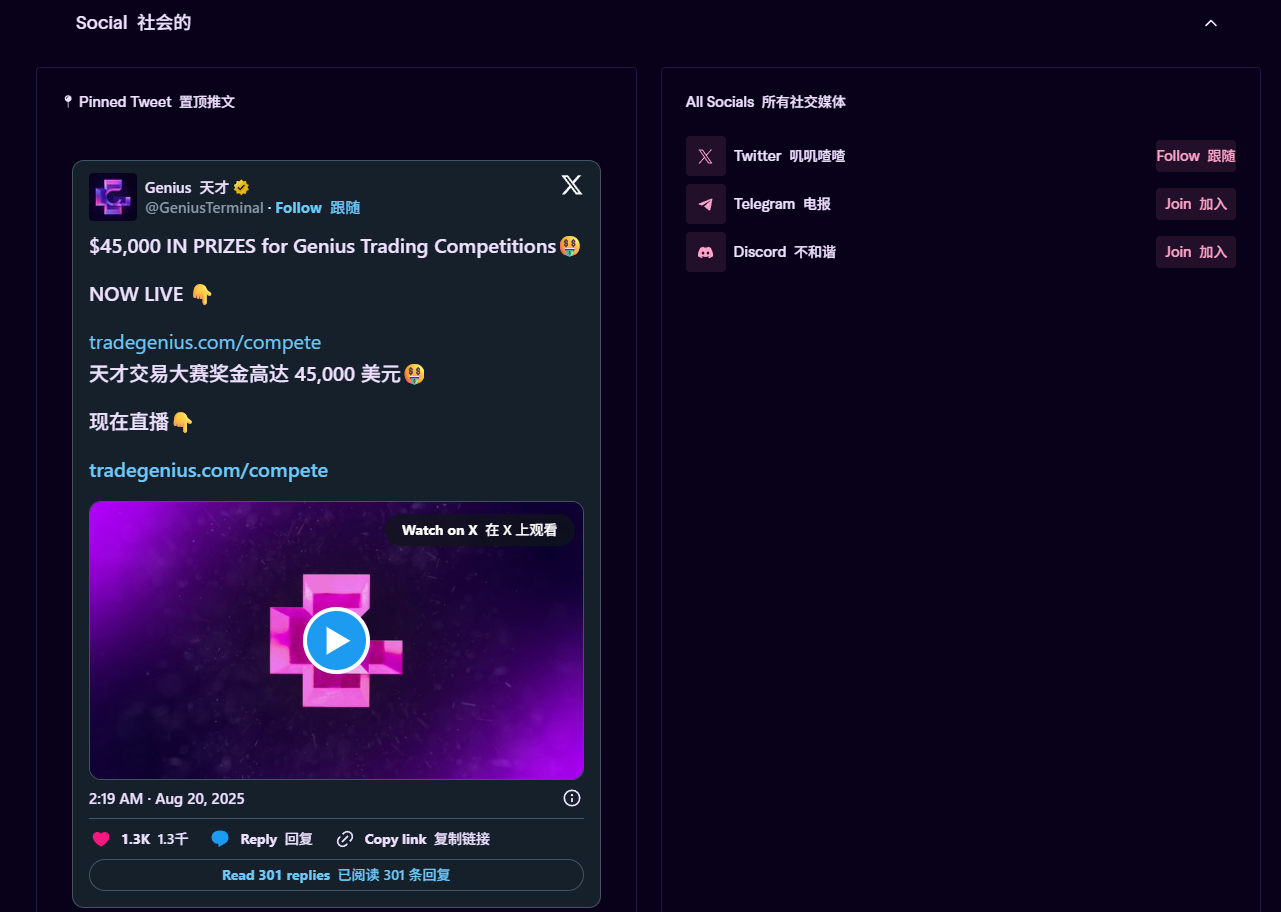
STEP 5. Under the "Airdrop" section, lastly is "Social" (the "Token Rewards" section is not yet open, skip for now), which contains official social media information.
STEP 6. Click on "Deposit" at the top. Supports deposits of EVM, Solana, and SUI assets. Official recommendation is to send ETH or USDC.

Current "Basic Income Points Earning" Strategy Sharing

Based on actual interaction, I've summarized a "basic income points earning" strategy. The specific operational思路 is as follows:

1、To minimize wear and tear from token price fluctuations, choose spot trading for USDC-USDT.
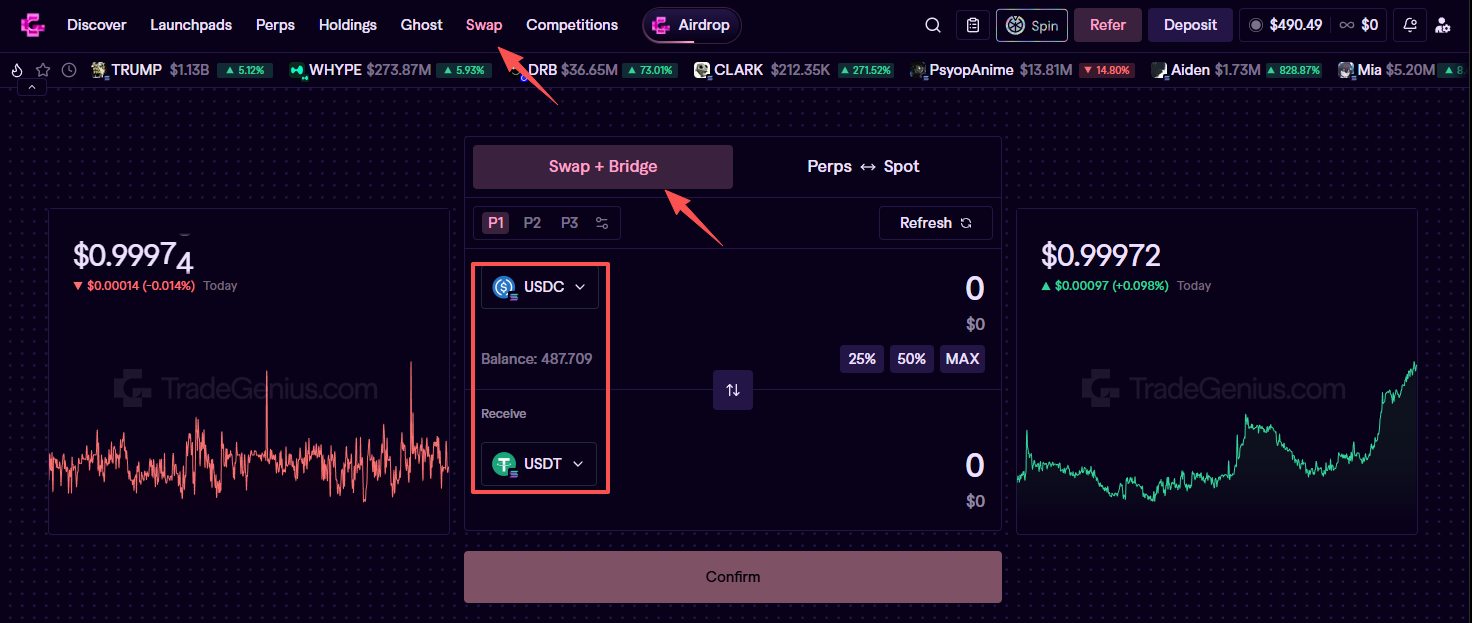
2、Try to make the single transaction amount larger. The Gas fee paid for a test transaction of $400 and $100 is almost the same, as shown below.
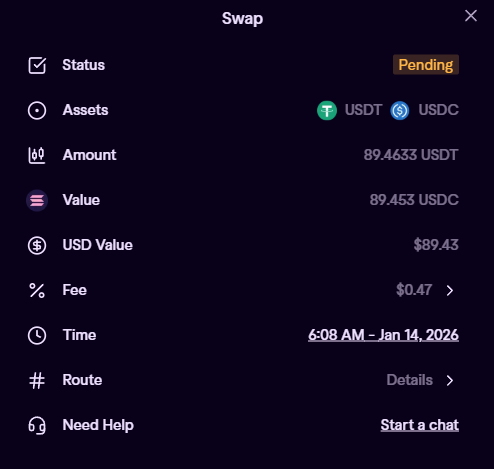
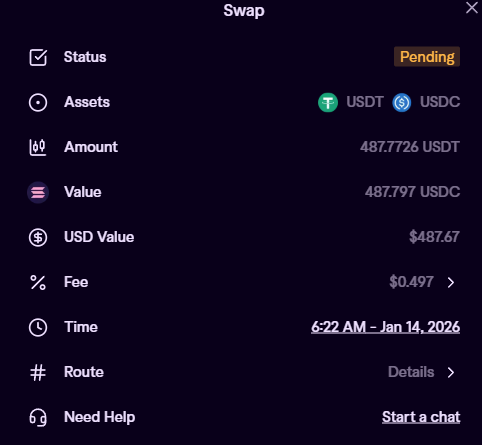
3、Once you unlock the wheel spin by reaching $10,000 in trading volume, just make one trade per day to qualify for the spin. There's no need to "frantically increase trading volume."
Related Questions

QWhat is Genius and what is its primary focus?

AGenius is a privacy-focused decentralized exchange (DEX) that offers spot trading, perpetual contracts, and copy trading. It supports over 10 blockchains, including BNB Chain and Solana, and aims to provide a chain-based alternative to centralized exchanges like Binance by combining CEX-like speed, liquidity, and privacy with self-custody and non-custodial features.

QWhy did CZ and YZi Labs invest in Genius, and how is it different from Aster?

ACZ and YZi Labs invested in Genius because it is a trading terminal that connects to exchanges, not a direct competitor to Aster. Genius focuses on enabling access to any token on any chain, soon with privacy features, while Aster is primarily a perpetual contract exchange. The investments and advisory role highlight the complementary rather than competitive nature of the two projects.

QHow can users earn GP points on the Genius platform?

AUsers can earn GP points by trading: 1 GP point for every $100 in spot trading volume or $1000 in perpetual contract volume. Additional points come from a 1200 GP bonus for reaching $10,000 in cumulative trading volume, with 200 GP for every additional $1,000. Daily trading grants a spin-the-wheel chance, and more spins are earned per $10,000 in trading. Inviting friends via a personal link also rewards points.

QWhat is the recommended 'low-cost points earning' strategy mentioned in the article?

AThe recommended strategy to minimize costs while earning points is to: 1) Trade the USDC-USDT pair to reduce price volatility wear. 2) Execute larger single transactions (e.g., $400 instead of $100) to optimize gas fees, which are similar for both amounts. 3) Reach $10,000 in trading to unlock the daily spin-the-wheel feature, then only trade once daily to maintain the spin opportunity without excessive volume.

QWhat are the steps to start using Genius platform and earn the sign-up bonus?

ATo start using Genius and earn the 500 GP sign-up bonus: 1) Visit the official website via an invite link (e.g., https://www.tradegenius.com/ref/NY8SYH). 2) Click 'Start Trading' and then 'Sign In' to connect a wallet. 3) Navigate to the 'Airdrop' section to view points and your referral link. 4) Deposit assets like ETH or USDC via supported chains (EVM, Solana, SUI). 5) Begin trading to accumulate points and bonuses.

Related Reads

The Value Distribution of Stablecoins

**Summary: The Value Distribution of Stablecoins** The article argues that stablecoins are evolving from mere trading tools into broader channels for dollar access. It divides the stablecoin ecosystem into four layers to analyze how value is distributed: 1. **Issuance Layer:** Mints stablecoins, holds reserve assets, and captures the spread between reserve yield and user costs (e.g., Tether, Circle). This layer currently earns the largest profit margin. 2. **Infrastructure Layer:** Connects stablecoins to the traditional financial system, handling fiat on/off-ramps, banking integration, compliance (KYC/AML), and asset management (e.g., Bridge, BVNK). This is the "unglamorous" but critical work, building the essential bridges between crypto and real-world finance. 3. **Acquiring/Distribution Layer:** Integrates stablecoins into merchant systems, manages payment flows, and provides enterprise financial software (e.g., Stripe, Coinbase). They act as the access point for businesses. 4. **Application Layer:** The end-users and businesses that ultimately use stablecoins for payments, settlements, or as a store of value. They benefit from convenience but have little pricing power. The core thesis is that while the issuance layer currently dominates profits, the often-overlooked **infrastructure layer holds significant long-term potential**. The real challenge and barrier to mass adoption is not the on-chain transfer of stablecoins (which is simple), but the complex "last mile" integration into existing business workflows, banking systems, and regulatory frameworks across different countries. Companies in this layer are currently in a "land grab" phase, investing heavily to build networks, secure bank partnerships, and establish compliance pathways. While their position is currently pressured by the profitable issuers above and distribution platforms below, the article suggests that if stablecoins become a default financial rail for businesses, the infrastructure providers who have done the hard work of integration will ultimately gain strong pricing power and become entrenched, essential players.

marsbit3h ago

The Value Distribution of Stablecoins

marsbit3h ago

The Value Distribution of Stablecoins

The Value Distribution of Stablecoins The article argues that stablecoins are evolving from a mere trading tool into a broad "dollar channel." It analyzes the industry's value chain through four layers: 1. **Issuance Layer (e.g., Tether, Circle):** The top layer that mints stablecoins, holds reserve assets, and captures the thickest interest rate spread. 2. **Infrastructure Layer (e.g., Bridge, BVNK):** Connects stablecoins to the traditional financial system, handling critical but complex "dirty work" like fiat on/off-ramps, banking integration, compliance (KYC/AML), and cross-border settlement. 3. **Acquiring/Distribution Layer (e.g., Stripe, Coinbase):** Embeds stablecoins into merchant systems, manages payment flows, and integrates with enterprise software. 4. **Application Layer:** End-users and businesses that ultimately use stablecoins for payments, settlement, or storing value. The author posits that while the issuance layer currently captures the most profit, the most overlooked and potentially critical layer is infrastructure. The core challenge for stablecoin adoption isn't the on-chain transfer (which is simple), but bridging the gap between blockchain and the real-world financial system. This involves solving practical problems for businesses: fiat conversion, reconciliation, tax handling, and user onboarding. Infrastructure companies are currently in a difficult "land-grab" phase—building networks, securing banking relationships, and achieving compliance country-by-country. They face pressure from both the profitable issuance layer above and distribution platforms below. However, the author suggests this layer is building a crucial moat. Once stablecoins become a default business rail, the infrastructure players who have done the hard work of integration may gain significant, durable value and pricing power.

链捕手3h ago

The Value Distribution of Stablecoins

链捕手3h ago

How to Do Research Well: Deliberately Practice the Real Skills That Matter

No one truly teaches you how to do research. You're often given a desk, a pre-selected problem, and vague instructions to "create something new." Consequently, many people reverse-engineer the job based on visible outputs—papers, posts, announcements—learning only how to *appear* like a researcher rather than how to *become* one. True research capability is built from stacking small, trainable skills, nearly all of which can be developed through deliberate practice. **Pick Your Own Problem:** Most researchers absorb problems from advisors or trends, lacking the underlying reasoning. Choosing a problem you genuinely care about, as John Schulman advises, leads to original work. Develop "taste" like a muscle: predict experiment outcomes, guess paper results from methods, and track which findings remain important over time. **Upgrade Your Inputs:** Relying on shared reading lists (arXiv hot lists, filtered group chats) leads to unoriginal conclusions. Undervalued old literature often holds crucial insights (e.g., MoE, LSTM, backpropagation). Richard Sutton's "The Bitter Lesson" or Claude Shannon's 1952 talk on creative thinking are more predictive than lengthy modern surveys. Breadth matters as much as depth: draw from neuroscience, mechanism design, hardware knowledge, and honest statistics. Read papers directly, especially appendices and limitations sections. **Write Everything Down:** As Paul Graham noted, writing exposes flaws in seemingly mature ideas. Writing is the cheapest defense against self-deception. Following Feynman's principle, Darwin programmatically wrote down facts contradicting his theory to combat memory bias. Maintain a detailed log of hypotheses, setups, predictions, results, and updated understandings. Reviewing past logs fosters essential humility.

marsbit6h ago

How to Do Research Well: Deliberately Practice the Real Skills That Matter

marsbit6h ago

Trading

Spot
Futures
活动图片





