XRP volume surges to $3.6B as Ripple expands Asia strategy

ambcryptoPublished on 2026-03-26Last updated on 2026-03-26

Abstract

Ripple's expansion in Singapore, including broader regulatory approval from the Monetary Authority of Singapore (MAS) and participation in the BLOOM initiative, has brought XRP back into focus. The company is piloting programmable trade settlement using the XRP Ledger and RLUSD to improve cross-border trade efficiency. Market reaction was swift, with XRP's trading volume surging to $3.6 billion and its price rising to $1.42. While this signals strong bullish interest, the long-term impact depends on whether these regulated initiatives translate into sustained real-world utility and transaction demand.

Ripple [XRP] is back in the spotlight, and this time the narrative centers on utility. Ripple’s Singapore expansion, its MAS-linked pilot, and the market’s fast reaction pushed XRP into the market’s discourse. Therefore, the question is simple: is this just another headline pop or the start of something more enduring?

Ripple expands its regulated footprint in Singapore

Ripple had already secured broader approval from the Monetary Authority of Singapore to expand payment activities under its Major Payment Institution license. That gave the firm more room to offer token-based settlement services and related payment rails in a market that had become central to its Asia-Pacific strategy.

This mattered because Singapore was not handing out credibility for free. Ripple’s local entity gained wider permissions to serve banks, fintechs, and crypto firms using XRP, RLUSD, and similar rails. However, that was more than a licensing update. It pushed Ripple further into a market that still took rules seriously.

Ripple has been in Singapore since 2017, and no other region has grown as quickly for the firm. Singapore wasn’t just a backdrop; it became one of Ripple’s most important proving grounds, a place where the company could advance real utility.

XRP Ledger and RLUSD in cross-border trade flows

The bigger shift came through MAS’s BLOOM initiative. Ripple joined the program with Unloq to pilot programmable trade settlement using Unloq’s SC+ infrastructure, Ripple’s technology, the XRP Ledger, and RLUSD.

The pilot targeted one of finance’s toughest challenges: cross‐border trade settlement, which for years has remained slow, fragmented, and painfully inefficient. Under this model, payments were released only after pre-agreed commercial conditions were met, such as shipment verification.

Therefore, this was not another vague blockchain promise. It tested whether digital settlement assets could actually reduce friction and improve trade finance access, especially for SMEs. In particular, that gave XRP’s utility case something it often lacked: a real-world framework with rules attached.

Could Singapore become a real utility catalyst?

The market reacted quickly, and it did not do so quietly. XRP’s volume surged from $2.1 billion to $3.6 billion, at press time, while the price recovered from $1.38 to $1.42 as traders responded to the developments.
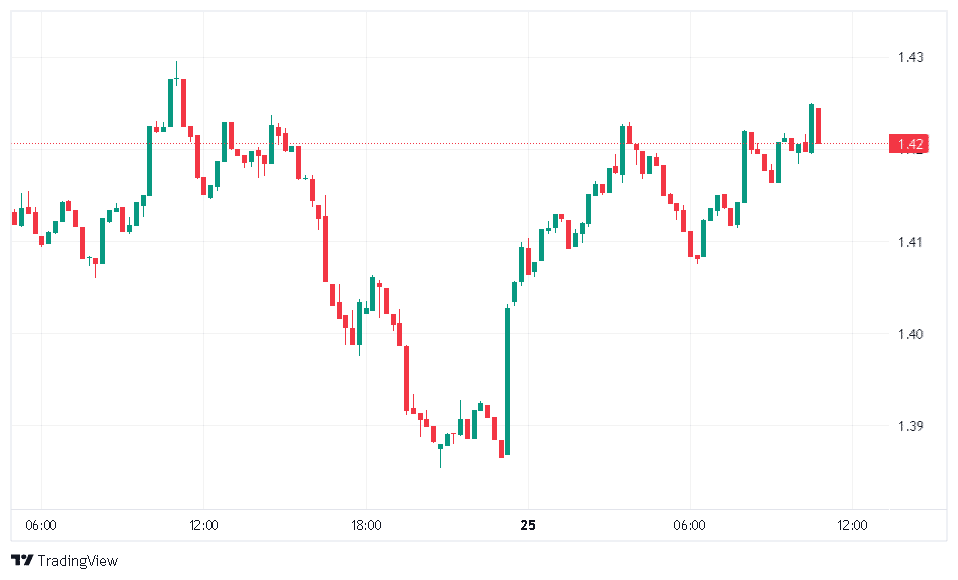
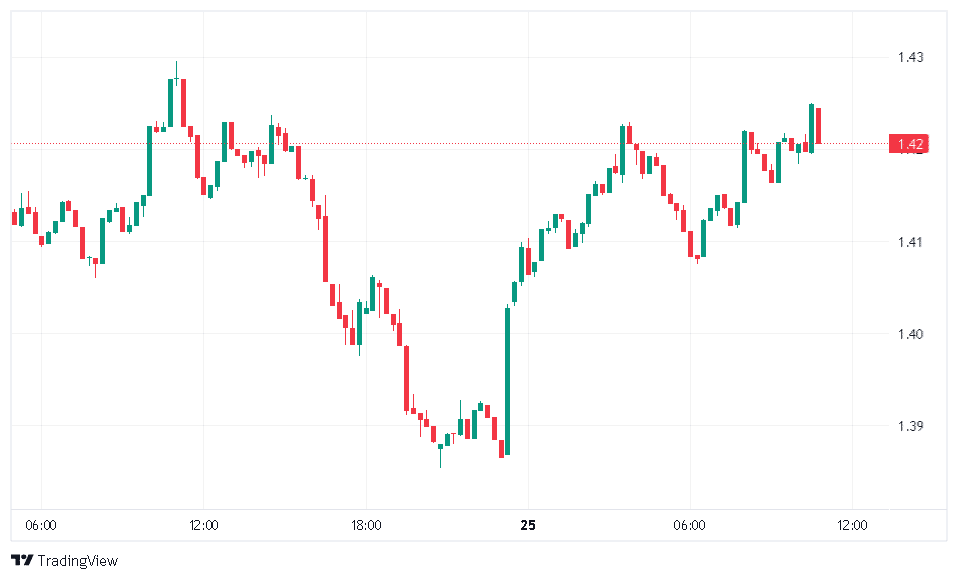
Source: CoinMarketCap

Rising volume alongside climbing prices signaled strong bullish participation Still, attention alone meant nothing.

XRP had seen excitement before, and much of it died fast. Looking ahead, Singapore could become a real utility catalyst, but failure to do so would mean this move would end up as just another temporary spike.


Final Summary

  • Ripple’s Singapore push gave XRP a harder, more credible utility narrative than the market usually gets.
  • The real test now lies in whether regulated pilots turn into sustained transaction demand.

Related Questions

QWhat was the main reason for XRP's trading volume surge to $3.6 billion?

AXRP's trading volume surged due to Ripple's expansion in Singapore, including its broader approval from the Monetary Authority of Singapore and participation in the MAS's BLOOM initiative for programmable trade settlement.

QHow did Ripple's Major Payment Institution license in Singapore benefit the company?

AThe license gave Ripple broader permissions to offer token-based settlement services and payment rails, allowing it to serve banks, fintechs, and crypto firms using XRP and RLUSD in the Singapore market.

QWhat specific problem does the MAS BLOOM initiative pilot program aim to solve?

AThe pilot program aims to address the challenges of cross-border trade settlement, which has been slow, fragmented, and inefficient, by using programmable payments that are triggered only after pre-agreed commercial conditions are met.

QWhat was the price movement of XRP following the news about Ripple's Singapore expansion?

AThe price of XRP recovered from $1.38 to $1.42 as traders responded to the developments in Ripple's Singapore strategy.

QWhy is Singapore considered a critical market for Ripple's Asia-Pacific strategy?

ASingapore is Ripple's fastest-growing region since 2017 and serves as a key proving ground for advancing real utility, thanks to its regulatory clarity and strategic importance in the Asia-Pacific region.

Related Reads

Stuck Polymarket: The Real Test After Riding the Traffic Boom Has Arrived

Polymarket, a leading prediction market platform, is facing significant technical challenges as its growth outpaces its current infrastructure on Polygon. Users are experiencing laggy transactions, unresponsive orders, and delayed confirmations, severely impacting the trading experience. In response, DeFi Engineering VP Josh Stevens outlined a comprehensive engineering overhaul. The plan includes reducing on-chain data delays, fixing order cancellation issues, rebuilding the central limit order book (CLOB), improving website performance, and developing a unified SDK and API. A major revelation was the ongoing "chain migration," indicating a potential move away from Polygon. The core issue is that Polymarket has evolved from a simple prediction market into a high-frequency trading platform, making Polygon's limitations—such as block space, gas fees, and block time—a ceiling for further growth. The migration is not just a simple chain switch but a fundamental rebuild of its trading system to support more complex products like perpetual contracts (Perps). This announcement has sparked competition among chains like Solana, Sui, and Algorand, all vying to host Polymarket. For Polygon, losing this key application, which contributes significantly to its gas fee revenue, would be a major setback. The real test for Polymarket is no longer attracting users but proving it can provide a stable, reliable trading environment that retains them.

Odaily星球日报55m ago

Stuck Polymarket: The Real Test After Riding the Traffic Boom Has Arrived

Odaily星球日报55m ago

Lowering Expectations for BTC's Next Bull Market

The author, Alex Xu, explains his decision to significantly reduce his Bitcoin holdings (from full to ~30% of his portfolio) during the current bull cycle, citing a lowered long-term outlook for BTC's price appreciation in the next cycle. He outlines six key reasons for this reduced expectation: 1. **Diminished Growth Drivers:** The narrative of exponential user adoption has largely played out with institutional ETF adoption. The next major growth phase—adoption by sovereign national reserves or central banks—seems unlikely in the near future. 2. **Personal Opportunity Cost:** More attractive investment opportunities have emerged in other assets, such as undervalued companies. 3. **Industry-Wide Contraction:** The broader crypto industry is struggling, with most Web3 business models (SocialFi, GameFi, DePIN) failing. This overall萧条 (depression) reduces the fundamental demand and consensus for Bitcoin. 4. **Strain on Major Buyer:** MicroStrategy, a major corporate buyer of BTC, faces rising financing expenses for its debt, which could slow its purchasing rate and create significant marginal pressure on the market. 5. **Increased Competition from Gold:** The emergence of "tokenized gold" has closed the functional gap (portability, divisibility) between physical gold and Bitcoin, offering a strong competitor in the non-sovereign store-of-value space. 6. **Security Budget Concerns:** The block reward halving continues to exacerbate the long-standing issue of funding Bitcoin's network security, with new fee source explorations like Ordinals and L2s largely failing. The author's decision to hold a significant (though reduced) position reflects a cautious, not bearish, outlook. He remains open to increasing his exposure if the fundamental reasons for his skepticism change or if new positive catalysts emerge.

marsbit1h ago

Lowering Expectations for BTC's Next Bull Market

marsbit1h ago

Can Iran 'Control' the Strait of Hormuz?

Iran has announced a comprehensive plan to assert control over the strategic Strait of Hormuz, a critical global oil shipping chokepoint. The proposed measures include requiring all vessels to obtain Iranian permission for passage, imposing fees for security, environmental protection, and navigation management—preferably paid in Iranian rials—and absolutely banning Israeli ships. Vessels from countries deemed hostile by Iran’s top security bodies may also be barred. Analysts suggest Iran’s motives are multifaceted: increasing pressure on the U.S. and Israel by leveraging control over oil transit to influence global prices and inflation; creating a new revenue stream, potentially exceeding $7.7 billion annually, to counter Western sanctions and support postwar reconstruction; and using transit permissions as bargaining chips in future negotiations, notably with the U.S. However, the plan faces significant practical and diplomatic challenges. Enforcing comprehensive interception and fee collection in the busy waterway, patrolled by international military forces, would be difficult. The U.S. has already countering with a blockade of Iranian ports and threats to intercept any ship paying fees, potentially strangling Iran’s oil exports and fee revenue. Broad international opposition, led by European and Gulf states, and legal controversies further complicate implementation. The proposal may ultimately serve more as a negotiating tactic than a feasible policy, with its execution remaining highly uncertain.

marsbit2h ago

Can Iran 'Control' the Strait of Hormuz?

marsbit2h ago

Trading

Spot
Futures

Hot Articles

What is XRP 2.0

XRP 2.0: A New Frontier in the Cryptocurrency Landscape Introduction to XRP 2.0 In the ever-evolving realm of cryptocurrency, new projects continuously emerge, vying for attention and adoption. One such promising initiative is XRP 2.0, a novel cryptocurrency project designed to leverage advanced blockchain technology and robust encryption methodologies. While the name draws parallels with Ripple’s XRP, it’s crucial to note that XRP 2.0 operates independently, focusing on enhancing transaction security, privacy, and scalability. As the digital financial landscape increasingly embraces decentralized solutions, XRP 2.0 aims to contribute meaningfully to web3 and the overall expansion of crypto projects. What is XRP 2.0? At its core, XRP 2.0 is a cryptocurrency project that aims to create a secure and decentralized digital currency ecosystem. Its foundational technology integrates sophisticated blockchain principles with cutting-edge encryption techniques. The overarching goal of XRP 2.0 is to establish itself as a reliable and efficient platform enabling swift transaction execution while prioritizing enhanced privacy protections for its users. The project is promoted as a solution to many limitations faced by existing cryptocurrencies, proposing a system that can handle a higher volume of transactions with improved speed and privacy. This versatility positions XRP 2.0 as a significant contender in a marketplace riddled with various digital currencies. Who is the Creator of XRP 2.0? The identity of the creator behind XRP 2.0 has been flagged as ‘Wilbur.’ However, comprehensive details regarding Wilbur or their associated entity remain elusive. The anonymity of many cryptocurrency creators is not an uncommon phenomenon in the industry, often designed to maintain a degree of privacy and security. Who are the Investors of XRP 2.0? As of now, specific information related to the investment foundations or organizations supporting XRP 2.0 is not publicly available. In the cryptocurrency sector, the backing by reputed investors can significantly influence a project's credibility and success, yet the transparency regarding the financial supporters of XRP 2.0 has not been established. How Does XRP 2.0 Work? XRP 2.0 stands out by employing a combination of blockchain technology and advanced encryption algorithms that ensures secure and decentralized transactions. Its innovative structure includes unique features designed to foster user engagement and broaden functionalities beyond conventional cryptocurrency transactions. Among these features, XRP 2.0 incorporates AI-powered capabilities, such as text-to-image and text-to-speech functionalities. These additions are designed to enhance the interactive experience for users, promoting broader applicability across various sectors. By bridging technological advancements with user-centered design, XRP 2.0 aims to capture the attention of a diverse range of individuals and enterprises looking to integrate cryptocurrency solutions into their operational frameworks. Timeline of XRP 2.0 Understanding XRP 2.0 requires examining the milestones that have defined its journey thus far: July 23, 2023: XRP 2.0 is introduced as a novel cryptocurrency project, aiming to revolutionize secure and decentralized transaction capabilities in the blockchain domain. September 8, 2023: The launching of another project, XRP20, occurs, marking the emergence of an ERC-20 token on the Ethereum blockchain that remains unrelated to XRP 2.0. November 13, 2023: The XRP Ledger undergoes a significant update with the release of rippled server software version 2.0.0. It is essential to note that this development is disconnected from the XRP 2.0 cryptocurrency project. Key Points About XRP 2.0 To distill the essence of XRP 2.0, several critical factors emerge: Unique Features: The inclusion of features like AI-powered text-to-image and text-to-speech further diversifies the potential applications of XRP 2.0. Blockchain Technology: The framework utilizes advanced blockchain mechanisms and encryption protocols, ensuring a secure and decentralized environment for transactions. Scalability and Privacy: XRP 2.0 prioritizes enhanced privacy protections in transaction processes and the scalability necessary to accommodate a growing user base. No Affiliation with Ripple: Importantly, despite its name, XRP 2.0 does not have any allegiance or collaboration with Ripple’s XRP, distinguishing its operational framework and objectives within the cryptocurrency ecosystem. Conclusion XRP 2.0 represents an ambitious venture into the cryptocurrency sphere, aiming to offer a combination of security, privacy, and efficiency in digital transactions. By integrating sophisticated technologies and user-friendly features, the project sets out to broaden the horizons of what cryptocurrency can achieve in today's digital economy. While the anonymity of its creator and lack of disclosed investors might raise questions for some, XRP 2.0's focus on advanced functionalities and decentralisation enhances its appeal amidst an increasingly crowded crypto market. As the cryptocurrency landscape continues to evolve, XRP 2.0 may yet emerge as a pivotal player in the expansion of secure and scalable blockchain solutions.

941 Total ViewsPublished 2024.04.01Updated 2024.12.03

What is XRP 2.0

Discussions

Welcome to the HTX Community. Here, you can stay informed about the latest platform developments and gain access to professional market insights. Users' opinions on the price of XRP (XRP) are presented below.

活动图片