Will the Continued Shutdown of the Strait of Hormuz Trigger an Oil and Gas Supply Crisis?

marsbitPublished on 2026-05-08Last updated on 2026-05-08

Abstract

The prolonged closure of the Strait of Hormuz, a critical global energy chokepoint, is evolving from a military conflict into a severe stress test for worldwide energy trade. Despite a ceasefire, transit remains minimal due to persistent threats from Iran, which uses drones, small boats, mines, and a new transit permit/fee system to effectively control the strait. Daily vessel traffic has plummeted from about 135 to under 10 ships, trapping over 1500 commercial vessels. The U.S. has initiated "Project Freedom" to escort ships, but Iran condemns it as a violation. The crisis is forcing a fundamental re-pricing of risk and cost for using this route, which normally carries about one-fifth of global oil and LNG supplies. Even if a political deal is reached, restoring full, trusted transit will be slow due to mine clearance needs, security concerns, and eroded market confidence. Major oil producers like Saudi Arabia are using alternative pipelines, but capacities are limited and routes are also vulnerable. Iran has signaled its intent to institutionalize control over the strait post-conflict, leveraging it as a geopolitical tool. The standoff underscores how Iran can paralyze this vital passage without a traditional navy, creating a lasting impact on global energy security and trade logistics.

Editor's Note: The crisis in the Strait of Hormuz is evolving from a military conflict into a stress test for global energy trade.

The key recent shift is that the ceasefire has not led to a genuine resumption of navigation. In early May, the United States announced the launch of "Project Freedom," attempting to guide stranded vessels away from the Persian Gulf; Iran, in turn, warned external warships not to enter the strait. Subsequently, the U.S. and Iran engaged in another round of clashes near the Strait of Hormuz, with the U.S. claiming it intercepted an Iranian attack on three U.S. naval vessels, and Iran accusing the U.S. of violating the ceasefire and attacking vessels and coastal areas. While former President Trump stated the ceasefire remained in effect, the market has already begun repricing the risks, with Brent crude prices briefly rising to around $101 per barrel.

Iran has demonstrated that, even without a traditionally strong navy, it can bring the world's most important energy artery to a near-standstill through the use of drones, small boats, the threat of mines, and mechanisms for passage permits and fees. For shipowners, insurers, and oil-producing nations, the question is no longer just "can we pass through," but "how much risk do we bear for each passage."

This means the cost of using the Strait of Hormuz is being repriced. Once considered an implicitly available piece of global energy infrastructure, it is now turning into a geopolitical bargaining chip in Iran's hands. Even if a future agreement is reached between the U.S. and Iran, a full restoration of shipping to pre-conflict levels is unlikely to happen immediately, because what has truly been damaged is not the waterway itself, but the market's trust in its safety.

Below is the original article:

No region in the world produces more oil and natural gas than the countries spanning the coast of the Persian Gulf. Most of that energy is exported by tankers navigating through the Strait of Hormuz—and that waterway has effectively been blocked for more than two months.

Since being attacked by the U.S. and Israel in late February, Iran has been restricting vessel transit through the strait. Iran refuses to reopen this vital shipping lane unless the U.S. lifts its maritime blockade on Iranian ports. Tensions escalated again in early May, nearly threatening the maintenance of the ceasefire agreement. Prior to this, former U.S. President Donald Trump announced that the U.S. would launch an operation called "Project Freedom" to guide stranded ships away from the Persian Gulf.

The economic impact of the Strait of Hormuz obstruction is accumulating worldwide. As prices for oil, natural gas, and other commodities rise, supplies are also tightening. Even if the U.S. and Iran eventually break the deadlock in peace talks and reach an agreement to lift the strait blockade, free navigation may not fully resume. Iran has already signaled its intent to use its de facto control over the Strait of Hormuz as a weapon it can wield against adversaries in the future.
How Did the War Affect the Strait of Hormuz?

How did the Iran war affect shipping in the Strait of Hormuz?

Following the outbreak of war on February 28, Iran intermittently attacked ships in and around the Persian Gulf, leading most shipowners to be unwilling to risk casualties, cargo loss, and vessel destruction by attempting to cross the Strait of Hormuz. The average number of vessels passing through the strait daily dropped from around 135 during peacetime to fewer than 10.

Meanwhile, Iran has continued to transport its own oil through the strait. It has also allowed some other vessels to pass, often via a corridor hugging the Iranian coastline; sometimes, Iran has demanded fees of up to $2 million from these vessels.
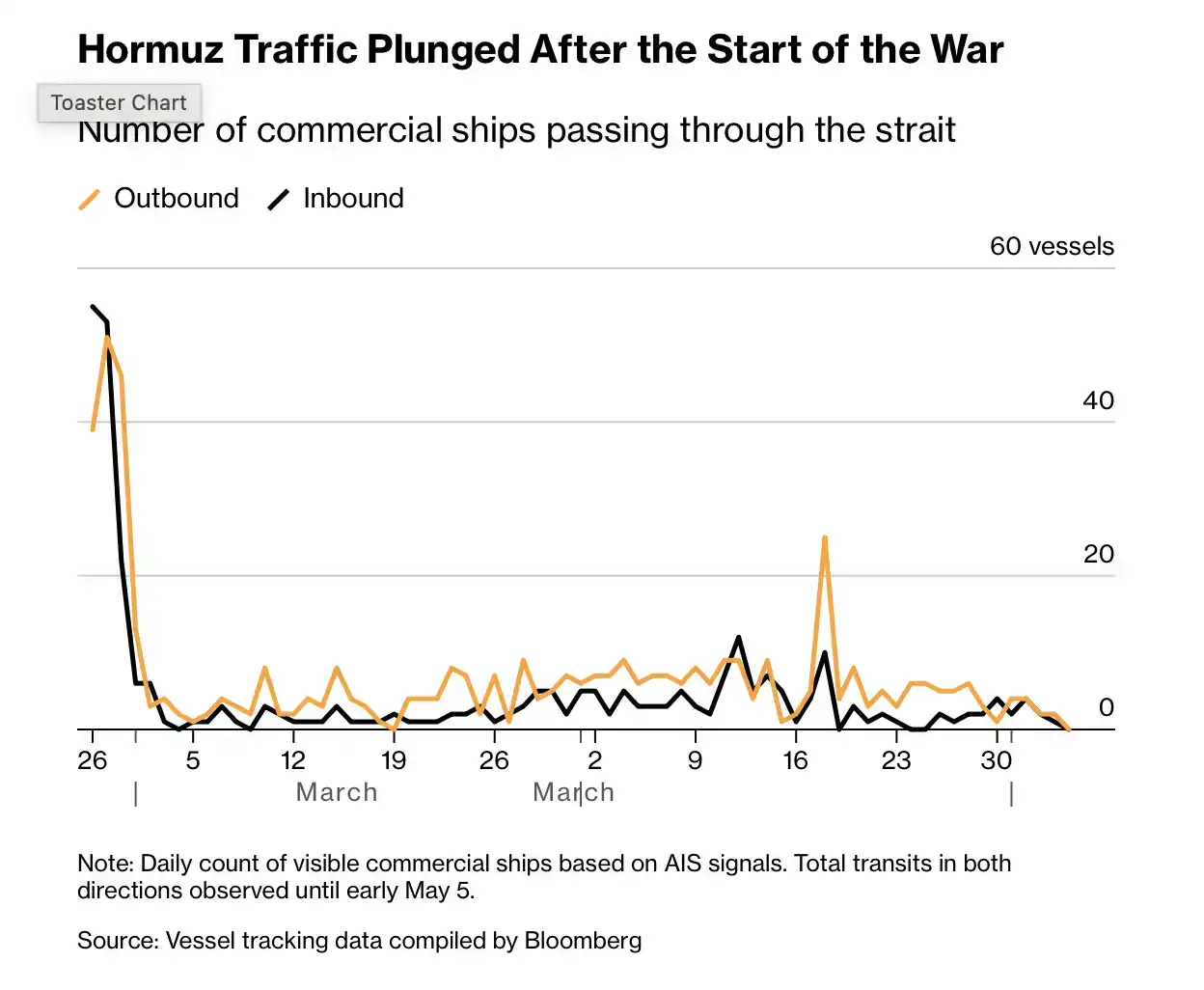
Even after the warring parties agreed to a ceasefire in early April, strait traffic remained nearly stagnant. Starting April 13, the U.S. began imposing a blockade on vessels that had called at Iranian ports or were bound for them, aiming to pressure Iranian oil exports and force the Iranian regime to restore the Strait of Hormuz to a "toll-free zone."

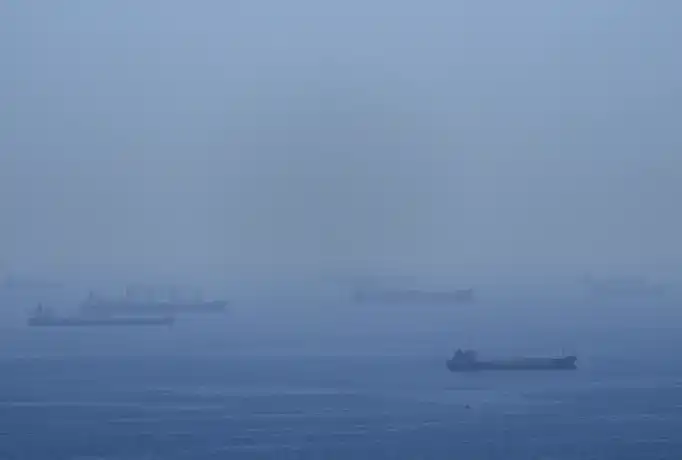
So far, Iran has successfully resisted the blockade pressure. According to Iran's semi-official Tasnim news agency, in early May, Iran even expanded the area over which it claims control in the Strait of Hormuz. As the stalemate persists, the U.S. military states that over 1,500 merchant vessels are now trapped in the Persian Gulf. With crude storage space exhausted, oil producers in the region have been forced to suspend most of their production.

What is needed to reopen the Strait of Hormuz?

Even if a peace agreement is reached, it is unlikely to immediately restore normal navigation through the Strait of Hormuz. Shipowners need assurance that the reopening is lasting and that passage is safe. One issue is the potential threat of mines. Iran has stated it has laid mines along the most commonly used routes within this narrow strait. Sweeping and clearing these explosives could take weeks.

Some vessel operators may be reluctant to sail through the Strait of Hormuz without military escorts. The U.S. Navy does not have enough ships to protect the more than 100 vessels that typically pass through the waterway daily, and the Trump administration has struggled to convince allies to immediately deploy their naval forces. The UK and France are leading consultations to form a multinational coalition to help restore shipping in the Strait of Hormuz once the conflict ceasefire holds.

Even if escort arrangements are finalized, clearing the backlog of vessels on both sides of the strait could take weeks. The narrowness of the Strait of Hormuz limits the number of ships that can be escorted at once and also makes convoyed vessels more vulnerable to attack.

Trump announced that, starting May 4, the U.S. would launch "Project Freedom" to guide neutral vessels out of the Persian Gulf. He did not elaborate on the operation's details, though U.S. Central Command stated it would provide military support, including deploying missile destroyers, aircraft, and drones. Iran labeled this move "Project Deadlock" and accused it of violating the ceasefire.

What does the Iran war mean for the long-term future of the Strait of Hormuz?

Shipowners, insurers, and clients have seen that for Iran, with minimal traditional naval power, rapidly bringing Strait of Hormuz transit to a halt was not difficult; restoring normal operations, however, is proving much harder.

If a U.S.-Iran peace agreement fails to eliminate the threat Iran poses to Hormuz shipping, the economic logic of this critical trade artery could change for years. The most cautious vessel operators may decide that transiting the strait under any circumstance is not worth the risk. Higher insurance premiums could also weaken the competitiveness of Gulf trade compared to other regions.

Iran has signaled its intent to continue exerting control over Strait of Hormuz transit and monetize its influence over this waterway, even after the war ends. Iran's parliament is advancing a bill to enshrine its sovereignty over the strait in domestic law and formally establish a fee system for vessel passage.
Energy Artery Being Repriced

Why is the Strait of Hormuz so important?

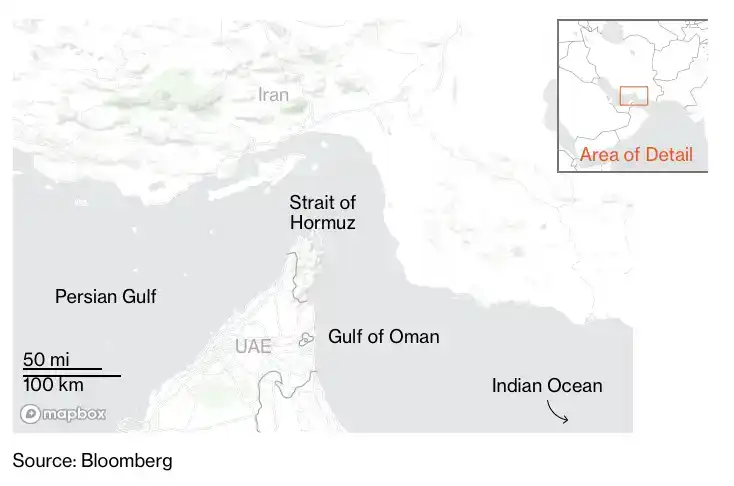
The Strait of Hormuz borders Iran to the north and the UAE and Oman to the south, connecting the Persian Gulf with the Indian Ocean. It stretches about 100 miles (161 km) long and is about 24 miles wide at its narrowest point. The two-way shipping lanes are each just 2 miles wide.

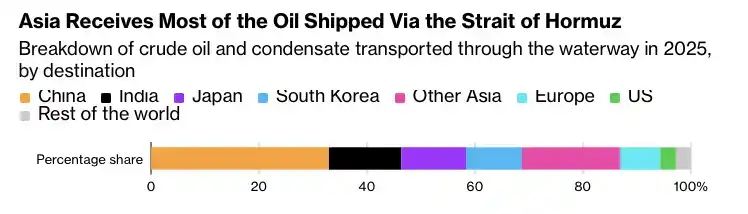
For energy markets, this strait is a vital artery, carrying about one-fifth of the world's oil and liquefied natural gas supply. Under normal circumstances, Saudi Arabia, Iraq, Iran, Kuwait, Bahrain, Qatar, and the UAE all export crude oil via the Strait of Hormuz, with the majority of cargoes destined for Asia.
Gulf countries also have numerous refineries producing significant volumes of diesel, jet fuel, naphtha—used in making plastics and gasoline—and other petroleum products, which are exported via the strait to global markets.

Beyond energy, the Strait of Hormuz is also a chokepoint for transporting products like aluminum, fertilizers, and even helium, which is used in semiconductor manufacturing.

Can oil-producing nations bypass the Strait of Hormuz?

Kuwait, Qatar, and Bahrain have no alternative maritime export routes.

Saudi Arabia, the largest shipper of oil through the Strait of Hormuz, has already diverted some crude via a pipeline extending west to the Red Sea port of Yanbu. Saudi Aramco plans to utilize the pipeline's full capacity of 7 million barrels per day, though only about 5 million barrels per day is available for export, with the remainder for domestic use.

But the Red Sea route is not without risk. Iran has already attacked a refinery in Yanbu and struck a pumping station on the East-West Pipeline; furthermore, the Iran-backed Houthi rebels in Yemen have threatened to resume attacks on vessels in the Red Sea.

The UAE can also bypass the Strait of Hormuz to some extent. However, its alternative capacity is limited, and the port of Fujairah has also been attacked by Iran. This port lies at the end of a pipeline linking UAE oilfields with the Gulf of Oman. Additionally, while Iraq is attempting to resume exports via Jordanian and Syrian ports, the transport volumes under consideration represent only a small fraction of its typical exports via the Strait of Hormuz.

Does Iran have the right to control the Strait of Hormuz?

Under the United Nations Convention on the Law of the Sea (UNCLOS), coastal states can exercise sovereignty over waters extending 12 nautical miles (about 14 miles) from their coastline, an area known as the territorial sea.

The Strait of Hormuz passes through the territorial seas of Iran and Oman. However, states must allow foreign vessels "innocent passage" within their territorial seas and must not hamper "innocent passage" or "transit passage" of foreign vessels through straits used for international navigation. The convention also stipulates that states may not levy charges on foreign vessels merely for passing through their territorial seas.

Although the Iranian government signed UNCLOS in 1982, the Iranian parliament has never ratified the treaty.


Related Questions

QWhat is the core change in the geopolitical situation regarding the Strait of Hormuz, according to the article?

AThe core change is that the Strait of Hormuz is being re-priced from a piece of default, usable global infrastructure into a geopolitical lever under Iran's de facto control. It's no longer just a question of physical passage, but of risk and cost.

QAccording to the article, why would normal traffic not resume immediately even after a peace deal between the US and Iran?

ANormal traffic wouldn't resume immediately because the main issue is not just the physical blockade but the shattered market trust in the safety of the passage. Ship operators need assurances of lasting safety, and concerns like uncleared mines, lack of military escort, and high insurance costs would persist.

QHow did the daily traffic through the Strait of Hormuz change after the outbreak of war and during the ceasefire?

AAfter the war outbreak, daily traffic dropped from an average of about 135 vessels in peacetime to less than 10. During the subsequent ceasefire, maritime traffic remained almost at a standstill, with over 1,500 commercial ships reportedly trapped.

QWhat alternative route does Saudi Arabia primarily use to bypass the Strait of Hormuz, and what are its limitations?

ASaudi Arabia primarily reroutes oil through the Petroline pipeline to the Red Sea port of Yanbu. Its limitations include the pipeline's total capacity of 7 million barrels per day, with only about 5 million barrels available for export, and the route's exposure to risks from Iran and Houthi attacks.

QWhat is the legal basis, according to the article, that challenges Iran's right to control or charge fees for passage through the Strait of Hormuz?

AAccording to the United Nations Convention on the Law of the Sea (UNCLOS), which Iran signed in 1982 but never ratified, coastal states must allow 'innocent passage' or 'transit passage' in straits used for international navigation. The convention also states that countries cannot levy charges solely for the passage of foreign ships through their territorial waters.

Related Reads

Xiaohongshu's Second Great Voyage, This Time Sailing Towards AI

Xiaohongshu's Second Voyage: Navigating Towards AI Since ChatGPT's emergence, Xiaohongshu's founder Mao Wenchao has been acutely aware of AI's potential threat, recognizing that the life advice people seek from chatbots overlaps directly with his platform's core business. Founded in 2013 as a PDF shopping guide for Chinese tourists, Xiaohongshu evolved into a massive community where millions share authentic, personal experiences—from product reviews to travel tips. This vast repository of "I've tried this" human judgment became its most valuable asset. However, the rise of AI, which delivers instant answers, challenges the very need for users to sift through numerous personal notes. Fearing its treasure trove of lived experience could become mere training data for others, Xiaohongshu is proactively adapting. In 2026, it established a dedicated AI division (Dots), launched RED Skill to turn user experiences into usable AI tools, and acquired the AI search product "Diandian." Its investments now extend to AI firms like MiniMax and hardware startups, moving upstream to address needs before they even become search queries. The platform's commercialization strategy is also evolving. With a newly acquired payment license and tools like the AIPS model to track consumer decision journeys, Xiaohongshu aims to seamlessly integrate recommendations with transactions, embedding commerce within AI-generated answers. Yet, a critical tension remains. While building smarter machines to organize and leverage its human experiences, Xiaohongshu must prevent AI from drowning out the authentic, flawed, and trustworthy "I've tried this" voices that built its community. Its core challenge is to harness AI's power without letting the map—the machine's perfect, synthesized answer—replace the territory of genuine human experience. This balance between technological advancement and preserving human trust defines its current journey and its future.

marsbit2m ago

Xiaohongshu's Second Great Voyage, This Time Sailing Towards AI

marsbit2m ago

SharpLink CEO: How to Understand Ethereum Developers Just Exceeded 1 Million?

SharpLink CEO reflects on the milestone of Ethereum surpassing 1 million historical developers, emphasizing that this figure represents the largest pool of technical talent ever assembled around an open, permissionless blockchain network. While approximately 232,000 developers remain active, the key question for the crypto industry is not which chain is fastest, but where the best builders choose to build long-term. Ethereum's advantage lies in a decade-long accumulation of infrastructure, standards, tools, liquidity, and a cohesive culture, making it the default operating system for programmable finance. This developer base is tackling complex challenges: the Glamsterdam upgrade aims to enhance scalability while preserving core principles; synchronous composability seeks to unify Rollup ecosystems; and significant efforts are underway for post-quantum security. Ethereum's deeper network effects stem from composability and shared standards (like the EVM and Solidity), creating a flywheel of more developers, tools, and liquidity. Three reinforcing strengths cement Ethereum's lead: credible neutrality (secured by ~900k validators), a modular architecture with interconnected Rollups, and a culture that attracts top researchers. The ecosystem is consolidating as the trusted coordination layer for internet-native finance, favored by large institutions valuing security and liquidity. The future of Ethereum is being built by this global community of founders and architects.

链捕手17m ago

SharpLink CEO: How to Understand Ethereum Developers Just Exceeded 1 Million?

链捕手17m ago

A Clod of Chinese Soil Chokes Two Japanese Giants

"Chinese Soil Chokes Japanese Giants" The production of a key electronic specialty gas, tungsten hexafluoride (WF6), vital for manufacturing AI chips, was halted by two leading Japanese producers—Kanto Denka and Central Glass. Their shutdown was not due to a technological failure but a sudden, critical shortage of a raw material they had long taken for granted: ultra-high-purity (6N-grade) tungsten powder, which is almost entirely sourced from China. Following a quiet Chinese export announcement in January 2026, tungsten powder shipments to Japan dropped to zero for months. Despite frantic efforts, Japanese companies found no viable alternative; imported powder was three times more expensive and lacked the required purity. Their existing stockpiles were exhausted by mid-2026. WF6 is essential for depositing tungsten into the microscopic contact holes of High Bandwidth Memory (HBM) chips, which are crucial for advanced processors like those from Nvidia. While Japanese firms had mastered producing ultra-pure WF6 gas, their entire supply chain relied on China's 6N tungsten powder—a dependency now revealed as a fatal vulnerability. China's dominance in this "soil" results from decades of painstaking R&D by companies like Xiamen Tungsten and China Tungsten & Hightech. They overcame immense technical hurdles, such as separating chemically similar molybdenum from tungsten, to achieve mass production of the world's purest tungsten powder. With their primary suppliers gone, Kanto Denka and Central Glass announced a permanent halt to WF6 production starting July 1, 2026. This immediately created a supply crisis for major semiconductor manufacturers like Samsung and SK Hynix, forcing them to urgently seek and certify new Chinese suppliers for WF6 itself. The reversal marks a dramatic shift: China has moved from exporting low-value raw materials to controlling the high-purity foundation of a critical global tech supply chain, upending a long-established industrial hierarchy.

marsbit48m ago

A Clod of Chinese Soil Chokes Two Japanese Giants

marsbit48m ago

Trading

Spot
Futures

Hot Articles

How to Buy GAS

Welcome to HTX.com! We've made purchasing GAS (GAS) simple and convenient. Follow our step-by-step guide to embark on your crypto journey.Step 1: Create Your HTX AccountUse your email or phone number to sign up for a free account on HTX. Experience a hassle-free registration journey and unlock all features.Get My AccountStep 2: Go to Buy Crypto and Choose Your Payment MethodCredit/Debit Card: Use your Visa or Mastercard to buy GAS (GAS) instantly.Balance: Use funds from your HTX account balance to trade seamlessly.Third Parties: We've added popular payment methods such as Google Pay and Apple Pay to enhance convenience.P2P: Trade directly with other users on HTX.Over-the-Counter (OTC): We offer tailor-made services and competitive exchange rates for traders.Step 3: Store Your GAS (GAS)After purchasing your GAS (GAS), store it in your HTX account. Alternatively, you can send it elsewhere via blockchain transfer or use it to trade other cryptocurrencies.Step 4: Trade GAS (GAS)Easily trade GAS (GAS) on HTX's spot market. Simply access your account, select your trading pair, execute your trades, and monitor in real-time. We offer a user-friendly experience for both beginners and seasoned traders.

2.8k Total ViewsPublished 2024.03.29Updated 2026.06.02

How to Buy GAS

Discussions

Welcome to the HTX Community. Here, you can stay informed about the latest platform developments and gain access to professional market insights. Users' opinions on the price of GAS (GAS) are presented below.

活动图片