Why Do 85% of Token Launches Ultimately Become Expensive 'Funerals'?

marsbitPublished on 2026-02-24Last updated on 2026-02-24

Abstract

According to Arrakis Research, 85% of tokens launched in 2025 ended the year with negative returns, highlighting a systemic failure in token design rather than market conditions. Token Generation Events (TGEs) are not celebrations but "open gladiator arenas" where flawed economic models are exploited. Key failures include excessive Fully Diluted Valuations (FDV) over $1 billion, which had a 100% failure rate, and low initial circulation, leading to massive sell pressure upon unlocks. Only 9.4% of tokens that dropped in their first week recovered. The report identifies four critical success factors: 1. **Sybil Resistance:** Filtering out airdrop farmers (e.g., LayerZero’s efforts reduced initial sell-off). 2. **Revenue-Based Airdrops:** Treating airdrops as customer acquisition costs tied to real protocol usage. 3. **Ready Infrastructure:** Staking, governance, and custody must be operational at launch to provide utility and retain holders. 4. **Effective Market Makers:** Choosing transparent market-making services that provide liquidity depth, not artificial demand. The ultimate goal is achieving decentralization in development, governance, value distribution, and participation. Success requires building genuine demand through protocol utility, not marketing hype. Tokens must be designed to withstand inherent sell pressure from airdrop recipients, exchanges, and market makers from day one.

Written by: Eli5DeFi

Compiled by: AididiaoJP, Foresight News

Token launches in 2026 face a brutal reality.

It's not a celebration, nor is it a reward for your hard work building.

It's more like an 'open gladiator arena'—any flaw in your token economic model will be seized upon and publicly exploited by seasoned veterans with better models than yours.

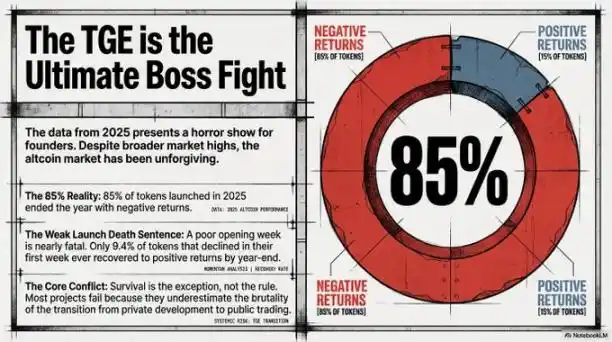
Arrakis Research compiled data from 2025, and the results are unequivocal: 85% of token launch projects ended the year with negative returns.

This can't be blamed on poor market conditions; a bear market doesn't specifically target tokens with poor tokenomics while sparing the well-designed ones.

This number is the market sounding an alarm for founders: most people are heading into a fight but have only prepared for a ribbon-cutting ceremony.
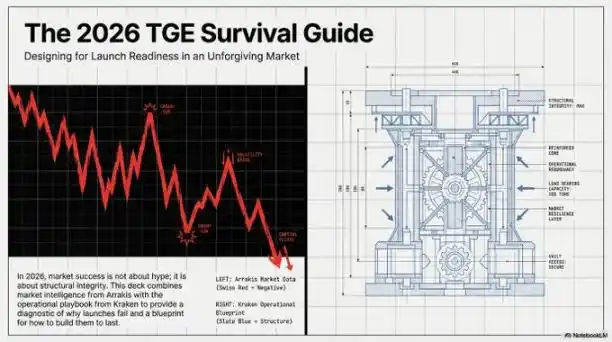
The good news? The surviving 15% aren't just lucky. They are meticulous, and their methods are replicable.

"Poor performance in the first week is basically a death sentence. Data shows that only 9.4% of tokens that fell in their first week managed to recover." — Arrakis Research

This statement is worth pondering.

Summary

  • Your token's failure isn't bad luck; it's because you didn't design it to succeed in the first place.
  • 85% of tokens launched in 2025 declined over the year. This is a design problem, not a market problem.
  • Launching with a Fully Diluted Valuation (FDV) exceeding $1 billion is essentially giving money to people who will never use your product, helping them 'cash out at the top'.
  • Staking, governance, and custody are not 'add-on features'; they are the token's immune system. Without them, the token collapses immediately upon launch.
  • Only 9.4% of tokens that fell in their first week recovered. The first week's performance essentially determines life or death.

The 'Physical Laws' Behind TGE

Here's a useful mental model, borrowing concepts from physics. Every token launch has two opposing forces:

  • Selling Pressure = Gravity. It exists objectively, is patient, and doesn't care about your grand vision.
  • Real Demand = Rocket Engine.

The issue isn't whether gravity exists (it always does), but whether your engine is powerful enough to escape it. Unfortunately, most teams build rockets without engines and then blame the planet's gravity.
Who Sells on Day One? (It's Not That They're Bad)

Many founders make a big mistake here: seeing selling as betrayal. It's not; it's simple math.

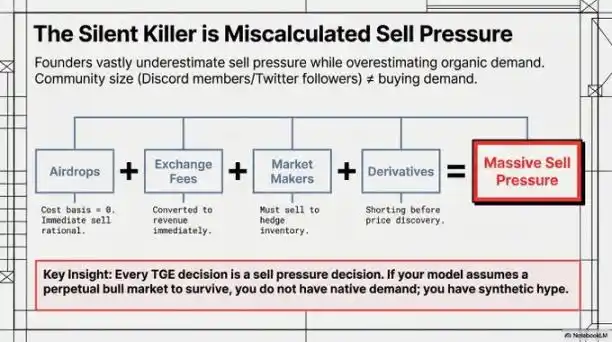
Airdrop users have a cost basis of zero. It's perfectly rational to convert something obtained for free into real money. Data shows that 80% of airdrop users sell their tokens within the first 24 hours of receiving them. This isn't disloyalty; it's human nature.

Centralized exchanges receive tokens as listing fees; this is their revenue. Liquidating their inventory is justified and reasonable.

If market makers are working on a 'loan model' partnership, to hedge risk and prepare stablecoins for quoting, they must also sell a portion of the borrowed tokens. This isn't betrayal either; it's a feature of the model you agreed to, with its inherent math.

Early short sellers act before the price stabilizes. They are veterans, often having been around longer than your project. They are not the problem; your failure to anticipate them is the problem.

Many projects design their tokens assuming the above actors don't exist. But they are real. Either you factor them in, or they will 'teach you a lesson'.
The Valuation Trap (How to Fool Yourself with Math)

The most expensive vanity item in crypto isn't profile pictures (PFPs); it's an outrageously high Fully Diluted Valuation (FDV).

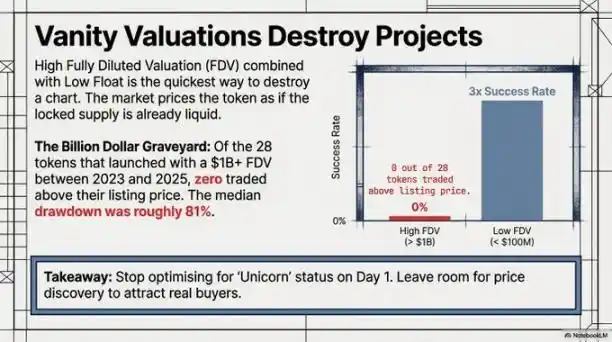
The common trick: the team releases only 5% of the tokens into circulation ('low float') but publicly claims an FDV of $1 billion.

The market does the math: is the price of the remaining 95% of locked tokens calculated as if they will 'never unlock'? But that's impossible; they will eventually be released. When that day comes, the price plummets like a 'ski jump'.

The data is staggering, and every founder should see it:
FDV at Launch

  • Above $1 billion: By year-end, not a single token was above its launch price. Median decline: 81%.
  • Below $100 million: The probability of performing well in the first month is 3 times higher than for tokens with an FDV over $500 million.

A 100% failure rate. Not 70%, not 90%, but 100%.

Yet founders keep doing it because '$1 billion FDV' looks great in press releases and makes early investors' paper gains look good before they can actually sell. Essentially, it's a 'pricing illusion' that the market mercilessly bursts.

Obsessing over launch day FDV is like judging a company's success by how pretty its PowerPoint is. It might impress those who don't look long-term. A lower valuation leaves room for genuine price discovery, enabling sustainable growth. Low-key launches often survive; vanity launches mostly die.

Four Talismans (The Things That Actually Work)

Arrakis summarized four key pillars that distinguish who survives from who just pays tuition. We add our own insights.

Talisman 1: Sybil — Filter Before Airdrop

A comparison of two cases makes it clear:
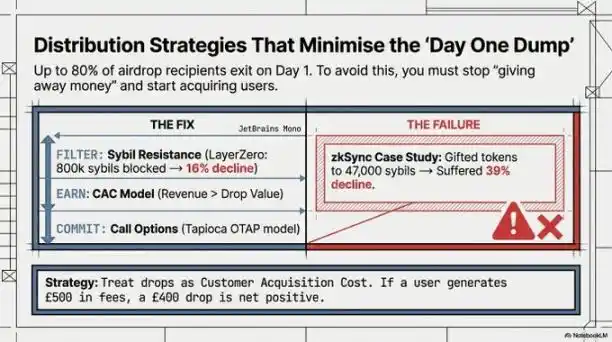
  • @LayerZero_Core put in the hard work, identifying 800,000 'Sybil addresses' (fake accounts farming the airdrop) before the token launch. These recipients would only sell immediately and never return. Result: only a 16% drop in the first month.
  • zkSync did little filtering, resulting in 47,000 Sybil addresses receiving the airdrop. Result: a 39% drop over the same period.

The difference between 16% and 39% is the price of not doing the homework.

Sybil resistance sounds tedious, but think clearly: you are paying for real users, not feeding parasites. Those airdrop farmers don't want your product; they only want your token. Make it costlier for those who don't use your product to get the token.

Talisman 2: Revenue-Based Airdrop — Treat Airdrop as 'Customer Acquisition Cost'

Change your perspective on airdrops: don't see them as 'community rewards', see them as 'customer acquisition cost'.
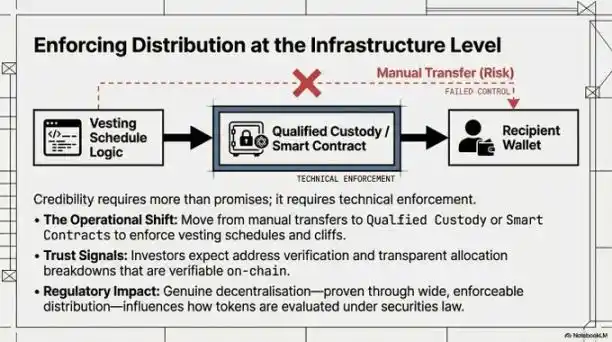
If a user contributed $500 in fees to your protocol, and you reward them with $400 worth of tokens. Even if they sell all tokens immediately, this 'acquisition' is still a net gain ($100 net profit). Real economic activity has already occurred; the token sell-off is just an entry in the ledger, not a disaster.

Talisman 3: Infrastructure Readiness — Don't Roll Out a Car Without an Engine

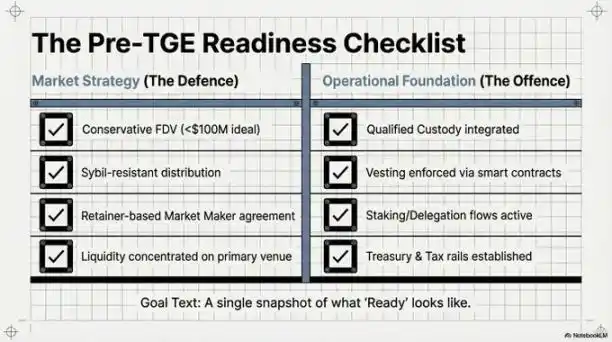
Staking and governance functionalities must be available the moment the token launches. Not 'coming soon', not 'in development', but 'available immediately'.

If not, the result will be:

Early supporters get the token and find they can neither stake it for yield nor participate in voting. Capital sits idle. Idle, non-yielding capital gets sold. This isn't disloyalty; it's basic investment logic.
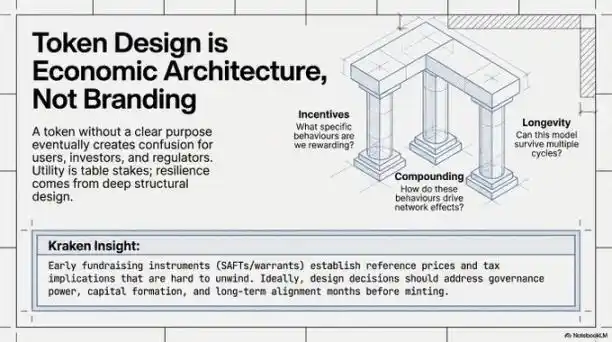
Additionally, a qualified custody solution must be in place from day one. This is a hard requirement institutional investors will check. If custody is still just a 'multisig' without a compliant framework, large funds simply won't enter. This isn't being difficult; it's their risk management.

Talisman 4: Choosing the Right Market Maker — Understand the Service You're Buying

Market makers provide 'liquidity' (market depth), not 'demand' (buyers). This is crucial. Some founders hire market makers thinking they're hiring a 'price protection squad'. They only make existing buying and selling smoother; they can't conjure up buyers.

  • The 'Engagement Model' is more transparent and better.
  • The 'Loan Model' can be useful, but the market maker's own hedging needs inherently conflict with your goal of stabilizing the price.
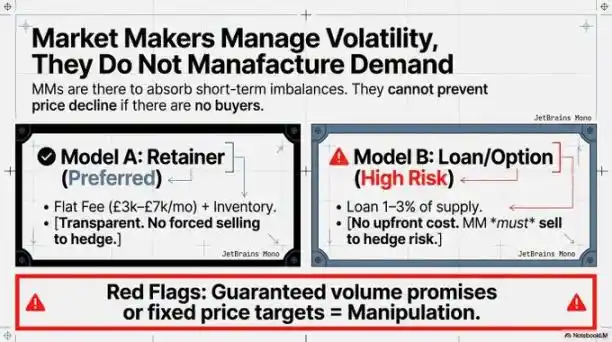
Danger signs when choosing a market maker:

  • Guaranteed volume targets
  • Unwilling to accept your terms
  • Promising to support the price under heavy selling pressure

These might indicate they plan to use wash trading (fake volume) instead of legitimate market making.

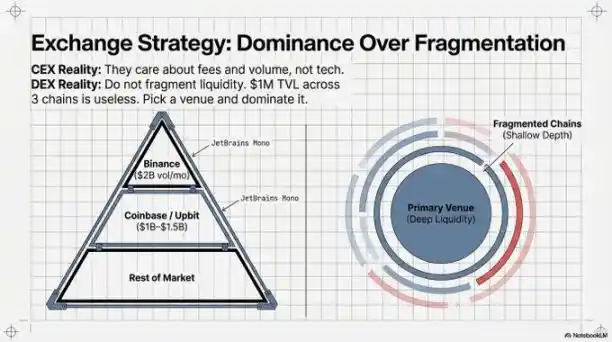
Liquidity should be concentrated. Spreading $1 million across three chains results in shallow 'depth' on each chain, unable to withstand any pressure. It's better to choose one main battlefield and create deep liquidity there. Depth in one place is better than thin coverage in three.
The Ultimate Goal: Decentralization

The infrastructure and distribution mentioned earlier are defensive measures. The real long-term goal is for the protocol to mature truly in four aspects:

  • Development Decentralization: Not just the core team can write code; third parties can also participate in development through grant programs.
  • Governance Decentralization: Transparent decision-making process, multi-party participation, proposals that are actually implemented.
  • Value Distribution Decentralization: Economic design allows more participants to benefit, not just enriching an internal circle.
  • Access Decentralization: Global users can participate in staking, voting, etc., through low-barrier, compliant means, not limited to crypto veterans.

The brilliance of the Arrakis framework lies here. A protocol that is only well-prepared at launch but does not advance true decentralization is merely postponing 'centralization risk', not solving it.

Final Thoughts

Arrakis's research is one of the most rigorous analyses of TGE in the first quarter of this year. The core argument is correct: a token launch is about deploying infrastructure, not running a marketing campaign.
Teams that treat it as marketing often produce beautiful 'first-week charts', followed by a 'ski jump' decline. Teams that treat it as infrastructure—meticulously analyzing sell pressure sources, preparing months in advance, not chasing inflated FDV, filtering out airdrop farmers—they often become the surviving 15%.

We want to add one point: real demand for the token must come from the protocol's inherent utility, not from marketing hype. People must genuinely need this token to access the value created by the protocol. If the token's only use is 'governing a protocol no one uses', then even perfect Sybil resistance and compliant custody are useless. Governing something useless has no value.

Before thinking about how to launch, think about how to create real demand first.

Related Questions

QAccording to the article, what percentage of token launches in 2025 ended with negative returns, and what is the primary reason for this failure rate?

A85% of token launches in 2025 ended with negative returns. The primary reason is not bad market conditions but flawed token design and economic models from the start.

QWhat is the critical mistake many founders make regarding the Fully Diluted Valuation (FDV) of their token at launch?

AThe critical mistake is launching with an excessively high FDV (e.g., over $1 billion), often with a very low circulating supply. This creates a 'pricing illusion' that is inevitably shattered when the remaining tokens unlock, leading to a massive price decline. The data shows a 100% failure rate for tokens launched with an FDV over $10 billion.

QWhat are the two opposing forces in the 'physics' model used to describe a Token Generation Event (TGE)?

AThe two opposing forces are Selling Pressure, which is likened to gravity—a constant, patient force—and Real Demand, which is likened to a rocket engine that must be powerful enough to overcome that gravity.

QName two of the four 'talismans' or key pillars identified by Arrakis Research that are crucial for a successful token launch.

ATwo of the four talismans are: 1) Sybil Resistance (filtering out fake users before the airdrop) and 2) Revenue-Based Airdrops (treating the airdrop as a customer acquisition cost rather than just a community reward).

QWhy is it essential for staking and governance functionalities to be available immediately at the token's launch, according to the article?

AStaking and governance must be available immediately because without them, capital from early supporters is idle and unproductive. Idle capital that isn't earning yield is far more likely to be sold, creating immediate and unsustainable selling pressure on the token.

Related Reads

STAR 50 Soars 10.73%, Why Did A-Shares Stage a "V-Shaped Reversal"?

After a prolonged decline, the Chinese A-share market staged a strong rally on July 21. The STAR 50 index surged 10.73%, its largest single-day gain in nearly a year, leading a broad-based "V-shaped" reversal. The Shanghai Composite Index rose 1.79%, the Shenzhen Component Index gained 4.81%, and the ChiNext Index jumped 7.05%. Total market turnover reached 2.97 trillion yuan, an increase of 256.1 billion yuan from the previous session, with over 3,100 stocks advancing. The semiconductor sector spearheaded the rebound, with related ETFs posting significant gains. Analysts attribute the surge to three converging factors. First, coordinated capital inflows from "national team" institutions, insurance funds, listed company buybacks, and fund house self-purchases have bolstered market liquidity and confidence. Second, supportive policy signals, including commitments from regulators to ensure stable market operations, provided a favorable backdrop. Third, a stabilization and recovery in overseas markets, notably South Korea, created a positive external environment. Institutions suggest the most severe panic selling phase for the tech sector has likely passed, following a significant digestion of crowded positions and leveraged funds. While short-term volatility may persist, the medium to long-term outlook remains underpinned by enduring trends like AI computing demand expansion and semiconductor localization. The market's focus now shifts to the sustainability of supportive fund flows, earnings reports, and upcoming catalysts from the global AI industry chain.

marsbit18m ago

STAR 50 Soars 10.73%, Why Did A-Shares Stage a "V-Shaped Reversal"?

marsbit18m ago

U.S. Tech Momentum Stocks Post Largest Single-Day Gain Ever, But Is the Plunge Over?

US tech momentum stocks staged a sharp rebound on Tuesday (July 21st). Morgan Stanley's TMT Momentum Factor surged over 12%, marking its largest single-day gain on record, exceeding even peaks from the 2000 dot-com bubble. Key momentum indices from Goldman Sachs also posted their strongest daily performances in years. The rally was led by semiconductors, with the Philadelphia Semiconductor Index jumping 4.6%. This rebound followed three consecutive down days and a cumulative 33% plunge in momentum stocks, one of the steepest drawdowns since the dot-com era. Analysts attribute the surge largely to a short squeeze. Heavy selling had pushed high-beta momentum stocks into deeply oversold territory, forcing many short sellers, particularly in Asia, to cover their positions, creating a self-reinforcing buying spiral. However, the rebound's internals appear weak. Trading volume was notably low, and advancing stocks still lagged decliners on the S&P 500, indicating a narrow, concentrated rally rather than broad market participation. Diverging views emerge on the outlook. BTIG warns the bounce has hit key resistance and recommends selling into strength, citing extreme volatility and historical parallels to past market tops. Conversely, Goldman Sachs and UBS believe the momentum unwind is nearing its end, suggesting it may be time to gradually add exposure, as positioning has been significantly reduced. They caution, however, that high volatility warrants a measured approach, potentially using defined-risk strategies. The upcoming earnings season, particularly reports from major tech firms like Alphabet, is seen as a critical test for the rally's sustainability. Simultaneously, bond markets flashed a warning, with yields rising partly due to spiking oil prices. Analysts note that if long-term Treasury yields break decisively higher, it could pose a significant headwind for equities, especially growth stocks.

marsbit26m ago

U.S. Tech Momentum Stocks Post Largest Single-Day Gain Ever, But Is the Plunge Over?

marsbit26m ago

U.S. Tech Momentum Stocks Record Largest Single-Day Gain Ever, but Has the Rout Ended?

U.S. tech momentum stocks staged a dramatic rebound on Tuesday, July 21st. Key momentum indices like the Morgan Stanley TMT Momentum Factor and Goldman Sachs' High Beta Momentum Long Index posted historic or near-historic single-day gains, fueled largely by semiconductor stocks. This sharp rally followed a severe three-day sell-off that saw momentum stocks plunge 33%, marking one of the steepest pullbacks since the dot-com bubble. Analysts attribute the bounce primarily to a short squeeze, as forced covering from over-leveraged traders, particularly in Asia, created a buying spiral. However, the rally's health is questioned due to weak market breadth—overall trading volume was low, and decliners outnumbered advancers in the S&P 500 despite the index's gain—suggesting a narrow, concentrated surge rather than broad recovery. Opinions on the sustainability diverge. BTIG strategists warn the rebound has hit key resistance levels, citing extreme volatility and historic stock dispersion as signs of an ongoing broader correction, and recommend selling into strength. Conversely, Goldman Sachs and UBS view the aggressive momentum unwinding as nearing its end, noting reduced positioning and a lack of new fundamental catalysts. They suggest the sell-off presents a selective opportunity to add exposure, albeit cautiously and gradually using defined-risk strategies. The immediate trajectory hinges on the ongoing earnings season, with market focus on Alphabet's capital expenditure guidance for AI investment clarity. Meanwhile, bond markets present a risk, with rising Treasury yields—potentially heading toward 5.5%—and widening credit spreads for mega-cap tech companies posing a threat to equity valuations. The combination of technical factors, earnings results, and macro conditions leaves the durability of the rebound in doubt.

链捕手28m ago

U.S. Tech Momentum Stocks Record Largest Single-Day Gain Ever, but Has the Rout Ended?

链捕手28m ago

Long-Divided Must Unite, Long-United Must Divide: When L1 Becomes Its Own Rollup, What Is Ethereum's Endgame?

"The Inevitable Cycle: When L1 Becomes Its Own Rollup – What is Ethereum's Endgame?" For years, the Ethereum community grappled with concerns that L2s were fragmenting the ecosystem and eroding L1's value. While L2s provided cheaper execution, they also splintered liquidity and the unified user experience of a single chain. This has prompted a fundamental reassessment of the relationship between L1 and L2. Ethereum's roadmap is evolving. The "Scale" initiative merges L1 and L2 expansion into a holistic framework. L1 itself is advancing with higher gas limits, statelessness, and zkEVM verification, no longer content to be just a low-throughput settlement layer. Consequently, the primary value proposition of L2s is shifting from merely providing cheap blockspace to offering L1 cannot easily provide: application-specific optimizations, privacy features, and flexible governance models. L2s are becoming a spectrum of execution environments with varying degrees of security inheritance from Ethereum. A critical challenge in this multi-chain future is interoperability. The vision is to make Ethereum "feel like one chain again." This relies on advancements in native account abstraction (like EIP-7702) and intent-based architectures (Open Intents Framework), where users declare desired outcomes, and solvers handle the complex cross-chain execution. Furthermore, shortening Ethereum's finality time from minutes to seconds is crucial, as it underpins trust between chains for bridges, stablecoins, and cross-chain applications. Perhaps the most provocative idea is that Ethereum L1 itself could become a form of "its own Rollup." As zkEVM and proof systems mature, high-performance nodes could execute transactions and generate validity proofs. Regular validators would then verify these proofs instead of re-executing all transactions. This blurs the traditional L1/L2 hierarchy, making "Rollup" more of a general execution-verification architecture. Native Rollup aims to integrate L2 validation more directly into the Ethereum protocol, allowing L2s to inherit L1's security more fully and move away from reliance on security councils. In the end, L2s are not destined to replace L1 or be made obsolete by it. The likely future is a unified system where diverse execution environments—each optimized for specific use cases like DeFi, gaming, or privacy—coexist. They will share a common foundation of security, liquidity, and verifiable state, seamlessly connected to restore a cohesive user experience. The next phase for Ethereum is not just about scaling through separation, but about intelligently reintegrating what was separated back into a coherent whole.

链捕手44m ago

Long-Divided Must Unite, Long-United Must Divide: When L1 Becomes Its Own Rollup, What Is Ethereum's Endgame?

链捕手44m ago

Trading

Spot
活动图片





