Who Will Make Money in the Age of Agents?

marsbitPublished on 2026-05-27Last updated on 2026-05-27

Abstract

In the Agents era of blockchain, traditional value capture theories face challenges. The "Fat Protocol" theory, dominant since 2016, suggested protocols capture most value as their tokens are essential for network use. However, the proliferation of interchangeable L1s, L2s, and modular layers has eroded protocol scarcity and pricing power. Conversely, the "Fat App" theory posits that applications capturing user relationships (like wallets and exchanges) become the primary value layer by controlling distribution and transaction flows. This aligns with the current "Great Repricing" cycle. Agents disrupt this logic. As software users, they lack brand loyalty, prioritize cost and efficiency, and switch between platforms seamlessly. This undermines the front-end UX moats that "Fat Apps" rely on. The article explores several potential futures: 1. **Headless Applications:** Current leading apps could strip their front-ends and become backend API infrastructure for Agents, preserving their role. 2. **Protocol Resurgence:** If integration becomes trivial, Agents might bypass aggregators and interact directly with protocols, reviving "Fat Protocol" dynamics. 3. **Pricing Power Collapse:** Agents' rational, frictionless routing could commoditize the entire stack, compressing margins toward cost and leaving little profit for intermediaries. 4. **Unprecedented Activity:** Agents may enable new, high-frequency, machine-to-machine economic activities, expanding the total value pie ev...

Author: Jonah Burian

Compiled by: Jiahuan, ChainCatcher

Many speculate that the next billion users of blockchain will be Agents. But few ask the further question: In that world, who will make money?

Every previous theory of value capture in the crypto space assumes the user is human. The "Fat Protocols" theory posits that protocols are best at monetizing human users.

The "Fat Apps" theory I explored with my colleagues in "How to Capture Value" and "The Great Repricing" argues that the application layer can do better. But Agents change the nature of the user, and existing theories will break down accordingly.

The Fat Protocols Theory

In 2016, @jmonegro proposed "Fat Protocols." For nearly a decade, it has been the dominant value capture theory in crypto.

The core idea: In the traditional internet, value accumulates at the application layer (@Google, @facebook), while the underlying protocols (TCP/IP, HTTP) capture almost no value. The crypto world will completely reverse this. Blockchains have open, shared data, so applications will become commoditized.

And because using the network requires consuming the protocol's token, the token will capture the speculative value generated by usage growth as it appreciates. Each application's success drives demand for the token. The underlying protocol will grow faster than any application built on top of it.
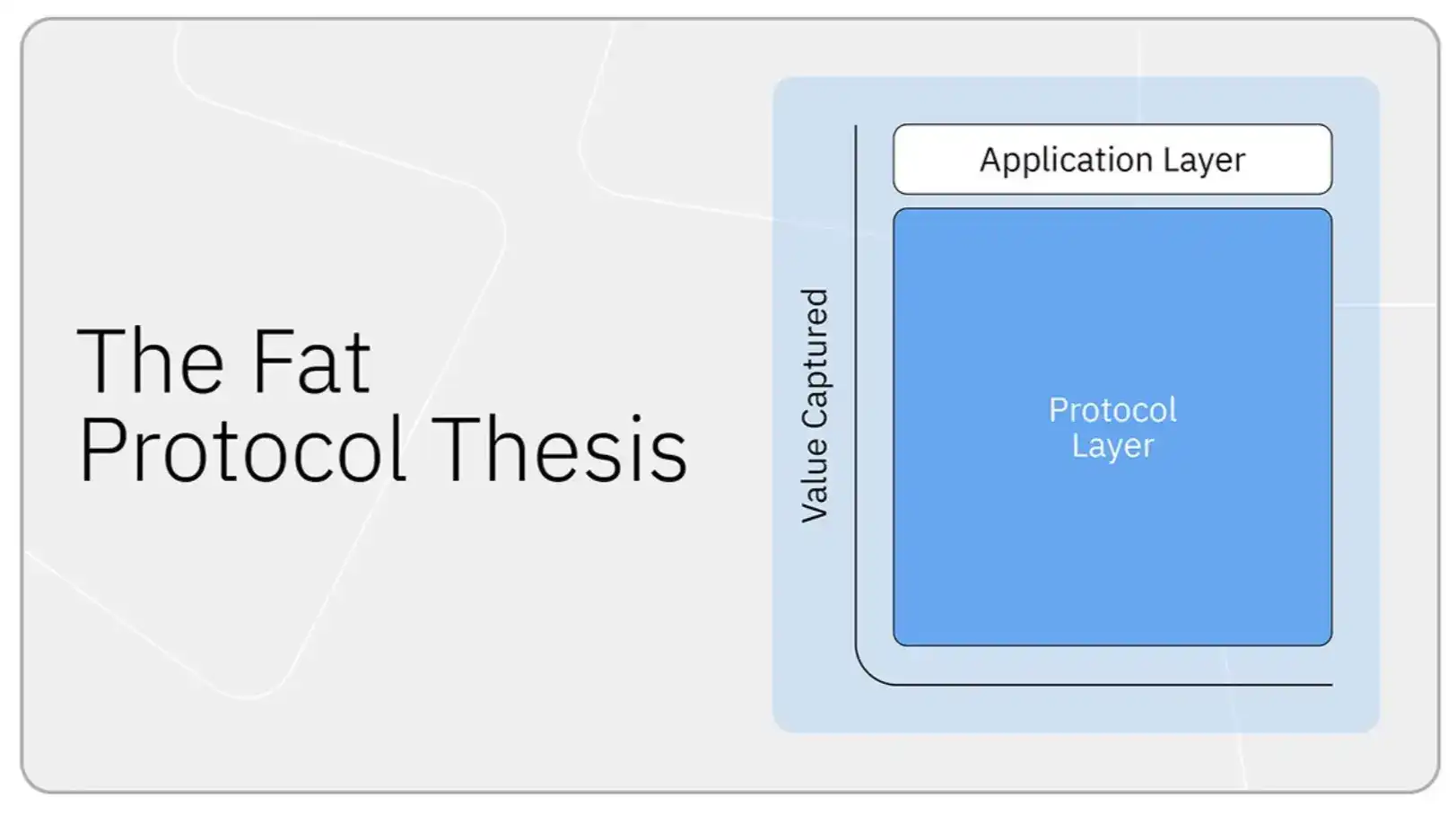
For years, this seemed correct. Bitcoin and Ethereum's values far surpassed any companies built on them.

This model works perfectly when the protocol itself is scarce, costly to build, and difficult to replace. Bitcoin and Ethereum in 2017 were indeed very scarce; there weren't dozens of general-purpose L1s competing for the same workloads.

Block space was sufficiently constrained that holding the underlying asset felt like holding a piece of every application that needed it.

Today, reliable alternatives exist at every layer of the infrastructure stack: multiple high-throughput L1s, dozens of L2s, and modular settlement and data availability (DA) layers competing fiercely on price. Block space has gone from constrained to abundant.

As cross-chain bridges and aggregators make the underlying chain nearly invisible to users, user switching costs collapse. Infrastructure becomes interchangeable, and interchangeable commodities compete on price. The result is that protocol pricing power dies along with scarcity.

The Fat Apps Theory

By 2026, the entities capturing most of the economic benefits are applications, not protocols: e.g., @phantom, @coinbase, @Polymarket, @Pumpfun.

In my view, the reason is that the most valuable asset in crypto is the user relationship.

If you control the user interface and transaction flow, you control distribution, and can profit from almost any on-chain product users touch: swaps, lending, staking, minting, and fiat on/off ramps. This is probably why funds are so obsessed with neobanks.
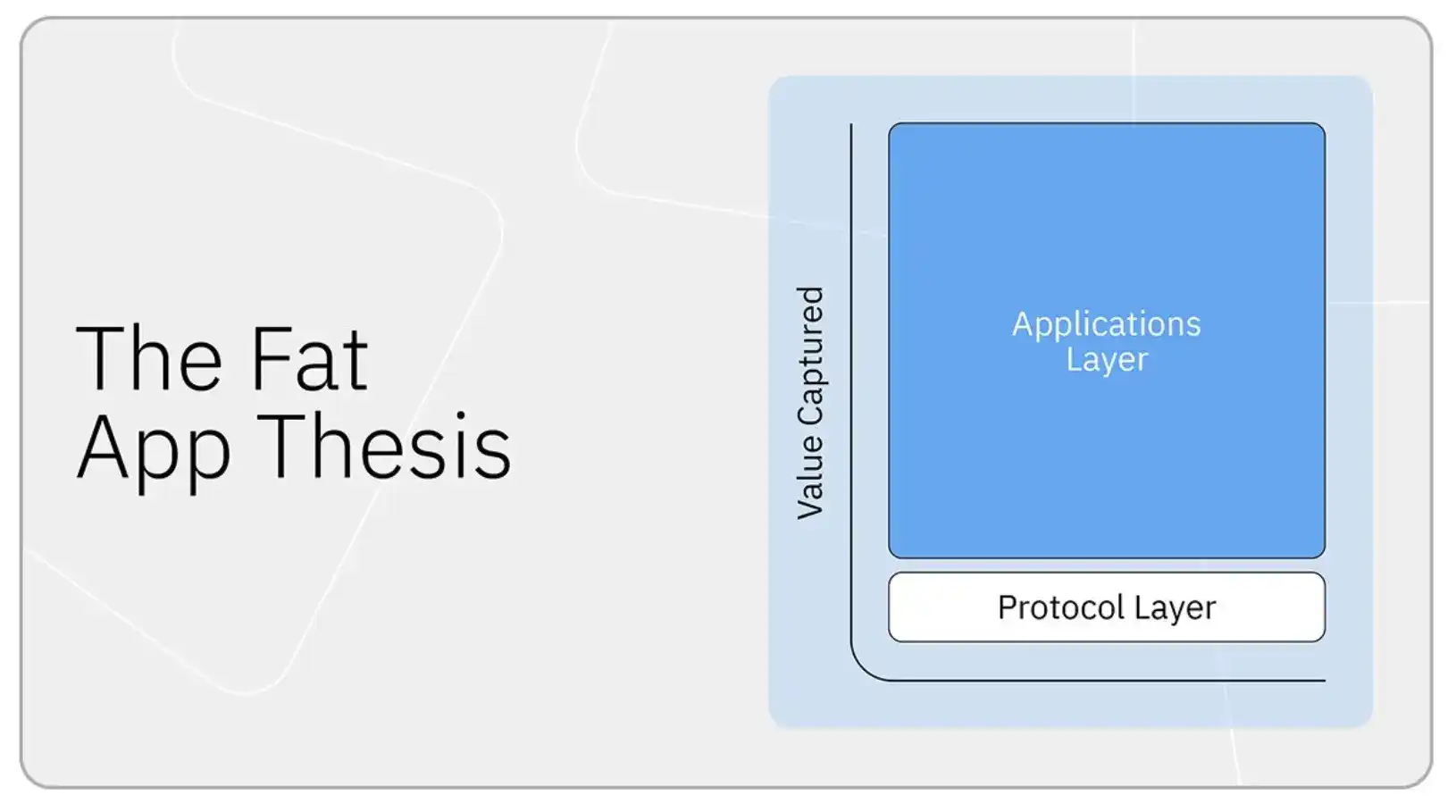
Applications also push infrastructure into pure price wars, forcing infrastructure margins down to marginal cost. I documented this dynamic in "How to Capture Value." The same dynamic is playing out in the stablecoin space, which I've discussed elsewhere.

Asset prices are reflecting this theory. Spencer and I called this shift "The Great Repricing": in this cycle, value is starting to accrue to the layer that owns the user.

Why Agents Break This Logic

The Fat Apps theory assumes users are humans who value UX, brand, and convenience. But Agents don't care about any of that. They call APIs directly, have no brand loyalty, and switch between platforms at zero cost.

When the user becomes software, owning the user relationship is no longer an unbreakable moat. The entire front-end moat upon which the Fat Apps theory relies is failing.

So, who captures value in the age of Agents?
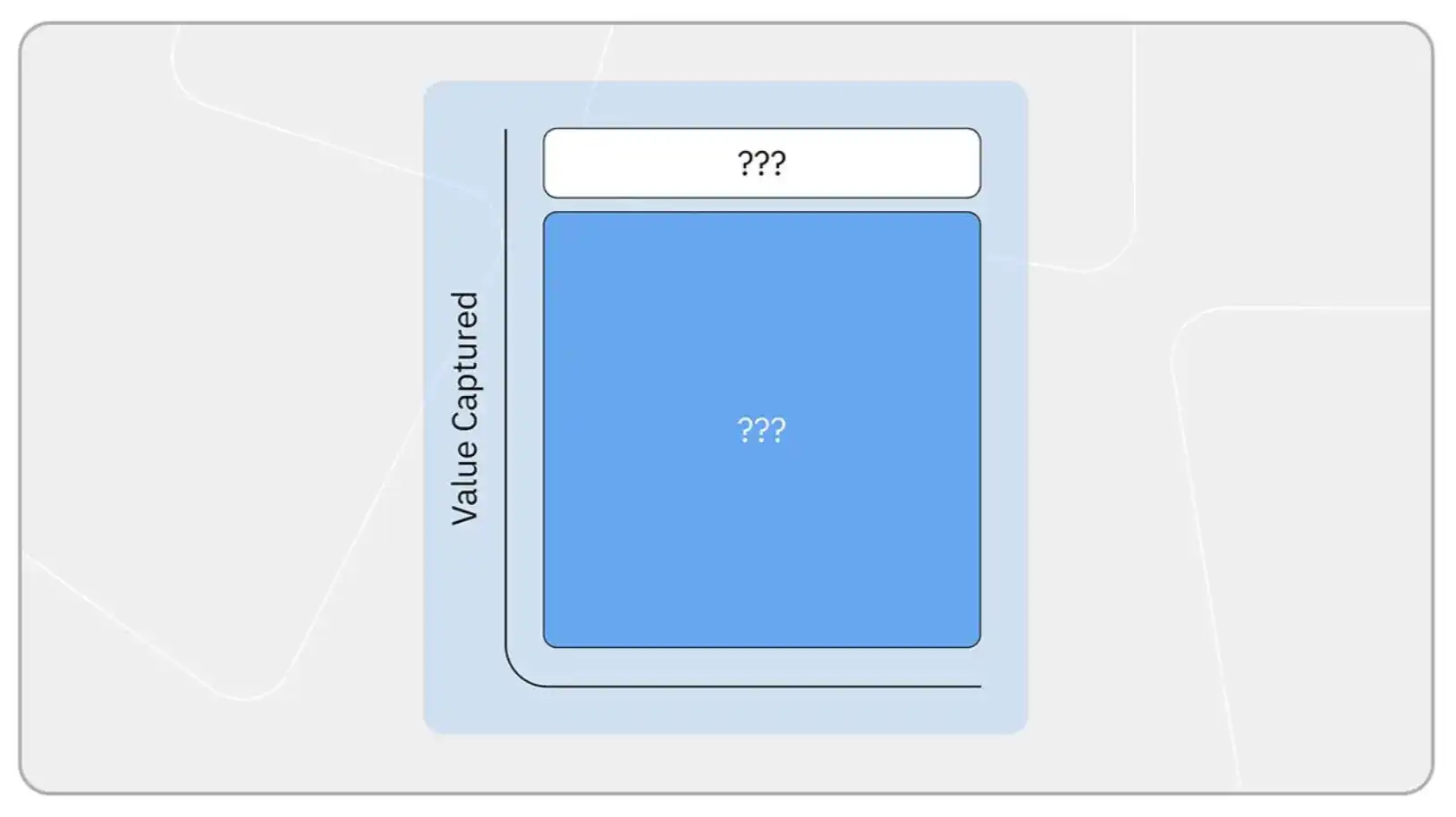
Applications Go "Headless"

In one version of the future, winners at the application layer remain winners by shedding their front-end interface, i.e., going "headless."

Wallets and aggregators have already done the hardest work: integrations with dozens of protocols, routing logic, authentication, and fiat on/off-ramp infrastructure.

The logical next step is to open this tech stack as an API for Agents, letting Agents route through them—just as humans route through @phantom or @JupiterExchange today.

In this world, the Fat Apps theory survives. It just loses its front end. The companies that won in the human era transform into pure back-end infrastructure for Agents. We already see traditional SaaS companies like Salesforce moving in this direction.

The Resurgence of Protocols

In another version, Agents completely skip the middle layer.

If integration becomes easy enough (well-documented APIs, standardized RPCs, predictable execution semantics), Agents have no real reason to pay an aggregator to do something they can do themselves. Aggregators' advantages in the human era were UX and handling routing complexity.

But Agents don't need UX, and routing is an engineering problem that Agents are increasingly good at solving.

If the world evolves this way, the Fat Protocols theory gets a second life.

Pricing Power Collapses Across the Stack

Perhaps Agents will apply commoditization pressure everywhere. They are perfectly rational, frictionlessly routing to the cheapest venue every single time with zero loyalty.

Applications lose the ability to charge a UX premium from humans. Aggregators and infrastructure lose pricing power because there is no longer human inertia protecting them from price wars.

In this scenario, no one in the tech stack captures much profit. Margins across the supply chain are forced down to marginal cost. The residual value accrues to the owners of the Agents, or to the end-users the Agents serve.

Crypto becomes a utility, and it's hard to make big money in utilities.

Agents Create Unprecedented Activity

The simple take on this is: Agents are doing everything humans do, just faster and at greater scale. Even if margins are compressed, the overall pie grows.

I think there's a more interesting version.

Agents enable activities that were previously infeasible: e.g., continuously rebalancing a portfolio for less than a penny in execution costs, machine-to-machine commerce between Agents, and entirely new markets that exist only because pricing and transaction speeds far outpace what humans can follow.

Current on-chain activity data doesn't reflect this because we assume a human must be involved.

If this is the change Agents bring, then the question shifts from "how is the existing pie divided" to "how much new economic activity pours on-chain, and which layers are ready to serve it."

A Yet-Unnamed Business Model

Every cycle, we try to guess where value will flow, and tend to think existing business models will extend into the future. This assumption usually causes us to miss the new models that haven't yet emerged.

When the internet was new, no one foresaw the attention economy. The idea that "slicing up user attention and auctioning it to advertisers would become the dominant business model, and a single company could capture a significant share of global ad spend" was alien. It only seems inevitable in hindsight.

AI looks like one of the biggest technological disruptions in decades. In an Agent-dominated world, some value capture might flow to business models no one is talking about today. And the entities capturing that value might not be the ones the market is currently focused on.

What to Watch

The most likely outcome is not one system completely replacing the other. For a long time, humans and Agents will coexist as crypto users, with entirely different maps of value capture.

As long as humans interact on-chain, the Fat Apps theory still applies: consumers willing to pay for UX, brand, and convenience will continue to pay a premium to the applications that own that relationship. And the layers involved in Agent transactions will be governed by a separate set of theories, whichever of the above scenarios becomes reality.

For builders, I think the question worth iterating on the Agent side is: What actually makes an Agent come back to you instead of routing directly to the next cheapest alternative? UX probably isn't the answer. Liquidity, latency, settlement guarantees might be.


Related Questions

QAccording to the article, what was the dominant value capture theory in crypto for the past decade, and what was its core argument?

AThe dominant value capture theory was the 'Fat Protocols' theory. Its core argument was that in the crypto world, value accrues to the underlying blockchain protocols (like Bitcoin and Ethereum) rather than the applications built on top. This is because protocols become more valuable as they are used (demand for their token increases), while applications become commoditized due to open, shared data.

QWhat is the 'Fat App' theory, and why is it currently challenging the 'Fat Protocols' theory?

AThe 'Fat App' theory argues that value is increasingly captured at the application layer. It posits that the most valuable asset in crypto is the user relationship. Entities that control the user interface and transaction flow (like wallets and exchanges) control distribution and can monetize various on-chain products. It challenges 'Fat Protocols' because infrastructure has become commoditized with many alternatives, eroding protocol pricing power.

QWhy does the author believe AI Agents will disrupt the current 'Fat App' value capture model?

AThe 'Fat App' model assumes users are humans who value UX, brand, and convenience. AI Agents do not care about these aspects; they interact via APIs with zero brand loyalty and can switch between platforms at near-zero cost. Therefore, the front-end moat (user relationship) that 'Fat Apps' rely on becomes ineffective when the 'user' is software.

QThe article outlines several possible scenarios for value capture in an Agents-dominated world. Name two of them.

ATwo possible scenarios are: 1) Successful applications become 'headless,' pivoting to serve as backend infrastructure APIs for Agents, keeping the 'Fat App' theory alive but without the front-end. 2) Agents bypass middlemen entirely and interact directly with protocols if integration is simple enough, potentially revitalizing the 'Fat Protocols' theory.

QWhat does the author suggest builders in the Agents economy should focus on, instead of user experience (UX)?

AThe author suggests builders should focus on what would make an Agent choose their service repeatedly over a cheaper alternative. Potential answers include factors like superior liquidity, lower latency, or stronger settlement guarantees, rather than traditional UX elements that appeal to humans.

Related Reads

Solo Company Craze: Some Earn Millions Annually, Others See Incomes Shrink by 90%

The Rise of the "One-Person Company" (OPC): AI Fuels a Solo Entrepreneurship Wave The concept of the "One-Person Company" (OPC)—where an individual leverages AI tools to start and run a business—is gaining significant traction, hailed by some as ushering in a "golden age" for solo entrepreneurship. While success stories abound, the reality is a mixed picture of high earnings and significant struggles. The article profiles several OPC founders across different industries: * A game developer created 6 bullet-chat (danmaku) games in a year using an AI-powered workflow, earning approximately 1 million RMB. AI handled around 70% of art and 99% of coding tasks, slashing development cycles from months to about 15 days per game. * A materials researcher in Japan, using AI for tasks from translation to legal advice, earns roughly triple the salary of a local white-collar worker. * A biotech entrepreneur uses AI Agents to automate 80% of repetitive work like data analysis, doubling their previous income while gaining time freedom. * Conversely, a former tech executive turned cross-border e-commerce founder in Latin America reports a 90% drop in income compared to their previous corporate job, cautioning against blindly following the trend. Key insights from these cases include: AI dramatically lowers barriers to entry and operational costs, but does not guarantee success. It excels at automating repetitive tasks but cannot replace core human skills like creativity, project management, judgment, and client acquisition. Industry experience and existing client/resources remain critical advantages. The model suits self-starters with specific expertise but poses challenges in areas like sales, compliance, and scaling. Ultimately, while AI empowers solo ventures, entrepreneurship's inherent risks and demands persist.

marsbit6m ago

Solo Company Craze: Some Earn Millions Annually, Others See Incomes Shrink by 90%

marsbit6m ago

Goldman Sachs Research Report Analysis: Chip Shortage to Persist Until 2028, Maintain Buy Recommendations

Goldman Sachs Research Report Summary: Memory Shortage Until 2028, Maintain Buy Recommendations Goldman Sachs' latest Asia-Pacific equities report, "The 720," forecasts a sustained memory chip upcycle extending into 2028, driven by strong AI server demand visibility, limited supply growth, and binding long-term agreements. The firm believes the market significantly underestimates the cycle's duration, as evidenced by low P/E ratios for memory stocks. Key sector calls include raising 12-month price targets for Samsung Electronics and SK Hynix, and upgrading Kioxia from Hold to Buy, citing higher and more sustainable peak profits over the next 2-3 years. The report also highlights the broader AI hardware supply chain benefiting from hyperscaler capex acceleration. Recommendations include: * MediaTek (Buy) for its data center/ASIC pivot. * Eoptolink (Buy) on 1.6T optical module ramp-up. * Biren (Buy) for its AI chip migration. * Huaqin (Buy, newly covered) for its shift from consumer electronics ODM to AI data centers. * Lenovo (Buy) on the AI PC refresh cycle. Other notable mentions include China property developers (under an optimistic scenario), BYD for its affordable city NOA strategy, and select Japanese semiconductor equipment makers. A macro theme notes the divergence between AI-boom beneficiaries (e.g., Korea, Taiwan) and energy-importing economies facing inflationary pressure. The report concludes with standard disclaimers, noting that price targets are forward-looking estimates and that sell-side research has an inherent bullish bias. The core investment thesis hinges on the longevity of the memory upcycle and the AI-driven capex wave.

marsbit39m ago

Goldman Sachs Research Report Analysis: Chip Shortage to Persist Until 2028, Maintain Buy Recommendations

marsbit39m ago

A Detailed Look at Cathie Wood's Masterful Moves on Circle

Title: A Detailed Look at Cathie Wood's Masterful Moves on Circle ARK Invest's Cathie Wood executed a textbook investment strategy on Circle (CRCL), showcasing how a long-term investor can capitalize on short-term volatility. Key to her success was securing 4.49 million shares at the $31 IPO price before the public offering, leveraging pre-IPO access unavailable to most investors. The stock debuted at $69, fueled by extreme demand against a limited float of only 15% of total shares. Wood then began systematically selling as the price soared, driven by policy optimism like the GENIUS Act, which pushed shares to nearly $299. She sold approximately 1.7 million shares across four transactions at an average price around $210, partly triggered by ARK's internal rule to rebalance when a single stock's weight exceeds 10%. Following a steep decline due to lock-up expirations, increased supply, and interest rate concerns, Circle fell over 80% from its peak. Wood started buying back shares around $82-$86 after a strong Q3 earnings report ironically caused a price drop in November 2025. She continued buying on the way down, eventually rebuilding her position to roughly 4.5 million shares by Q1 2026. The core lessons from Wood's play are: 1) A firm, independent conviction in Circle's long-term narrative as a digital dollar infrastructure player. 2) Executing in phases—selling into strength and buying into weakness—without attempting to time exact tops or bottoms. 3) Strict adherence to position-sizing and rebalancing rules, which forced profit-taking at highs and created capacity to buy at lows. For most investors, chasing the volatile post-IPO "pop" is risky; Wood's success was built on pre-IPO access, deep research, and disciplined execution.

marsbit42m ago

A Detailed Look at Cathie Wood's Masterful Moves on Circle

marsbit42m ago

Morning Post | Michael Saylor Releases Bitcoin Tracker Info; Aave Publishes Kelp rsETH Bridge Attack Post-Incident Investigation; Gravity Bridge Announces Service Suspension Following Attack

ChainCatcher Daily Summary - June 1, 2026 In regulatory news, the U.S. OCC granted preliminary conditional approval for Laser Digital to establish a federally regulated trust bank. In Vietnam, a draft law amendment proposes allowing SMEs to use digital and virtual assets as loan collateral. Hong Kong's SFC chairman reported that trading volume on the city's 12 licensed virtual asset platforms grew nearly 300% YoY in Q1 2026. Notable incidents include the Cosmos ecosystem cross-chain bridge Gravity Bridge pausing services after an attack. Aave published a post-mortem on the April 18th Kelp rsETH bridge attack, attributing it to a third-party bridge infrastructure vulnerability via an RPC poisoning attack, not the Aave protocol itself. In market developments, MicroStrategy's Michael Saylor hinted at a potential upcoming Bitcoin purchase announcement. Fed Governor Waller commented that widespread stablecoin adoption could amplify the impact of U.S. monetary policy. Meanwhile, sentiment analysis from Santiment indicates a record-high Bitcoin long/short ratio of 2.23, potentially signaling a short-term price correction, while Ethereum shows signs of FUD among commentators. In legal matters, the SEC sued the founder of Privvy Investments for an alleged $12.3 million crypto AI trading bot scam. In China, a Qingdao man was sentenced to 10 years and 9 months for stealing 107 BTC by obtaining a victim's wallet seed phrase. Top trending meme tokens on ETH, Solana, and Base networks for the past 24 hours are also listed.

链捕手1h ago

Morning Post | Michael Saylor Releases Bitcoin Tracker Info; Aave Publishes Kelp rsETH Bridge Attack Post-Incident Investigation; Gravity Bridge Announces Service Suspension Following Attack

链捕手1h ago

Trading

Spot
Futures
活动图片




