While Playing Every Day, I See These Innovations and Changes in Prediction Markets

Odaily星球日报Published on 2026-02-10Last updated on 2026-02-10

Abstract

The article, titled "While Playing Daily, I See These Innovations and Changes in Prediction Markets," explores emerging trends in prediction markets beyond the dominant player, Polymarket. While Polymarket is noted for its strong liquidity and anticipated token airdrop, the author highlights that newer platforms are introducing features that offer clearer airdrop strategies through point systems, unlike Polymarket's current "blind farming" approach. Key innovations identified include: 1. **Earning on Position Holdings**: Platforms like predict.fun integrate with DeFi protocols (e.g., Venus Protocol) to allow users' locked funds to generate yield (3-5% APY) while waiting for event resolutions, turning idle capital into productive assets. 2. **Swipe-Based, Social-Feed Interface**: Some platforms adopt TikTok or Instagram-style swipe interactions (vertical or horizontal) to make browsing and participating in prediction markets more engaging and content-driven, aiming to transform them from low-frequency trading tools into high-frequency content consumption products. 3. **Community-Centric Event Markets**: Instead of replicating generic events, platforms like predict.fun are designing markets around crypto-native topics (e.g., Binance SAFU fund changes, CZ's tweet counts), enhancing community engagement and creating niche, culturally relevant content that fosters discussion and participation, particularly within Asian crypto communities. The article suggests that these innov...

Original | Odaily Planet Daily (@OdailyChina)

Author | Asher (@Asher_ 0210)

"Polymarket has such good liquidity. Besides farming points for potential token airdrops, why would I use other prediction market platforms?" This is a question I kept pondering while recently experiencing various prediction markets.

Indeed, the recent trademark application for "POLY" submitted by Blockratize, the parent company of Polymarket, during its token issuance plan, coupled with previous clear indications from Polymarket executives about plans to launch a native token and conduct an airdrop, has led to widespread market expectations that farming on Polymarket might be the next "big opportunity." However, unlike other emerging prediction markets, Polymarket currently lacks a clear points or task-based incentive system, making it difficult for users to dynamically adjust their "farming" strategies based on incentive feedback. To some extent, it remains in the hard mode of 'blind farming'.

In contrast, most of these emerging prediction market platforms have introduced points mechanisms, allowing users to have a clearer "path to an airdrop strategy" while participating in platform trading. Although many of these prediction market platforms are still in their early stages, often have bugs, and frequently draw criticism from community members, during the actual experience, one can indeed discover some differentiated highlights that are "distinct from Polymarket."

Below, I will introduce several highlights summarized from recent experiences with different prediction market platforms.

Highlight One: Position Funds No Longer "Lie Idle"; Prediction Positions Can Also Generate Continuous Returns

In traditional prediction markets (like Polymarket, Kalshi), after users buy YES/NO positions, the funds are typically locked until the event is settled. During this period, these funds cannot be used for other strategies nor generate any returns; they are essentially "idle funds" with significant opportunity cost.

predict.fun attempts to change this. The platform connects the collateral funds users employ for predictions to low-risk yield-generating strategies within the BNB Chain ecosystem, allowing positions to automatically generate stablecoin returns while held. According to an official announcement on January 8, 2026, predict.fun has partnered with Venus Protocol. Users' locked USDT collateral assets are automatically deposited into Venus's money markets to generate yield, thus continuously producing additional returns while waiting for the event outcome.

This means users' funds continue to "work" on-chain during the holding period, with common stablecoin annualized returns roughly in the 3%–5% range (depending on the underlying DeFi strategy and market conditions). More importantly, these returns are independent of the prediction outcome—regardless of whether the prediction ultimately succeeds or fails, the yield generated during the holding period can be claimed separately, adding an additional layer of passive income on top of the prediction profit or loss.

From a product mechanism perspective, this design transforms "dead money" in traditional prediction markets into "live money," making it one of predict.fun's most distinctive differentiating features currently. The platform has already opened the position yield claim function, allowing users to claim accumulated holding returns at a fixed time every Tuesday, giving long-term holdings a clearer compound return logic from a strategic perspective.
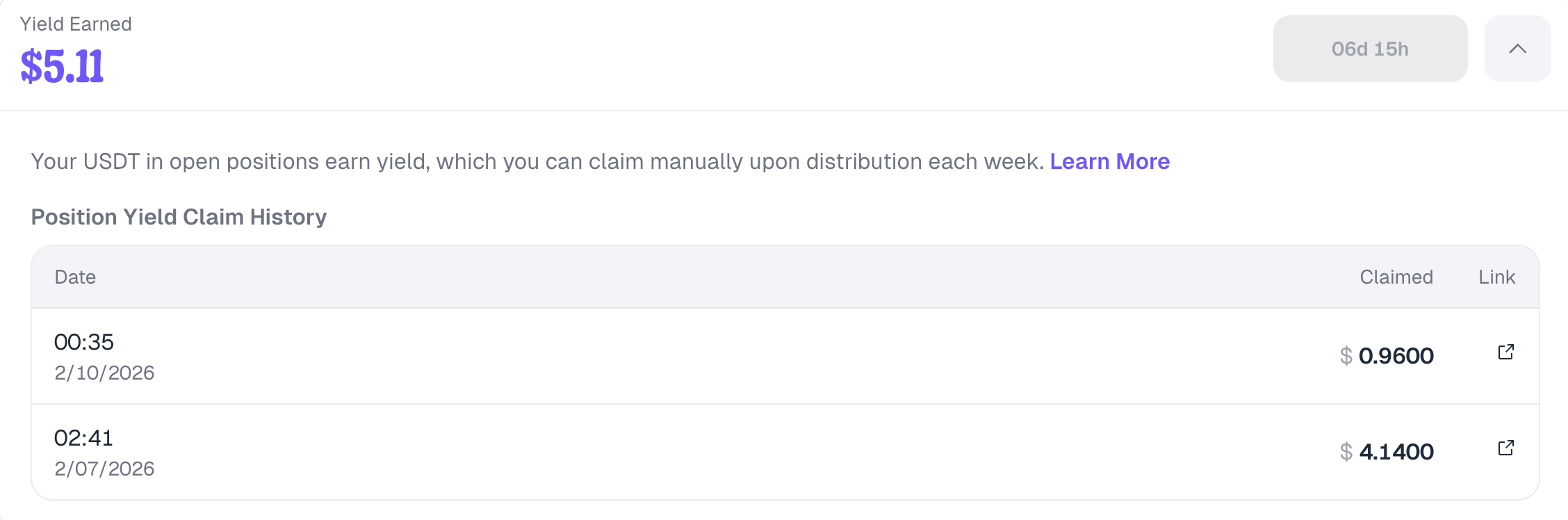
predict.fun Position Yield Claim Screenshot

Highlight Two: Short-Video Style Swiping Experience, Bringing Prediction Markets Closer to "Content Consumption Products"

Unlike the trading-terminal-like interface of traditional prediction markets, some emerging prediction market platforms are noticeably shifting their interaction design towards content platforms, attempting to lower the participation barrier and increase user dwell time. For example, on predict.fun's mobile interface, one screen corresponds to one prediction event. Users can quickly browse different markets by swiping up and down, an overall experience more akin to the information feed mode of short-video platforms. This design eliminates the need for users to actively search for events; instead, they naturally discover prediction topics of interest while continuously "scrolling through markets," significantly improving browsing efficiency and participation frequency.

Similarly, Probable employs a left-right swiping interaction, making the prediction experience closer to the information matching logic of social products. From a product perspective, the core of such designs is not merely UI optimization but an attempt to transform prediction markets from "low-frequency trading tools" into "high-frequency content consumption entry points."
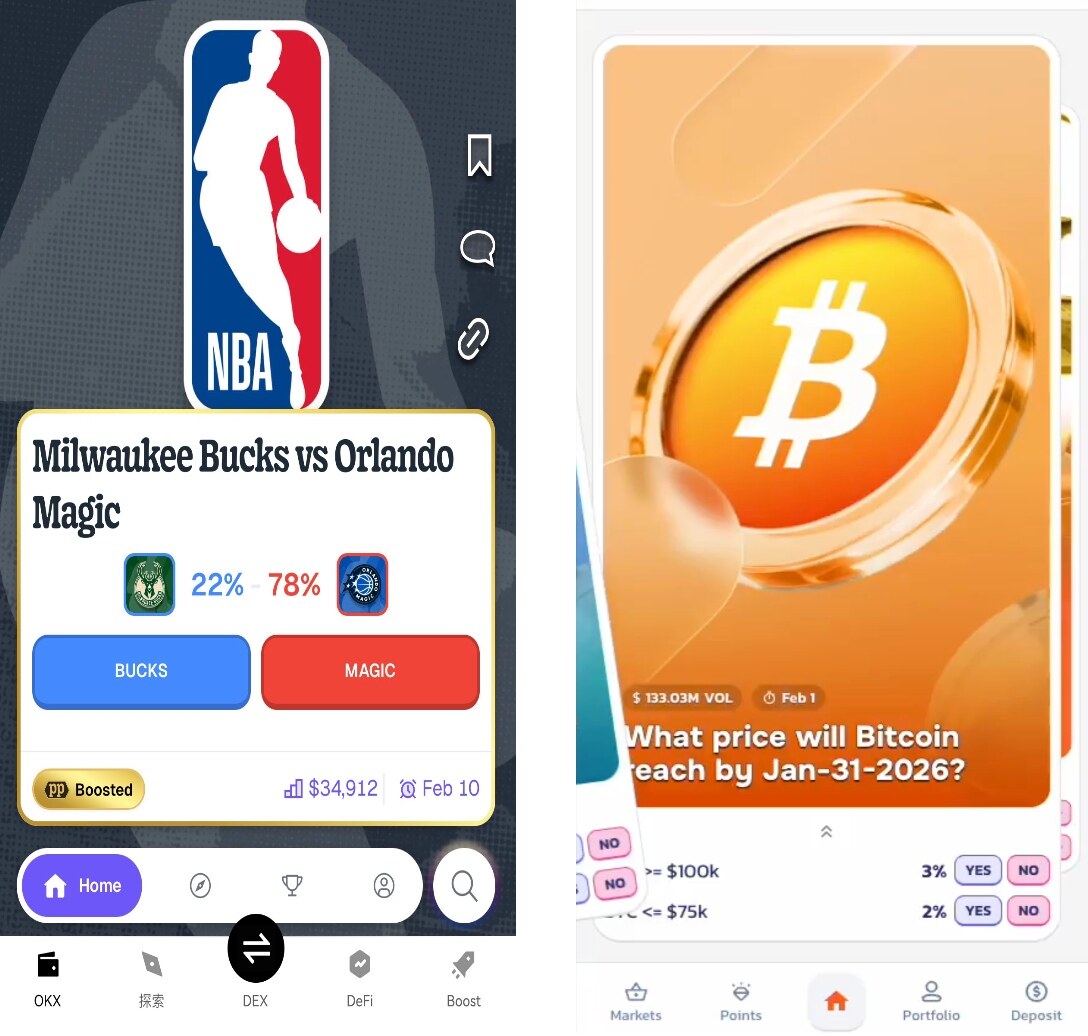
Schematic Diagram of Mobile Interaction Methods for Two Prediction Market Platforms (Left: predict.fun; Right: Probable)

predict.fun founder Dingaling also mentioned in a Space that he hopes to build prediction markets into a usage scenario similar to short-video apps—where users can place bets while browsing hot events and fun topics in their daily routine, further enhancing community engagement and user stickiness through features like comments and interactions.

From an experiential standpoint, this information flow-style interaction is itself a highly attractive product innovation. Compared to the traditional method of actively searching for markets, swiping to browse allows users to continuously "scroll through markets" in fragmented time, naturally generating participation behaviors while consuming content, making the prediction market experience more lightweight and fluid.

Highlight Three: "Exclusive Event Markets" Centered on Community Hotspots, Strengthening Localized Sense of Participation

Beyond product mechanisms and interaction experiences, some emerging prediction market platforms are also beginning to experiment with differentiated approaches in market content design. That is, instead of simply replicating generic events available on Polymarket or Kalshi, they are launching more niche "exclusive event markets"围绕 (centered around) topics with high attention within the crypto community. For example, prediction events on predict.fun related to Binance and community hotspots, such as "Changes in Bitcoin Balance of Binance SAFU Fund Wallet on March 1st" and "Number of CZ's Tweets Between February 7 and 14, 2026," are topics closer to the daily discussions of crypto users.
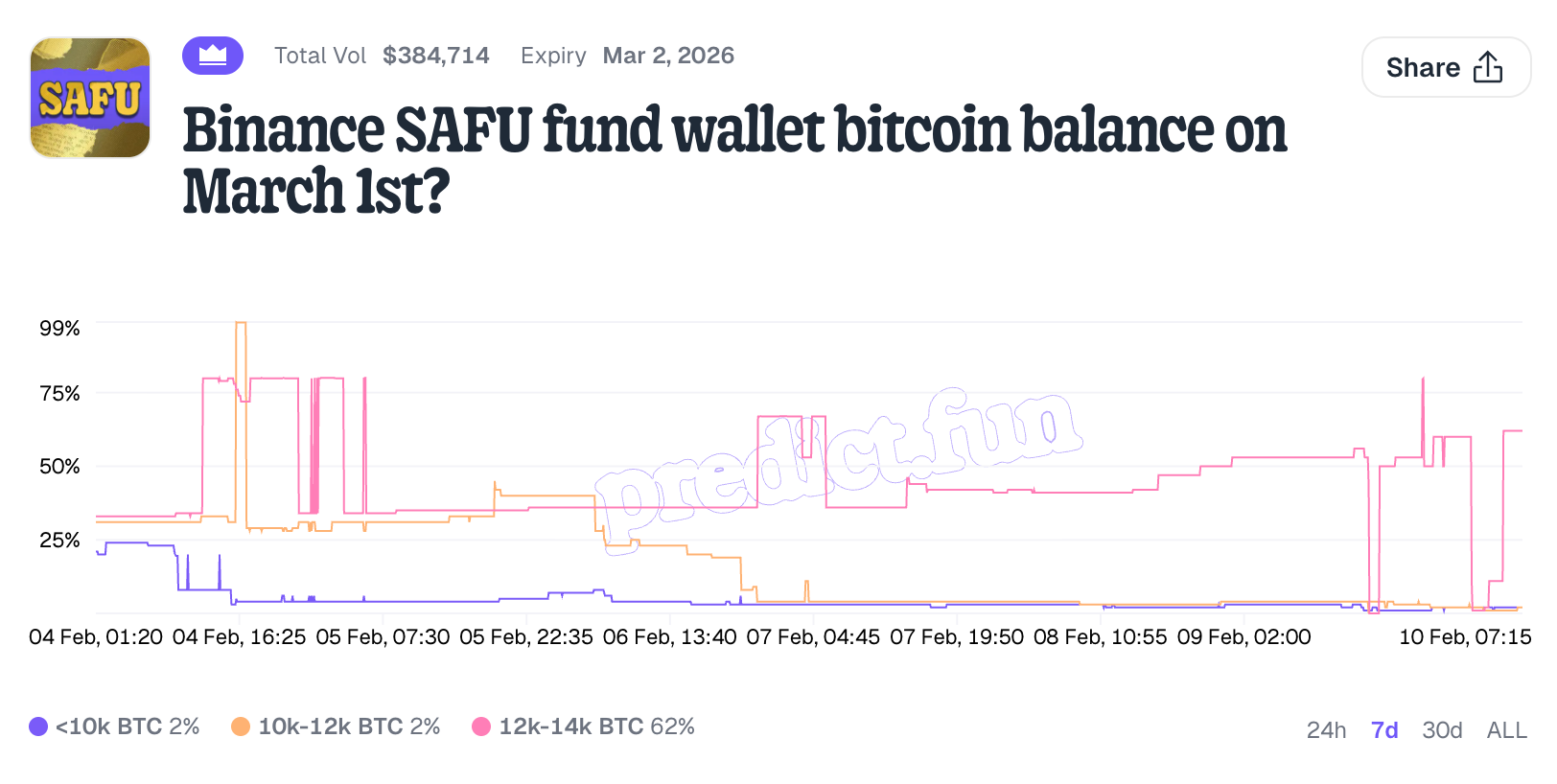
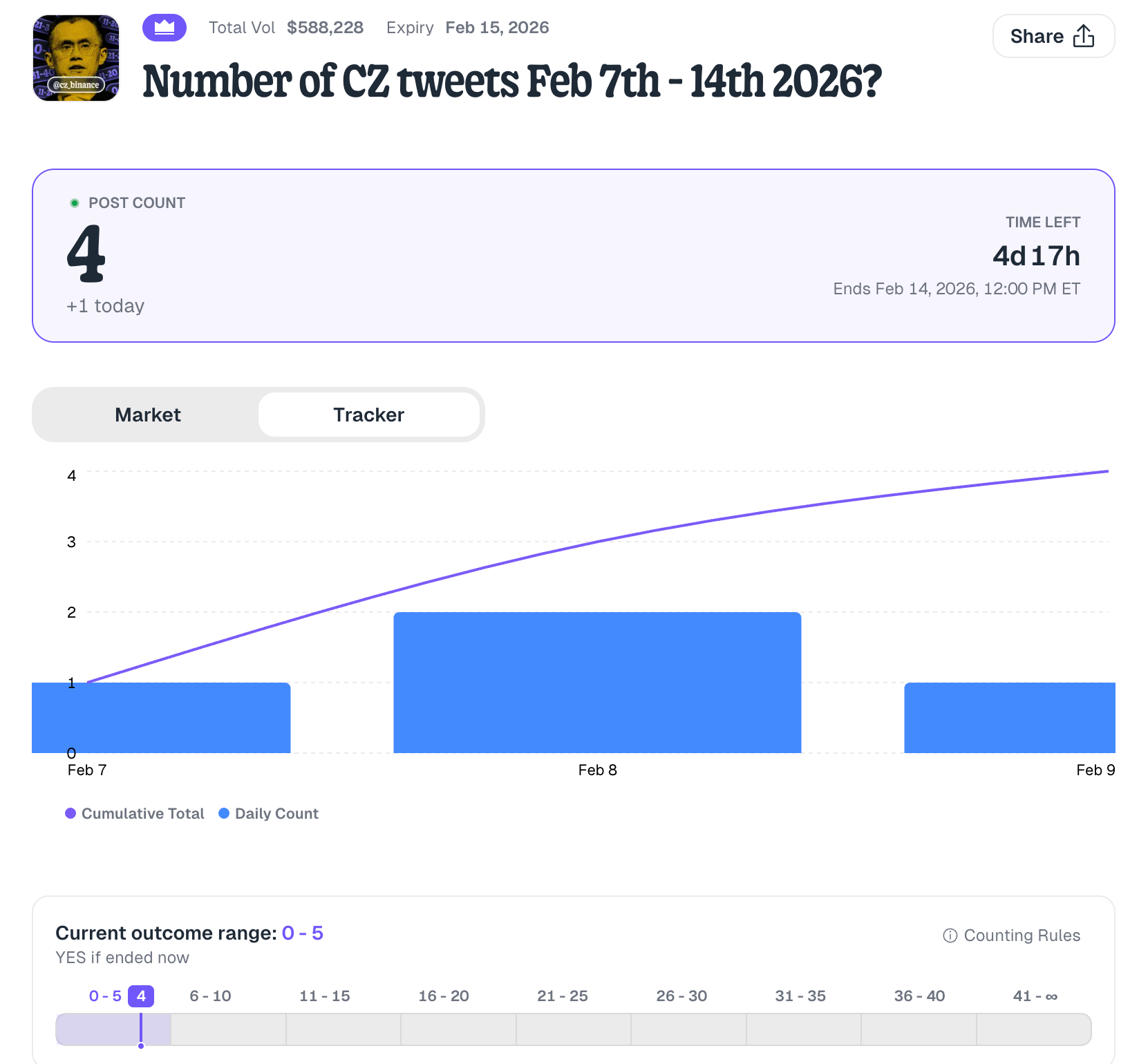
predict.fun Launches Exclusive Prediction Events

Compared to traditional macro events or generic political/sports markets, these community-centric prediction events are more likely to stimulate user discussion and dissemination, and更容易 (more easily) generate participation heat within specific user groups. From a platform operation perspective, the continuous launch of exclusive events essentially builds a content supply with platform characteristics, making the prediction market not just a "trading venue" but也逐渐 (gradually becoming) a gathering place for community hotspot sentiment and narratives.

From the aforementioned events, it's evident that predict.fun is consciously pursuing differentiation at the "event supply" level, rather than simply replicating markets already present on Polymarket or Kalshi. Designing prediction events around CZ, the Binance ecosystem, and community discussion hotspots makes it easier for the platform to achieve virality and participation within specific user groups. This content strategy is also becoming an important operational direction for some emerging prediction markets.

It is worth noting that a significant portion of the currently highly active emerging prediction markets originate from the BNB Chain ecosystem, and their user base is noticeably skewed towards the Asian community. In this context, community culture, subculture, and even participation behaviors with more "fan circle" characteristics are gradually becoming important factors influencing prediction market event design and dissemination. Against this backdrop, for emerging prediction market platforms, the Asian community culture formed around differentiated event design and the more "fan circle"-like participation behaviors are becoming a direction worthy of focused study. The related impacts will be further discussed in subsequent articles.

Related Content

The Underestimated Advantage of Prediction Markets: Counter-Cyclical, Anti-Volatility, Always Something to Play

Prediction Market Activity Hits Record High, Major Events Worth Noting in Top Projects Are All Here

Hot Sector, New Interaction Opportunities: Three Prediction Markets Favored by YZi Labs

Step-by-Step Guide to Participating in predict.fun, Backed by CZ

Related Questions

QWhat is the main advantage of predict.fun over traditional prediction markets like Polymarket regarding locked funds?

APredict.fun allows users' locked collateral funds to earn yield through low-risk interest-bearing strategies on BNB Chain (e.g., via Venus Protocol), providing an additional 3%-5% APY during the prediction period, unlike traditional markets where funds remain idle.

QHow does predict.fun's mobile interface differ from traditional prediction market platforms in terms of user experience?

APredict.fun uses a vertical swiping interface similar to short-video platforms, allowing users to browse events quickly in a content-consumption style, making it more engaging and reducing participation barriers compared to traditional transaction-oriented interfaces.

QWhat type of exclusive event markets does predict.fun focus on to differentiate itself?

APredict.fun creates events around crypto community hotspots, such as Binance-related topics (e.g., changes in Binance SAFU fund BTC balance or CZ's tweet counts), which resonate more with Asian crypto users and enhance community engagement.

QWhy are some emerging prediction markets introducing point or task incentive mechanisms?

AThey provide users with a clearer 'airdrop strategy path' by offering feedback through积分 (points) or tasks, unlike Polymarket's current 'blind farming' mode without explicit incentives, helping users adjust their participation strategies dynamically.

QWhat collaboration did predict.fun announce on January 8, 2026, to enhance user earnings?

APredict.fun partnered with Venus Protocol to automatically deposit users' locked USDT collateral into Venus' money market, generating stablecoin yield during the prediction holding period.

Related Reads

Must-Watch Events Next Week|CLARITY Act Could Face Senate Vote; SpaceX, Circle to Report Earnings (8.3-8.9)

**Summary: Key Events and Developments to Watch (August 3-9)** The upcoming week is marked by significant financial disclosures, key legislative deadlines, and notable product updates. **Major Financial Events:** Several companies are scheduled to release their Q2 2026 earnings. American Bitcoin (ABTC) will report on August 3, followed by SpaceX and Hut 8 Mining Corp. on August 4, and Circle on August 5. Notably, a significant portion of SpaceX shares (up to 12% of total shares) will be unlocked on August 6 following their earnings release. **Key Legislative Deadline:** The U.S. Senate faces an August 7 deadline to secure 60 votes for the CLARITY Act, a bipartisan bill aiming to establish a federal regulatory framework for cryptocurrencies. The Senate may hold a full vote on the bill during the week. **Economic Data:** The U.S. July Non-Farm Payrolls report will be released on August 7, providing crucial labor market data. **Technology & Product Updates:** * **Shutdowns:** DeFi portfolio tracker Zapper and wallet app Ctrl Wallet will cease operations on August 3. * **Upgrades:** LayerZero will deprecate its v1 relayers on August 3. XRP Ledger's new version 3.3.0, featuring five new functions, is expected next week. * **AI:** Elon Musk announced that the advanced Grok 4.6 AI model is set for release around August 7. * **Bitcoin:** The BIP-110 forced signaling for a potential Bitcoin network change is scheduled to begin around August 8. **Other Notable Events:** Chinese robotics firm Unitree Tech has set its preliminary price inquiry for its IPO for August 5. South Korean exchange Upbit will delist AQT and AERGO tokens on August 3.

marsbit1h ago

Must-Watch Events Next Week|CLARITY Act Could Face Senate Vote; SpaceX, Circle to Report Earnings (8.3-8.9)

marsbit1h ago

Stocks Are Plummeting More Sharply Than Cryptocurrencies. Where Has the Money Gone?

Stock Markets Plunge Deeper Than Cryptocurrencies: Where Did the Money Go? In late July, Seoul's Kospi index triggered circuit breakers for two consecutive days, plummeting over 40% from its June high. The collapse was led by heavyweight stocks like SK Hynix, whose record profits still disappointed investors, and devastating leveraged ETFs, with one major product losing over 83% of its value. This signaled a global, forced deleveraging targeting the most crowded trades. Interestingly, while stocks exhibited extreme volatility akin to crypto markets, Bitcoin rose nearly 15% in July after a prior steep drop. Analysis shows the money fleeing equities did not flow into Bitcoin. Instead, Bitcoin had already absorbed its sell-off in May-June, when U.S. spot Bitcoin ETFs saw historic outflows. The true safe-haven beneficiary was gold, whose price rose over 20% year-on-year, highlighting a decoupling between Bitcoin and gold as "digital gold." The sell-off was a targeted unwinding of leveraged positions in tech and semiconductors, accelerated by broker-dealer risk management and shifts in the AI narrative, including new competition from Chinese memory chipmakers. The retreat path was clear: from high-valuation tech stocks to cash and U.S. Treasuries, then to gold. For Bitcoin to attract sustained institutional inflows, conditions like eased global liquidity pressure, a "soft-landing" Fed rate cut, and U.S. regulatory clarity via legislation like the stalled CLARITY Act are needed. Currently, Bitcoin is not a safe haven but an already-cleared asset. Its low correlation with tech stocks, however, makes it a potential diversification play for institutional portfolios once the storm passes. The money isn't here yet, but the positioning is underway.

marsbit1h ago

Stocks Are Plummeting More Sharply Than Cryptocurrencies. Where Has the Money Gone?

marsbit1h ago

In Conversation with Ray Dalio: We Are Currently in an AI Bubble, with 1% of My Portfolio in Bitcoin

Ray Dalio, founder of Bridgewater Associates, warns in an interview that the current AI boom shows classic bubble characteristics, which could lead to significant economic downturns as seen in past cycles like 1929 or 2000. He explains that speculative enthusiasm, fueled by debt and overvaluation, often precedes a crash when rising rates or taxation force asset sales, causing widespread losses and recession. Dalio also outlines his "Big Cycle" theory, describing an approximate 80-year pattern where widening wealth gaps, massive government deficits, and shifting geopolitical power (like China's rise) create internal conflict and global instability. He emphasizes that we are in a late-cycle, transitional phase where traditional powers like the US and UK face decline. For personal wealth protection, Dalio advises diversification beyond cash into assets like stocks, bonds, real estate, and particularly gold, which he prefers over Bitcoin. While he holds about 1% of his portfolio in Bitcoin as a non-printable hard asset, he views gold as more secure from technological or governmental threats. Regarding AI's impact, Dalio believes it will disproportionately benefit capital owners, worsening inequality by replacing both physical and cognitive labor. He suggests that human intuition and emotional intelligence, combined with AI, will be key for future workers. On taxation, Dalio argues that wealth taxes are impractical and risk triggering asset sell-offs, reducing productive investment. He points to the UK as a cautionary example of debt, low productivity, and political strife. Geopolitically, Dalio foresees a more regionalized world, with the US showing weakness in prolonged conflicts like with Iran, akin to past imperial declines. The ideal outcome, he suggests, is coexisting powerful blocs (e.g., Americas, China-Asia Pacific) without major war.

marsbit5h ago

In Conversation with Ray Dalio: We Are Currently in an AI Bubble, with 1% of My Portfolio in Bitcoin

marsbit5h ago

Trading

Spot
活动图片





