What Were Crypto KOLs Talking About in the Last 24 Hours!

比推Published on 2026-02-14Last updated on 2026-02-14

Abstract

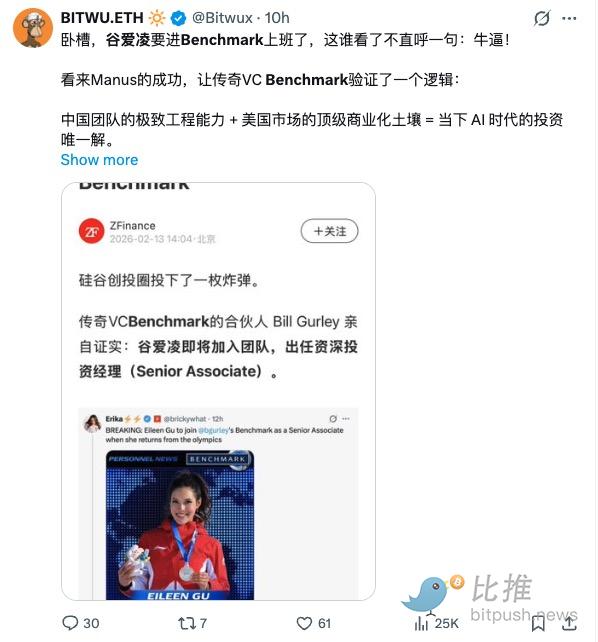
Summary of "What Were Crypto KOLs Talking About in the Last 24 Hours!" The article compiles trending discussions among crypto influencers, primarily from X (formerly Twitter), covering several key topics: 1. **False Rumor About Eileen Gu**: A claim that the athlete Eileen Gu joined Benchmark was debunked. Comments highlighted her controversial public perception, dual identity, and the fact that, as a U.S. citizen, she is subject to U.S. global taxation on her earnings. 2. **KOLs' Bitcoin Buying Range**: Many Key Opinion Leaders (KOLs) identified $40,000-$50,000 as an ideal range to buy Bitcoin. Replies expressed that a drop to this level would be reasonable based on historical patterns, but a further decline could shatter market confidence. Some were skeptical, predicting targets would shift lower if prices fell. 3. **Ethereum's Stagnant Price**: The phrase "Eight years later, still $1900" was used to describe Ethereum's perceived lack of progress, causing frustration among its supporters ("Ethereum soldiers"). 4. **Hong Kong Conference Insights**: The article included multiple images from a Hong Kong crypto conference, though the specific content of the discussions was not detailed in the text. 5. **Prevailing Market Sentiment**: A mood of pessimism was noted in the industry, with some participants choosing to leave the market while others advocated for patience and waiting for a market reversal ("mean reversion"). A comment pointed out the increasing "siphoning effect...

Editor's Note: The following discussions are personal opinions and do not constitute investment advice. Information compiled from X.

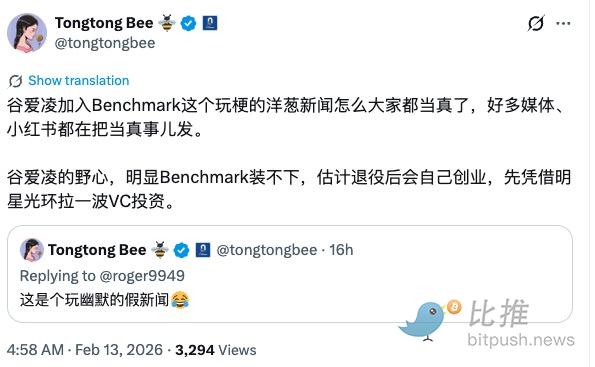
Eileen Gu Joining Benchmark? Fake!

Popular Replies:

Next step: HTX Co-CEO, TRON Global Ambassador lol

She's been getting roasted these past few days—criticized in Chinese circles, called out in English circles, one moment representing Americans, the next representing Chinese!

Fun fact: Eileen Gu is a U.S. citizen, and the U.S. government taxes globally. So, 40% of every dollar she earns in China goes to the U.S. government!

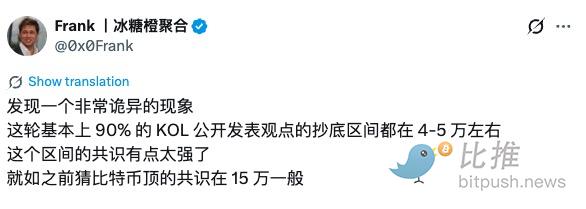
90% of KOLs' Bottom-Buying Range is $40K-$50K?

Popular Replies:

You're right on point. Actually, if it really drops to $40K-$50K, it would be reasonable. History is there, everyone gets it. The fear is if it drops to $20K-$30K or even lower—that would shatter all faith.

Hahaha, a couple of months ago they were shouting $60K. If it really drops to $40K-$50K, they'll start yelling $30K-$40K.

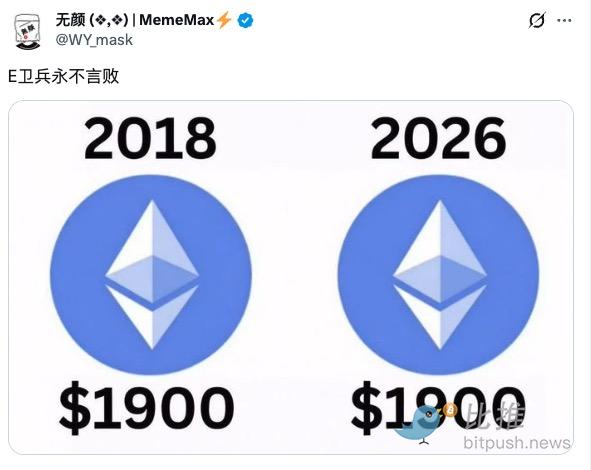
"Eight Years, Still $1900"—ETH Maximalists Collective Meltdown

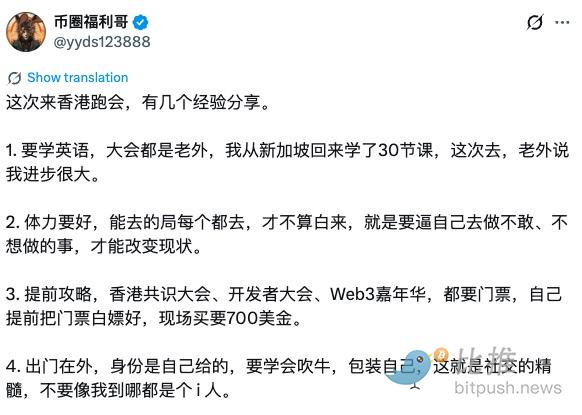
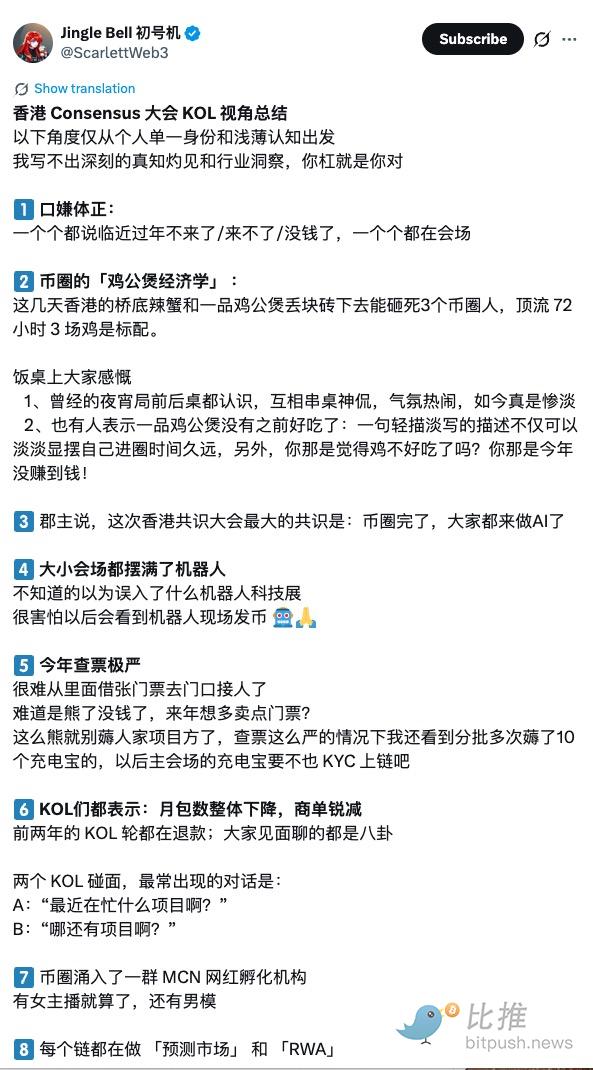
Hong Kong Conference Essay Extravaganza

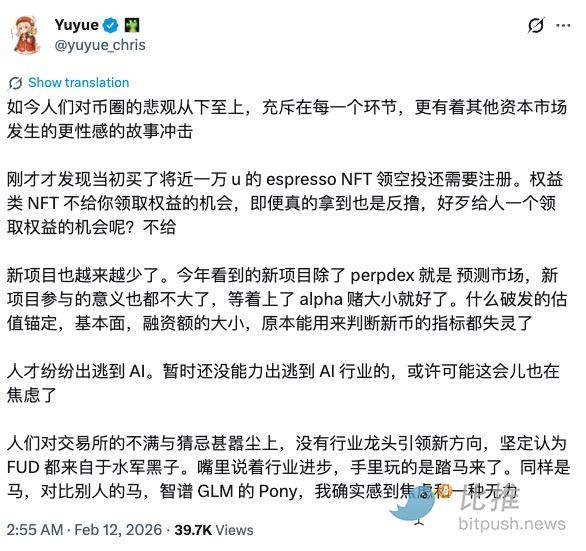
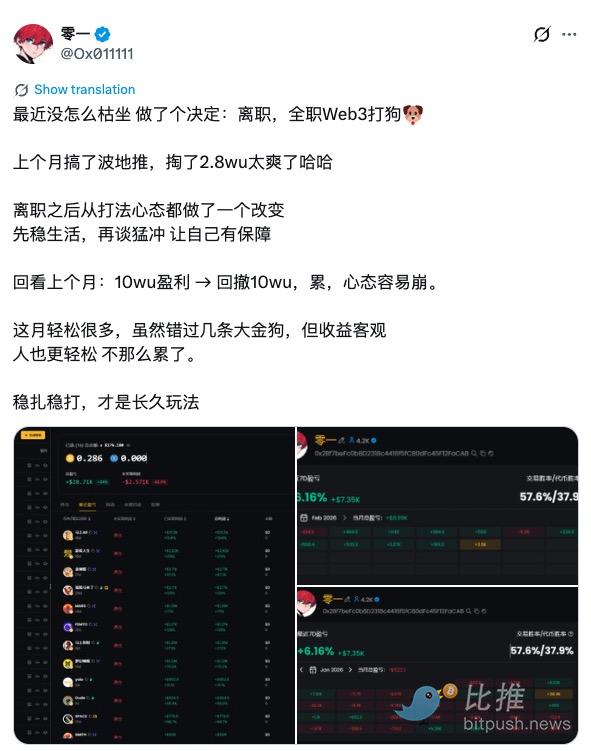
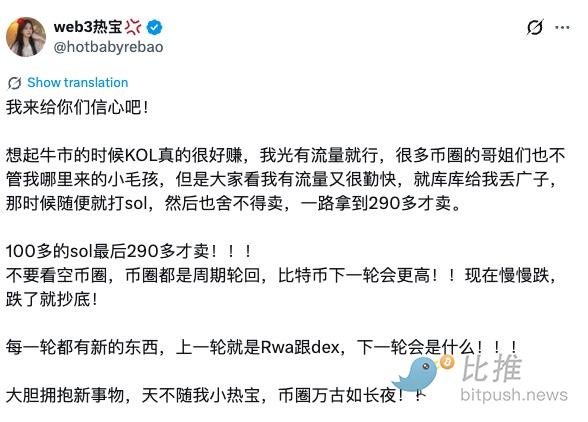
Pessimism Pervades the Industry—Some Flee, Others Hold Firm

Popular Replies:

Extremes reverse—wait for the mean reversion. Right now, it's about resting. The sooner you rest up, the more advantage you'll have;

Just wait it out;

The AI circle's siphon effect should become particularly strong this year.


Twitter:https://twitter.com/BitpushNewsCN

Bitpush TG Discussion Group:https://t.me/BitPushCommunity

Bitpush TG Subscription: https://t.me/bitpush

Original link:https://www.bitpush.news/articles/7612025
Related Reads

Once-Popular Web3 Enters Wave of Layoffs

The once-hot Web3 industry is experiencing a severe wave of layoffs. While many companies attribute job cuts to AI-driven restructuring, the primary reason is often financial pressure. The Web3 sector, at the intersection of tech and finance, has been hit particularly hard. Employees at major cryptocurrency exchanges report sudden, impersonal layoffs—often with system access revoked overnight—and minimal or no severance. Common tactics include setting impossible performance targets or terminating employees for minor policy violations. The working atmosphere has become toxic, marked by intense monitoring, excessive meetings, and management obsessed with control and internal politics rather than product innovation. The industry's core business model is collapsing. Exchange revenue from trading fees and listing charges has plummeted due to a decline in quality projects and retail investor exodus. Events like the massive forced liquidation on October 10th further shattered confidence. Competition from on-chain derivatives platforms and prediction markets is intensifying the downturn. As layoffs continue, displaced workers struggle to find new opportunities. Many transition to the AI sector, but face significant bias from traditional finance and even some AI firms, which view crypto industry experience with suspicion. The current downturn appears more structural than cyclical, driven by unsustainable practices, internal strife, and a failure to innovate, raising questions about the industry's future trajectory.

marsbit49m ago

Once-Popular Web3 Enters Wave of Layoffs

marsbit49m ago

Sales Drop 26% But Prices Rise? Xiaomi's Dilemma

Xiaomi, facing a significant 26.3% year-on-year decline in global smartphone shipments in Q2 2026, has implemented its third price hike of the year. On August 2nd, prices were raised for nine models, including the flagship Mi 17 series (up 400-500 yuan) and Redmi K90/Turbo 5 series (up 300 yuan). This move completes a pattern where cost pressure, originating from surging memory chip prices, has climbed from entry-level to mid-range and now flagship products. The primary driver is a severe supply squeeze on consumer-grade DRAM and NAND flash memory, as major manufacturers like Samsung shift advanced capacity to more profitable HBM for AI applications. According to Xiaomi President Lu Weibing, memory prices for the same configuration have skyrocketed nearly fourfold since Q1 2025, adding roughly 1500 yuan to the cost of a mainstream 12GB+512GB phone. IDC estimates consumer memory costs have risen nearly 300% year-on-year. While the price increases hurt demand and contributed to the sales slump, Xiaomi's strategy of reducing entry-level models and upgrading its product mix also played a role. Domestically, its market share in China fell to 12% (5th place), while leaders Huawei and Apple saw shipments grow over 24%. To mitigate future risks, Xiaomi is accelerating its in-house "Surge" chip development and optimizing memory configurations across its lineup. Xiaomi is not alone; major brands like OPPO, vivo, and Apple have already raised prices in 2026, with industry insiders predicting another round of increases (200-800 yuan) in the second half. A full-scale industry-wide涨价 cycle is underway, forcing both manufacturers and consumers to recalibrate their strategies and purchasing decisions amid sustained cost pressures.

marsbit1h ago

Sales Drop 26% But Prices Rise? Xiaomi's Dilemma

marsbit1h ago

Trading

Spot
活动图片