What Kills SaaS Isn't AI, It's Agent

marsbitPublished on 2026-02-06Last updated on 2026-02-06

Abstract

The article argues that AI agents, not AI itself, are disrupting the SaaS industry. The recent market reaction to Anthropic's Claude Cowork plugin release, which erased $285 billion in software market value in 24 hours, highlights this shift. The core thesis is that the traditional SaaS model—building a "nice UI + integrations + per-seat pricing" on top of shallow moats—is dying. AI agents that can autonomously execute workflows within existing systems (CRMs, databases) are making the intermediate UI layer obsolete. This creates a "Thin Middle Squeeze": value is moving upward to the AI agent execution layer and downward to the foundational data layer (record systems), while the middle layer (traditional SaaS UI) is being crushed. However, the author clarifies that software market spending is not decreasing but shifting. New opportunities lie in: AI platform subscriptions with usage-based pricing, owning proprietary data in record systems, building infrastructure for AI security/governance, adopting outcome-based pricing models, and providing implementation services. The conclusion is that the era of "easy SaaS" with per-seat pricing is over, but immense opportunities remain for those building in the agent, data, or infrastructure layers.

Author: David Ondrej

Compiled by: Deep Tide TechFlow

Introduction: Last Monday, Anthropic released a suite of plugins for Claude Cowork. Not a new model, not a chatbot upgrade, but plugins. Within 24 hours, the software stock market lost $2.85 trillion in market value. A plugin market announcement wiped out more wealth in a single day than most industries produce in a year. Wall Street is no longer afraid of AI; they are afraid of what AI replaces.

David Ondrej points out that what is dying is a very specific type of software business—SaaS built on the weak moat of "beautiful UI + integration + per-seat pricing." When AI agents can directly complete tasks within existing systems, you don't need 15 different SaaS tools with beautiful dashboards. Value is being sucked upward into the agent layer and downward into the data layer. Everything in the middle is being squeezed.

Full text below:

Last Monday, Anthropic released a suite of plugins for Claude Cowork.

Not a new model, not a chatbot upgrade, but plugins.

Within 24 hours, the software stock market lost $2.85 trillion in market value.

A plugin market announcement wiped out more wealth in a single day than most industries produce in a year.

Wall Street is no longer afraid of AI.

They are afraid of what AI replaces.

II

Here’s where most people get it wrong.

They hear "SaaS is dead" and think it means companies will stop buying software.

That’s not it at all. Not even close.

What’s dying is a very specific type of software business—and if you understand which type, you’re looking at the biggest startup opportunity in a decade.

Let me explain:

III

Over the past 15 years, the SaaS playbook was simple:

Find a common business workflow. Build a beautiful UI around it. Add some integrations. Charge per seat, per month. Defend your position with switching costs and minor product tweaks.

This playbook created hundreds of billionaires.

But it has a fatal flaw that no one talks about.

Most of the value was never in the software itself. It was in the workflow the software organized.

The UI was the middleman.

And AI just made the middleman obsolete.

IV

Here’s what Anthropic actually did—because the headlines missed the point.

They didn’t build a better chatbot. They turned Claude into a work execution layer.

Cowork plugins allow AI agents to log into your existing tools—your CRM, your documents, your databases—and autonomously execute entire workflows. Legal audits, sales pipeline management, data analysis, production-level code, and more.

No human involvement required. This is the part that spooked the market.

Because if AI agents can do the work directly within your existing systems—why do you need 15 different SaaS tools with beautiful dashboards?

Here’s the part that should really keep SaaS founders up at night:

If 10 AI agents can do the work of 100 employees, you no longer need 100 Salesforce seats.

AI doesn’t kill software directly. It kills the number of employees using the software. That kills the per-seat revenue model. That kills the business.

V

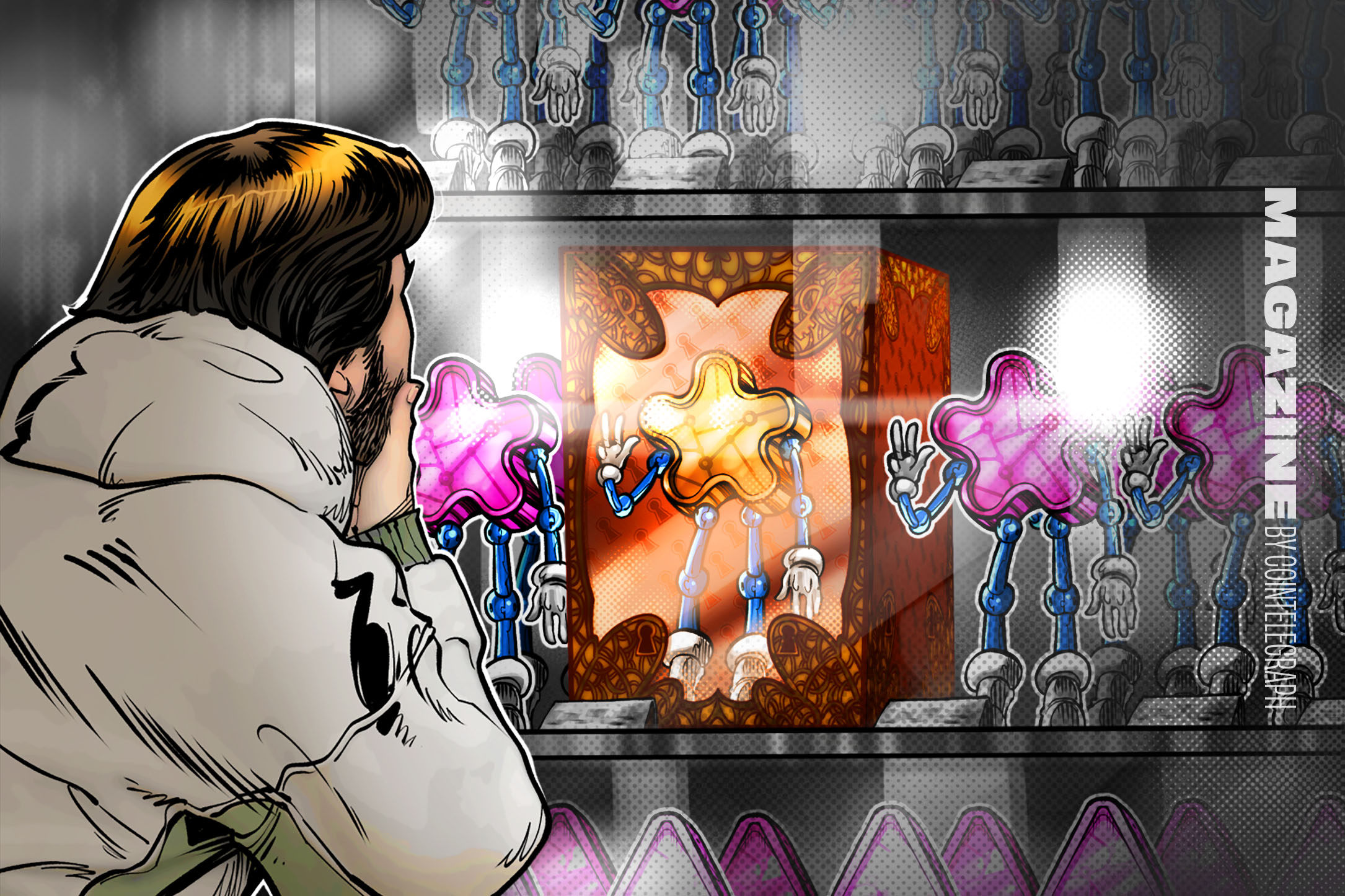
This is what I call the "Thin Middle Squeeze."

Imagine three layers:

Top Layer—AI agents. The things that actually perform the work.

Middle Layer—SaaS UI. Dashboards, workflows, the buttons you click.

Bottom Layer—Systems of record. Databases, CRMs, and ERPs that store the real data.

Now, value is being sucked upward into the agent layer and downward into the data layer.

Everything in the thin middle is getting crushed.

This is why Adobe’s forward P/E dropped from 30 to 12. ServiceNow from 67 to 28. Not because people don’t need what they do—but because investors realized that when AI agents can completely bypass the UI, the moat around "beautiful UI + integrations" is paper-thin.

The interface used to be the product, but now it’s just a shell.

VI

But here’s where those saying "SaaS is dead" are completely wrong.

SaaS isn’t dead; the era of easy SaaS moats is dead.

That’s a huge difference.

Companies will spend more on software this year than ever before. Enterprise AI capex alone will exceed $470 billion by 2026. This isn’t a shrinking market—it’s a market exploding in size.

The money isn’t disappearing; it’s moving.

Most people are so busy panicking that they completely miss where it’s landing.

VII

Here’s where the money is actually going:

  • AI Platform Subscriptions

Usage-based. Consumption-based. Not per seat. Companies will pay for AI capacity like they pay for cloud computing—based on what they use, not how many people sit in the building. This is already happening. GitHub’s AI agent is gated behind a premium tier with usage-based pricing. That’s the template.

  • Systems of Record

Agents don’t eliminate the backend; they operate the backend. CRMs, ERPs, data warehouses—these become more valuable, not less. Because AI agents need clean, authoritative, trustworthy data to act. Garbage data in, garbage actions out. Companies with large-scale, proprietary data will win.

  • Security, Governance, and Compliance

When agents act at scale, mistakes happen at scale. Every company deploying AI agents will pay for permissions, audit logs, policy enforcement, monitoring, and evaluation. It’s boring infrastructure—and it will print money quietly for the next decade.

  • Outcome-Based Pricing

No more "$99 per seat per month." You’ll see "$5 per contract reviewed." "$2 per support ticket resolved." "$10 per enriched qualified lead." Software priced like labor—because it’s replacing labor. This is where the entire industry’s pricing model shifts.

  • Services

This one surprises people. But when building software becomes cheap and easy, companies will experiment with more custom software services. Implementation, workflow design, migration, integration work—demand for services is about to explode. Vibe coding makes creation easy. Making it work in a real business is a whole different story.

VIII

So if you’re building a startup right now—or thinking about it—here’s the only question that matters:

Where are you in the stack?

If you’re building in the thin middle—putting a pretty UI on someone else’s data, charging per seat, with no proprietary edge—you have a serious problem. Not because your product is bad. But because the economics of your position are collapsing in real time.

The agent layer above you is eating your interface.

The system of record below you is eating your lock-in.

You’re being squeezed from both directions. And that squeeze only accelerates from here.

IX

Here’s what to build instead.

Build in the agent layer. Create AI-native tools that don’t just display information—they execute workflows. Don’t show users a dashboard. Do the work for them. Price based on outcomes, not seats. Be the thing that acts.

Build in the data layer. Own proprietary data. Build systems of record for areas that don’t yet have good systems. Make yourself the authoritative backend that every AI agent needs to plug into. Agents come and go—the data layer is eternal.

Build infrastructure. Security. Monitoring. Evaluation. Governance. Compliance. Tools that enable safe deployment of AI agents at scale. Not sexy. Extremely profitable. Demand hasn’t even begun yet.

Build services. Help companies implement, customize, and operate AI systems in their actual businesses. This is where most of the real-world complexity lives, and where massive value will be created over the next 5 years.

X

Here’s the irony no one is talking about.

Anthropic’s Cowork—the product that supposedly kills SaaS—is itself a SaaS product, sold via subscription to organizations over the internet.

SaaS as a delivery model is fine. It’s always been fine.

SaaS as a business strategy built on shallow moats and commoditized workflows priced per seat—that’s over.

Conclusion

Everyone looks at this $2.85 trillion loss and sees destruction.

But I see transfer.

That value didn’t disappear. It’s moving—from companies that captured value by being the middleman between humans and their tools, to companies that capture value through execution, data, and infrastructure.

The old playbook was: Build workflow UI, charge per seat, grow revenue by increasing your customer’s headcount.

The new playbook is: Build something that owns data, executes outcomes, or secures systems. Price based on value delivered, not butts in seats.

If you’re a founder reading this, the worst thing you can do is panic.

The second worst thing is to keep building like it’s 2019.

The best thing you can do is understand where the value is moving—and stand where it lands.

The SaaS era isn’t over.

The easy SaaS era is over.

And honestly, for anyone actually building real things, this is the best news in a decade.

Related Questions

QWhat is the immediate financial impact of Anthropic's Claude Cowork plugin announcement on the software market?

AWithin 24 hours of the announcement, software stocks lost $285 billion in market value.

QAccording to the author, what specific type of SaaS business model is dying?

AThe specific type of SaaS business model that is dying is the one built on the thin moat of 'pretty UI + integrations + per-seat pricing'.

QWhat is the 'Thin Middle Squeeze' phenomenon described in the article?

AThe 'Thin Middle Squeeze' is the phenomenon where value is being sucked upwards into the AI agent layer and downwards into the data layer, crushing everything in the thin middle layer of SaaS UI and dashboards.

QWhat are the new areas where money is flowing, as opposed to traditional per-seat SaaS?

AMoney is flowing towards AI platform subscriptions (usage-based), systems of record, security/governance/compliance tools, outcome-based pricing models, and services for implementation and customization.

QWhat is the fundamental shift in the new 'playbook' for building software companies, as opposed to the old one?

AThe new playbook is to build things that own data, execute outcomes, or secure systems, and to price based on the value delivered, not on the number of seats (per-seat pricing).

Related Reads

WeChat AI Card Hands-On Guide: Has the AI Shopping Era Arrived?

**"WeChat AI Card" Practical Test Guide: Has the Era of AI Shopping Arrived?** WeChat has officially launched the "AI Exclusive Card," a feature integrated into its Workbuddy AI assistant. This card is designed to handle payments for AI-initiated purchases. Our hands-on test reveals it's not yet a tool for fully autonomous AI shopping, but rather a controlled payment layer for AI agents. The AI Card functions as an isolated sub-wallet within WeChat Pay. Users must bind the card and transfer funds into it from their main wallet. Crucially, every transaction requires explicit user confirmation via smartphone scan; AI cannot spend autonomously. Currently accessible through the Workbuddy agent, the card targets specific digital consumption scenarios: purchasing paid content (reports, data), calling paid APIs/tools, and subscribing to services. Its design prioritizes security and control by separating funds and mandating approval for each payment. We tested a real-world scenario: ordering bubble tea via Workbuddy using a "Meituan Life Assistant" skill. The process encountered multiple hurdles: high "skill" usage costs (exceeding daily free credits), and most importantly, while a payment was successfully initiated, the AI purchased an incorrect product (a mismatched group-buy coupon instead of the desired drink). This highlights the current limitation: the **AI Card only solves the payment step**. The broader challenge lies in the **AI agent's execution chain**—accurately understanding intent, navigating third-party platforms, selecting the right product, and ensuring proper fulfillment. The payment succeeded, but the purchase failed to meet the user's need. In conclusion, the WeChat AI Exclusive Card is a cautious, early-step experiment in AI commerce. It provides a secure, user-controlled payment method for agent interactions but is not yet capable of reliable, end-to-end complex purchases. For now, it's best used for low-value, low-risk digital services with careful user verification at each step. The vision of AI handling complete shopping tasks remains a work in progress.

marsbit2h ago

WeChat AI Card Hands-On Guide: Has the AI Shopping Era Arrived?

marsbit2h ago

Deconstructing Notion's Growth: From a Note-taking Tool to 100 Million Users—How Notion Built a Triple Growth Flywheel Through Product, Templates, and Community

Notion's growth from a niche note-taking tool to a platform with 100 million users is powered by three interconnected flywheels: Product-Led Growth (PLG), a Template Economy, and Community-Driven Growth. First, Notion's PLG strategy relies on a highly flexible, "plastic" product that users can adapt to countless personal and team workflows. Its freemium model lowers the barrier to entry, while features like page sharing and collaboration drive organic, usage-based viral growth as users naturally invite others. Second, the Template Economy solves the "blank page" problem. Templates, created by both Notion and its community, transform abstract product capabilities into concrete, copyable solutions for specific scenarios (e.g., project management, content calendars). This dramatically lowers activation costs for new users and fuels SEO-driven discovery. Third, a vibrant Community acts as a distributed growth engine. Users and official Ambassadors create tutorials, share use cases, and host local events. This community not only educates users but also fosters a sense of identity around pursuing "better ways of working," strengthening loyalty and enabling global, low-cost expansion. Together, these flywheels create a self-reinforcing ecosystem: a great product attracts users who create templates and community content, which in turn attracts more users and deepens engagement. This system allowed Notion to scale from individuals to teams and enterprises through a bottom-up adoption path. Looking ahead, AI integration promises to accelerate these flywheels further by making templates smarter and the platform a potential AI-native work operating system. Ultimately, Notion's defensible advantage is not just its features, but this deeply entrenched network of user assets, creators, and community trust.

marsbit2h ago

Deconstructing Notion's Growth: From a Note-taking Tool to 100 Million Users—How Notion Built a Triple Growth Flywheel Through Product, Templates, and Community

marsbit2h ago

$10 Billion, Qualcomm to Acquire Chip Legend Jim Keller's Company

Global mobile chip giant Qualcomm is in advanced talks to acquire AI chip startup Tenstorrent in a deal valued between $8-10 billion, according to media reports. This potential acquisition would be one of the largest in the AI chip sector in recent years. Tenstorrent, led by legendary chip architect Jim Keller, has gained prominence for its RISC-V architecture and AI accelerator designs. The move highlights Qualcomm's strategic push to diversify beyond its core smartphone chip business. As the smartphone market matures, Qualcomm is aggressively targeting growth in automotive, data center, and cloud AI. Acquiring Tenstorrent would allow Qualcomm to rapidly enter the high-end AI computing market, bypassing lengthy in-house development cycles. Tenstorrent's cost-effective system architecture, which avoids expensive HBM memory and relies on standard Ethernet for clustering, offers a potential alternative to Nvidia's costly solutions. Furthermore, Tenstorrent's high-performance RISC-V CPU technology and its focus on the automotive and edge computing segments align with Qualcomm's strategic goals, including its "Snapdragon Digital Chassis" platform. Despite the strategic rationale, the high valuation has sparked some investor caution. The successful integration of Tenstorrent's open-source culture and independent team into Qualcomm's organization, along with the commercialization of its technology, remains a key challenge.

marsbit2h ago

$10 Billion, Qualcomm to Acquire Chip Legend Jim Keller's Company

marsbit2h ago

Trading

Spot
Futures
活动图片