Original Author: Xu Chao
Original Source: Wall Street News
In the view of economist aka Shan, the monetary policy choices of the new Fed Chairman, Kevin Warsh, are pushing the U.S. economy towards a crossroads with no way back—no matter which path he chooses, an economic crisis comparable to the Great Depression of 1929 seems almost certain. The only difference lies in whether this crisis manifests as an asset crash or the complete collapse of the U.S. dollar's purchasing power.
Over the past two months, Warsh has made high-profile statements on multiple occasions, vowing to bring inflation down below 2% and admitting he has "no magic wand." However, his words have not shaken price trends; futures markets only experienced brief volatility during his speeches before quickly returning to high levels. More critically, the U.S. CPI has fallen below 2% only twice in the past decade—1.8% in 2019 and 1.2% in 2020—with the ten-year average well above 3%, indicating that the long-term loose monetary policy has led to deeply entrenched issues.
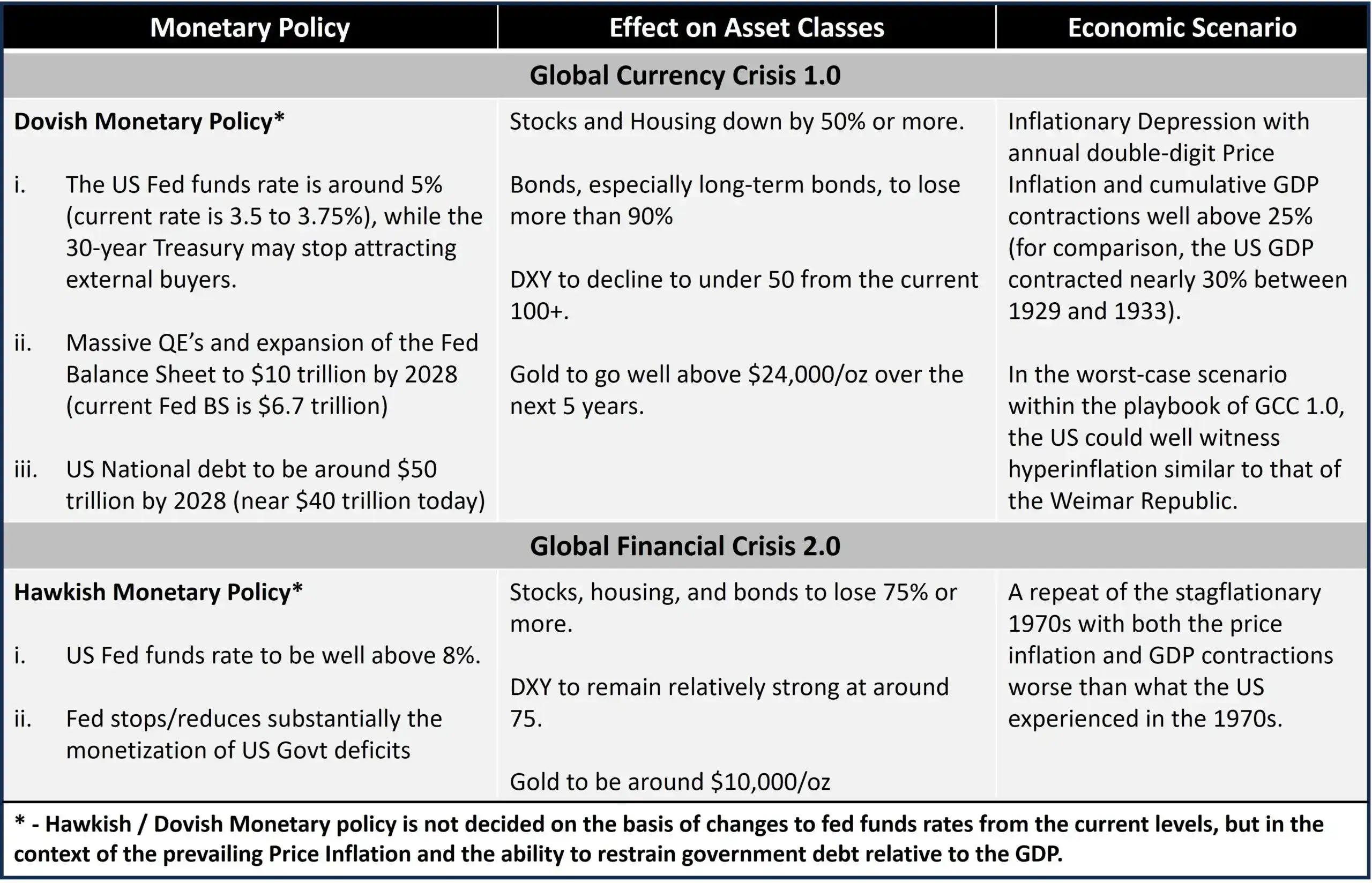
Against this backdrop, Warsh's options are reduced to two diametrically opposed paths: the first is to persist with tightening, puncture the bubble, and trigger a "Global Financial Crisis 2.0" (GFC 2.0) similar to but more severe than 2008; the second is to return to easing under pressure, ultimately exchanging the systemic collapse of the dollar's purchasing power for short-term stability, i.e., "Global Currency Crisis 1.0" (GCC 1.0). Shan judges that, in the face of immense political pressure, the probability of Warsh choosing the latter overwhelmingly outweighs the former.
No Middle Ground: Two Paths Leading to the Same Crisis
According to the analytical framework of economist aka Shan, there is no middle ground between GFC 2.0 and GCC 1.0. Either outcome will lead to a severe economic recession.
If Warsh maintains a hawkish stance—continuing to raise interest rates, advancing quantitative tightening (QT), and pushing the government toward budget balance—the multiple asset bubbles, already inflated to dangerous levels, will burst one after another. Unlike 2008, which only saw a housing bubble burst, today there coexist an AI bubble, a housing bubble, and a private credit bubble. Each alone is larger than the subprime mortgage crisis of 2008, and their combined detonation would far exceed the impact of the Lehman moment.
If Warsh repeats Ben Bernanke's playbook under recessionary pressure—zero interest rate policy (ZIRP) plus quantitative easing (QE)—the excessive issuance of money will accelerate the collapse of the dollar's purchasing power, ultimately evolving into a currency crisis. Ironically, Bernanke won the Nobel Prize in 2022 for his crisis response at that time, yet the dilemma the U.S. faces today is precisely the direct consequence of that loose policy approach.
Cantillon Effects: Why 2026 Is Different from 2008
The key to understanding this crisis lies in an often-overlooked concept in monetary economics—the Cantillon Effects. Its core logic is that newly created money does not flow evenly into all assets but concentrates in specific asset categories during different periods, creating an asymmetric impact on prices.
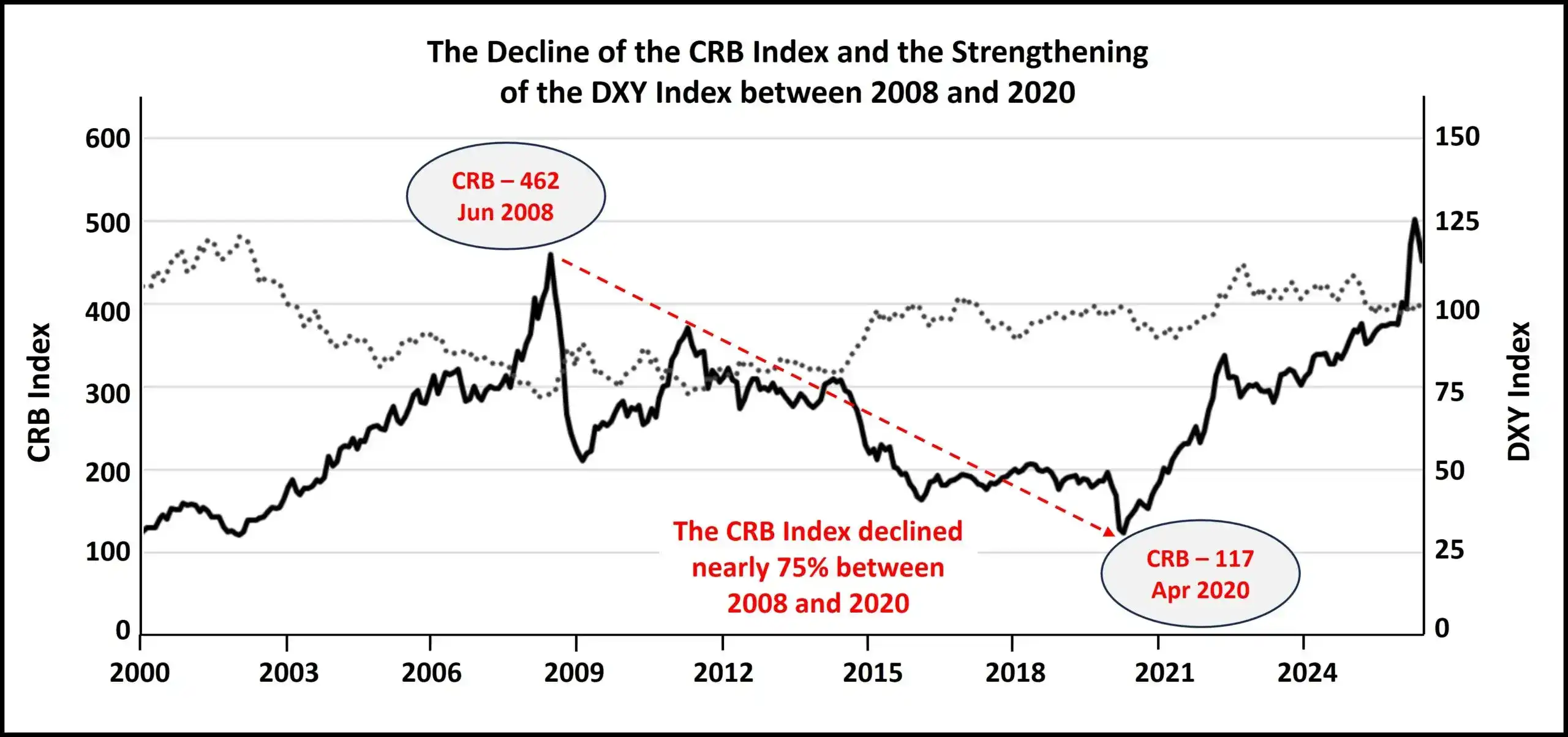
Between 2008 and 2020, the U.S. M2 money supply ballooned from $7 trillion to $20 trillion, the Federal Reserve's balance sheet expanded from less than $1 trillion to nearly $8 trillion, and the national debt climbed from under $10 trillion to nearly $30 trillion. During this period, stocks, real estate, and bonds soared, but commodity prices moved inversely—the CRB Commodity Index fell by nearly 75% cumulatively over this decade-long cycle of monetary excess.
2022 was the decisive turning point in this cycle. Historically suppressed commodity prices are beginning to catch up, reflecting the accumulated monetary inflation from previous years. This means that simply due to the historical debt accumulated over past decades of deficit expansion and artificially low interest rates, the U.S. already faces at least a decade of high inflation pressure—and if monetary policy spirals out of control on this basis, high inflation could easily turn into hyperinflation at any moment.
Can Warsh Walk the Talk?
Observable evidence so far suggests that the probability of Warsh genuinely implementing hawkish policies is extremely low.
The real test will come when the "contemporary Lehman moment" arrives—when multiple bubbles burst in sequence, the economy plunges into a sharp recession, and political pressure to restart ZIRP and QE becomes overwhelming. The question is whether Warsh has the willpower to withstand this pressure and make the economically correct but politically costly choice: raising interest rates, continuing to shrink the balance sheet, and forcing fiscal consolidation.
aka Shan is blunt about this: he personally believes this probability is "extremely low, even close to zero." Inflation is ultimately a policy choice, but in the face of political reality, the more damaging yet more convenient path is often the final choice.