War With Iran May Spark Federal Reserve Intervention, Arthur Hayes Says

bitcoinistPublished on 2026-03-02Last updated on 2026-03-02

Abstract

Crypto exchange BitMEX co-founder Arthur Hayes argues that U.S. military intervention in Iran could lead to Federal Reserve monetary easing, which may boost Bitcoin and crypto prices. Drawing on historical patterns since 1985, Hayes notes that past U.S. military actions in the Middle East—such as the Gulf War and post-9/11 operations—were often followed by Fed rate cuts or increased money supply. He suggests that if President Trump continues extensive military engagement in Iran, the Fed may loosen its tight monetary policy, driving capital into risk assets like Bitcoin. While current markets show limited panic, Hayes advises investors to wait for clear Fed action before making significant crypto moves.

Iran and the Middle East are on fire again. US and Israeli forces launched a series of airstrikes on Iran over the weekend, killing Supreme Leader Ali Khamenei — a development that sent shockwaves through global markets and sparked fresh debate about what comes next for the US economy. And amid all the chaos, one prominent voice in the crypto world is already drawing a straight line from the bombing runs to Bitcoin prices.

Arthur Hayes Makes His Case

Arthur Hayes, co-founder of crypto exchange BitMEX, published a blog post this week arguing that US military action in the Middle East has a historical pattern — and that pattern tends to be good for crypto.

His reasoning goes back decades. According to Hayes, every sitting US president since 1985 has sent forces into the Middle East. Each time, the Federal Reserve followed by cutting interest rates or pumping more money into the financial system to help cover the costs.

A quote by Arthur Hayes on his blog post.

The Gulf War in 1990. The aftermath of the September 11 attacks in 2001. The troop surge in Afghanistan in 2009. Each episode, Hayes argues, came with a looser money supply.

His conclusion: if US President Donald Trump keeps spending heavily on what Hayes calls “Iranian nation-building,” the Fed may eventually feel pressure to ease up on its current tight monetary stance. That, in turn, could send money flowing into riskier assets — including Bitcoin and other cryptocurrencies.

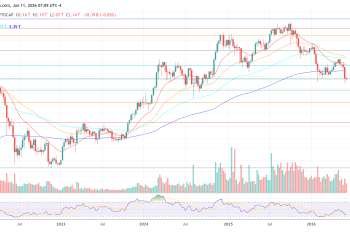
BTCUSD now trading at $65,919. Chart: TradingView

Iran-US War: Markets Stay Calm For Now

So far, the markets aren’t panicking. Stock futures dipped only slightly when trading opened Monday. Oil prices spiked at first, then pulled back, erasing nearly half the early gains. The S&P 500 shed less than 1%. Financial newsletter The Kobeissi Letter was blunt about it — this was no doomsday open.

Crypto social media told a different story in tone, if not in substance. Reports say mentions of “World War 3” spiked across platforms over the weekend, according to data from analytics firm Santiment.

But those numbers were still well below the levels recorded last June, when a prior round of Israeli strikes on Iranian nuclear and military sites led to nearly two weeks of direct conflict between the two countries.

A Pattern Worth Watching

Hayes himself is urging caution for now. He admits there’s no way to know how long Trump will stay committed to a costly military campaign in Iran, or how much market pain the administration can stomach before pulling back.

His advice to crypto investors is to wait — specifically for a concrete Fed rate cut or money-printing signal before making big moves.

“The time to back up the truck and buy Bitcoin,” he wrote, is right after the Fed acts, not before.

Featured image from Getty Images, chart from TradingView

Related Questions

QAccording to Arthur Hayes, what is the historical pattern of the Federal Reserve's response to US military action in the Middle East?

AAccording to Arthur Hayes, the historical pattern is that the Federal Reserve has followed US military action in the Middle East by cutting interest rates or pumping more money into the financial system to help cover the costs.

QWhat specific event over the weekend is cited as the catalyst for the current market discussion?

AThe catalyst was a series of US and Israeli airstrikes on Iran over the weekend, which killed Supreme Leader Ali Khamenei.

QWhat is Arthur Hayes' main investment advice for crypto investors regarding the current situation?

AHis advice is to wait for a concrete Fed rate cut or money-printing signal before making big moves, and to buy Bitcoin right after the Fed acts, not before.

QHow did the markets initially react to the news of the airstrikes, according to The Kobeissi Letter?

AThe markets did not panic. Stock futures dipped only slightly, oil prices spiked but then pulled back erasing nearly half their gains, the S&P 500 was down less than 1%, and Bitcoin turned positive on the day.

QWhat does Arthur Hayes suggest could be the ultimate result of continued US spending on 'Iranian nation-building'?

AHe suggests that continued heavy spending could pressure the Federal Reserve to ease its tight monetary stance, which in turn could send money flowing into riskier assets like Bitcoin and other cryptocurrencies.

Related Reads

Can Generative Models Finally Be Trained End-to-End? The Core Is a For Loop

This article introduces a novel training paradigm for generative models called Explorative Modeling (XM), which enables true end-to-end training. Traditionally, powerful generative models like autoregressive and diffusion models are not trained end-to-end. They are trained to predict a single small step but require iterative multi-step sampling for inference. This "exposure bias" leads to error accumulation and limits performance. The core challenge XM addresses is "mode blurring." In generative tasks, a single input (e.g., "generate a dog") corresponds to many valid outputs (multiple modes). Standard training objectives like reconstruction loss force the model to average these modes, producing unrealistic, blurry outputs. To avoid this, existing models break generation into many small, almost deterministic steps, sacrificing end-to-end training. XM tackles this by restructuring the training loop itself. Its key insight is to amplify "generative expressivity." For each training input, instead of generating one sample, the model generates K candidate outputs. Only the candidate closest to the real data is used for computing the loss and updating the model via backpropagation. This simple "best-of-K" mechanism is implemented as a short for-loop. By exploring multiple possibilities, the model learns to distribute its guesses across different modes rather than collapsing to their uninformative average. The paper demonstrates that "exploration" acts as a new, powerful scaling axis. Gains from XM increase with model size, data scale, and compute. Experiments show improvements in FID scores for image generation and significant efficiency gains, sometimes outperforming larger models without exploration. When pushed to the limit, XM enables fully single-step, end-to-end generative models. In robotics tasks, an "Explorative Policy" matched the performance of a 100-step Diffusion Policy with a single forward pass, drastically improving inference speed. While the best-of-K concept is not entirely new, the authors' contribution lies in formally understanding it as a direct method to boost generative expressivity without fragmenting the generation process. This work suggests that as models scale, enhancing exploration during training may become crucial for overcoming fundamental performance bottlenecks.

marsbit9m ago

Can Generative Models Finally Be Trained End-to-End? The Core Is a For Loop

marsbit9m ago

Annual Salary of Millions Competing for Electricians, Meta Rushes to Open Its Own Technical School

The AI boom is facing an unexpected bottleneck: a severe shortage of skilled construction workers and electricians. As tech giants like Meta, OpenAI, and Alphabet race to build massive data centers—such as OpenAI's $16 billion "Stargate" project—they are hitting a critical labor wall. The U.S. needs an estimated 130,000 more electricians, 240,000 construction workers, and 150,000 supervisors by 2030 for AI infrastructure alone, but tens of thousands of electrician jobs go unfilled each year. While AI companies offer high premiums, with electricians earning up to $280,000 annually, worker scarcity still causes massive losses—delays on a single project can cost $14.2 million per month. The complexity of building AI data centers, which require immense power (equivalent to powering hundreds of thousands of homes), sophisticated electrical systems, and advanced liquid cooling solutions, demands highly skilled technicians who are in short supply. To combat this, companies are investing heavily in training. Meta has committed $115 million to a free training school offering tuition, housing, and stipends, targeting 5,000 new workers. OpenAI is partnering with unions to secure skilled labor. These efforts are paying off, with a significant rise in Gen Z interest in trade schools over college. However, the power demands are staggering. AI data centers are driving a rapid surge in electricity consumption, projected to account for up to 12% of U.S. power use by 2028 and raising costs for consumers. Furthermore, the construction boom is project-based, leading to a potential future glut of trained workers once building peaks, which could depress wages industry-wide. The race for AI supremacy now depends as much on skilled hands as on advanced chips.

marsbit1h ago

Annual Salary of Millions Competing for Electricians, Meta Rushes to Open Its Own Technical School

marsbit1h ago

Trading

Spot
活动图片