US Stocks Plummet: Philadelphia Semiconductor Index Plunges Nearly 5% as Semiconductor Stocks Become the Epicenter

Published on 2026-08-19Last updated on 2026-08-19

Abstract

The semiconductor sector faced significant selling pressure, dragging down the Nasdaq Index by over 1%, while the S&P 500 Index fell for the third consecutive day. U.S. stocks closed lower across the board on Tuesday (18th).

The semiconductor sector faced significant selling pressure, dragging the Nasdaq Composite down by over 1%, while the S&P 500 index fell for a third consecutive session. US stocks closed lower across the board on Tuesday (18th).

US stocks closed lower across the board on Tuesday (18th) as stalled US-Iran negotiations and persistently high international oil prices fueled market concerns that inflationary pressures might not recede quickly, driving up global government bond yields. The yield on the US 30-year Treasury note hit a 19-year high. Simultaneously, the semiconductor sector encountered notable selling pressure, dragging the Nasdaq Composite down by over 1% and causing the S&P 500 index to decline for a third straight day.
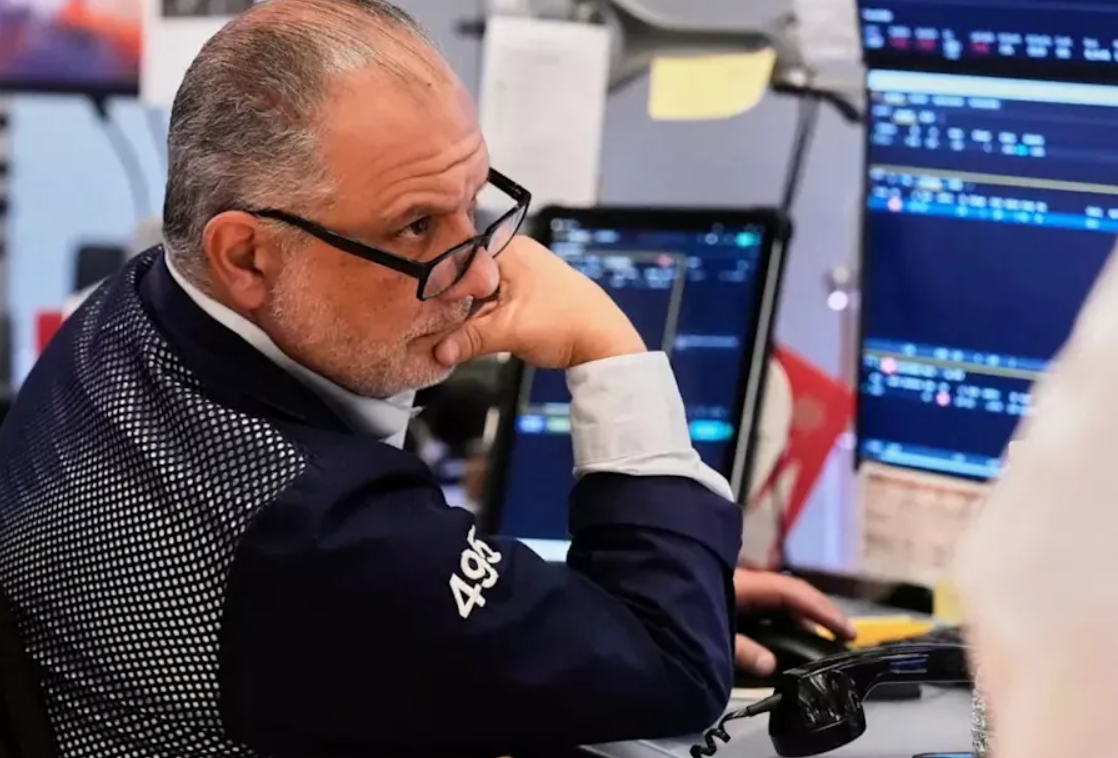
The Dow Jones Industrial Average fell 116.38 points or 0.22%, closing at 53,343.40 points; the S&P 500 index dropped 0.69% to 7,691.76 points, marking its third consecutive day of losses; the Nasdaq Composite Index plunged 1.33% to 26,289.71 points; and the Philadelphia Semiconductor Index plummeted 628.54 points or 4.98%, ending at 11,992.47 points.

Semiconductor Stocks Sold Off: SanDisk, Seagate Plunge Over 9%

According to a CNBC report, technology stocks were one of the main sources of pressure on Tuesday's market, with semiconductor and data storage-related stocks suffering particularly steep declines.

TSMC's ADR tumbled 4.07%. Western Digital slumped about 7%, SanDisk fell 9%, chipmaker Marvell Technology also dropped nearly 8%, and Seagate Technology's decline exceeded 9%. The wave of selling in tech stocks weighed heavily on the Nasdaq's performance.

Aside from the tech sector's retreat, the rapidly rising yields in the bond market have prompted investors to reassess the valuation of risk assets.

The yield on the US 30-year Treasury note climbed to its highest level in 19 years on Tuesday, and this bond market sell-off is not confined to the US. Japan's 10-year government bond yield rose to a 30-year high, Germany's 30-year bond yield hit its highest since 2011, and France's 30-year bond yield also reached a level not seen since 2008, indicating simultaneous pressure on long-term bonds globally.

Stalled US-Iran Talks, High Oil Prices Renew Market Fears of Inflation Resurgence

A major reason for the continued rise in bond yields recently is investor concern that persistently high energy prices could rekindle inflation.

As negotiations between the US and Iran to end the war have seen no breakthrough, uncertainty in the Middle East continues to support oil prices. US crude oil futures rose about 0.5% on Tuesday, following gains on Monday, reaching $84.94 per barrel.

Markets had hoped that the US and Iran might reach an agreement to end the conflict through talks, but those hopes dimmed further on Tuesday. US President Donald Trump stated on his social media platform Truth Social that the US is not currently engaged in any "negotiations or dialogue" with Iran and has no such meetings planned, while emphasizing that the US naval blockade remains "fully and effectively enforced."

Trump even warned on Monday that the US might attack Oman if it interfered with US efforts in the Iran negotiations, deepening market worries about a potential escalation of tensions in the Middle East.

Corporate Earnings, AI Theme Provide Support, but Analysts Warn of Potential Correction

Despite rising bond yields and geopolitical risks, the US stock market has been buoyed this year by strong corporate earnings and the investment boom in artificial intelligence (AI). However, as yields continue to climb, concerns are emerging that investors may be overly ignoring the pressures stemming from the high-interest-rate environment.

Bill Fitzpatrick, Portfolio Manager at Logan Capital Management, noted that the market is currently choosing to overlook challenges related to bond yields, instead focusing on the positives of robust corporate profits and AI developments. "But at some point, we could very easily face a sell-off."

He further pointed out that the factors driving bond yields higher "aren't going to suddenly disappear tomorrow," suggesting that concerns over high oil prices, inflation, and interest rates could continue to weigh on the US stock market's future trajectory.


Related Reads

Musk Awaits $50 Trillion: Is There a Limit to the U.S. National Debt and What Comes Next?

Elon Musk reacted to a projection of US national debt reaching $50 trillion by 2030, labeling it a "precise timeline" with a laughing emoji. The debt has recently passed the $40 trillion mark. Skeptics note that specific debt thresholds have been breached before without immediate collapse. However, analysts warn the focus should shift from the nominal debt amount to its affordability. A key metric is when the average interest rate on the debt exceeds the economy's growth rate, a point the US Congressional Budget Office projects for 2031. Once this "debt spiral" begins, interest costs grow self-reinforcing. Currently, interest payments have already surpassed defense spending, exceeding $1 trillion annually. Ray Dalio warns a debt crisis could occur within "three years, plus or minus two," advising portfolio diversification into gold and some Bitcoin. Potential outcomes if debt becomes unmanageable include: 1) Financial repression and monetization (the "Japanese path" of controlled yields and inflation), seen as the most likely; 2) Severe austerity (the "Greek path" of spending cuts/tax hikes), considered politically unlikely; or 3) Technical default/restructuring, which would cause global financial shock. The most probable path is a hybrid of moderate financial repression and gradual inflation, leading not to a sudden crash but to long-term economic stagnation and a declining standard of living. By 2056, debt could reach 175% of GDP. Ultimately, the limit for US debt is not a fixed number but a function of market confidence in the dollar.

cryptonews.ru1h ago

Musk Awaits $50 Trillion: Is There a Limit to the U.S. National Debt and What Comes Next?

cryptonews.ru1h ago

Solana Developer Mert Mumtaz Highly Praises Altcoin!

In the world of cryptocurrencies and finance, where privacy is a major focus, significant developments are underway. Valor Group founder Dev and notable crypto ecosystem figure Mert Mumtaz participated in a program on The Rollup crypto broadcasting platform, discussing the latest developments for the Zcash (ZEC) network and its important future roadmap. The conversation covered network scalability, security updates, and measures taken against quantum threats. The recent Ironwood update implemented in the Zcash network is considered a crucial milestone for the project. During the event, Mert highlighted that internal security audits using 'red team' methods and AI identified a potential vulnerability in the Orchard pool that could have allowed the creation of counterfeit notes. Extensive work and formal verification proved the code mathematically perfect according to specifications. The seamless migration of funds from the Orchard pool to the new Ironwood pool has completely eliminated the risk of counterfeit coin creation in the network. Dev shared important technical details about Zcash's future vision, emphasizing that Valor Group's main goal is for Zcash to achieve transaction volumes comparable to credit cards. He stated they aim to process over 50,000 transactions per second with sub-second latency while maintaining the full proof-of-work mechanism. The main scaling bottleneck was identified not as the nodes themselves, but wallet scanning processes. A new wallet architecture and synchronization delay optimization are expected to resolve this issue. The upcoming Tachion update promises to provide complete protection for Zcash against quantum computing threats. This update will integrate recursive zero-knowledge proofs into the network. It is reported to reduce transaction sizes by more than five times, eliminate node data processing overhead, and address state growth issues. With Tachion, the network is claimed to achieve not just 'quantum-resilient' but a truly 'quantum-secure' privacy structure.

cryptonews.ru1h ago

Solana Developer Mert Mumtaz Highly Praises Altcoin!

cryptonews.ru1h ago

Trading

Spot
活动图片