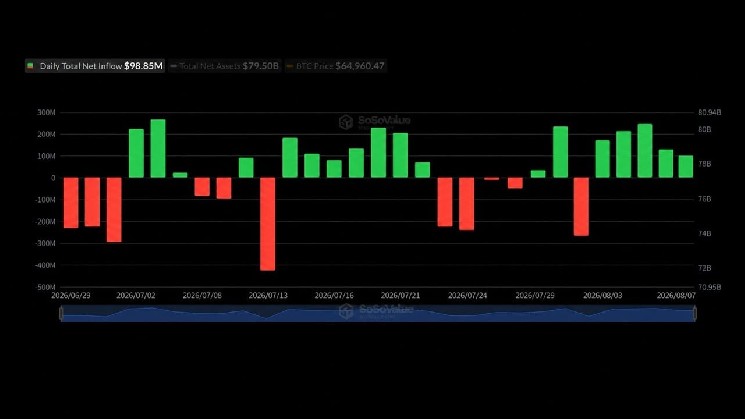
Demand for US spot bitcoin ETFs recovered this week: investors returned after several months of volatile flows, despite uncertainty around digital asset regulation and the security of self-custody.
On Saturday, Bloomberg ETF analyst Eric Balchunas reported that spot funds attracted approximately $1 billion in net inflows for the week — the best result since April and the third-largest week since last October. He described this period as Bitcoin's "quiet IPO."
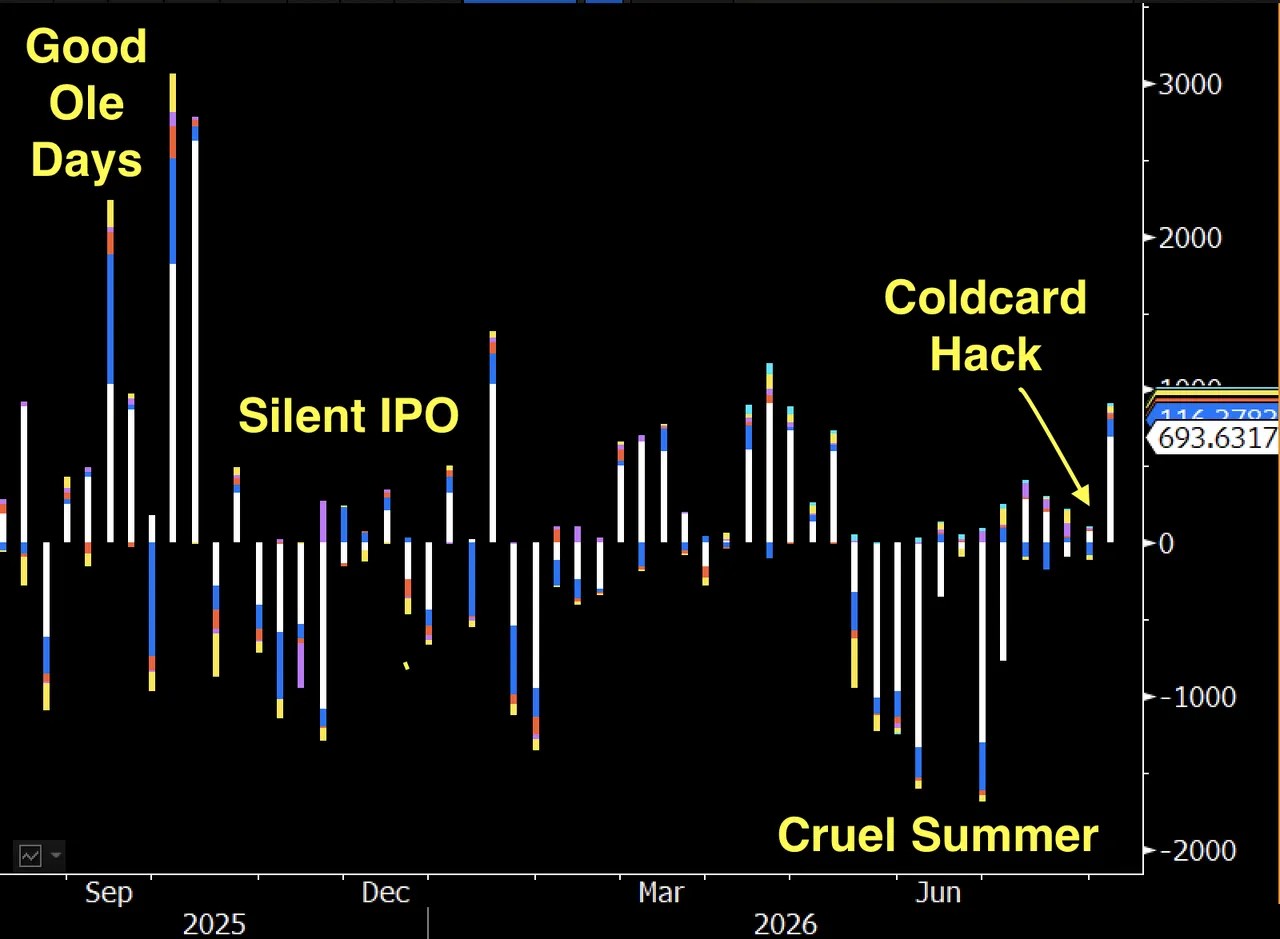
Source: Eric Balchunas
This term was introduced by investor Jordi Visser in November, describing what he sees as a generational shift among Bitcoin holders. According to this theory, early investors sold the asset amid growing demand from ETFs and other institutional buyers. This provided sufficient supply and restrained Bitcoin's rise despite the significant new capital inflow.
The selling by early investors coincided with a weakening of ETF inflows compared to periods of higher demand. Therefore, this week's recovery stands out particularly noticeably.
Related: Bitcoin Miners' Shift to AI Loses Wow Factor for Wall Street
Coldcard Hack Highlights Self-Custody Risks
The recovery followed a major security incident involving Coldcard — Coinkite's popular hardware Bitcoin wallet. As a result, approximately $116 million worth of Bitcoin was stolen. The exploit used a vulnerability in the key generation mechanism on affected devices, allowing attackers to compromise funds in wallets with vulnerable firmware.
On Friday, Balchunas suggested that this incident could over time increase the appeal of spot Bitcoin ETFs for investors unwilling to be solely responsible for technical issues and asset security. He linked the surge in ETF inflows after the hack to a possible, though not yet proven, effect.
Balchunas acknowledged that correlation does not prove causation: "In the long run, it's hard to imagine that no one will switch." This refers to investors who may switch from cold storage to ETFs.
Magazine: Do Coldcard Attacks Mean All Hardware Wallets Are Now Insecure?
end-content