US Senate at an 'Impass' Over Passage of CLARITY Act

cryptonews.ruPublished on 2026-08-06Last updated on 2026-08-06

Abstract

The US Senate is at an impasse regarding the CLARITY Act. Republican Majority Leader John Thune has not yet initiated a vote to end debate, risking a delay as Congress enters its August recess. The House of Representatives begins a month-long break on August 7, after which focus will shift to the November elections, leaving the crypto bill with dwindling chances of swift progress. Key sticking points remain, as noted by a Democratic staffer: ethics, illicit finance, and the text drafted by the Senate Agriculture Committee. The ethics issue is particularly contentious, with Democrats demanding provisions to address President Donald Trump's growing interests in digital assets. Other required changes include granting authority to state attorneys general and removing a statute of limitations clause. While Thune still intends to hold a procedural vote, final passage is unlikely before the recess. Analysts note that extending the session or changing Senate rules would require unanimous consent, which is improbable as senators are eager to campaign. Despite the potential failure of the bill, industry figures suggest the crypto sector will continue to develop regardless.

US Senate Republican Majority Leader John Thune has still not initiated a cloture vote on the CLARITY Act — the bill risks being paused due to the August recess.

The House of Representatives will begin a month-long recess on August 7, after which it will shift focus to preparing for the November elections. The crypto bill has fewer and fewer chances for swift advancement.

Nevertheless, as reported by Laura Weiss from Punchbowl News, Thune still intends to hold a procedural vote on the CLARITY Act.

"We are building the process, but there are still some issues we want to resolve," the senator added.

At the same time, a staffer for the Democratic minority in the Senate told The Block that work on the document has "reached an impasse." Legislators still face three key issues: ethics, illicit financing, and the text prepared by the Senate Agriculture Committee.

"If we can settle these points, we definitely want to move forward," the source added.

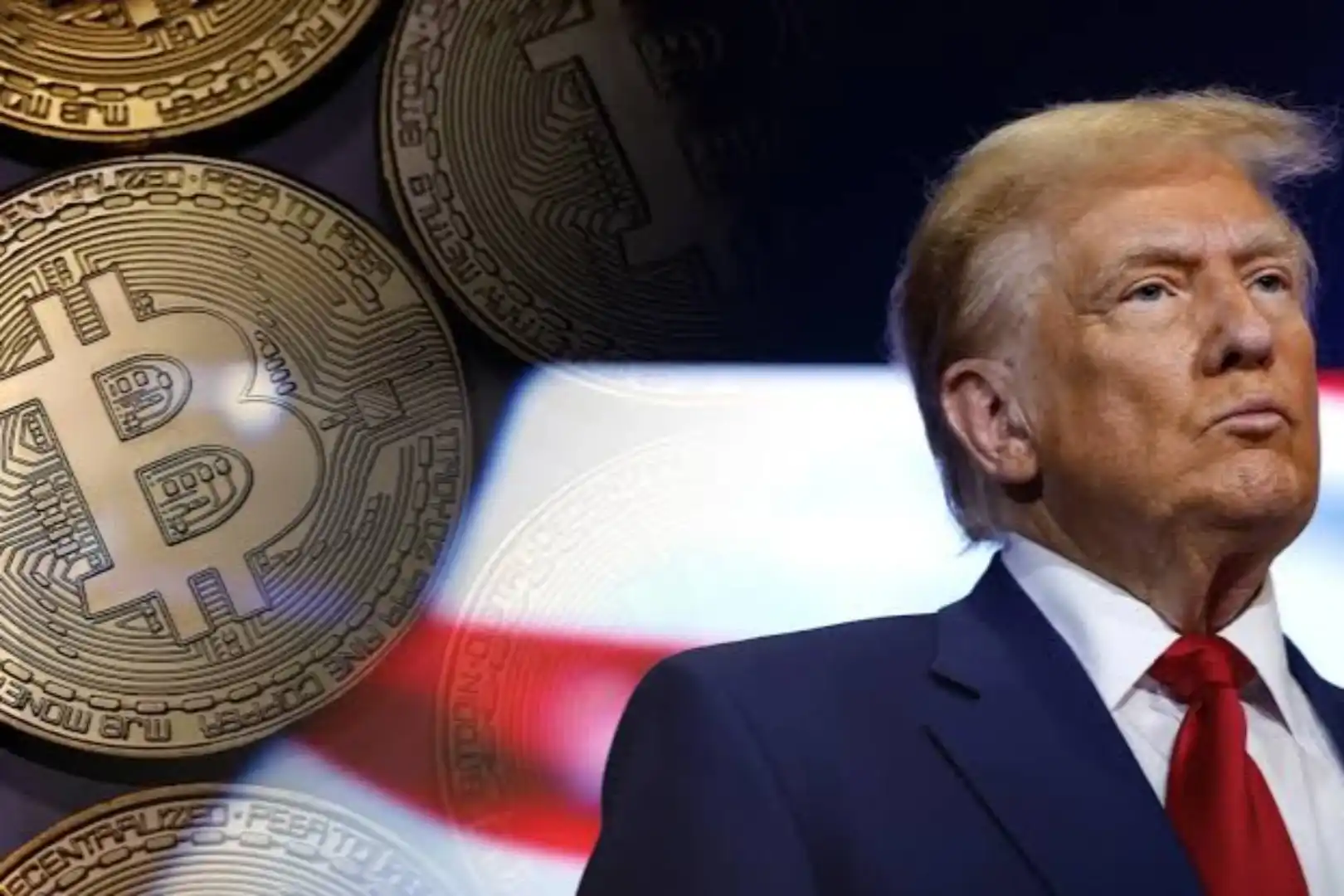
The most contentious issue is ethics. Democrats demand that the growing interests of US President Donald Trump in the digital asset sector be taken into account.

Media: Trump Agrees to Add Ethical Norms to CLARITY Act

The Senate staffer noted that the text must include a provision on the authority of state prosecutors and remove the clause on the statute of limitations for crimes. Although the document's advancement does not require the president's approval, Trump could veto it, added the publication's source.

Illicit financing is also a relevant problem. The prevailing view within the administration is that the law does not sufficiently protect law enforcement and consumers.

A separate point of contention is the version of the text from the Senate Agriculture Committee. The committee advanced its version in January, but Democrats did not support it.

"The only way to hold a final vote at this stage is to postpone the Senate recess for a week or to suspend the rules, which requires unanimous consent. Both options are unlikely, as senators want to return home to participate in the election campaign," analysts at TD Cowen concluded.

As a reminder, Bitwise Chief Investment Officer Matt Hougan stated that the crypto industry will continue to develop even if the CLARITY Act bill fails in the US Senate.

end-content

Related Questions

QWhat is the main reason the CLARITY Act is at risk of being paused in the US Senate?

AThe main reason is the upcoming August recess of Congress. Senate Majority Leader John Thune has not yet initiated a cloture vote to end debate, and with the House of Representatives going on a month-long break starting August 7th, time is running out for the bill's advancement before the legislative body shifts focus to the November elections.

QAccording to a Democratic Senate aide, on what three key issues has work on the CLARITY Act 'reached a dead end'?

AThe three key sticking points are: 1) Ethics, specifically concerns about President Donald Trump's growing interests in digital assets; 2) Illicit finance, with concerns the bill does not sufficiently protect law enforcement and consumers; and 3) The version of the text prepared by the Senate Agriculture Committee, which Democrats did not support.

QWhat specific ethical concern do Democrats have regarding the CLARITY Act and President Trump?

ADemocrats are demanding that the bill address the growing financial interests of President Donald Trump in the digital asset sector. They want ethical norms included to account for this.

QWhat procedural options are available to hold a final vote on the CLARITY Act before the recess, and why are they considered unlikely?

AThe two options are: 1) Postponing the Senate recess by one week, or 2) Unanimously agreeing to waive the rules. Both are considered highly unlikely because senators are eager to return home to campaign for the upcoming elections.

QAccording to Bitwise's Matt Hougan, what would happen to the crypto industry if the CLARITY Act fails in the Senate?

AMatt Hougan, Chief Investment Officer of Bitwise, stated that the cryptocurrency industry will continue to develop and grow even if the CLARITY Act fails to pass in the US Senate.

Related Reads

The $6.4 Billion CRO Accumulation Plan of Trump Media Group Falls Apart

A $6.4 billion plan to create a publicly-listed CRO treasury company, announced a year ago by Trump Media & Technology Group (DJT), Crypto.com, and SPAC Yorkville, has been terminated. The ambitious deal, which aimed to accumulate approximately 6.3 billion CRO tokens (nearly 20% of supply at the time), never progressed beyond a framework agreement. Related plans for a prediction market integrated into Truth Social and ETF custody services by Crypto.com were also shelved, scaled back to a simple marketing partnership. The collaboration followed significant political alignment, with Crypto.com donating to Trump's inauguration and a pro-Trump super PAC, and its CEO meeting with Trump. The SEC also closed an investigation into the exchange shortly before the deal was announced, raising conflict-of-interest concerns. Officially, the termination was attributed to an unfavorable market environment. CRO's price has fallen roughly 70% since the announcement, and the broader market for publicly-traded digital asset treasuries has cooled significantly, with Bitcoin nearly halving from its late-2025 peak. The only completed transaction from the 2025 agreements remains intact: Trump Media's ~$105 million CRO purchase and Crypto.com's $50 million purchase of DJT stock. The termination aligns with DJT's strategic pivot away from crypto; the company is now pursuing a multi-billion dollar all-stock merger with nuclear fusion firm TAE Technologies, shifting its focus to clean energy.

marsbit8m ago

The $6.4 Billion CRO Accumulation Plan of Trump Media Group Falls Apart

marsbit8m ago

Tiger Research: The $43 Million Gray Area of Asian Prediction Markets

Tiger Research: Asia's $43 Million Grey Zone in Prediction Markets Western jurisdictions have created regulatory pathways for prediction markets through derivatives law (like the U.S. CFTC framework) or flexible gambling licenses (like the UK's "betting intermediary" category). In contrast, Asia lacks a comparable regulatory architecture. The absence of a general gambling license framework adaptable to private operators, coupled with closed financial product definitions (e.g., positive lists of assets in Korea and Japan), leaves prediction markets in a regulatory grey area. This lack of a clear classification—whether as gambling, financial derivatives, or a novel third category—has not stopped market activity. Significant liquidity, evidenced by over $52 million tied to a single South Korean election, flows to offshore platforms. However, this results in forgone tax revenue (estimated at $4-43 million annually per major Asian market), no consumer protection, and no oversight for market integrity. The core issue is not cultural opposition to gambling, which exists legally in many Asian markets, but a missing institutional design. Without a deliberate regulatory pathway, authorities are left with suboptimal options: expanding criminal sanctions or blocking access, which fail to address the underlying economic activity or achieve key policy goals. Establishing a regulatory foundation requires initiating a formal public discourse to first define prediction markets' legal status and societal value, a foundational step that has yet to occur in most Asian jurisdictions.

marsbit17m ago

Tiger Research: The $43 Million Gray Area of Asian Prediction Markets

marsbit17m ago

How Singapore's Retail Giant Masters the Gold Trade: Selling Thousands of Pounds Monthly Without Betting on Price, Gold Leasing Inspires RWA Income Design on Chain

A Singapore retail giant, Mustafa Centre, sells around 1,100 pounds of gold jewelry monthly, holding nearly a ton of inventory valued over $100 million, yet avoids gold price speculation. They achieve this by maintaining a constant inventory—buying back the exact amount of gold sold each day, earning only from sales margins, not price movements. This practice is enabled by the century-old gold leasing market. Retailers borrow physical gold to meet inventory needs without tying up capital or bearing price risk, paying a lease rate. Lenders earn yield on otherwise idle gold. This real-economy demand, driven by operational needs rather than speculation, provides a stable income stream. The article highlights how this traditional leasing model inspires on-chain Real World Asset (RWA) protocols like thUSD and thGOLD. These protocols channel gold lease yields—generated from borrowers like Mustafa—to token holders. The key challenge has been access, not yield availability. Platforms like Libeara, with institutional backing (e.g., SC Ventures), facilitate this by tokenizing funds (e.g., the MG 999 Gold Fund) that lend to vetted commercial borrowers, making this off-chain yield accessible on-chain. Thus, gold leasing demonstrates a proven, non-speculative revenue source for crypto protocols seeking sustainable "real yield," connecting physical trade finance to decentralized finance.

marsbit28m ago

How Singapore's Retail Giant Masters the Gold Trade: Selling Thousands of Pounds Monthly Without Betting on Price, Gold Leasing Inspires RWA Income Design on Chain

marsbit28m ago

Trading

Spot
活动图片