Written by: Zhang Yaqi, Wall Street News
U.S. consumer spending unexpectedly stalled in July, and key inflation gauges showed moderate trends, providing more data support for the Federal Reserve's stance of keeping interest rates unchanged.
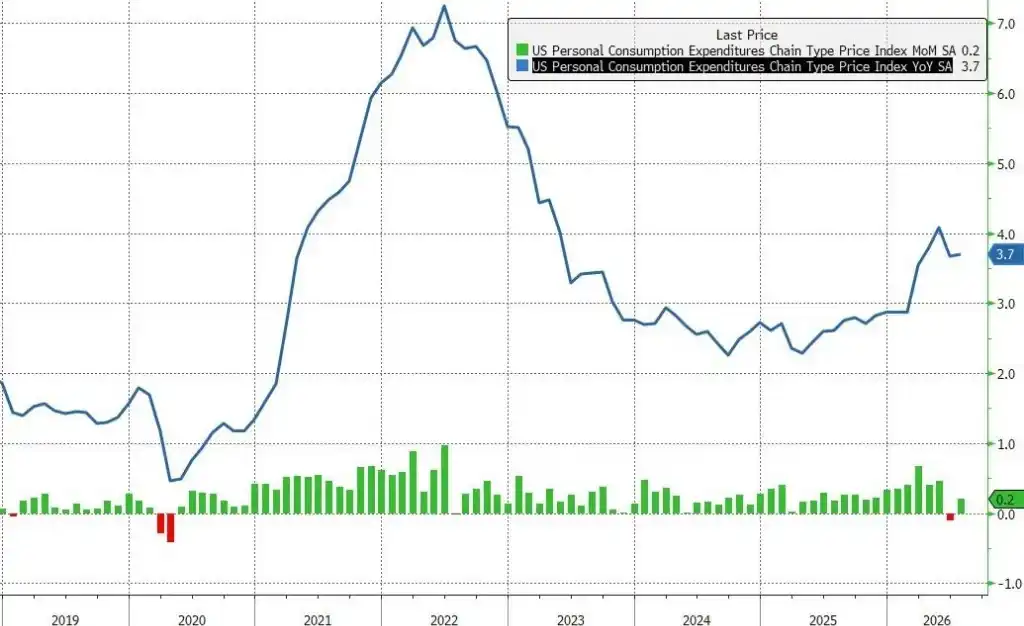
Data released by the U.S. Commerce Department's Bureau of Economic Analysis on Wednesday showed that the Personal Consumption Expenditures (PCE) price index rose 0.2% month-over-month in July, above market expectations of 0.1%, with the year-over-year increase holding steady at 3.7%. The core PCE index, which excludes food and energy, also rose 0.2% month-over-month, with the year-over-year growth rate unchanged at 3.3%, meeting market expectations. Meanwhile, inflation-adjusted real personal consumption expenditures were flat compared to the previous month, following strong growth recorded in both May and June.
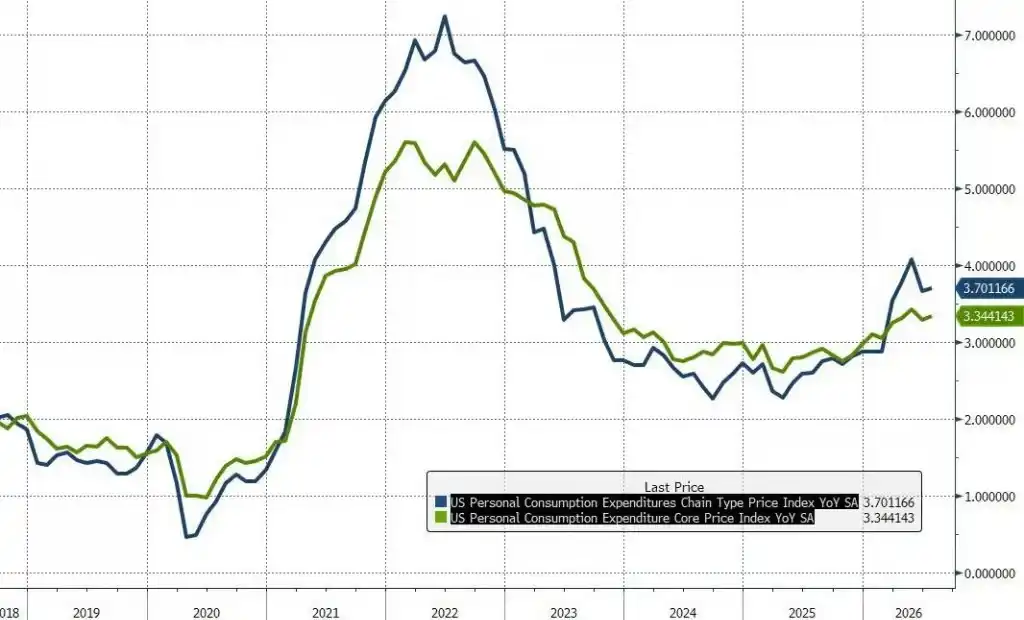
This data corroborates a series of recent economic reports, suggesting signs of cooling in the U.S. economy in July following robust expansion in early summer. For Federal Reserve officials, this batch of data will further support arguments for pausing interest rate hikes, but core PCE remains well above the Fed's 2% policy target, indicating inflation pressures have not fully subsided.
The market's focus now shifts to the annual central bankers' conference in Jackson Hole, Wyoming, on Friday. Investors will closely watch remarks from Fed Chairman Wash for the latest indications on how to address persistent inflation.
Core Inflation Meets Expectations but Remains Significantly Above Fed Target
The year-over-year growth rate of the core PCE index held steady at 3.3% in July, unchanged from June and in line with market expectations, indicating underlying inflation pressure is stabilizing. However, the overall PCE price index, the Fed's preferred inflation gauge, remained at a high 3.7% year-over-year, still a considerable distance from the central bank's 2% policy target.
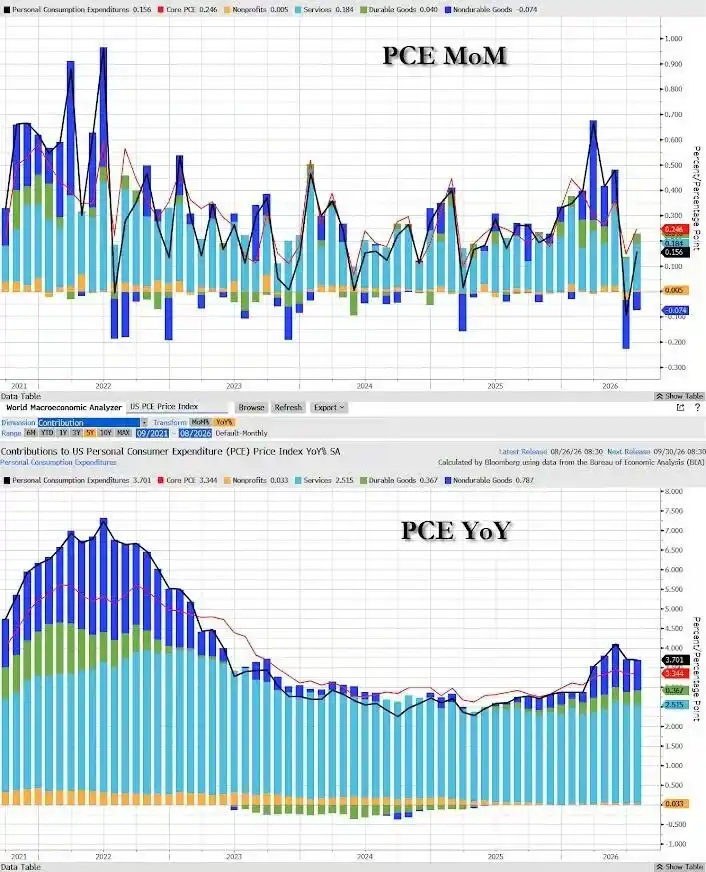
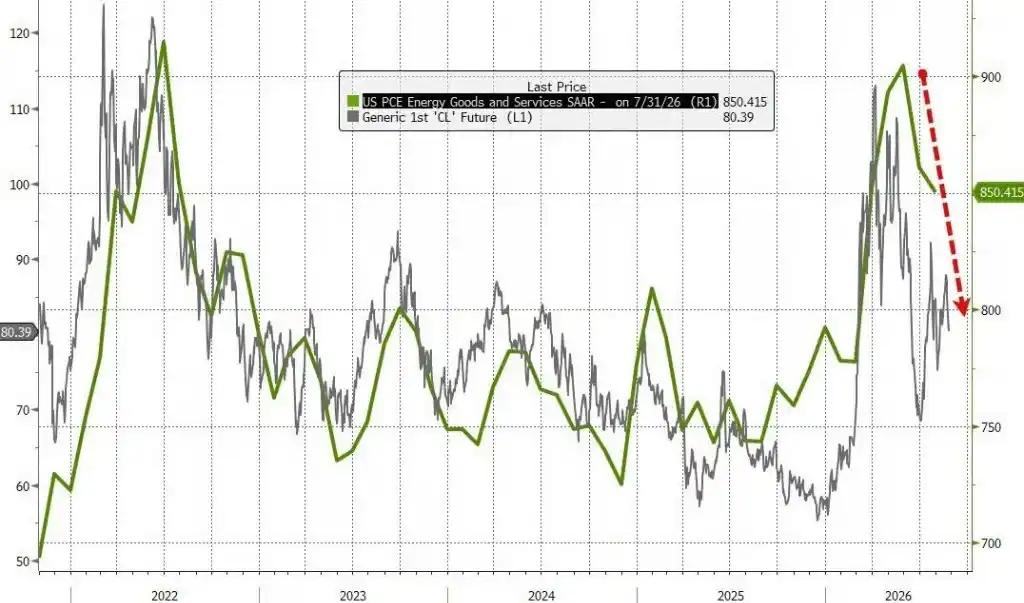
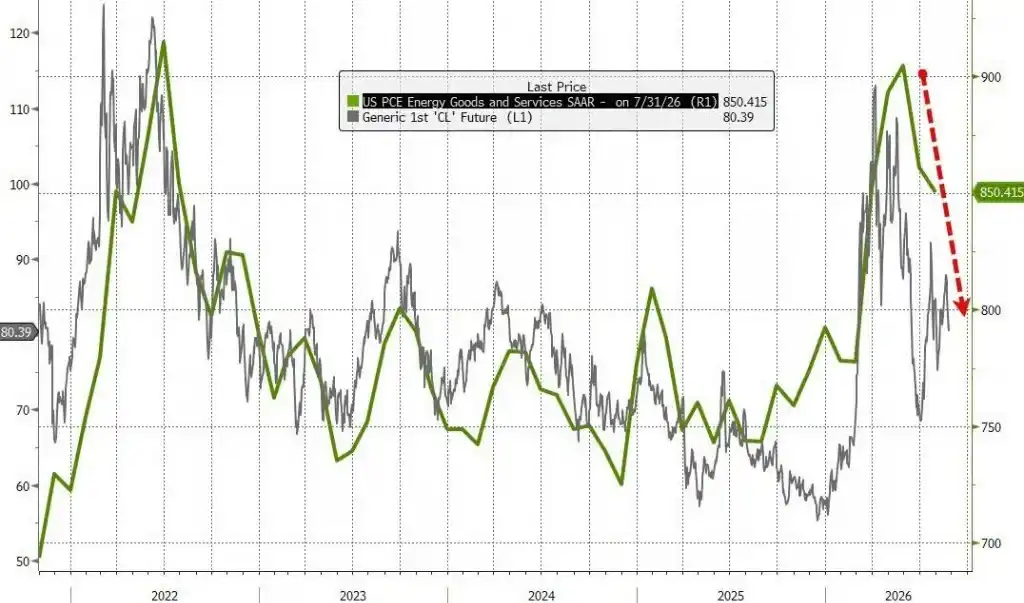
Breaking down the components, prices for nondurable goods continued their downward trend in July, while falling crude oil prices also weighed on the energy component of PCE.
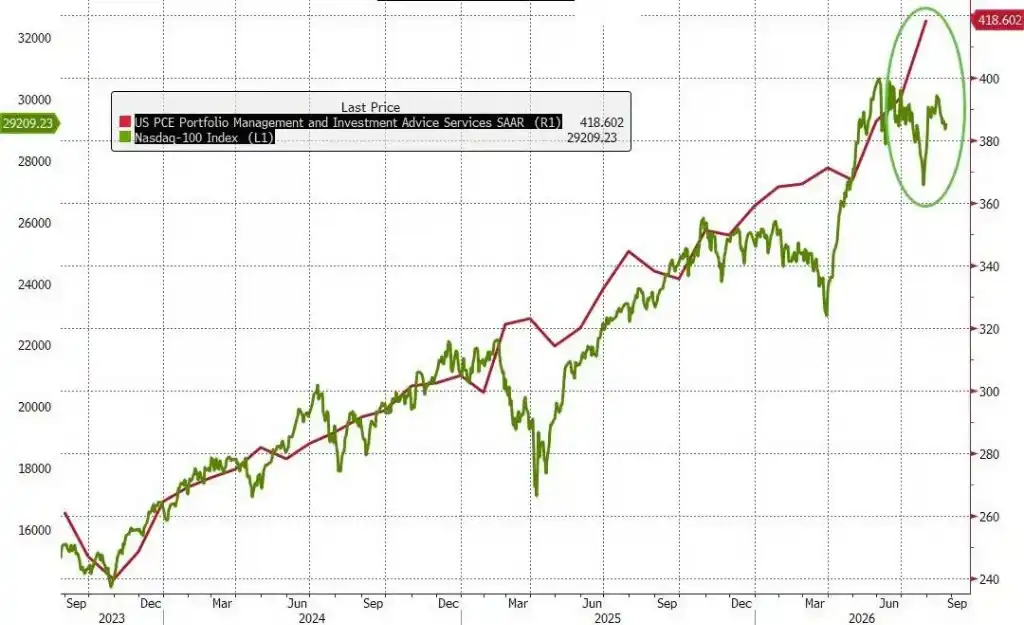
Notably, a significant rise in the cost of securities investment portfolio management services became a structural factor pushing overall prices higher, correlating with stock market performance.
Nominal Consumption Grows, Real Purchasing Power Under Pressure
Nominal personal consumption expenditures rose 0.2% month-over-month in July, while personal income grew 0.4% month-over-month, both slightly exceeding expectations.
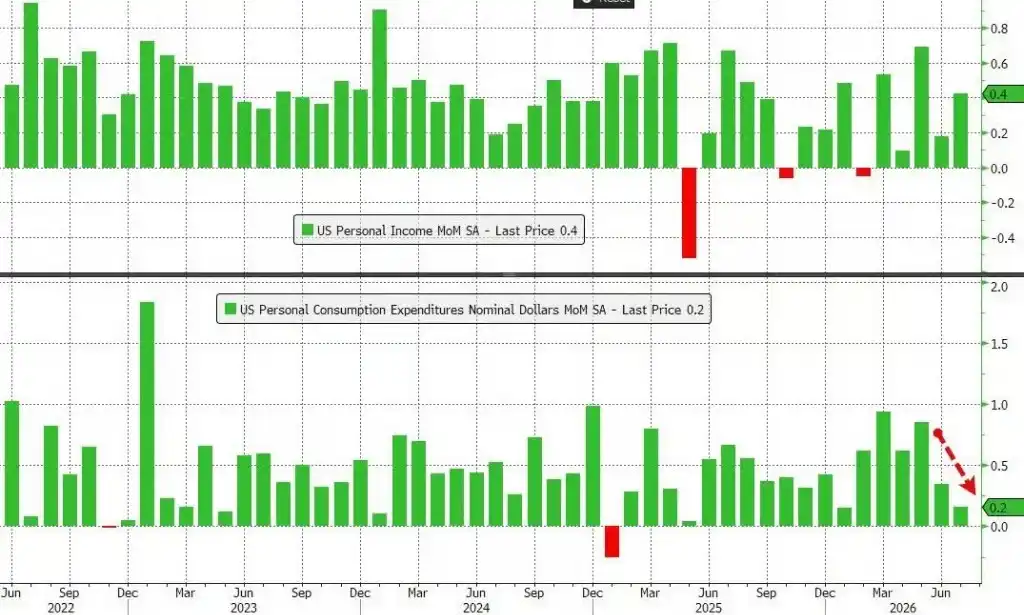
However, inflation-adjusted real consumption expenditures were flat month-over-month, reflecting how price pressures are eroding real purchasing power.
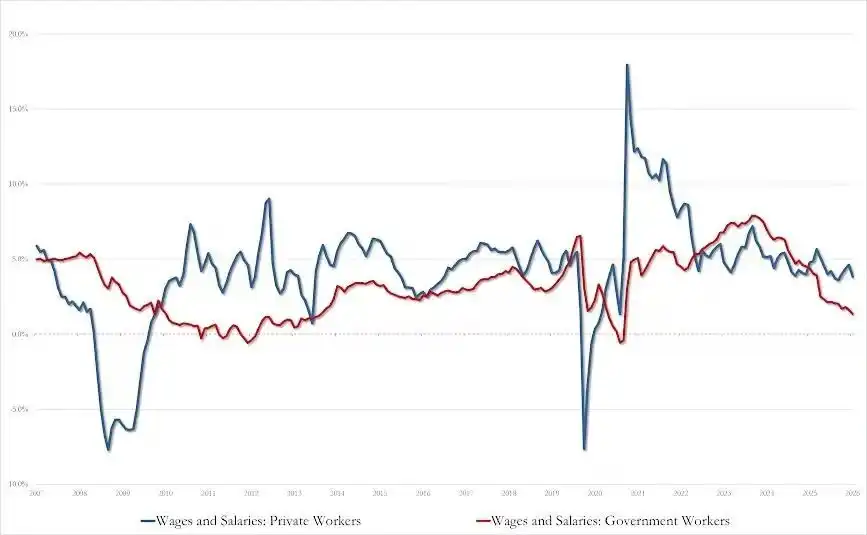
The annual growth rate of income showed a general slowdown. Among the components, wage growth for government employees decelerated to 1.4% year-over-year, the lowest since March 2021; wage growth in the private sector fell from 4.6% to 3.8% year-over-year, the lowest since March 2026.
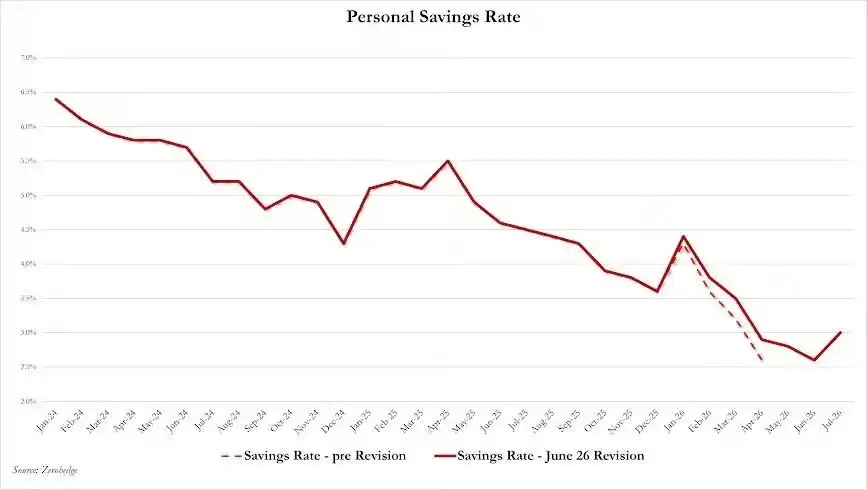
The slowdown in income growth may be prompting consumers to become more cautious—the savings rate saw a noticeable rebound in July, rising from its previous four-year low.
Jackson Hole Speech in Market Spotlight
Against this data backdrop, market attention turns to Wash's remarks at the Jackson Hole symposium this Friday. Investors hope to gain clarity on how the Fed will weigh its monetary policy path as inflation persists above target.
The current PCE data, along with previously released CPI and PPI figures, paint a picture of cooling but not yet fully vanquished inflation, providing Wash with some narrative space. Meanwhile, another report released the same day showed the U.S. second-quarter GDP growth rate was unchanged from the preliminary estimate, but detailed data pointed to stronger consumer spending, adding some support to the economic outlook.