US-EU Tariff War Wipes Billions — Start of Crypto Winter 2026?

ccn.comPublished on 2026-01-19Last updated on 2026-01-19

Abstract

In mid-January 2026, U.S. President Donald Trump announced new tariffs on eight European nations, starting at 10% and potentially rising to 25% by June unless Denmark negotiates the sale of Greenland. This triggered a sharp crypto market sell-off, wiping billions in value. Bitcoin fell from near $97,000 to below $93,000, while altcoins saw deeper losses of 9–20%. Over $871 million in leveraged positions were liquidated. Analysts are divided on whether this marks the start of a prolonged "crypto winter" or is a temporary macro shock. Some point to historical post-halving weakness and fading institutional optimism, suggesting Bitcoin could drop to $67,000–$75,000. Others argue growing institutional adoption and Bitcoin’s "digital gold" role may cushion a deeper downturn. The event highlighted crypto’s sensitivity to geopolitical risk and leveraged market fragility. Recovery remains uncertain as trade tensions and regulatory delays persist.

Key Takeaways

  • U.S.–EU tariff threats tied to Greenland triggered a sharp risk-off move, wiping billions from crypto markets.
  • Bitcoin slid below $93,000 as leveraged positions unraveled and altcoins suffered deeper losses.
  • Analysts remain divided on whether this signals the start of a “crypto winter” or a temporary macro-driven shock.

The crypto market entered 2026 with optimism still lingering from late last year. That confidence didn’t last long.

Over the weekend, a sudden surge in geopolitical tension sent shockwaves through global markets, triggering the first major crypto flash crash of the year.

Billions of dollars were wiped out in a matter of hours as leveraged positions unraveled, with altcoins bearing the brunt of the damage.

At the center of the sell-off was a familiar catalyst: trade-war fears sparked by fresh tariff threats from United States President Donald Trump.

Try Our Recommended Crypto Exchanges
Sponsored
Disclosure
We sometimes use affiliate links in our content, when clicking on those we might receive a commission at no extra cost to you. By using this website you agree to our terms and conditions and privacy policy.
"}' data-trk="68df7fd8872238d510dfbf06" href="https://clicks.pipaffiliates.com/c?c=1104900&l=en&p=1" rel="nofollow" target="_blank">
XM.com"}' data-trk="68df7fd8872238d510dfbf06" href="https://clicks.pipaffiliates.com/c?c=1104900&l=en&p=1" rel="nofollow" target="_blank">

XM.com

promotions
Get 100% Bonus up to $100 on your first Deposit."}' data-trk="68df7fd8872238d510dfbf06" href="https://clicks.pipaffiliates.com/c?c=1104900&l=en&p=1" rel="nofollow" target="_blank"> Get 100% Bonus up to $100 on your first Deposit.
Coins
28
  • Bitcoin
  • Ethereum
  • Ripple
  • Solana
  • Dogecoin
  • Cardano
  • Litecoin
  • Stellar
  • Bitcoin Cash
  • Avalanche
  • Shiba Inu
  • Polkadot
  • Chainlink
  • Enjin Coin
  • Polygon Ecosystem Token
  • SushiSwap
  • Ethereum Classic
  • Uniswap
  • Filecoin
  • Axie Infinity
  • Aave
  • Algorand
  • Tezos
  • Synthetix
  • The Sandbox
  • The Graph
  • Internet Computer
  • Basic Attention Token
  • APEcoin
  • Arbitrum
  • NEAR Protocol
  • Storj
  • Cosmos
No result
Claim Offer
"}' data-trk="6899b9831836d97539c51aa6" href="https://www.bitunix.com/" rel="nofollow" target="_blank">
Bitunix"}' data-trk="6899b9831836d97539c51aa6" href="https://www.bitunix.com/" rel="nofollow" target="_blank">

Bitunix

promotions
Receive up to $100,000 worth of exclusive gifts for newcomers upon registration."}' data-trk="6899b9831836d97539c51aa6" href="https://www.bitunix.com/" rel="nofollow" target="_blank"> Receive up to $100,000 worth of exclusive gifts for newcomers upon registration.
Coins
151
  • Bitcoin
  • Ethereum
  • Tether
  • USD Coin
  • Solana
  • Ripple
  • Dogecoin
  • Cardano
  • Toncoin
  • Shiba Inu
  • Avalanche
  • TRON
  • Chainlink
  • Polygon Matic
  • Polkadot
  • Wrapped Bitcoin
  • Litecoin
  • Dai
  • NEAR Protocol
  • Bitcoin Cash
  • Stellar
  • Cosmos
  • Filecoin
  • Ethereum Classic
  • Aptos
  • Hedera Hashgraph
  • Immutable
  • Optimism
  • Arbitrum
  • VeChain
  • The Sandbox
  • Decentraland
  • Axie Infinity
  • Injective Protocol
  • Render
  • The Graph
  • Maker
  • Aave
  • Chiliz
  • Helium
  • PAX Gold
  • Compound
  • Lido DAO Token
  • Sui
  • Conflux Network
  • Lido Staked ETH
  • OKB
  • Uniswap
  • Pepe
  • Ondo
  • Mantle
  • First Digital USD
  • XDC Network
  • Artificial Superintelligence Alliance
  • Jupiter
  • Quant
  • Worldcoin
  • Bonk
  • Tether Gold
  • JITO
  • JasmyCoin
  • Core
  • Floki Inu
  • Ethereum Name Service
  • SushiSwap
  • 1inch Network
  • Tezos
  • Algorand
  • Flow
  • Trust Wallet Token
  • Curve DAO Token
  • MultiversX
  • Basic Attention Token
  • Enjin Coin
  • Ethena
  • Ethena Staked USDe
  • Audius
  • Alchemy Pay
  • Arkham
  • API3
  • Bounce Token
  • Altlayer
  • Aergo
  • Amp
  • Aevo
  • Ankr
  • Axelar
  • Alpaca Finance
  • Blur
  • Biconomy
  • Tranchess
  • Celer Network
  • Shentu
  • Civic
  • Convex Finance
  • Cartesi
  • Cyber
  • COTI
  • DIA
  • dYdX
  • ether.fi
  • FLUX
  • Ampleforth
  • Golem
  • Holo
  • Illuvium
  • JUST
  • Livepeer
  • Memecoin
  • Manta Network
  • Treasure
  • Mask Network
  • Origin Protocol
  • ORDI
  • Ontology
  • Phala Network
  • Pendle
  • Portal
  • Pyth Network
  • ConstitutionDAO
  • iExec RLC
  • Reserve Rights
  • Ravencoin
  • Storj
  • Status
  • Spell Token
  • Sun (New)
  • SuperVerse
  • Tellor
  • LayerZero
  • Scroll
  • Usual
  • Eigenlayer
  • Hamster Kombat
  • Catizen
  • Berachain
  • KAITO
  • Pudgy Penguins
  • Solayer
  • Bio Protocol
  • ChainGPT
  • Cookie DAO
  • Solv Protocol
  • Movement
  • DeXe
  • Nexo
  • Hyperliquid
  • STEPN
  • Synthetix
  • Neo
  • APEcoin
  • Gala
  • Internet Computer
  • Pi Network
  • IoTex
  • Build'N'Build
No result
Claim Offer
"}' data-trk="67adf8d4f12aaec7e4808bf5" href="https://bonus.bitget.com/CCN12" rel="nofollow" target="_blank">
Bitget"}' data-trk="67adf8d4f12aaec7e4808bf5" href="https://bonus.bitget.com/CCN12" rel="nofollow" target="_blank">

Bitget

promotions
New user rewards up to 6,200 USDT."}' data-trk="67adf8d4f12aaec7e4808bf5" href="https://bonus.bitget.com/CCN12" rel="nofollow" target="_blank"> New user rewards up to 6,200 USDT.
Coins
88
  • Bitcoin
  • Ethereum
  • Tether
  • Litecoin
  • Bitcoin Cash
  • TRON
  • Ripple
  • Cardano
  • Binance USD
  • USD Coin
  • Polkadot
  • Shiba Inu
  • Basic Attention Token
  • Qtum
  • Ethereum Classic
  • Chainlink
  • Solana
  • Polygon Matic
  • Cosmos
  • Wrapped Bitcoin
  • PancakeSwap
  • The Sandbox
  • Storj
  • iExec RLC
  • Bancor
  • Uniswap
  • Enjin Coin
  • 1inch Network
  • Chiliz
  • Aave
  • Synthetix
  • Maker
  • Compound
  • Theta Network
  • Celo
  • Curve DAO Token
  • Decentraland
  • JUST
  • Axie Infinity
  • Gala
  • Internet Computer
  • The Graph
  • Filecoin
  • dYdX
  • Mask Network
  • Lido DAO Token
  • Reserve Rights
  • Chromia
  • Ankr
  • Ocean Protocol
  • Adventure Gold
  • Origin Protocol
  • Celer Network
  • NKN
  • Bitget Token
  • Alchemix
  • Immutable
  • Ethereum Name Service
  • Avalanche
  • Zilliqa
  • JasmyCoin
  • Toncoin
  • Convex Finance
  • Spell Token
  • Holo
  • Render Token
  • SushiSwap
  • MetisDAO
  • Audius
  • Illuvium
  • ARPA Chain
  • Osmosis
  • Fantom
  • Neo
  • Arweave
  • Algorand
  • Kusama
  • XDC Network
  • APEcoin
  • MultiversX
  • THORChain
  • NEAR Protocol
  • Nexo
  • Amp
  • Livepeer
  • PAX Gold
  • TrueUSD
  • BitTorrent
  • Golem
  • FLUX
  • Helium
  • Dai
  • Build'N'Build
No result
Claim Offer
Explore All Offers

Tariff Threats Spark a Market Rout

In mid-January 2026, President Trump announced plans to impose a new round of tariffs on imports from eight European countries — Denmark, Norway, Sweden, France, Germany, the United Kingdom, the Netherlands, and Finland — beginning Feb. 1.

The proposed tariffs would start at 10% and rise to 25% by June 1, unless Denmark agrees to negotiate the potential U.S. purchase of Greenland.

Markets reacted swiftly. Between Jan. 18 and 19, crypto prices fell sharply as traders moved to de-risk.

Bitcoin (BTC) slid from recent highs near $97,000 to below $93,000, briefly erasing billions in market capitalization.

Altcoins fared even worse. Excluding Ethereum, many major tokens posted losses ranging from 9% to more than 20% over 24 hours, pushing several assets to new monthly lows.

The broader crypto market cap dropped toward $3.13 trillion as risk-off sentiment spread.

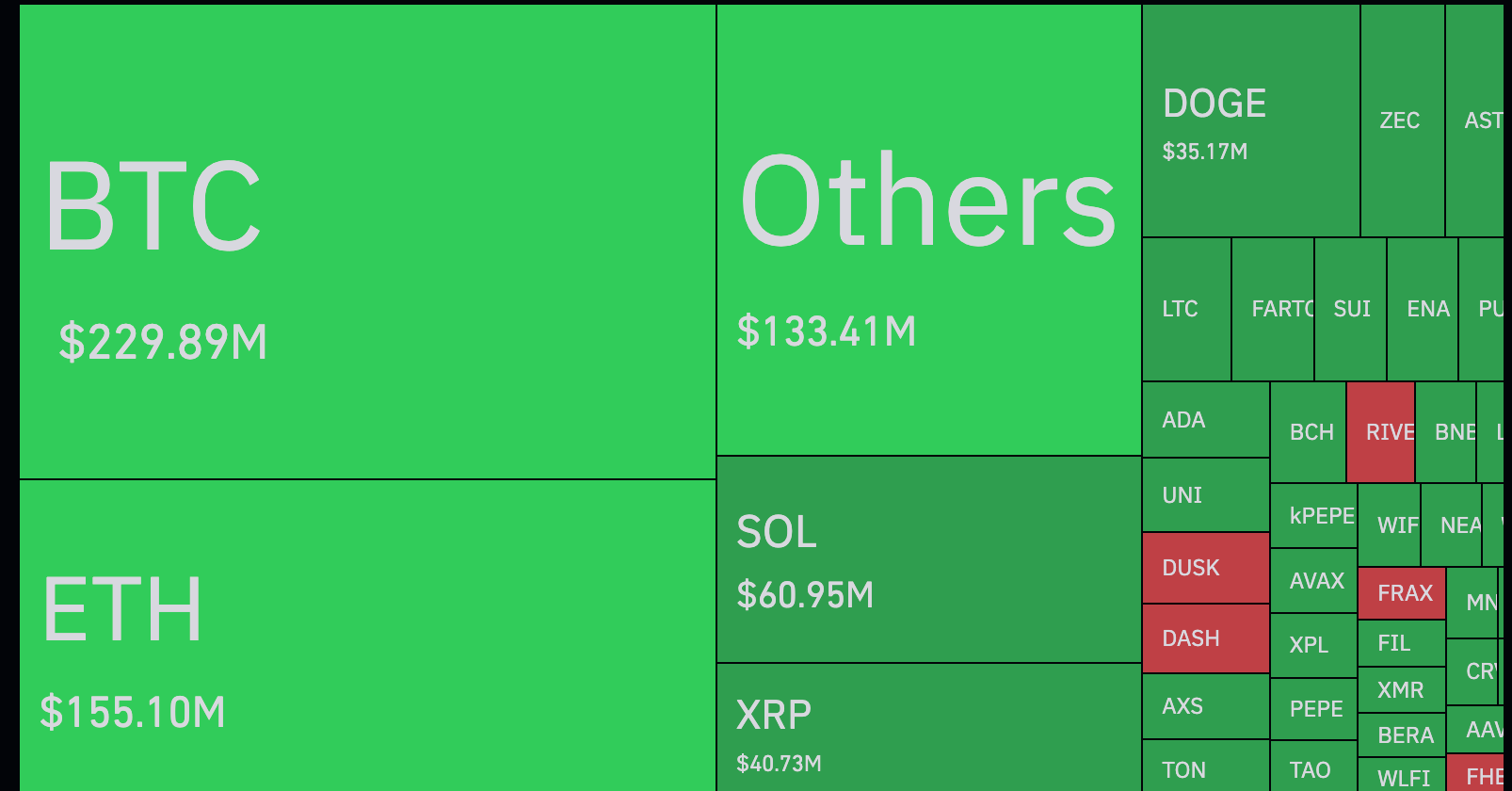
Data from CoinGlass shows more than $871 million in liquidations during the sell-off.

Bitcoin long positions accounted for roughly $229 million, while altcoin traders absorbed the bulk of the damage, with about $641 million wiped out as positions were forcibly closed.

Crypto liquidation heatmap. Source: Coinglass.

Analysts pointed to a mix of macro uncertainty and existing market fragility.

Trade tensions revived fears of a prolonged economic slowdown, while crypto’s tendency to correlate with equities during periods of stress amplified the sell-off.

Ongoing delays in U.S. crypto market structure legislation and cooling institutional inflows added further pressure.

By Monday morning, Bitcoin and Ethereum had clawed back nearly half of their losses. Altcoins, however, struggled to recover.

Temporary Shock or Start of Crypto Winter 2026?

The sharp pullback has revived a question that has hovered over the market since late 2025: Is crypto heading into another prolonged winter?

January has already delivered echoes of last year’s tariff-driven volatility, which culminated in the October crash that wiped trillions from global crypto valuations.

Now, with many assets still below their 2025 highs, renewed trade wars and rising geopolitical tensions have reignited fears of a “crypto winter” in 2026.

Bearish analysts point to familiar warning signs. Post-halving years have historically brought weaker performance, and several tailwinds from 2025.

Making matters worse, Trump-related optimism and expectations of looser financial conditions have begun to fade.

If macro pressure persists, some see Bitcoin revisiting the $67,000–$75,000 range in a slower, more institutionally driven downturn.

Others remain unconvinced that a prolonged winter is imminent.

Supporters of the bullish case argue that the traditional four-year cycle is losing relevance as institutional participation deepens.

They point to Bitcoin’s growing role as a form of “digital gold,” supported by ETF inflows and more resilient on-chain activity than in previous cycles.

For now, the U.S.–EU tariff dispute appears to have acted as a trigger rather than a root cause. ‘

The market’s reaction was sharp, but it was amplified by existing caution and leverage rather than a collapse in fundamentals.

Whether this flash crash marks the start of a longer downturn or simply another episode of macro-driven volatility may become clearer in the weeks ahead — especially as trade negotiations, monetary policy expectations, and regulatory developments continue to unfold.

Top Picks for Bitcoin
  • Best Exchanges for Bitcoin Get A Great Offer When You Join These Exchanges
  • Buy Bitcoin Fast & Easy How To Buy Bitcoin With a Credit Card Now
  • Best Online Casinos for Bitcoin See Our Picks for the Best Crypto Gambling Sites

Related Questions

QWhat was the main geopolitical event that caused the crypto market crash in January 2026?

AThe main event was U.S. President Donald Trump's announcement of plans to impose new tariffs, starting at 10% and rising to 25% by June 1, on imports from eight European countries, contingent on Denmark's refusal to negotiate the potential U.S. purchase of Greenland.

QHow much value was liquidated from the crypto market during the sell-off, and which segment suffered the most?

AOver $871 million was liquidated during the sell-off. Altcoin traders absorbed the bulk of the damage, with about $641 million wiped out, while Bitcoin long positions accounted for roughly $229 million.

QWhat was Bitcoin's price movement during the crash, and what level did it briefly fall below?

ABitcoin slid from recent highs near $97,000 to below $93,000, briefly erasing billions in market capitalization.

QAccording to the article, what are the two opposing views among analysts regarding the market's future?

AAnalysts are divided. Some believe the crash could signal the start of a prolonged 'crypto winter,' citing historical post-halving weakness and fading macro tailwinds. Others argue the traditional cycle is less relevant due to deeper institutional participation, viewing Bitcoin as 'digital gold' supported by ETF inflows.

QWhich specific European countries were targeted by the proposed U.S. tariffs mentioned in the article?

AThe eight European countries targeted were Denmark, Norway, Sweden, France, Germany, the United Kingdom, the Netherlands, and Finland.

Related Reads

7 Months After the Collapse of Huiwang, Southeast Asia's Escrow Platforms Undergo a Major Reshuffle

Following the collapse of Huione Pay—dubbed the "Alipay of Southeast Asia"—seven months ago, the region's underground financial guarantee platform sector is undergoing a significant reshuffle. This power vacuum has been swiftly filled by emerging platforms such as XinBi, Tiger/Navigator, JinBei (renamed JinBo), Dali/Tiancheng, and FullyLight. These platforms, operating largely via Telegram and offering services like escrow for illicit transactions, have absorbed the vast user base and markets left behind by Huione. While positioning themselves as "trust intermediaries," their primary clientele consists of networks involved in online scams, money laundering, illegal gambling, and even human trafficking. For instance, the Tiger/Navigator platform explicitly provides "escrow" services for kidnapping-for-ransom operations ("强押车交易"). Data underscores the immense scale: Huione alone processed over $103 billion in cryptocurrency payments and facilitated over $31 billion through its escrow market before its downfall, linking it to Cambodia's notorious Prince Group. Since its collapse, competitors have seen explosive growth. For example, the XinBi platform has accumulated over $1.6 billion in total USDT revenue, while platforms like NewPay, OkPay (under Dali), and FullyLight Wallet collectively processed over $4.8 billion in USDT in a single year. This ecosystem thrives in regions like Cambodia and Myanmar, where regulatory gaps allow these platforms to act as critical financial infrastructure for sprawling cybercrime industries, from scam compounds to online casinos. The article concludes that the moniker "Southeast Asian Alipay" is a misnomer, obscuring the platforms' fundamental role in enabling serious criminal enterprises rather than representing legitimate financial innovation.

Odaily星球日报43m ago

7 Months After the Collapse of Huiwang, Southeast Asia's Escrow Platforms Undergo a Major Reshuffle

Odaily星球日报43m ago

The Changing Landscape: What Are Crypto VCs Experiencing?

Title: The Shifting Landscape of Crypto Venture Capital The era of dedicated crypto venture capital funds is undergoing a significant transformation. Once essential for navigating the sector's complexity and high risk, these specialized funds are now facing an identity crisis as the market matures. This shift mirrors historical patterns in other specialized investment classes like cleantech and SPACs, where initial information advantages dissipate as technologies become mainstream and integrated into existing industry frameworks. The article argues that crypto is reaching a critical inflection point, transitioning from a "building phase" to an "integration phase." Major players like Stripe, BlackRock, and Visa now engage with crypto not for its novel mechanics but as a foundational financial infrastructure. Their needs—regulatory compliance, banking partnerships, distribution channels—align with traditional fintech, a domain easily understood by large, generalist funds like Sequoia and Founders Fund. This evolution creates a "barbell effect" within the VC landscape. On one end are massive, diversified platforms that can incorporate crypto as one vertical among many. On the other are small, nimble funds focused on niche, experimental projects. The middle ground—medium-sized dedicated crypto funds—is being squeezed out. Their typical fund size makes it impossible to generate sufficient returns solely from early-stage crypto bets, yet they cannot compete with giants for later-stage deals. Consequently, leading crypto-native firms like Paradigm and Framework Ventures are expanding into AI, robotics, and other sectors, driven partly by LP pressure for better returns amid a broader VC DPI crisis. Others, like Dragonfly and a16z, have narrowed their crypto focus predominantly to financial infrastructure like stablecoins, reframing the sector's core narrative. For crypto entrepreneurs, this consolidation presents challenges. While generalist funds offer larger checks and broader resources, crypto projects now compete fiercely with AI for attention and capital within these firms. Furthermore, the long-term, non-commercial foundational work that built the ecosystem—funded by dedicated crypto VCs—is less likely to attract generalist capital focused on direct returns. The conclusion is that "crypto investor" as a standalone category is becoming obsolete, akin to "internet investor." Crypto is becoming a baseline infrastructure layer. The future will see a barbell structure: large-scale growth financing handled by generalist funds, while pioneering, speculative projects are funded by small, specialized vehicles. The dedicated crypto funds of the 2017-2021 boom, which incubated core infrastructure, are giving way to this new, bifurcated reality.

Foresight News1h ago

The Changing Landscape: What Are Crypto VCs Experiencing?

Foresight News1h ago

As Consensus Accelerates, What Are Young Investors Betting On?

Title: As Consensus Forms Faster, What Are Young Investors Betting On? In the rapid evolution of tech investment, a new generation of young investors is navigating a landscape where AI, robotics, commercial aerospace, and quantum computing are advancing simultaneously. Traditional investment logic based on financial models is giving way to a need for deep technical understanding and the ability to act before industry consensus forms. An analysis of trends from the "WAIC FUTURE TECH" list of young investment leaders reveals key shifts in focus. The first major trend is the movement of AI from the digital screen into the physical world. Investment is shifting from large language models and chatbots towards embodied AI, robotics, AI hardware, and edge computing. While demonstrations generate excitement, the real challenge lies in achieving scalable, reliable, and cost-effective delivery in complex real-world environments like factories and logistics. Success depends not just on algorithms but on the integration of sensors, actuators, and control systems. Second, the competitive focus for large models is moving beyond raw capability toward building an "intelligence flywheel." The goal is to create self-reinforcing systems where user interaction generates data, improving the model, which in turn enhances the user experience and attracts more engagement. Companies that successfully embed AI into workflows to create these closed-loop systems can build lasting value that isn't easily erased by the next model upgrade. Third, facing a potential bottleneck in high-quality human-generated data, investors are looking at new underlying technologies. Reinforcement learning and self-play, as demonstrated by AlphaGo Zero, offer paths for AI to generate its own experience. Scientific foundation models, which aim to build general AI capabilities for fields like life sciences and materials discovery, represent a non-consensus direction that could unlock new frontiers of knowledge and data. Finally, in deep-tech areas like quantum computing, commercial aerospace, and space-based infrastructure, patient capital is essential. These fields have long, uncertain development and validation cycles involving complex engineering, supply chains, and regulations. Investment here requires a long-term view, focusing on foundational team capabilities and the eventual emergence of market demand, even if commercial returns are distant. Collectively, these trends illustrate how young investors are adapting to a new era. They are learning to make earlier, technically-informed judgments, balance hype with real-world viability, and provide the patient capital needed to build the deep-tech foundations of the future.

marsbit1h ago

As Consensus Accelerates, What Are Young Investors Betting On?

marsbit1h ago

Trading

Spot
活动图片