Key Takeaways
- U.S.–EU tariff threats tied to Greenland triggered a sharp risk-off move, wiping billions from crypto markets.
- Bitcoin slid below $93,000 as leveraged positions unraveled and altcoins suffered deeper losses.
- Analysts remain divided on whether this signals the start of a “crypto winter” or a temporary macro-driven shock.
The crypto market entered 2026 with optimism still lingering from late last year. That confidence didn’t last long.
Over the weekend, a sudden surge in geopolitical tension sent shockwaves through global markets, triggering the first major crypto flash crash of the year.
Billions of dollars were wiped out in a matter of hours as leveraged positions unraveled, with altcoins bearing the brunt of the damage.
At the center of the sell-off was a familiar catalyst: trade-war fears sparked by fresh tariff threats from United States President Donald Trump.

XM.com


Bitunix


























































































Bitget
















Tariff Threats Spark a Market Rout
In mid-January 2026, President Trump announced plans to impose a new round of tariffs on imports from eight European countries — Denmark, Norway, Sweden, France, Germany, the United Kingdom, the Netherlands, and Finland — beginning Feb. 1.
The proposed tariffs would start at 10% and rise to 25% by June 1, unless Denmark agrees to negotiate the potential U.S. purchase of Greenland.
Markets reacted swiftly. Between Jan. 18 and 19, crypto prices fell sharply as traders moved to de-risk.
Bitcoin (BTC) slid from recent highs near $97,000 to below $93,000, briefly erasing billions in market capitalization.
Altcoins fared even worse. Excluding Ethereum, many major tokens posted losses ranging from 9% to more than 20% over 24 hours, pushing several assets to new monthly lows.
The broader crypto market cap dropped toward $3.13 trillion as risk-off sentiment spread.
Data from CoinGlass shows more than $871 million in liquidations during the sell-off.
Bitcoin long positions accounted for roughly $229 million, while altcoin traders absorbed the bulk of the damage, with about $641 million wiped out as positions were forcibly closed.
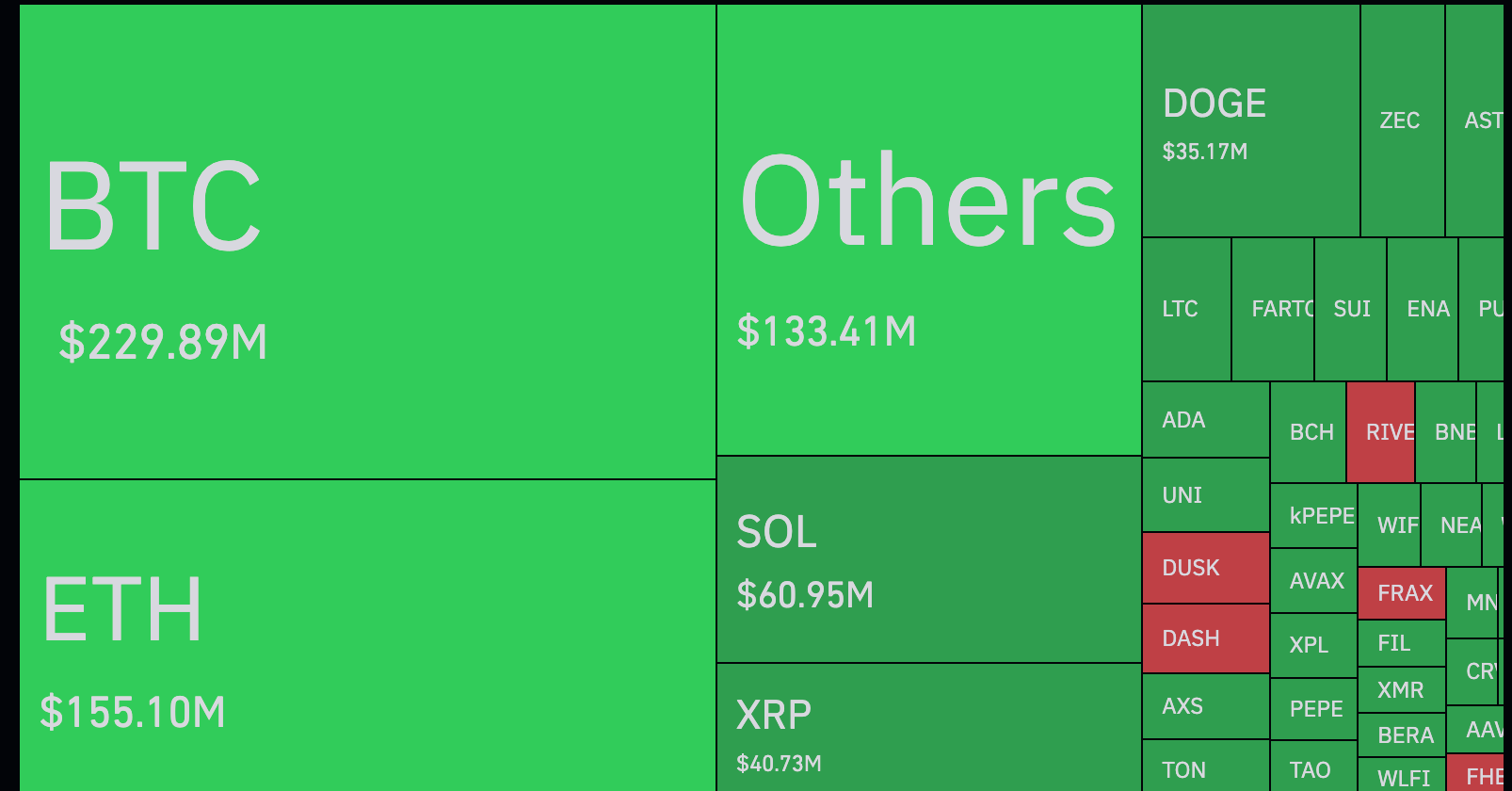
Analysts pointed to a mix of macro uncertainty and existing market fragility.
Trade tensions revived fears of a prolonged economic slowdown, while crypto’s tendency to correlate with equities during periods of stress amplified the sell-off.
Ongoing delays in U.S. crypto market structure legislation and cooling institutional inflows added further pressure.
By Monday morning, Bitcoin and Ethereum had clawed back nearly half of their losses. Altcoins, however, struggled to recover.
Temporary Shock or Start of Crypto Winter 2026?
The sharp pullback has revived a question that has hovered over the market since late 2025: Is crypto heading into another prolonged winter?
January has already delivered echoes of last year’s tariff-driven volatility, which culminated in the October crash that wiped trillions from global crypto valuations.
Now, with many assets still below their 2025 highs, renewed trade wars and rising geopolitical tensions have reignited fears of a “crypto winter” in 2026.
Bearish analysts point to familiar warning signs. Post-halving years have historically brought weaker performance, and several tailwinds from 2025.
Making matters worse, Trump-related optimism and expectations of looser financial conditions have begun to fade.
If macro pressure persists, some see Bitcoin revisiting the $67,000–$75,000 range in a slower, more institutionally driven downturn.
Others remain unconvinced that a prolonged winter is imminent.
Supporters of the bullish case argue that the traditional four-year cycle is losing relevance as institutional participation deepens.
They point to Bitcoin’s growing role as a form of “digital gold,” supported by ETF inflows and more resilient on-chain activity than in previous cycles.
For now, the U.S.–EU tariff dispute appears to have acted as a trigger rather than a root cause. ‘
The market’s reaction was sharp, but it was amplified by existing caution and leverage rather than a collapse in fundamentals.
Whether this flash crash marks the start of a longer downturn or simply another episode of macro-driven volatility may become clearer in the weeks ahead — especially as trade negotiations, monetary policy expectations, and regulatory developments continue to unfold.






