Trump’s Dual Pressure: When the Iran Deal Meets the Midterm Elections

marsbitPublished on 2026-05-25Last updated on 2026-05-25

Abstract

U.S. President Donald Trump’s efforts to negotiate a deal with Iran are triggering a political backlash within his own Republican Party, as the approach of midterm elections intensifies internal divisions. Reports of a potential agreement—involving a temporary ceasefire, phased sanctions relief, and the unfreezing of Iranian assets in exchange for discussions on Tehran diluting or transferring its stockpile of highly enriched uranium—have drawn sharp criticism from GOP hawks. Key allies like Senators Lindsey Graham and Ted Cruz warned that such concessions could allow Iran to recuperate, undermine recent U.S. military gains, and ultimately strengthen a hostile regime. The dispute highlights a broader political struggle for Trump, who must reconcile his "America First" posture with diplomatic compromise while facing a tough electoral landscape. With Republicans fighting to maintain control of Congress and Trump’s approval ratings declining, the Iran deal has quickly become a test of party loyalty and perceived toughness. Public sparring between Trump aides and critics—including former Secretary of State Mike Pompeo—underscores the internal pressure. While Secretary of State Marco Rubio defended Trump’s historically hardline stance, skeptics like Senator Thom Tillis questioned the logic of any deal that leaves nuclear materials in Iran. The outcome now hinges on whether Trump can persuade his party’s hardliners to accept a negotiated exit.

Editor's Note: Trump is attempting to find an exit for the Iran conflict through negotiations, but it has first triggered a political backlash within the Republican Party.

Surrounding this yet-to-be-officially-announced deal, hawkish Republicans fear that a ceasefire, sanctions relief, and the unfreezing of assets would give Iran breathing room and even undermine the gains from previous U.S. military actions. For Trump, this is not only a diplomatic negotiation but also an intra-party struggle over policy direction: he must prove his toughness while avoiding further escalation of the war.

More notably, the divisions within the Republican Party over Iran are now intertwining with domestic U.S. electoral pressures. When war, energy, the economy, and Congressional election prospects all become political variables, any foreign agreement is no longer just a diplomatic decision. It is quickly transformed into a test of party loyalty, a show of strength, and voter sentiment. Whether Trump can persuade the hawks to accept diplomatic compromise under the 'America First' narrative will be key to whether this deal materializes.

The following is the original text:
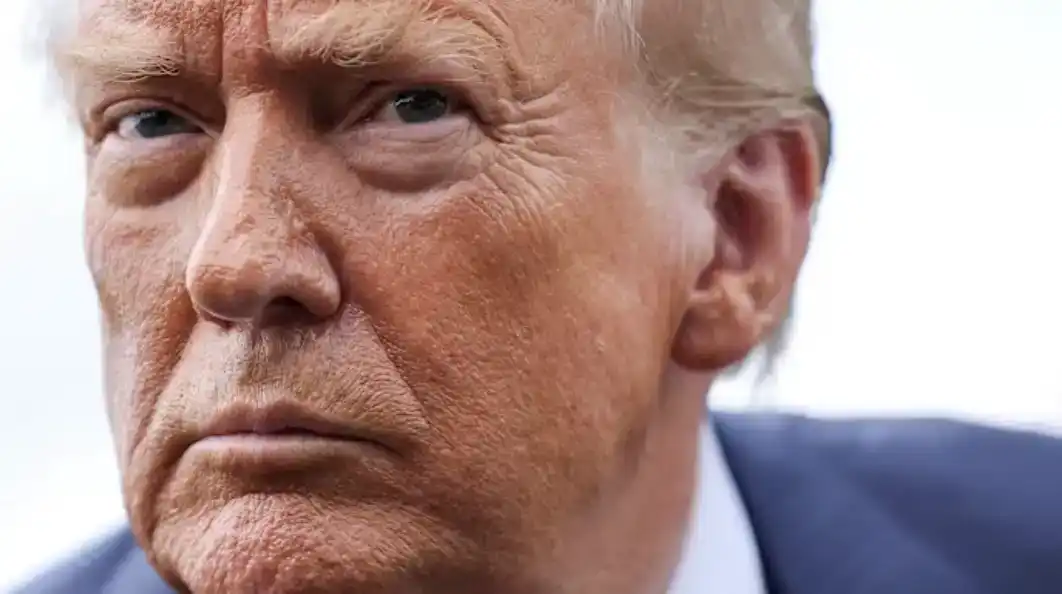
Donald Trump’s weekend attempt to push for a U.S.-Iran deal has sparked a backlash within the Republican Party. Several Republican lawmakers have warned that the president might concede too much in the negotiations.

U.S. negotiators are reportedly close to an agreement. The deal would offer Iran some concessions while extending the existing ceasefire, reopening the Strait of Hormuz, and paving the way for further negotiations on Iran’s nuclear program. Following the news, foreign policy hawks including Republican Senators Lindsey Graham and Ted Cruz have spoken out.

Over the past week, concerns have mounted that Trump might resume strikes against Iran, accelerating efforts to find a diplomatic solution.

According to people briefed on the proposals, the envisioned deal would include a commitment for Tehran to dilute or transfer its stockpile of highly enriched uranium. In exchange, the U.S. would relax sanctions in phases and unfreeze Iranian assets held abroad, depending on the progress of final agreement talks.

But even before the formal release of the deal’s details, several Republicans, including some of the president’s staunchest supporters, have begun questioning Trump’s negotiating strategy.

"If the region believes that a deal with Iran means allowing this regime to survive and become stronger over time, then we are pouring fuel on the conflicts in Lebanon and Iraq," Graham wrote on social media. Graham has long been a loyal Trump ally and frequently plays golf with the president.

He added: "I personally do not buy the argument that Iran cannot be denied the ability to threaten the Strait of Hormuz, or that the region cannot protect itself from Iranian military capabilities."

Another foreign policy hardliner, Cruz, said he was "deeply concerned" about the reported agreement. He called Trump’s earlier decision to strike Iran first the "most consequential decision" of his second term.

Cruz added: "If this ultimately results in an Iranian regime still controlled by Islamists chanting 'Death to America,' not only receiving billions of dollars but also continuing to enrich uranium, develop nuclear weapons, and effectively control the Strait of Hormuz, then it will be a disastrous mistake."

Senate Armed Services Committee Republican Chairman Roger Wicker posted on X on Saturday: "A rumored 60-day ceasefire deal — banking on Iran negotiating in good faith — would be a disaster. All the gains from Operation Epic Rage would be lost!"

Mike Pompeo, who served as Secretary of State during Trump’s first term, also criticized the plan, saying it is "anything but America First."

Pompeo wrote on X: "It's simple: Open the damn Strait. Cut off Iran's money. Destroy enough Iranian military capability that it can no longer threaten our allies in the region. This should have been done long ago. Get it done."

These criticisms quickly angered the White House.

White House Communications Director Steven Cheung responded sharply to Pompeo’s post, telling the former Secretary of State he "should shut his stupid mouth and leave the real work to the professionals."

Trump campaign adviser Alex Bruesewitz accused Cruz of "trying to sabotage the work of the president and his administration." Cruz later retorted that "young political opportunists pushing appeasement of Iran are not helping the president."

This public clash also exposes the political pressure Trump faces as he tries to unite the Republican Party. The current electoral environment is not easy, with Republicans trying to maintain control of both chambers of Congress while combating unfavorable polls. Multiple polls show Trump’s approval rating has fallen to historic lows, with public dissatisfaction over his handling of the war and the U.S. economy persisting.

North Carolina Republican Senator Thom Tillis has become one of the party's sharpest critics of Trump. On Sunday, he also questioned the deal's rationale in a CNN interview, saying the framework reported in the media "doesn’t make sense."

Tillis said: "About 11 weeks ago, Defense Secretary Hagseath and the Pentagon told us they had destroyed Iran’s defense system and it was just a matter of time before we secured the nuclear materials. Now we are discussing a plan that might accept leaving nuclear materials inside Iran? Where exactly does that make sense?"

U.S. Secretary of State Marco Rubio dismissed the criticism, insisting Trump has taken an unprecedentedly tough stance against Tehran.

Speaking at a joint press conference with India’s foreign minister in New Delhi, Rubio said: "On Iran’s nuclear ambitions, I don’t think anyone has been tougher than President Trump. No one has been more resolute on this issue than President Trump."

He added: "Given what this president has proven he is willing to do, it’s absurd that anyone thinks he would agree to a deal that ultimately leaves Iran in a better position on the nuclear issue."


Related Questions

QWhat are the main points of the reported agreement between the U.S. and Iran as described in the article?

AThe reported agreement includes a commitment for Iran to dilute or transfer its stockpile of high-enriched uranium. In exchange, the U.S. would phase in sanctions relief and unfreeze Iranian assets held abroad, contingent on progress in final negotiations. It also aims to extend the existing ceasefire and reopen the Strait of Hormuz, paving the way for further talks on its nuclear program.

QWhy are some Republican lawmakers, like Senators Graham and Cruz, critical of the potential Iran deal?

ARepublican hawks like Senators Lindsey Graham and Ted Cruz fear the deal would allow the Iranian regime to survive, grow stronger over time, and continue its threatening activities. They argue it could undermine the gains from previous military actions ('Operation Epic Fury'), leave Iran with funds and nuclear capabilities, and potentially destabilize the region further by emboldening Iranian influence in places like Lebanon and Iraq.

QHow does the article connect the Iran negotiations to Donald Trump's domestic political challenges?

AThe article connects the Iran negotiations to Trump's domestic political challenges by highlighting that Republican dissent over the deal is intertwined with election pressures. With midterm elections approaching and Trump's poll numbers low, any foreign policy agreement is quickly tested as a measure of party loyalty, toughness, and voter sentiment. Trump must navigate convincing the hawkish wing of his party to accept a diplomatic compromise within his 'America First' narrative, which is crucial for the deal's success and his political standing.

QWhat was the reaction from former Secretary of State Mike Pompeo and the White House to the reported deal?

AFormer Secretary of State Mike Pompeo criticized the reported plan on social media, calling it 'anything but America First' and advocating for more aggressive actions like opening the Strait of Hormuz, cutting off Iran's funding, and destroying its military capabilities. In response, White House Communications Director Steven Cheung attacked Pompeo personally, telling him to 'shut the hell up' and leave the work to professionals.

QAccording to the article, what justification does Secretary of State Marco Rubio offer in defense of President Trump's approach to Iran?

ASecretary of State Marco Rubio defended President Trump by asserting that no one has been tougher or more determined than Trump on Iran's nuclear ambitions. He argued it was absurd to think Trump would agree to a deal that ultimately leaves Iran in a better position on nuclear issues, given the president's proven willingness to take decisive action.

Related Reads

AI Relay Stations Spark Heated Debate on Zhihu: Behind Cheap Tokens, What Are Users Really Worried About?

A discussion on Zhihu about "AI relay stations" shifted the niche developer topic of "cheap tokens" into broader user awareness. Users moved beyond simply questioning the legitimacy of these services to focus on practical concerns: Where do cheap tokens truly come from? Is the model being accessed the real one? Can relay stations see prompts, code, and API keys? For occasional users, are the risks worth it? The core debate centered less on price and more on trust. A primary worry is model authenticity—the risk of "model swapping," where users paying for a premium model might be routed to a cheaper one, creating an information asymmetry. Others argued that cost comparisons matter; while cheaper than official pay-as-you-go APIs, relay stations may not be the lowest-cost option versus subscriptions, domestic models, or free tiers, making user needs assessment crucial. Speculation about token sources ranged from legitimate bulk discounts to gray-area methods like account sharing or exploiting regional pricing. This opacity makes risk assessment difficult for users. Data security emerged as a critical concern, especially for enterprise use. When processing sensitive information like code, contracts, or client data, the inability to verify a relay station's data handling, retention, or access policies poses significant compliance and confidentiality risks. The evolving consensus suggests relay stations can be used cautiously for low-sensitivity, disposable tasks (e.g., summarizing public info, simple translation). However, they should not be the default for sensitive, professional, or production workflows involving proprietary data, Agents, or automated systems. Recommendations include avoiding large prepayments, not relying on a single service, using test prompts to monitor quality, anonymizing data where possible, and keeping official channels as backups. Ultimately, the discussion framed tokens not just as a billing unit but as a measure of real cost encompassing price, model integrity, data security, and service stability. The popularity of relay stations highlights user demand for affordable access, but the debate underscores a key trade-off: the savings from cheap tokens may come at the price of trust, transparency, and control over one's data and AI experience.

marsbit22m ago

AI Relay Stations Spark Heated Debate on Zhihu: Behind Cheap Tokens, What Are Users Really Worried About?

marsbit22m ago

In-Depth Research Report on TradFi: The Convergence Wave of Crypto and Traditional Finance

In 2026, the crypto industry is undergoing a profound infrastructure-level transformation—TradFi assets are migrating on-chain at an unprecedented pace. According to CoinGecko's Q1 2026 report, the total value locked (TVL) of tokenized real-world assets (RWA) has surpassed $31 billion, a nearly 4x increase from $7.8 billion at the beginning of 2025, with the sector’s aggregate market capitalization reaching $19.3 billion. Among these, the market cap of tokenized stocks surged from $2 million to $486 million, with Q1 spot trading volume reaching $15.1 billion—a single quarter already surpassing the entire second half of 2025. RWA perpetual contract Q1 trading volume reached a staggering $524.8 billion, far exceeding the $313 billion for all of 2025. Meanwhile, BlackRock's BUIDL fund has reached $2.3 billion in scale and has filed for two new tokenized funds, signaling that the world's largest asset manager's tokenization strategy is evolving from pilot to product suite expansion. HTX, as a core participant in the crypto exchange sector, officially launched TradFi perpetual futures products including NVDA, AAPL, MSFT, META, and SPY in 2026, enabling crypto users to gain 24/7 trading access to core U.S. equities. Boston Consulting Group predicts that global tokenized asset scale could reach $16 trillion by 2030, while McKinsey offers a conservative estimate of approximately $2 trillion. The on-chain migration of TradFi assets is no longer a "future narrative" but a structural transformation unfolding in real time, as crypto exchanges evolve from single crypto asset trading platforms toward "multi-asset-class trading infrastructure."

HTX Learn24m ago

In-Depth Research Report on TradFi: The Convergence Wave of Crypto and Traditional Finance

HTX Learn24m ago

Blocked Its Own Treasure, WeChat AI Steps Up

Tencent's stock surged over 10% on June 2nd amid reports that WeChat, with 1.43 billion monthly users, is finalizing tests for a native AI Agent. The reported feature, accessible by swiping right from the main interface, allows users to issue commands in natural language. The AI then decomposes tasks and automatically calls upon relevant Mini Programs within WeChat to complete actions like ordering food, booking tickets, or making payments, creating a closed-loop service execution system. This strategic shift follows the internal conflict and subsequent "blocking" of Tencent's standalone AI app, Yuanbao, by WeChat for violating sharing rules during a 2026 Spring Festival promotion. The incident highlighted a lack of internal consensus and exposed the weakness of competing in the standalone AI assistant arena against rivals like ByteDance's Doubao (345M MAU) and Alibaba's Qianwen. The new WeChat AI Agent aims to leverage WeChat's unique assets—its massive user base, standardized Mini Program APIs, WeChat Pay, and identity system—to move from simple content generation to actual task execution. Analysts note this changes the competitive landscape from model benchmarks to which AI can connect to more real-world services. However, success depends on key variables: the capability of Tencent's underlying Hunyuan model, managing massive inference costs, and redesigning incentives for Mini Program developers whose traffic might be bypassed. The move is seen as an attempt to keep user service intent within WeChat's ecosystem as AI begins to redefine how users access services.

marsbit1h ago

Blocked Its Own Treasure, WeChat AI Steps Up

marsbit1h ago

ByteDance Adopts Arm CPUs, Jensen Huang: So Sad I Didn't Buy Arm

**Summary:** At Computex 2026, Arm CEO Rene Haas announced that ByteDance and Oracle have adopted Arm's self-designed Arm AGI data center CPU. The company expects significant revenue growth from this product, projecting $20 billion in demand for the 2027/2028 fiscal years. Haas noted that restricting AI-capable CPUs from the US to China is nearly impossible due to their widespread applications. Arm's stock has surged dramatically this year, notably rising 16% after NVIDIA's Arm-based Vera CPU and RTX Spark announcements. A highlight was the informal, humorous on-stage conversation between Haas and NVIDIA CEO Jensen Huang. Huang joked about NVIDIA's failed attempt to acquire Arm and playfully lamented selling his Arm shares. Both executives showed a clear sense of camaraderie and shared regret over the missed merger. Key technical topics were discussed: 1. **AI PC Design:** Huang explained NVIDIA's RTX Spark superchip (with a 20-core Arm CPU) is designed for future AI agents that will autonomously run and use tools on PCs, blending local and cloud processing. 2. **Agent vs. OS:** Huang emphasized the operating system remains crucial, as AI agents rely on its APIs and tools to function. 3. **Growth Constraints:** He identified the shift to "useful AI" that generates profitable tokens as a primary driver for immense, almost limitless, computational demand. Haas outlined Arm's strategy across PC and data centers. For PCs, Arm collaborates with partners like NVIDIA and MediaTek, offering its compute subsystem (CSS) for custom SoCs. In data centers, its Arm AGI CPU (built on TSMC's 3nm process) has gained major partners including OpenAI, Meta, and now ByteDance and Oracle. Arm presented a multi-year roadmap for its in-house CPU line. The article concludes that while GPUs dominated the AI training race, the explosion of AI agents is shifting significant focus to CPUs for inference, state management, and tool orchestration. The industry is trending towards vertical integration, with companies like cloud providers designing chips and chip/IP firms offering full solutions, all competing to deliver more efficient computing per watt.

marsbit1h ago

ByteDance Adopts Arm CPUs, Jensen Huang: So Sad I Didn't Buy Arm

marsbit1h ago

Trading

Spot
Futures
活动图片




