Yesterday, news of a 'successful cancer vaccine' directly caused a stir on Wall Street.
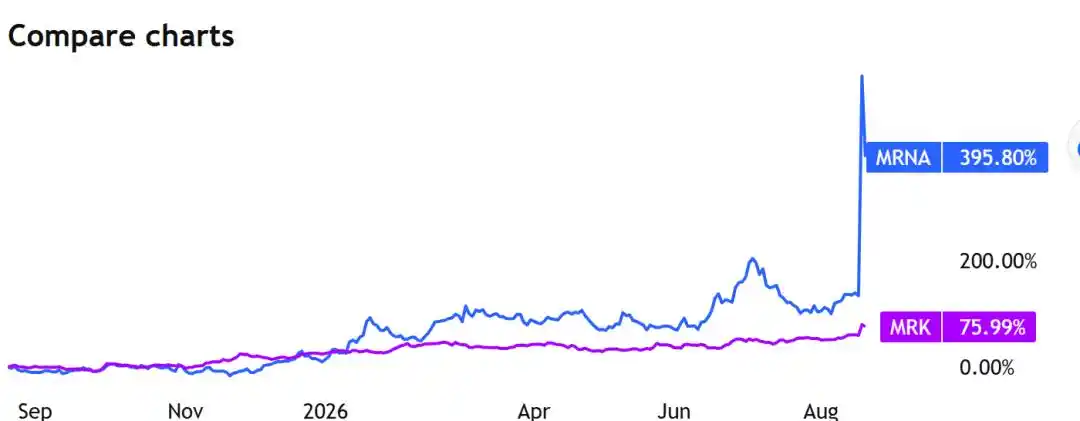
Moderna's stock price soared by 177% in a single day, marking one of the most dramatic single-day gains in recent years.
Why is capital so excited?
Because this new cancer treatment method sounds extremely 'sci-fi': first, read the genetic mutations in the patient's tumor, then create a customized mRNA vaccine for the patient.
Just as the entire industry was still immersed in this celebration, another 'miniaturized' mRNA cancer vaccine story reached a new milestone.
A few months ago, an AI entrepreneur without a medical background, Paul S. Conyngham, attempted to use AI tools like ChatGPT, Gemini, and Grok to "handcraft" a personalized mRNA vaccine for his cancer-stricken dog Rosie. This story quickly went viral online.
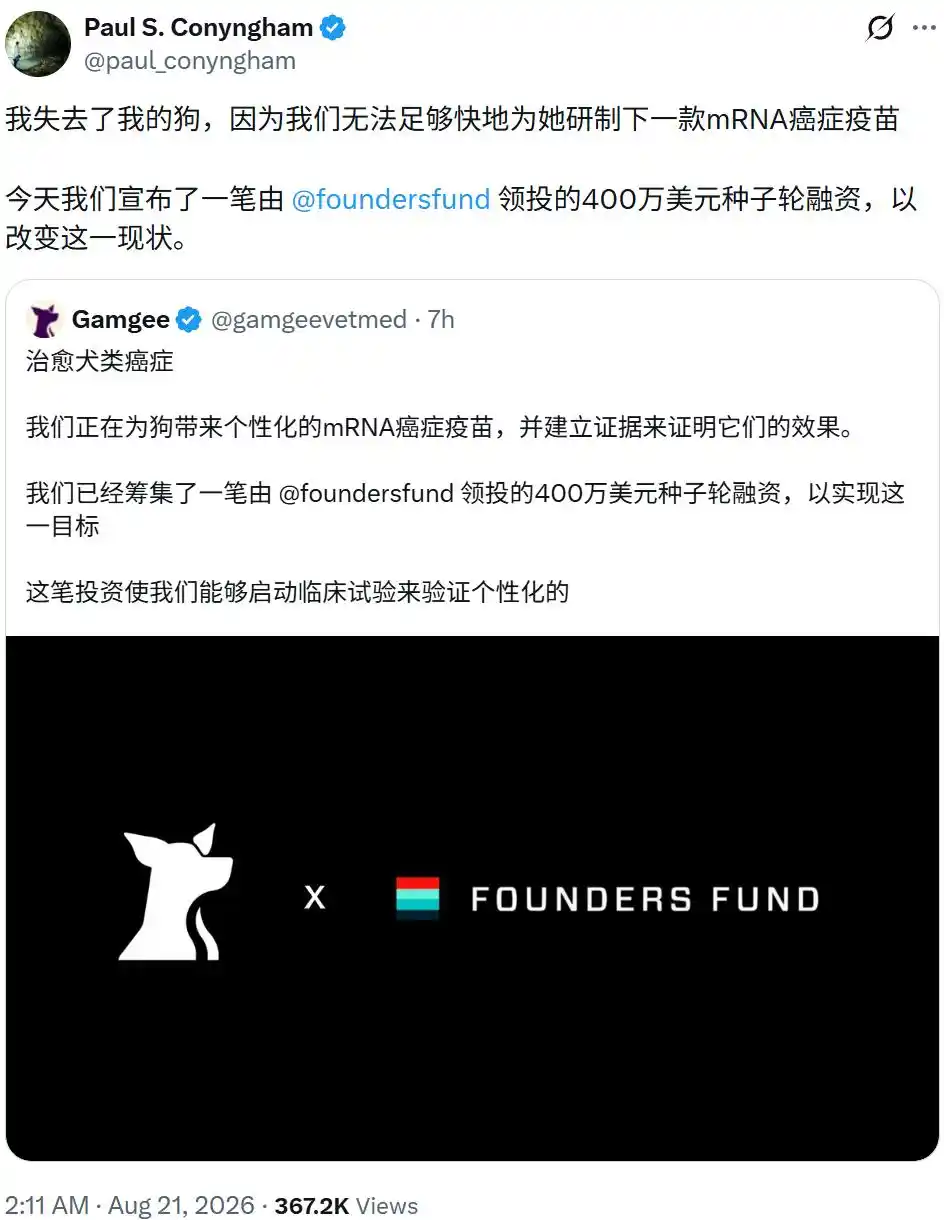
Just today, Paul announced that his newly founded company, Gamgee, secured $4 million in seed funding, led by Founders Fund.
This company aims to transform the plan initially tried for Rosie into a replicable process to provide personalized mRNA cancer vaccines for more dogs with cancer.
Regrettably, Rosie did not live to see the next chapter of this story.
The first sentence Paul wrote when announcing the funding was: "I lost my dog because we couldn't make her next mRNA cancer vaccine fast enough."
Rosie's Story
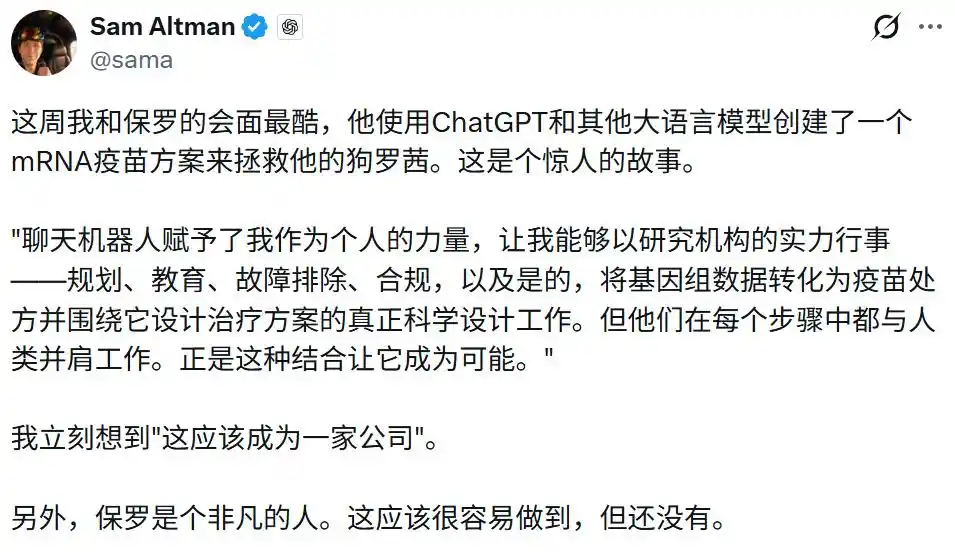
In March of this year, Rosie's story exploded on English-language social media: a tech entrepreneur with no biology training used AI tools to design a personalized mRNA cancer vaccine for his terminally ill dog, and several tumors shrank.
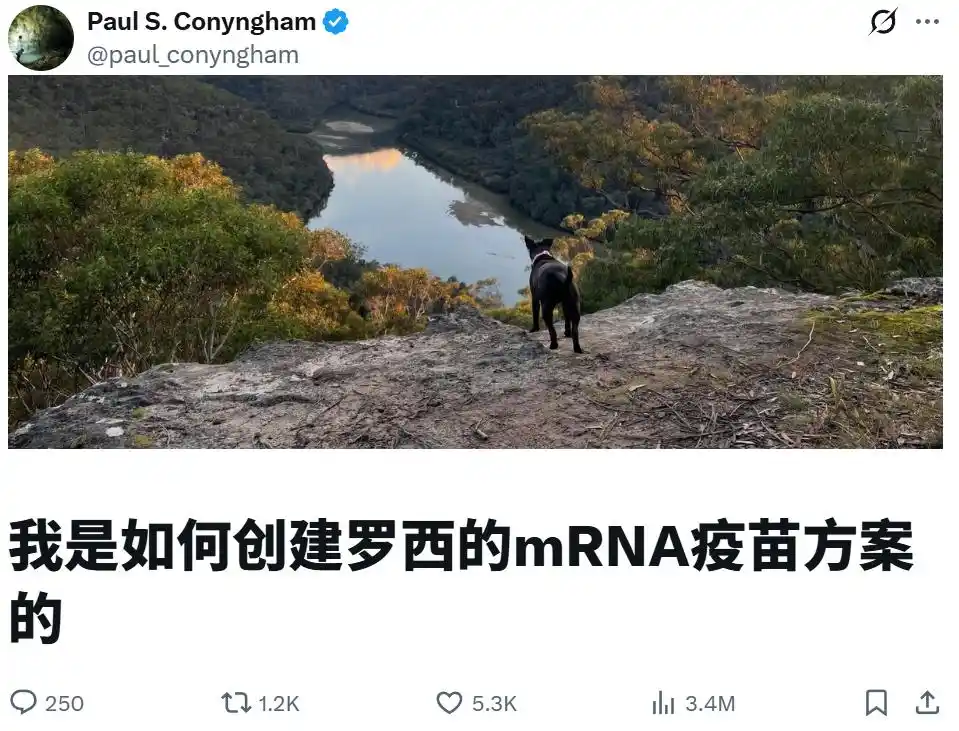
OpenAI CEO Sam Altman shared this story with his millions of followers.
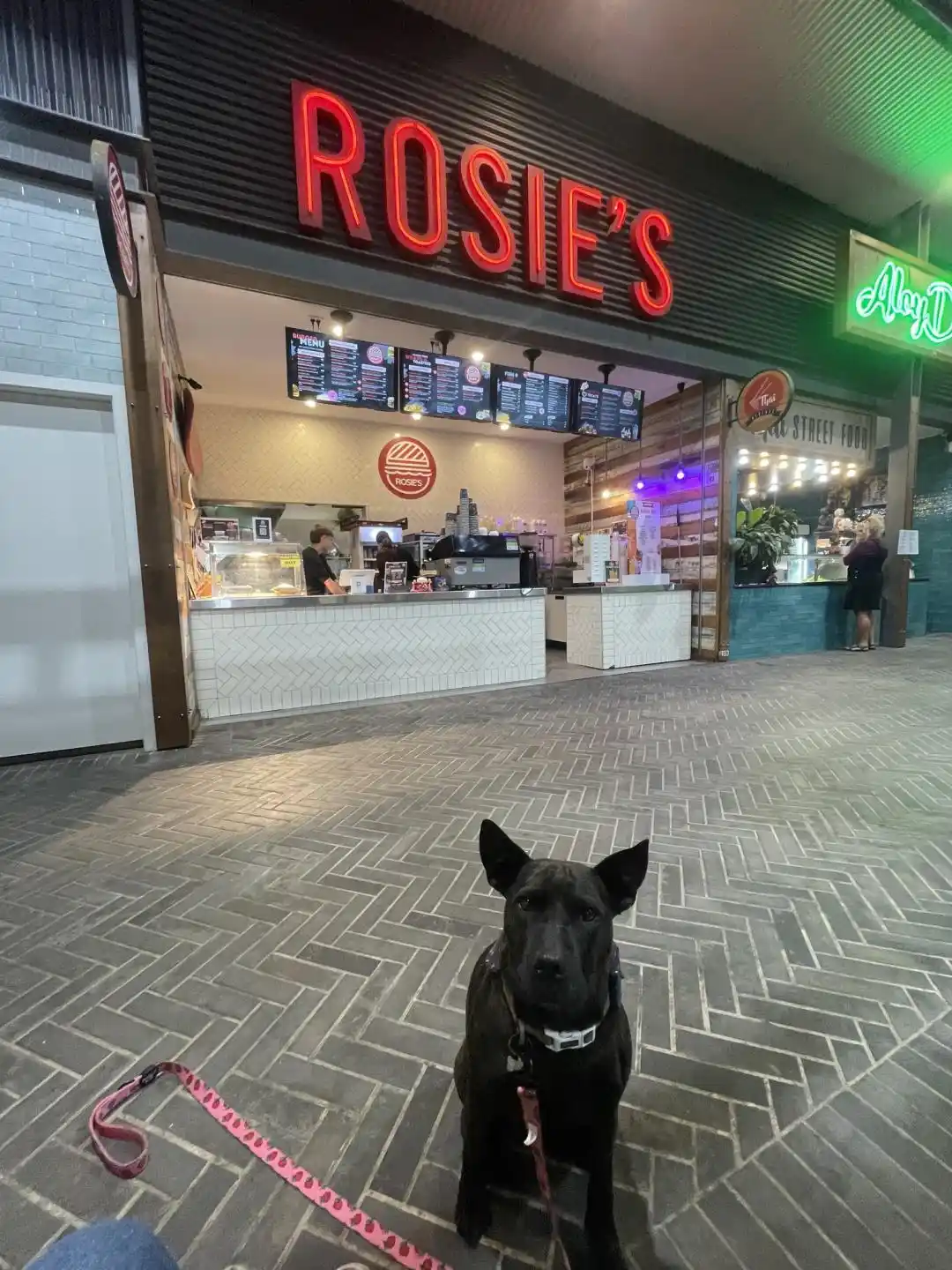
Rosie was a Staffordshire Bull Terrier mix diagnosed with mast cell tumor — the most common skin cancer in dogs. Surgery and chemotherapy delayed the disease but didn't stop it, immunotherapy failed, and the veterinarian's prognosis was measured in "months".
Conyngham, on the other hand, has 17 years of experience in machine learning. According to Medical Daily, he spent around $3,000 out-of-pocket to conduct paired sequencing of Rosie's tumor DNA and healthy DNA at the University of New South Wales (UNSW). He then used AI to screen for neoantigens from thousands of mutations and used protein structure prediction to judge which ones might be "seen" by the immune system. According to a report by Reason, he used ChatGPT and AlphaFold to identify the mutant proteins, and ultimately used Grok for the construct design.
He did not make the vaccine himself. Researchers at the UNSW RNA Institute reviewed the data and manufactured the mRNA construct in the lab, with the institute's director, Pall Thordarson, leading the effort. To obtain ethical approval in Australia, Conyngham spent three months writing a 100-page document.
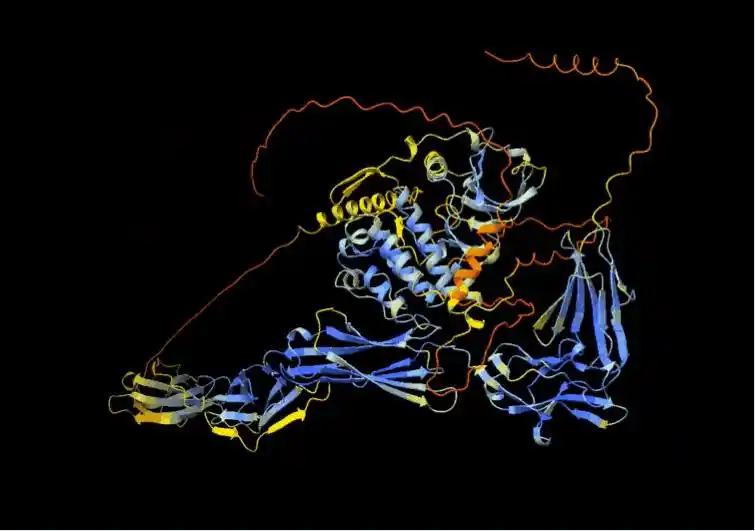
3D rendering of Rosie's healthy c-KIT protein using AlphaFold 2
Rosie received her first shot at a veterinary facility in Queensland in December 2025, followed by a booster the next month. Several of her tumors significantly shrank, and her quality of life improved. According to Y Combinator's company page, this is believed to be the first computationally designed mRNA cancer vaccine actually used on a dog.
Conyngham has always refused to call it a "cure."
The ending, as written in Gamgee's announcement: Rosie had gone into remission, but after a subsequent surgery, the cancer relapsed.
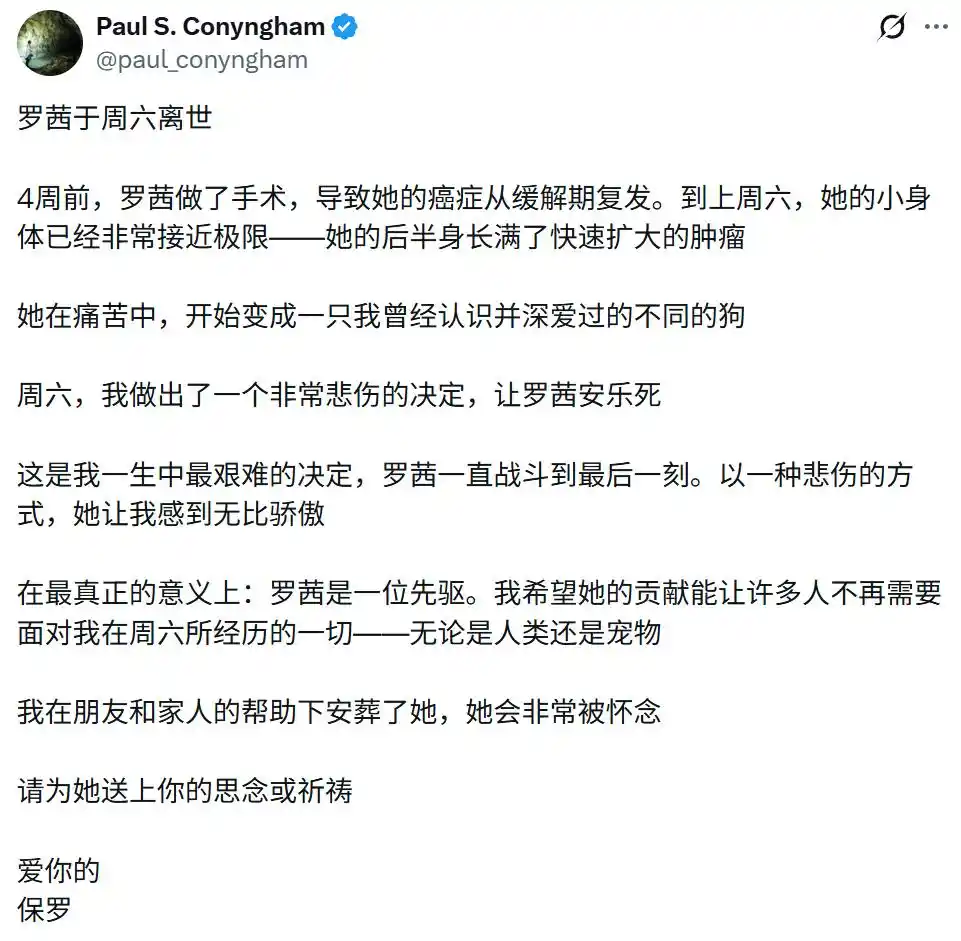
A more complete version comes from Conyngham's self-described account on X in June: That surgery took the cancer out of remission. Four weeks later, tumors rapidly spread across her hindquarters; she was in pain and was no longer the dog he knew. He made the decision for euthanasia, calling it the hardest decision of his life. He wrote that, in the truest sense, Rose was a pioneer.
Gamgee Aims to Turn a Handcrafted Process into an Assembly Line
Gamgee is part of Y Combinator's Summer 2026 batch. This $4 million seed round included, besides Founders Fund, Celine Halioua (founder and CEO of canine longevity company Loyal), Steve Eidelman (founder of Modern Animal), Arash Ferdowsi (co-founder of Dropbox), and Gokul Rajaram (creator of Google AdSense).
Founders Fund partner Amin Mirzadegan gave the reason for investment in the press release as the person, not the technology: Paul crossed several disciplines for a dog, taught himself entirely new fields, and kept pushing forward where most people would have stopped.
The company's goal is to industrialize the process that Conyngham manually navigated once: sequence the tumor and paired healthy tissue of each dog, find mutations unique to that cancer, identify tumor-specific neoantigens, design a personalized mRNA vaccine that teaches the immune system to target these points, and manage the entire chain from veterinary consultation, sequencing, design, production, treatment to follow-up.
Clinical studies are being conducted in Australia, with partners including UNSW, the University of Queensland, and the Garvan Institute of Medical Research. Enrollment is currently limited to eastern Australia; participating dogs receive the investigational vaccine for free, with eligibility determined by the study protocol and participating veterinary oncologists. The company stated it is in discussions with regulators, following the US Department of Agriculture (USDA) "patient-specific veterinary biologic products" pathway.
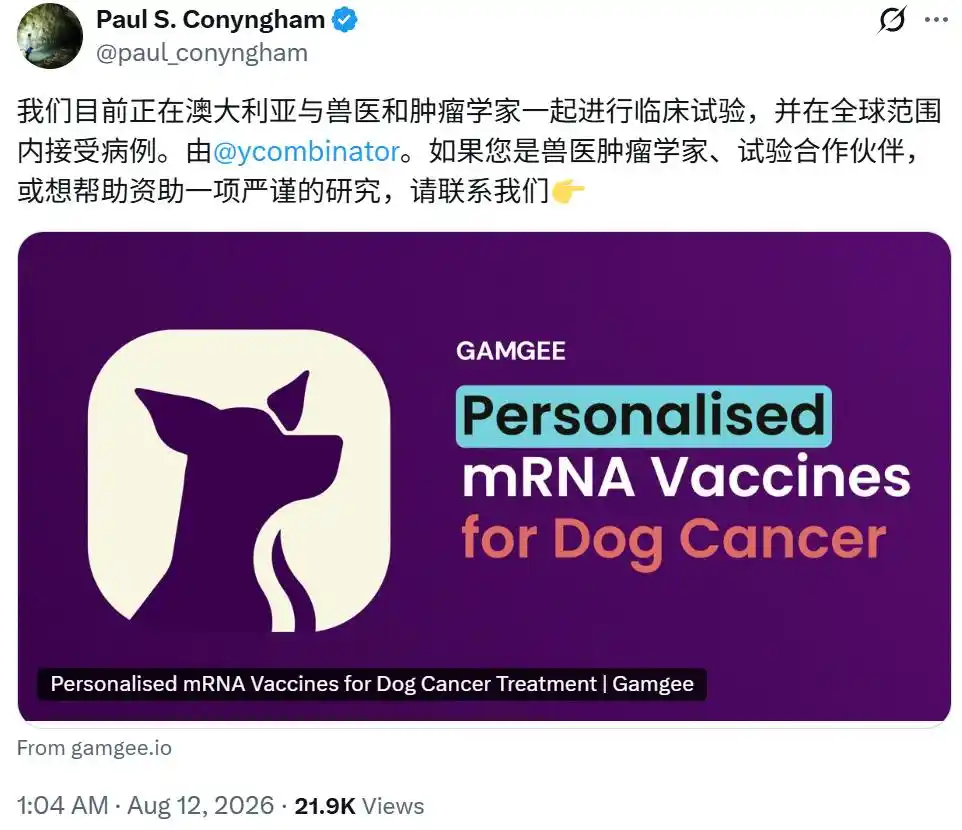
Regarding this funding round, Gamgee stated the money is to initiate a clinical trial to validate the personalized treatment plan developed for Rosie. Conyngham previously admitted on X that the company is recruiting veterinary oncologists and trial partners and seeking funding for a more rigorous study — this amounts to acknowledging that the evidence supporting its core claim is not yet in the form that regulators, veterinarians, or cautious pet owners would ultimately require.
Why Dogs?
Choosing dogs isn't just because Conyngham had one at home.
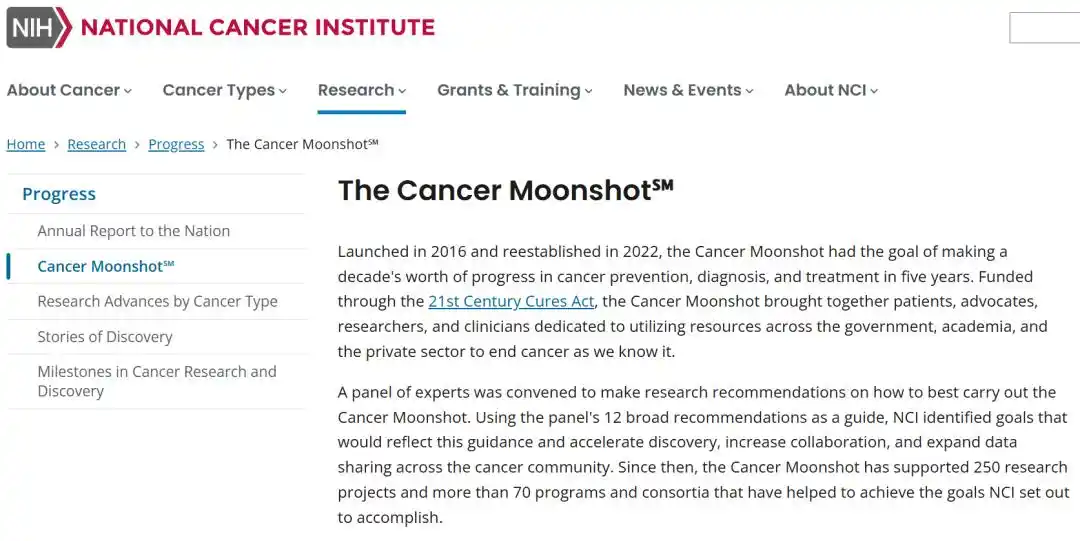
Comparative oncology is a field with decades of history. Spontaneous tumors in pet dogs share many biological, genetic, and histological features with human tumors. More importantly, they retain the naturally occurring complexity of drug resistance, metastasis, and tumor-host immune interactions, which are difficult to replicate in mouse models. The US National Cancer Institute has a dedicated Comparative Oncology Program, and the "Cancer Moonshot" initiative has also driven resources in this direction.
From an industry perspective, the canine track also attracts because of shorter regulatory pathways, lower costs, and faster trial cycles. There are already players: Torigen makes autologous tumor cell vaccines, ELIAS Animal Health works on autologous cancer vaccines combined with T-cell therapy, and Yale's EGFR/HER2 vaccine takes another more universal route, not requiring tumor samples. Gamgee's differentiation lies in "N-of-1" — a unique vaccine for each dog, not a universal target.
Conyngham has also set long-term goals for the company beyond pet healthcare: to make personalized mRNA vaccines deliverable by any veterinary oncologist and to establish N-of-1 medicine as a better treatment model across species, including humans.
For Cancer Vaccines, the Race Is About Speed
Looking at these two pieces of news together, they both eventually circle back to the same issue: time.
For Merck and Moderna, the positive Phase III results proved the feasibility of "making a separate drug for each patient." However, it took five years from finalizing the algorithm plan to the Phase III results and ten years from project initiation to today.
For Rosie, it took about two years from diagnosis to the first shot, with three months spent on the 100-page document for ethical approval, while the time she could wait was only months.
The core contradiction of personalized treatment has never been just "can it be designed," but rather whether the total time of the chain — design, approval, production, administration — can be compressed within the timeframe the patient (or sick dog) can afford. AI shortens the very first part of the chain — finding targets, designing sequences. The remaining parts have not yet been compressed to the same degree.
Conyngham's statement, "we couldn't make her next vaccine fast enough," refers precisely to this.
What Gamgee is essentially buying with $4 million is the ability to streamline this chain and obtain evidence acceptable to regulators and veterinarians. The success of this depends on the data from the Australian clinical study, not on how moving Rosie's story is.
Until then, the only responsible advice for someone whose dog has just been diagnosed with cancer is still: go to a qualified veterinary oncologist, not treat a viral case as a treatment plan.
Reference Links:
https://www.reuters.com/legal/litigation/merck-moderna-say-melanoma-skin-cancer-vaccine-meets-goals-large-trial-2026-08-19/
https://www.gamgee.io/story/
https://x.com/paul_conyngham/status/2090502003449590254
This article is from WeChat public account "Almost Human" (ID: almosthuman2014), author: Machine Heart Focused on AI