The U.S. Can No Longer Control Latin America, So They Took Maduro

marsbitPublished on 2026-01-05Last updated on 2026-01-05

Abstract

US influence over Latin America is waning, as evidenced by the recent US military operation to extract Venezuelan President Maduro. For decades, the US maintained control through three key financial tools: debt, dollarization, and sanctions. In the 1980s, Latin America’s foreign debt reached 50% of GDP, but today it stands at just 20%, partly due to China’s rise as a major lender and trading partner since the 2000s. Countries like Brazil and Argentina used commodity-driven revenue to pay off IMF debts and reduce dependency. Dollarization, once a means of control, has evolved into “de-Americanized dollarization”—people use the dollar for stability but reject US political influence. Meanwhile, extreme sanctions, such as those imposed on Venezuela, backfired. Instead of crushing resistance, they spurred the growth of a parallel financial ecosystem. This new system includes: - Stablecoins like USDT, used for 80% of Venezuela’s oil revenue - Local fintech platforms (e.g., Brazil’s Pix and Nubank) serving millions - Non-dollar trade channels, such as currency swaps with China - A thriving underground economy and crypto markets US policies—like proposed taxes on remittances and Wall Street’s “de-risking”—have unintentionally accelerated this shift. As the US tightens control, dollar usage becomes more decentralized, echoing the historical decline of the British pound. The very tools meant to enforce dominance are now fueling its erosion.

In the 1980s, Latin America's total external debt accounted for nearly 50% of its GDP. This metric was once a scale used by Washington to measure loyalty and control over this backyard.

Today, that number has dropped to 20%.

However, this 22-percentage-point difference does not mean that the people of Latin America are becoming wealthier day by day. To no longer be subject to others' currencies and rules, they are still struggling within the old order and paying a heavy price for it.

This is a contest about "control" versus "loss of control." The United States has attempted to grasp the economic lifeline of this continent through debt, currency, and sanctions. Yet, when this control is pushed to its limit, the system inevitably ignites an endogenous force of resistance.

Three Weapons of U.S. Financial Control Over Latin America

For over half a century, the financial empire of the United States has ruled Latin America primarily with three highly effective weapons.

The first weapon is debt. This is the empire's oldest colonial tool and its most effective instrument of financial governance.

On August 12, 1982, a plea for help from Mexico's Finance Minister was the trigger for the Latin American debt crisis. As Mexico declared its inability to repay $80 billion in external debt, the first domino fell. Brazil, Argentina, and Venezuela subsequently tumbled into the quagmire of default.

Then, a "creditors' alliance" composed of the U.S. Treasury, the Federal Reserve, and the IMF stepped in. The救命钱 they offered was exorbitantly expensive; each aid package came with extremely苛刻的附加条件 attached.

This was the later infamous Washington Consensus, which forced these countries to slash government spending, sell off state-owned assets, and completely open their domestic markets and capital controls.

It was an era when the U.S. could decide a nation's destiny for the next decade with a single check. Debt became a rope tightened around the necks of Latin American countries, with the other end always held by the Americans. Behind every aid package, the price of power was already clearly marked.

The second weapon is dollarization.

When debt control wasn't彻底 enough, a more extreme solution was pushed forward: simply abolish your national currency and directly use the U.S. dollar.

First, the U.S., through prior debt harvesting, induced foreign exchange depletion and hyperinflation in these countries, creating a physiological fear of the local currency among the populace. Then, Washington's think tanks began a large-scale舆论 campaign promoting "monetary stability," packaging the dollar as the only safe haven from turmoil.

And when providing emergency loans, the U.S. would often暗示 or even明示 that only by adopting the dollar could they obtain long-term financial credit endorsement. In 2000, on the brink of social unrest, Ecuador was forced to abandon its currency; shortly after, El Salvador, Panama, and others followed suit.

This is a very霸道 logic: if a country doesn't even have its own currency, its economic sovereignty is essentially in a state of trusteeship. Abandoning the national currency is equivalent to handing over the keys to your house. From then on, your inflation rate, your interest rates, can only be decided by others.

The third weapon is sanctions. This is the final, and most destructive, heavy weapon,专门 used against those who attempt to脱离轨道 and challenge the existing order.

Taking Venezuela as an example, the U.S. has imposed over 900 sanctions against it, involving 209 key individuals,几乎封死了 this country's every生存空间.

Venezuela is actually incredibly rich, literally "rolling in oil." Its oil reserves are as high as 303 billion barrels, even more than Saudi Arabia's. But the problem is, much of this oil is extra-heavy, like asphalt, with extremely high extraction difficulty. It requires external capital, technology, and diluents to turn it into money.

U.S. sanctions精准地切断 these lifelines, leaving Venezuela sitting on the "world's largest oil vault" unable to monetize it. The result is that Venezuela's oil production plummeted from 3 million barrels per day to a low of less than 500,000 barrels within just seven years.

It wasn't until early 2026, when U.S. forces, citing "narcoterrorism" and related criminal charges, conducted a military operation in Venezuela to take away Maduro, and Trump announced that major oil companies would take over and invest tens of billions of dollars to repair infrastructure, that the sanctions blade finally completed its closed loop.

First, use sanctions to completely paralyze a country's liquidity, then, under the banner of "management and repair," enter the ruins with tens of billions of dollars in hand, completing the re-harvesting of the global energy landscape.

Debt, dollarization, and sanctions—these three shackles constituted the U.S.'s half-century-long financial blockade of Latin America. This net was once impermeable, stretching from Mexico City to Buenos Aires.

Three Variables

Now, a series of variables are eroding the foundation of imperial hegemony. The three once-infallible weapons are failing amidst the changing logic of global博弈.

The loosening of the debt shackle began in the first decade of the 21st century. The biggest variable behind it is China.

In 2001, China joined the WTO, initiating a decade-long supercycle for commodities. Latin America, as a major global supplier of raw materials, became the biggest beneficiary of this feast.

Brazil's iron ore, Chile's copper, Argentina's soybeans—all flowed continuously to the East, exchanged for unprecedented foreign exchange accumulation. This accumulation gave Latin American countries breathing room and the底气 to break free from the IMF's束缚.

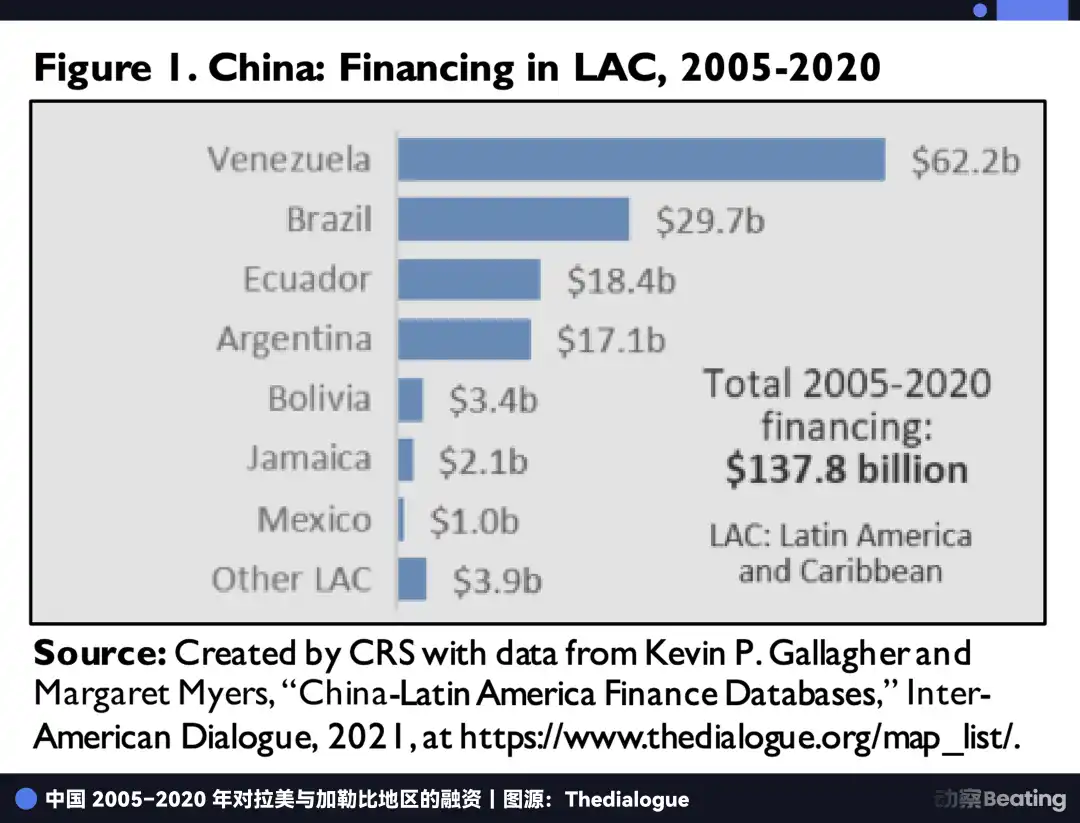
In 2005, Brazil and Argentina successively announced the early repayment of all debts owed to the IMF. From 2005 to 2020, China provided Latin America with over $137 billion in loans without political conditions attached.

Venezuela received $62 billion of this, with other major recipients including Brazil, Ecuador, and Argentina. These "oil-for-loans" agreements helped build much-needed infrastructure and gave these countries more bargaining chips when negotiating with Western creditors.
At the same time, Washington soon discovered it could not control these countries' economic policies through dollarization. The Latin American people hold U.S. dollars en masse to hedge against the collapse of their national currencies, not out of admiration for the "American Dream." In the streets and alleys of Latin America, the dollar is彻底剥离 of its political color, reduced to a purely financial tool—a reliable hard currency that won't turn into worthless paper tomorrow.

This is the so-called "de-Americanized dollarization."

People need the stability of the dollar but reject Washington's rules. The dollar is becoming a global, neutral measure of value, much like gold. It belongs to the world, no longer solely to the U.S. government.

When large volumes of dollar transactions spontaneously operate outside the official monitoring system, Washington finds that while it can still print money, it is increasingly difficult to manipulate the economic lifelines of other countries through monetary leverage.

As both debt and dollarization gradually lost their effectiveness, the U.S. opted for more激进 sanctions.

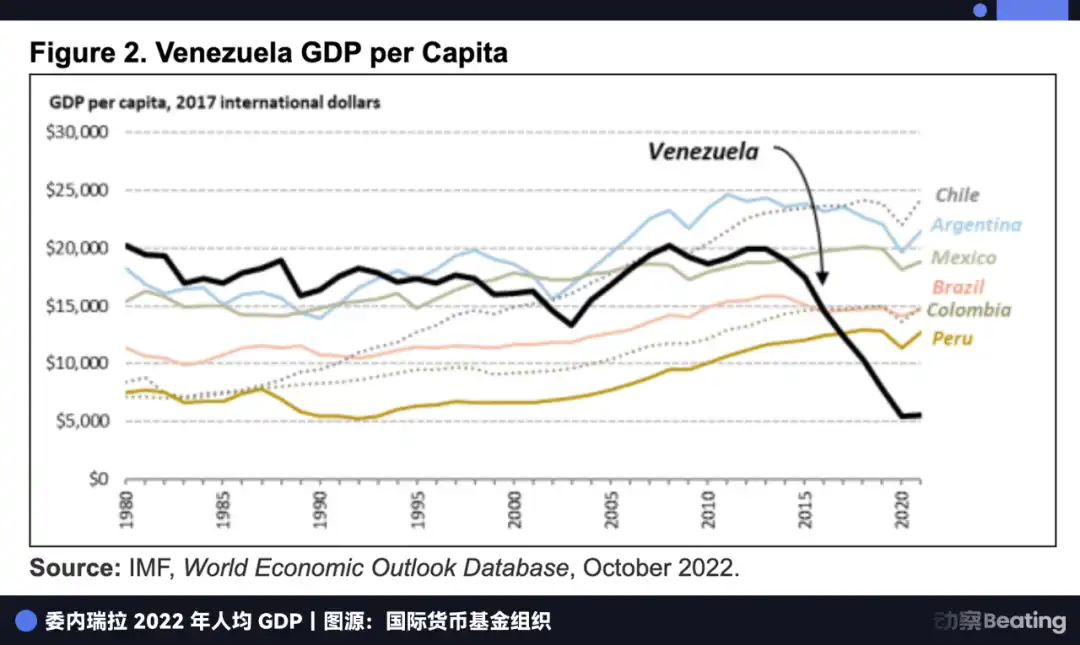
On one hand, internal governance failures and corruption in Venezuela led to the collapse of its economic pillar, with the national currency becoming worthless due to hyperinflation. On the other hand, external sanctions directly caused its GDP to shrink by about 75%. It was precisely this sense of suffocation from internal and external troubles that催生 a parallel financial ecosystem完全独立于 the dollar闭环之外.
Meanwhile, to avoid the risk of sky-high U.S. fines, global major banks initiated a so-called "de-risking" movement,主动切断 business dealings with Latin America. According to a report by the Atlantic Council, over 21 banks in the Caribbean lost correspondent banking relationships, with some countries even losing the ability to handle basic dollar trade and remittances from emigrants.

This defensive financial exclusion did not reinforce the existing hegemony; instead, it pushed more innocent individuals and businesses into the emerging parallel financial ecosystem.

The Parallel Financial Ecosystem Outside the Iron Curtain

In this博弈 over financial sovereignty and survival instinct, Latin America's parallel financial ecosystem is being woven from four forces—stablecoins, local Fintech, non-U.S. trade channels, and the underground economy—into a network不受 Washington's will左右.

In Latin America, stablecoins are no longer just investment or speculation chips.

Taking Venezuela as an example, to evade sanctions, the official government established a shadow financial network. By December 2025, about 80% of this country's oil revenue was collected in the form of the stablecoin USDT.

Furthermore, according to intelligence, through a channel spanning Turkey and the UAE for gold refining and over-the-counter transactions, Venezuela may have secretly amassed Bitcoin reserves worth up to $60 billion, a holding size comparable to MicroStrategy's.

However, this channel bypassing the SWIFT system, crossing Turkey and the UAE for gold and cryptocurrency, while technically evading sanctions, also became a key point of entry for Washington's accusations of involvement in illegal fund flows and support for drug trafficking due to its极高的隐蔽性.

For ordinary Latin Americans, when traditional bank accounts were frozen due to sanctions, they stopped paying attention to the繁冗 and politically charged instructions of the settlement systems, instead directly moving funds across borders via blockchain.

According to Chainalysis data, between 2022 and 2025, cryptocurrency transaction volume in Latin America approached $1.5 trillion. In Brazil, over 90% of transactions were related to stablecoins.
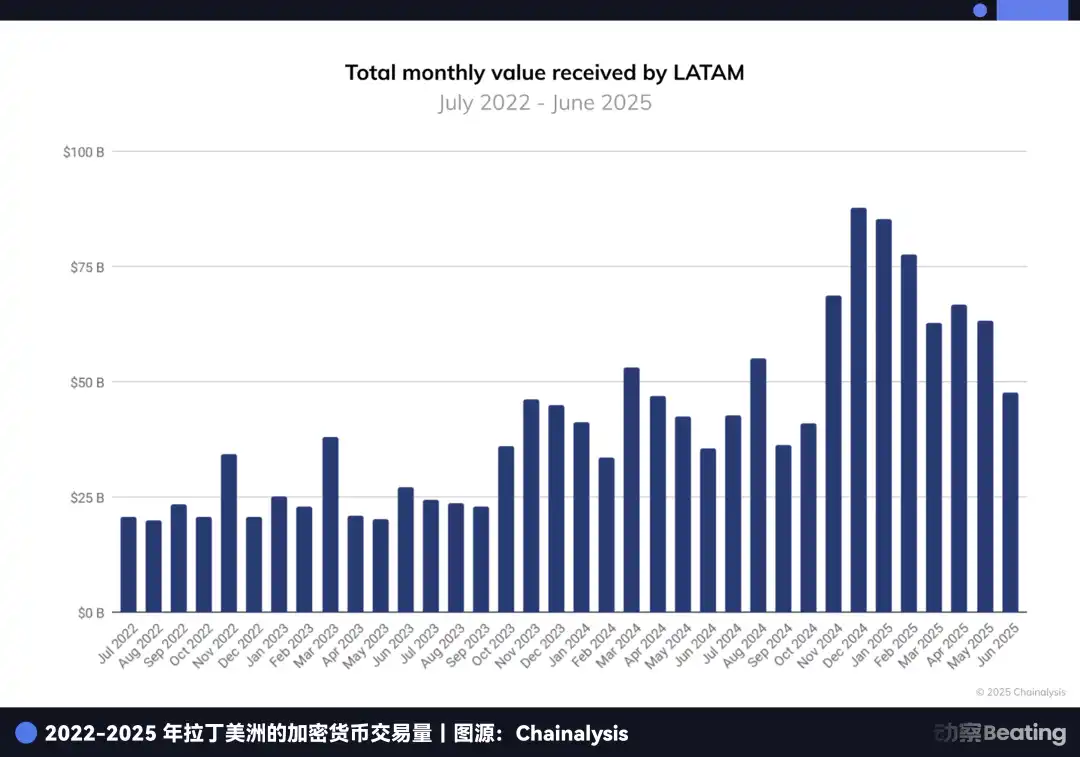
Compared to Manhattan bankers accustomed to俯瞰 from on high, local Fintech companies care more about the soil under their feet and具体的生计. In Brazil, for instance, even though only 60 million people have credit cards, the user base of the central bank-led Pix payment system surged to 170 million.

In 2024, Pix's total transaction volume reached $3.8 trillion, 1.7 times Brazil's GDP. Behind this data lies资金周转效率 pushed to the extreme.

Meanwhile, digital banking giant Nubank grew its user base from 1.3 million to 114 million in just eight years, capturing over 60% of Brazil's adult population, and recorded nearly $2 billion in net profit in 2024.

Payment giant Mercado Pago swept across Latin America with $142 billion in payment volume, while remittance market newcomer Bitso硬生生 tore a 4% share of the U.S.-Mexico remittance market from traditional giants like Western Union.

Additionally, non-dollar channels and the underground economy have converged. The $5 billion currency swap between Argentina and China, and the ongoing推进 of local currency settlement between China and Brazil, are becoming a symmetrical choice against the backdrop of great power博弈. This脱钩 from the top down is granting Latin American trade a form of breathing room independent of the dollar.

On the streets of Argentina, a black market exchange rate known as the "Dólar Blue" has become the全民的经济晴雨表. Its huge gap with the official rate赤裸裸地揭示了 the bankruptcy of official credit and has催生 countless street currency exchange vendors called "arbolitos" (little trees) and "cuevas cripto" (crypto caves)专门 trading USDT.

The穿透力 of stablecoins, the渗透率 of local Fintech, the strategic choices of non-U.S. channels, and the野蛮生长 of the underground economy共同编织 this financial network that摆脱 centralized control.

Who is Handing Over the Knife?

Any species' breakthrough requires not only an internal will to survive but also often a剧烈催化 from the external environment. The driving force behind the rise of Latin America's parallel financial system恰恰 comes from the U.S., which is trying to defend the old order.

A series of operations by Washington not only failed to stifle the sprouts of the new order but instead provided the most ample nourishment for its expansion.

The first push came from politicians'强行征用 of financial channels.

The Trump administration once proposed a 1% tax on remittances sent from the U.S. This might seem like a minor抽成, but against the backdrop of Latin America's annual remittances exceeding $150 billion, it was enough to shake the lifelines of tens of millions of low-income families.

Remember, in traditional financial channels, sending $200 to Latin America would incur fees of $6~8 just from giants like Western Union.

This additional 1% tax became the last straw that broke the camel's back. This tax slip sent an extremely dangerous signal to every laborer: traditional remittance channels are not only expensive but can also become pawns in political games at any time.

Trump might have thought he was building a financial wall, but客观上 he驱赶 tens of millions of users to flee the old system and collectively rush into the embrace of stablecoins and local Fintech. When the cost of survival is pushed to the limit by politics, users will migrate at an unprecedented speed.

The second push stems from a severe撕裂 among Wall Street elites regarding利益分配.

As mentioned earlier, to comply with increasingly strict anti-money laundering regulations, Wall Street giants initiated a "de-risking" movement,主动切断 business ties with "high-risk areas" like Latin America. JPMorgan Chase, as early as 2014, closed tens of thousands of Latin American client accounts citing "excessive risk."

By the end of 2025, JPMorgan Chase, on one hand, froze the bank accounts of two stablecoin companies operating in Venezuela, BlindPay and Kontigo, playing the role of the dollar system's most loyal "gatekeeper." On the other hand, it was疯狂囤积 physical precious metals to hedge against dollar risk.

Public data shows that JPMorgan Chase has become the world's largest holder of physical silver. More intriguingly, JPMorgan moved large amounts of silver from a deliverable state to a non-deliverable state.

This means this silver, while sitting in warehouses, is no longer allowed to be used to fulfill futures contract deliveries. In other words, JPMorgan is taking these "chips" off the gambling table and locking them away in its own rarely seen backyard.

While the dollar hegemony is still effective, these Wall Street elites use the rules to maximize their financial control; but at the same time, they are also preparing for the eventual collapse of this system. JPMorgan is both the number one maintainer of the existing dollar system and its biggest "internal short."

Thus, the more the U.S. tries to tighten the dollar's reins, the more the dollar leaps over the wall in a wild manner, seeking safer pastures. When core players within a system start preparing escape routes for the post-dollar era, this control inevitably moves towards its opposite.

The Curse of Hegemony

This dilemma of "control" versus "loss of control" is not unique to this era. If we look back to the foggy 19th century, in the long river of financial history, we can hear a distant and similar echo—the decline of the British pound.

In that long century, the pound sterling was the undisputed world currency. But when a currency truly belongs to the whole world, it no longer完全 belongs to its home country.

To output pounds to the world, Britain was forced to maintain a chronic trade deficit. This cost directly led to the hollowing out of its manufacturing industry and the慢性衰落 of its national power. In 1931, after experiencing three severe runs on the pound, Britain was forced to abandon the gold standard, and pound hegemony fell from grace.

The British Empire learned a lesson with a century of tuition: the more you try to use currency status to harvest the world, the more you accelerate the透支 of its vitality.

Today, the U.S. dollar is stepping into the same dilemma.

The more Washington tries to use the dollar as a weapon, employing sanctions, taxes, and harsh regulations to encircle and suppress, the more likely the dollar is to加速离家出走. You are明修栈道 (feigning movement in one direction), while the populace is暗渡陈仓 (advancing secretly another way).

Stablecoins, local Fintech, non-U.S. trade channels, the野蛮生长 underground economy... all these various choices are essentially隐秘路径 for the dollar to escape Washington's control.

From the近乎执念囤积 of physical gold by central banks in recent years to the关门落锁 of top financial capital on physical assets, this collective choice is shifting the global financial center of gravity back towards the era of hard assets.

This transformation is not happening amidst the total collapse of the old empire, but is being spontaneously deconstructed by hundreds of millions of tiny individuals and enterprises in the apparent prosperity of the present-day U.S.

The echo of history is already circling over Washington, its sound clearly audible.

Related Questions

QWhat are the three main financial weapons the United States has historically used to exert control over Latin America, according to the article?

AThe three main financial weapons are debt, dollarization, and sanctions.

QHow did China's entry into the WTO in 2001 impact Latin America's ability to manage its debt, as described in the text?

AIt triggered a decade-long supercycle in commodities, making Latin America, as a major supplier of raw materials, a huge beneficiary. This influx of foreign exchange allowed countries like Brazil and Argentina to pay off their IMF debts early and gain leverage in negotiations with Western creditors.

QWhat is the term used in the article to describe the phenomenon where the Latin American populace uses the U.S. dollar for its stability but rejects Washington's political rules?

ADe-Americanized dollarization.

QWhat specific action by the Trump administration in 2026 is cited as the culmination of the U.S. sanctions strategy against Venezuela?

AA military operation to 'take away' (capture) President Maduro on charges related to 'drug terrorism' and criminal indictments, followed by an announcement that major oil companies would take over and invest billions to repair infrastructure.

QThe article draws a historical parallel between the current situation of the U.S. dollar and the decline of a previous global currency. Which currency is it?

AThe British Pound Sterling.

Related Reads

Trading

Spot
Futures

Hot Articles

What is SONIC

Sonic: Pioneering the Future of Gaming in Web3 Introduction to Sonic In the ever-evolving landscape of Web3, the gaming industry stands out as one of the most dynamic and promising sectors. At the forefront of this revolution is Sonic, a project designed to amplify the gaming ecosystem on the Solana blockchain. Leveraging cutting-edge technology, Sonic aims to deliver an unparalleled gaming experience by efficiently processing millions of requests per second, ensuring that players enjoy seamless gameplay while maintaining low transaction costs. This article delves into the intricate details of Sonic, exploring its creators, funding sources, operational mechanics, and the timeline of significant events that have shaped its journey. What is Sonic? Sonic is an innovative layer-2 network that operates atop the Solana blockchain, specifically tailored to enhance the existing Solana gaming ecosystem. It accomplishes this through a customised, VM-agnostic game engine paired with a HyperGrid interpreter, facilitating sovereign game economies that roll up back to the Solana platform. The primary goals of Sonic include: Enhanced Gaming Experiences: Sonic is committed to offering lightning-fast on-chain gameplay, allowing players and developers to engage with games at previously unattainable speeds. Atomic Interoperability: This feature enables transactions to be executed within Sonic without the need to redeploy Solana programmes and accounts. This makes the process more efficient and directly benefits from Solana Layer1 services and liquidity. Seamless Deployment: Sonic allows developers to write for Ethereum Virtual Machine (EVM) based systems and execute them on Solana’s SVM infrastructure. This interoperability is crucial for attracting a broader range of dApps and decentralised applications to the platform. Support for Developers: By offering native composable gaming primitives and extensible data types - dining within the Entity-Component-System (ECS) framework - game creators can craft intricate business logic with ease. Overall, Sonic's unique approach not only caters to players but also provides an accessible and low-cost environment for developers to innovate and thrive. Creator of Sonic The information regarding the creator of Sonic is somewhat ambiguous. However, it is known that Sonic's SVM is owned by the company Mirror World. The absence of detailed information about the individuals behind Sonic reflects a common trend in several Web3 projects, where collective efforts and partnerships often overshadow individual contributions. Investors of Sonic Sonic has garnered considerable attention and support from various investors within the crypto and gaming sectors. Notably, the project raised an impressive $12 million during its Series A funding round. The round was led by BITKRAFT Ventures, with other notable investors including Galaxy, Okx Ventures, Interactive, Big Brain Holdings, and Mirana. This financial backing signifies the confidence that investment foundations have in Sonic’s potential to revolutionise the Web3 gaming landscape, further validating its innovative approaches and technologies. How Does Sonic Work? Sonic utilises the HyperGrid framework, a sophisticated parallel processing mechanism that enhances its scalability and customisability. Here are the core features that set Sonic apart: Lightning Speed at Low Costs: Sonic offers one of the fastest on-chain gaming experiences compared to other Layer-1 solutions, powered by the scalability of Solana’s virtual machine (SVM). Atomic Interoperability: Sonic enables transaction execution without redeployment of Solana programmes and accounts, effectively streamlining the interaction between users and the blockchain. EVM Compatibility: Developers can effortlessly migrate decentralised applications from EVM chains to the Solana environment using Sonic’s HyperGrid interpreter, increasing the accessibility and integration of various dApps. Ecosystem Support for Developers: By exposing native composable gaming primitives, Sonic facilitates a sandbox-like environment where developers can experiment and implement business logic, greatly enhancing the overall development experience. Monetisation Infrastructure: Sonic natively supports growth and monetisation efforts, providing frameworks for traffic generation, payments, and settlements, thereby ensuring that gaming projects are not only viable but also sustainable financially. Timeline of Sonic The evolution of Sonic has been marked by several key milestones. Below is a brief timeline highlighting critical events in the project's history: 2022: The Sonic cryptocurrency was officially launched, marking the beginning of its journey in the Web3 gaming arena. 2024: June: Sonic SVM successfully raised $12 million in a Series A funding round. This investment allowed Sonic to further develop its platform and expand its offerings. August: The launch of the Sonic Odyssey testnet provided users with the first opportunity to engage with the platform, offering interactive activities such as collecting rings—a nod to gaming nostalgia. October: SonicX, an innovative crypto game integrated with Solana, made its debut on TikTok, capturing the attention of over 120,000 users within a short span. This integration illustrated Sonic’s commitment to reaching a broader, global audience and showcased the potential of blockchain gaming. Key Points Sonic SVM is a revolutionary layer-2 network on Solana explicitly designed to enhance the GameFi landscape, demonstrating great potential for future development. HyperGrid Framework empowers Sonic by introducing horizontal scaling capabilities, ensuring that the network can handle the demands of Web3 gaming. Integration with Social Platforms: The successful launch of SonicX on TikTok displays Sonic’s strategy to leverage social media platforms to engage users, exponentially increasing the exposure and reach of its projects. Investment Confidence: The substantial funding from BITKRAFT Ventures, among others, emphasizes the robust backing Sonic has, paving the way for its ambitious future. In conclusion, Sonic encapsulates the essence of Web3 gaming innovation, striking a balance between cutting-edge technology, developer-centric tools, and community engagement. As the project continues to evolve, it is poised to redefine the gaming landscape, making it a notable entity for gamers and developers alike. As Sonic moves forward, it will undoubtedly attract greater interest and participation, solidifying its place within the broader narrative of blockchain gaming.

1.3k Total ViewsPublished 2024.04.04Updated 2024.12.03

What is SONIC

What is $S$

Understanding SPERO: A Comprehensive Overview Introduction to SPERO As the landscape of innovation continues to evolve, the emergence of web3 technologies and cryptocurrency projects plays a pivotal role in shaping the digital future. One project that has garnered attention in this dynamic field is SPERO, denoted as SPERO,$$s$. This article aims to gather and present detailed information about SPERO, to help enthusiasts and investors understand its foundations, objectives, and innovations within the web3 and crypto domains. What is SPERO,$$s$? SPERO,$$s$ is a unique project within the crypto space that seeks to leverage the principles of decentralisation and blockchain technology to create an ecosystem that promotes engagement, utility, and financial inclusion. The project is tailored to facilitate peer-to-peer interactions in new ways, providing users with innovative financial solutions and services. At its core, SPERO,$$s$ aims to empower individuals by providing tools and platforms that enhance user experience in the cryptocurrency space. This includes enabling more flexible transaction methods, fostering community-driven initiatives, and creating pathways for financial opportunities through decentralised applications (dApps). The underlying vision of SPERO,$$s$ revolves around inclusiveness, aiming to bridge gaps within traditional finance while harnessing the benefits of blockchain technology. Who is the Creator of SPERO,$$s$? The identity of the creator of SPERO,$$s$ remains somewhat obscure, as there are limited publicly available resources providing detailed background information on its founder(s). This lack of transparency can stem from the project's commitment to decentralisation—an ethos that many web3 projects share, prioritising collective contributions over individual recognition. By centring discussions around the community and its collective goals, SPERO,$$s$ embodies the essence of empowerment without singling out specific individuals. As such, understanding the ethos and mission of SPERO remains more important than identifying a singular creator. Who are the Investors of SPERO,$$s$? SPERO,$$s$ is supported by a diverse array of investors ranging from venture capitalists to angel investors dedicated to fostering innovation in the crypto sector. The focus of these investors generally aligns with SPERO's mission—prioritising projects that promise societal technological advancement, financial inclusivity, and decentralised governance. These investor foundations are typically interested in projects that not only offer innovative products but also contribute positively to the blockchain community and its ecosystems. The backing from these investors reinforces SPERO,$$s$ as a noteworthy contender in the rapidly evolving domain of crypto projects. How Does SPERO,$$s$ Work? SPERO,$$s$ employs a multi-faceted framework that distinguishes it from conventional cryptocurrency projects. Here are some of the key features that underline its uniqueness and innovation: Decentralised Governance: SPERO,$$s$ integrates decentralised governance models, empowering users to participate actively in decision-making processes regarding the project’s future. This approach fosters a sense of ownership and accountability among community members. Token Utility: SPERO,$$s$ utilises its own cryptocurrency token, designed to serve various functions within the ecosystem. These tokens enable transactions, rewards, and the facilitation of services offered on the platform, enhancing overall engagement and utility. Layered Architecture: The technical architecture of SPERO,$$s$ supports modularity and scalability, allowing for seamless integration of additional features and applications as the project evolves. This adaptability is paramount for sustaining relevance in the ever-changing crypto landscape. Community Engagement: The project emphasises community-driven initiatives, employing mechanisms that incentivise collaboration and feedback. By nurturing a strong community, SPERO,$$s$ can better address user needs and adapt to market trends. Focus on Inclusion: By offering low transaction fees and user-friendly interfaces, SPERO,$$s$ aims to attract a diverse user base, including individuals who may not previously have engaged in the crypto space. This commitment to inclusion aligns with its overarching mission of empowerment through accessibility. Timeline of SPERO,$$s$ Understanding a project's history provides crucial insights into its development trajectory and milestones. Below is a suggested timeline mapping significant events in the evolution of SPERO,$$s$: Conceptualisation and Ideation Phase: The initial ideas forming the basis of SPERO,$$s$ were conceived, aligning closely with the principles of decentralisation and community focus within the blockchain industry. Launch of Project Whitepaper: Following the conceptual phase, a comprehensive whitepaper detailing the vision, goals, and technological infrastructure of SPERO,$$s$ was released to garner community interest and feedback. Community Building and Early Engagements: Active outreach efforts were made to build a community of early adopters and potential investors, facilitating discussions around the project’s goals and garnering support. Token Generation Event: SPERO,$$s$ conducted a token generation event (TGE) to distribute its native tokens to early supporters and establish initial liquidity within the ecosystem. Launch of Initial dApp: The first decentralised application (dApp) associated with SPERO,$$s$ went live, allowing users to engage with the platform's core functionalities. Ongoing Development and Partnerships: Continuous updates and enhancements to the project's offerings, including strategic partnerships with other players in the blockchain space, have shaped SPERO,$$s$ into a competitive and evolving player in the crypto market. Conclusion SPERO,$$s$ stands as a testament to the potential of web3 and cryptocurrency to revolutionise financial systems and empower individuals. With a commitment to decentralised governance, community engagement, and innovatively designed functionalities, it paves the way toward a more inclusive financial landscape. As with any investment in the rapidly evolving crypto space, potential investors and users are encouraged to research thoroughly and engage thoughtfully with the ongoing developments within SPERO,$$s$. The project showcases the innovative spirit of the crypto industry, inviting further exploration into its myriad possibilities. While the journey of SPERO,$$s$ is still unfolding, its foundational principles may indeed influence the future of how we interact with technology, finance, and each other in interconnected digital ecosystems.

54 Total ViewsPublished 2024.12.17Updated 2024.12.17

What is $S$

What is AGENT S

Agent S: The Future of Autonomous Interaction in Web3 Introduction In the ever-evolving landscape of Web3 and cryptocurrency, innovations are constantly redefining how individuals interact with digital platforms. One such pioneering project, Agent S, promises to revolutionise human-computer interaction through its open agentic framework. By paving the way for autonomous interactions, Agent S aims to simplify complex tasks, offering transformative applications in artificial intelligence (AI). This detailed exploration will delve into the project's intricacies, its unique features, and the implications for the cryptocurrency domain. What is Agent S? Agent S stands as a groundbreaking open agentic framework, specifically designed to tackle three fundamental challenges in the automation of computer tasks: Acquiring Domain-Specific Knowledge: The framework intelligently learns from various external knowledge sources and internal experiences. This dual approach empowers it to build a rich repository of domain-specific knowledge, enhancing its performance in task execution. Planning Over Long Task Horizons: Agent S employs experience-augmented hierarchical planning, a strategic approach that facilitates efficient breakdown and execution of intricate tasks. This feature significantly enhances its ability to manage multiple subtasks efficiently and effectively. Handling Dynamic, Non-Uniform Interfaces: The project introduces the Agent-Computer Interface (ACI), an innovative solution that enhances the interaction between agents and users. Utilizing Multimodal Large Language Models (MLLMs), Agent S can navigate and manipulate diverse graphical user interfaces seamlessly. Through these pioneering features, Agent S provides a robust framework that addresses the complexities involved in automating human interaction with machines, setting the stage for myriad applications in AI and beyond. Who is the Creator of Agent S? While the concept of Agent S is fundamentally innovative, specific information about its creator remains elusive. The creator is currently unknown, which highlights either the nascent stage of the project or the strategic choice to keep founding members under wraps. Regardless of anonymity, the focus remains on the framework's capabilities and potential. Who are the Investors of Agent S? As Agent S is relatively new in the cryptographic ecosystem, detailed information regarding its investors and financial backers is not explicitly documented. The lack of publicly available insights into the investment foundations or organisations supporting the project raises questions about its funding structure and development roadmap. Understanding the backing is crucial for gauging the project's sustainability and potential market impact. How Does Agent S Work? At the core of Agent S lies cutting-edge technology that enables it to function effectively in diverse settings. Its operational model is built around several key features: Human-like Computer Interaction: The framework offers advanced AI planning, striving to make interactions with computers more intuitive. By mimicking human behaviour in tasks execution, it promises to elevate user experiences. Narrative Memory: Employed to leverage high-level experiences, Agent S utilises narrative memory to keep track of task histories, thereby enhancing its decision-making processes. Episodic Memory: This feature provides users with step-by-step guidance, allowing the framework to offer contextual support as tasks unfold. Support for OpenACI: With the ability to run locally, Agent S allows users to maintain control over their interactions and workflows, aligning with the decentralised ethos of Web3. Easy Integration with External APIs: Its versatility and compatibility with various AI platforms ensure that Agent S can fit seamlessly into existing technological ecosystems, making it an appealing choice for developers and organisations. These functionalities collectively contribute to Agent S's unique position within the crypto space, as it automates complex, multi-step tasks with minimal human intervention. As the project evolves, its potential applications in Web3 could redefine how digital interactions unfold. Timeline of Agent S The development and milestones of Agent S can be encapsulated in a timeline that highlights its significant events: September 27, 2024: The concept of Agent S was launched in a comprehensive research paper titled “An Open Agentic Framework that Uses Computers Like a Human,” showcasing the groundwork for the project. October 10, 2024: The research paper was made publicly available on arXiv, offering an in-depth exploration of the framework and its performance evaluation based on the OSWorld benchmark. October 12, 2024: A video presentation was released, providing a visual insight into the capabilities and features of Agent S, further engaging potential users and investors. These markers in the timeline not only illustrate the progress of Agent S but also indicate its commitment to transparency and community engagement. Key Points About Agent S As the Agent S framework continues to evolve, several key attributes stand out, underscoring its innovative nature and potential: Innovative Framework: Designed to provide an intuitive use of computers akin to human interaction, Agent S brings a novel approach to task automation. Autonomous Interaction: The ability to interact autonomously with computers through GUI signifies a leap towards more intelligent and efficient computing solutions. Complex Task Automation: With its robust methodology, it can automate complex, multi-step tasks, making processes faster and less error-prone. Continuous Improvement: The learning mechanisms enable Agent S to improve from past experiences, continually enhancing its performance and efficacy. Versatility: Its adaptability across different operating environments like OSWorld and WindowsAgentArena ensures that it can serve a broad range of applications. As Agent S positions itself in the Web3 and crypto landscape, its potential to enhance interaction capabilities and automate processes signifies a significant advancement in AI technologies. Through its innovative framework, Agent S exemplifies the future of digital interactions, promising a more seamless and efficient experience for users across various industries. Conclusion Agent S represents a bold leap forward in the marriage of AI and Web3, with the capacity to redefine how we interact with technology. While still in its early stages, the possibilities for its application are vast and compelling. Through its comprehensive framework addressing critical challenges, Agent S aims to bring autonomous interactions to the forefront of the digital experience. As we move deeper into the realms of cryptocurrency and decentralisation, projects like Agent S will undoubtedly play a crucial role in shaping the future of technology and human-computer collaboration.

574 Total ViewsPublished 2025.01.14Updated 2025.01.14

What is AGENT S

Discussions

Welcome to the HTX Community. Here, you can stay informed about the latest platform developments and gain access to professional market insights. Users' opinions on the price of S (S) are presented below.

活动图片