The Traffic Secret Overlooked by 99% of Web3 Creators

marsbitPublished on 2025-12-29Last updated on 2025-12-29

Abstract

Summary: Most Web3 content creators struggle with storytelling not due to a lack of creativity, but because their content lacks contrast—the element of change or transformation that makes narratives compelling. Contrast can be as simple as shifting from "before" to "after," "expectation" to "reality," or "belief" to "realization." Without it, content remains flat and forgettable, even if informative. Web3 is filled with straightforward explanations of features, data, and benefits, but the human brain engages more deeply with unexpected or relatable shifts. For instance, instead of stating "Solana is fast and cheap," a personal moment like "I clicked send, switched tabs, and realized the transaction was already complete" creates impact through contrast. Embracing contrast often requires vulnerability—admitting mistakes, doubts, or surprises—which fosters authenticity and connection. To incorporate contrast, ask: "What changed here?" and include elements like past assumptions, moments of hesitation, or unexpected outcomes. In Web3’s noisy landscape, contrast helps content stand out by being genuinely relatable, not needing exaggeration.

Original Author:Noir

Original Compilation: Deep Tide TechFlow

Most Web3 content creators think they are not good at storytelling because they feel they 'lack creativity'.

But friend, that is usually not the real root of the problem.

Actually, the real problem is:

—Your content lacks contrast.

Hey, either the content:

sounds the same,

feels flat,

or has no variation.

And when nothing changes, there is no story to tell.

What is Contrast?
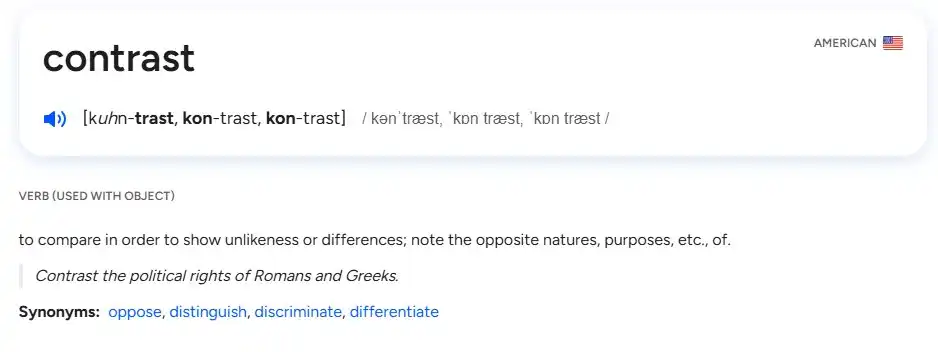
Contrast actually means that something is different from what came before.

Yes, it's that simple.

It doesn't require:

flowery language,

surprising plot twists,

or background music.

Essentially, contrast is a transformation, such as:

From "before" to "after"

From "expectation" to "reality"

From "belief" to "realization"

Without this transformation, your content is just information.

Yes, maybe it's useful, but memorable? Hmm... unlikely.

Why does a lack of contrast make content weak?

The Web3 world is full of:

features, data, promises, roadmaps......

But most content is presented too straightforwardly:

"This is what it does."

"These are its benefits."

"This is why you should care about it."

However, the brain isn't interested in this linear information.

It gets activated when something unexpected happens.

Why Content Loses Appeal Without Contrast

The Web3 world is flooded with:

features, data, promises, roadmaps......

But most content is presented too directly:

"This is its function."

"Why it's good."

"Why you need to care about it."

However, the brain isn't activated by this straight-line information.

It only wakes up when something unexpected occurs.

A Simple Example of "Contrast"

(You must have seen it countless times)

Expression without contrast:

Solana has fast transactions and low costs.

Your brain responds: Okay... and then?

Expression with contrast:

I clicked send, switched tabs, and then realized the transaction was already complete.

The same idea, but with a completely different impact.

The second expression creates a "moment." Get it?

Why Does "Contrast" Feel Uncomfortable?

(And why this is important)

Contrast often requires you to admit:

You were wrong, you were confused, you underestimated something.

That's why most people avoid it.

But this discomfort is precisely what makes content feel authentic.

People don't like flawless things.

They connect more easily with resonance and vulnerability.

When someone thinks: "Wait... I've felt that way too."

Congratulations, you've succeeded.

How to Add "Contrast" to Your Content?

Before publishing, ask yourself one question:

"What changed here?"

If you can't answer, try adding one of the following:

  • A mistaken assumption you once had
  • A moment of hesitation
  • An unexpected result
  • A 'small decision' you almost didn't make

It really doesn't need to be dramatic.

You just need a bit of relatable change.

Geek's Summary

Don't get me wrong, creativity does play an important role in storytelling.

But not everyone is naturally creative. This article is specifically for those who truly want to learn storytelling techniques.

Its core is: being sincere enough to show "transformation."

In the complex and noisy world of Web3,

"Contrast" is how you stand out without having to shout :)


Related Questions

QWhat is the main reason most Web3 content creators struggle with storytelling according to the article?

AThe main reason is that their content lacks contrast, not a lack of creativity.

QHow does the article define 'contrast' in the context of storytelling?

AContrast is defined as something that differs from what came before, representing a transformation such as from 'before' to 'after' or from 'expectation' to 'reality'.

QWhy does the absence of contrast make content less engaging?

AWithout contrast, content becomes mere information presented in a straightforward way, which fails to activate the brain as it only wakes up to unexpected changes.

QWhat example does the article use to illustrate content with and without contrast?

AWithout contrast: 'Solana's transactions are fast and cheap.' With contrast: 'I clicked send, switched pages, and then realized the transaction was already complete.'

QWhy is the discomfort of using contrast important for effective storytelling?

AThe discomfort, such as admitting being wrong or confused, makes the content feel authentic and relatable, as people connect more with vulnerability and shared experiences than with perfection.

Related Reads

Bitcoin Withdrawals Continue: 8 Years of Storage in a Coldcard Cold Wallet Ended in Zero

Coldcard Hardware Wallet Hacked: Losses Mount Due to Vulnerable Seed Generation A critical vulnerability in Coldcard hardware wallets has led to a continued wave of fund thefts. According to Galaxy Research, the total stolen has reached 1,367.05 BTC (approx. $88.6 million) from 4,585 addresses, a significant increase from the initial 594.5 BTC reported on July 30, 2026. Most of the stolen funds remain on the attackers' addresses. The issue is not with the current firmware, which Coinkite has updated, but with seed phrases generated on vulnerable devices between March 2021 and the release of fixed firmware versions. Due to a programmer error, devices switched from using a hardware random number generator to the software-based Yasmarang generator, which was initialized with publicly accessible data like the chip's serial number. This made the seed phrases predictable through offline brute-force attacks, meaning wallets remain at risk until funds are moved to a new wallet generated with the patched firmware. Affected devices include Mk2/Mk3 with firmware 4.0.1–4.1.9 (and up to 5.0.3), Mk4/Mk5 up to version 5.6.0, and Q models up to 1.5.0Q. The only exceptions are seeds created with a high-entropy method like at least 50 independent dice rolls or a strong unique BIP-39 passphrase. All other owners must generate a new seed on the fixed firmware and transfer their assets. A case highlighting the human impact involves a 39-year-old long-term investor who lost 2 BTC (approx. $130,000) in minutes. He had accumulated the Bitcoin over eight years through physical labor, viewing it as a financial lifeline and a retirement plan in a country suffering from hyperinflation. His story underscores that even conservative "buy and hold in cold storage" strategies can be compromised by such underlying technical flaws. From a technical perspective, this incident echoes historical failures where weak random number generators undermined cryptographic security, challenging the assumption that offline storage is automatically foolproof.

cryptonews.ru4h ago

Bitcoin Withdrawals Continue: 8 Years of Storage in a Coldcard Cold Wallet Ended in Zero

cryptonews.ru4h ago

Trading

Spot
活动图片





