The Playground of Whales: Why Retail Investors Are Fleeing DeFi

比推Published on 2026-01-27Last updated on 2026-01-27

Abstract

The article "Whales' Playground: Why Retail Investors Are Fleeing DeFi" argues that the era of decentralized finance as a tool for financial democratization has ended. Despite lower transaction costs on Layer 2 solutions and Ethereum mainnet, retail participation is declining due to several key issues: 1. **Low Gas Trap**: Cheap gas fees have turned DeFi into a high-effort, low-reward environment where users perform repetitive tasks for minimal airdrop rewards, resembling "digital labor." 2. **Unpredictable Rules**: Project teams frequently change rules retroactively (e.g., altering token distribution criteria or locking periods), undermining the "Code is Law" principle and leaving users vulnerable to arbitrary decisions. 3. **Lockup Traps**: High APY incentives often require long-term staking (1-4 years), but users risk illiquidity, token devaluation, and exploitation by whales who exit early. 4. **Risk-Reward Mismatch**: Low returns (5-10%) come with high risks: smart contract exploits, phishing, stablecoin depegging, and rug pulls. Retail investors bear disproportionate risk compared to potential gains. The author concludes that DeFi has become a playground for whales and predatory projects, advising retail investors to exit meaningless interactions, avoid lockups, and preserve capital by investing in core assets like Bitcoin instead.

Author: Chen Xiaomeng

Original Title: The Playground of Whales: Why Retail Investors Are Fleeing DeFi


The era of DeFi that once championed financial empowerment has effectively come to an end.

A few years ago, we were complaining that the $50+ gas fees on the Ethereum mainnet were barring retail investors. Now, Layer 2s have become ghost chains, and even the mainnet's gas fees have dropped to almost negligible levels after upgrades.

The barrier is gone. We expected a狂欢 (carnival) for retail, but instead, we got a silent mass exodus.

Why? Because everyone has finally woken up to the reality:

In this market, we worry ourselves sick ("carry the heart of selling white powder"), but only earn the meager profits of "selling flour."

I. The Low Gas Trap: From Noble Chain to Sweatshop
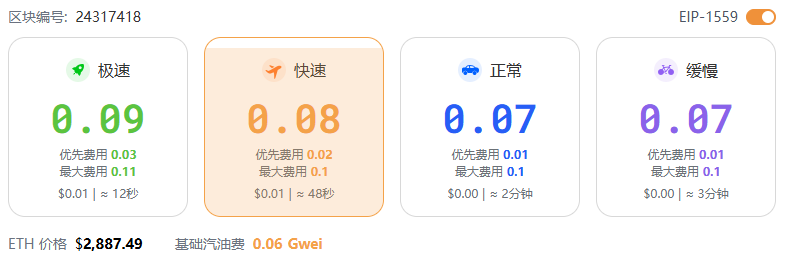
When gas was expensive, it at least filtered out low-quality interactions, forcing you to carefully consider every move. Now that gas is cheap, DeFi has turned into a massive electronic assembly line.

Because interaction costs are low, projects assume you should perform a massive number of interactions. So, for that tiny potential airdrop expectation, retail investors are forced to become proficient on-chain laborers: bridging, swapping, staking, providing LP... mechanically repeating these actions hundreds of times a day.

But this doesn't lead to higher returns. Instead, low gas has become a tool for projects to infinitely inflate their activity metrics.

This is on-chain manual labor.

II. The Capricious Dictator: Code is No Longer Law

"Code is Law" was once DeFi's most captivating narrative. But now, DeFi protocols not only have backdoors in their code, but the project teams' words have also become a sickle that can fall at any moment.

This is the current pain point retail investors hate the most—the uncertainty of the rules.

Project teams have long learned how to be ruthless. They invented undeliverable "points systems," like a carrot dangling in front of a donkey, luring you to constantly invest funds and time. After you've diligently farmed points for half a year, eagerly awaiting the payout, the project suddenly releases an announcement:

  • "For the fairness of the community, we will strictly crack down on Sybil attacks."

  • "Our VE model needs to be modified."

  • "For the development of the community, we have added a 45-day cooldown period."

Yesterday you were their cherished early supporter; today, because your IP address changed slightly, or your funds were withdrawn a day early, you are labeled a Sybil. The right to explain the rules belongs solely to the project team; they change them as they please.

This feeling is like going to work for a boss who promised daily wages. After you finish the job, the boss suddenly says, "For the long-term development of the company, we're withholding your pay. We'll see about paying you next year based on your performance."

In traditional business, this is called fraud. In DeFi, it's called DAO governance.

III. The Lock-up Prisoner: Capital Hunting Under High APY
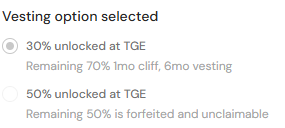
To maintain token prices, current DeFi protocols are obsessed with making users lock up their funds. Various Ve models keep emerging, often requiring periods of one year, two years, or even four years.

Projects lure you with extremely tempting APY. It looks like high returns, but the outcome is already scripted:

  • Liquidity Drain: Your principal is locked up, frozen and immobile.

  • Whale Front-Running: Project teams, early investors, and whales often have special vesting schedules for their tokens, or they can hedge their profits off-chain.

  • Price to Zero: By the time you can unlock, you might find that while you earned a 50% return in token terms, the token price has already dropped by 90%.

The essence of lock-ups is retail investors using their liquidity to provide exit liquidity for the whales. You covet the interest; they have their eyes on your principal.

IV. Extreme Mismatch of Risk and Reward

Let's do a realistic calculation.

Current DeFi protocols, excluding the shady meme coins that could rug pull at any moment, offer stablecoin yields around 5% – 10% for mainstream top protocols. This seems higher than banks, but what are the underlying risks?

  • Smart Contract Vulnerabilities: Hackers could drain the pool at any time.

  • Front-end Hijacking: Phishing sites are everywhere.

  • Depegging Risk: Algorithmic stablecoins or bridged assets can go to zero instantly.

  • Project Rug Pulls: Even projects with billions in TVL can disappear with the funds overnight.

Earning 5% yield while bearing 100% risk of total capital loss. This is the classic case of high risk, low reward. This level of return doesn't even cover the mental anguish you suffer while operating. Comparatively, simply buying and holding Bitcoin, or even using centralized exchange savings products, offers far better value for effort than messing around on-chain.

Conclusion: Refuse to Become On-Chain Fuel

DeFi innovation has stalled, but the methods of extraction have evolved.

At this stage, for most retail investors with less than $100,000 in capital, DeFi has lost its golden attributes. It is no longer a wilderness of opportunity but a playground meticulously designed by whales and unscrupulous project teams.

Every button, every rule, every suggestion to lock up funds here is designed to诱骗 (induce) you to hand over your chips.

So, perhaps the best strategy now is only one: Admit that current DeFi is indeed not working. Stop those meaningless interactions. Stop locking up funds for meager returns. Protect your principal. Convert it into truly valuable core assets, and then watch coldly from the sidelines as the whales battle each other.

Stop being an on-chain laborer. Your time and capital deserve a better destination.


Twitter:https://twitter.com/BitpushNewsCN

Bitpush TG Group:https://t.me/BitPushCommunity

Bitpush TG Channel: https://t.me/bitpush

Original Link:https://www.bitpush.news/articles/7606244

Related Questions

QAccording to the article, why are retail investors leaving DeFi despite lower transaction fees?

ARetail investors are leaving because the low fees have turned DeFi into a high-effort, low-reward environment where they must engage in massive, repetitive interactions for minimal potential airdrop rewards, while project teams and whales benefit disproportionately.

QWhat does the article criticize about the 'Code is Law' principle in current DeFi?

AThe article criticizes that 'Code is Law' is no longer valid because project teams now have backdoors in their code and can arbitrarily change rules (like retroactive Sybil checks or modifying tokenomics), making their announcements the true 'law' and creating extreme uncertainty for users.

QHow do lock-up mechanisms in DeFi protocols disadvantage retail investors, as described in the article?

ALock-up mechanisms trap retail investors' capital for long periods (1-4 years) with high APY promises, but ultimately lead to illiquidity, allow whales to dump their tokens first, and often result in significant token depreciation by the time retail can unlock, effectively making them provide exit liquidity for large players.

QWhat is the risk-reward mismatch the article identifies for users of mainstream DeFi protocols?

AThe mismatch is that users earn only 5-10% yields on stablecoins but are exposed to 100% principal risk from smart contract exploits, front-end hacks, asset de-pegging, or project rug pulls, making the potential returns not worth the high risk and stress compared to simpler alternatives like holding Bitcoin.

QWhat final strategy does the article suggest for retail investors with less than $100,000 in capital?

AThe article suggests they should承认现在的 DeFi 确实不行了 (admit that DeFi, as it is now, is not working), stop meaningless interactions and lock-ups, protect their principal by converting it into core valuable assets (like Bitcoin), and simply observe the 'whales playing in their playground' from the sidelines.

Related Reads

Stablecoins Finally Find Real Yield: An In-Depth Look at On-Chain Reinsurance Re | A Conversation with Re Founder Karan Saroya

Stablecoin Real Yield Found: A Deep Dive into On-Chain Reinsurance with Re's Karan Saroya As stablecoin supply exceeds $170 billion, the search for sustainable, non-speculative yield intensifies. Re, an on-chain reinsurance platform, provides an answer: connecting stablecoin capital to the trillion-dollar traditional reinsurance market. Re operates as a regulated reinsurer, accepting stablecoin deposits as collateral to back US insurance companies. These insurers pay premiums, generating yield that flows back to on-chain depositors. Currently supporting 35 insurers and underwriting $500 million, Re projects scaling to over $1 billion soon. Key insights from a Bankless podcast with founder Karan Saroya and investor Avichal of Electric Capital: 1. **Uncorrelated, Real-World Yield:** Re offers stablecoin holders access to reinsurance returns (targeting 12-14%+), an asset class entirely separate from crypto or equity markets. 2. **Operational Efficiency via Smart Contracts:** Re replaces traditional, labor-intensive capital fundraising with smart contracts, allowing a ~12-person team to compete with industry giants. 3. **Regulatory Leverage:** For every $1 of collateral, regulations allow backing $5-7 in written premiums. This leverage amplifies returns from the underlying risk-free rate. 4. **DeFi Integration:** Depositors receive receipt tokens, which can be used in protocols like Morpho for "looping," potentially pushing yields to 18-20%+. 5. **The "DeFi Mullet" Model:** A compliant front-end (regulated reinsurer) paired with a decentralized back-end (smart contracts, DeFi capital markets). 6. **RE Governance Token:** Modeled on Lloyd's of London, the token governs the central capital pool's allocation, counterparty acceptance, and parameters. 7. **Real Economic Impact:** Capital funds real-world productivity (factories, clinics, businesses) via insurance, moving beyond crypto's internal loops. The discussion highlights a pivotal moment: DeFi's supply-side infrastructure is now met by real demand for productive yield, potentially kickstarting a flywheel where vast on-chain stablecoin capital seeks these real-world returns.

链捕手33m ago

Stablecoins Finally Find Real Yield: An In-Depth Look at On-Chain Reinsurance Re | A Conversation with Re Founder Karan Saroya

链捕手33m ago

1996 or 1999? Walsh's First Test is 'How to View AI'

"1996 or 1999? Wall's First Big Test Is 'How to View AI'" Federal Reserve Chairman Wall's initial challenge is not whether to raise or cut rates, but a more fundamental judgment: what kind of boom is the current AI boom? This will determine the Fed's policy path and define his legacy. Economics is split between two opposing views, according to reporter Nick Timiraos. One sees imminent productivity gains that will increase supply and cool inflation, allowing the Fed to hold steady. The other argues that while productivity benefits are distant, demand shocks are here now, and waiting for data confirmation risks missing the intervention window, forcing sharper rate hikes later. Wall has signaled a leaning toward the first view, echoing 1996-era Alan Greenspan, who embraced strong, productivity-driven growth without fear of inflation. However, Wall faces a different macro environment than Greenspan did, with tariff pressures, expanding fiscal deficits, and diminishing globalization benefits, which could force more significant inflation pressures even if AI benefits materialize. Wall's logic, expressed before taking office, is that AI-driven productivity gains won't show in official data for years. If the Fed waits for confirmation, it might mistakenly tighten policy and choke off the very growth that could suppress inflation. This argues for using forward-looking narratives over lagging data. Chicago Fed President Austan Goolsbee presents a key counter-argument. He distinguishes between expected and unexpected productivity booms. A widely anticipated boom, like the current AI wave, can cause people to spend future wealth gains in advance, overheating the economy before productivity actually rises, thus requiring preemptive rate hikes. He cites rising costs for AI data centers as evidence of such overheating. Fed Governor Christopher Waller offers a rebuttal to Goolsbee, noting the "expected spending" mechanism only works if people can borrow against future income, which many households cannot do due to borrowing constraints. Wall also faces a paradox related to his desire to reduce the Fed's use of "forward guidance" (pre-announcing policy moves). This practice was established in 1999 when Greenspan began signaling hikes to avoid market shocks. If the economy follows a less optimistic path, Wall may be forced to choose between using the guidance he wants to abolish or risking market volatility by staying silent. The ultimate question defining Wall's first major test remains: Is this 1996 or 1999?

marsbit1h ago

1996 or 1999? Walsh's First Test is 'How to View AI'

marsbit1h ago

Ethereum Q1 2026 Report: Fees Decline, Users and Transaction Volume Hit New Highs

Ethereum Q1 2026 Report: Fees Down, Users & Transactions Hit New Highs Token Terminal's Q1 2026 report on Ethereum presents a pivotal development: the network achieved record highs in monthly active users (13.2M, +85.9% YoY), total transactions (200.4M, +81.5% YoY), and throughput (25.78 TPS), while transaction fees on the mainnet plummeted by 47.9% quarter-over-quarter. This shift is attributed to the network's strategic move into a "low fees for scale" phase, exemplified by the Fusaka upgrade which increased data capacity and lowered block space costs, releasing pent-up demand (a manifestation of Jevons's Paradox). The report highlights a core narrative shift for Ethereum: from a DeFi-centric blockchain to a global financial settlement layer. It maintains a dominant position in tokenized assets, holding majority market shares among top chains in stablecoins (61.8%), tokenized funds (73.0%), and tokenized commodities (84.0%). Growth in tokenized funds (+73.1% YoY) and commodities (+325.9% YoY) was particularly strong, driven by institutions like BlackRock and JPMorgan entering the space. Contrasting these usage gains, several USD-denominated value metrics declined in Q1: fully diluted market cap fell 30.3% QoQ, total value locked (TVL) dropped 11.0%, and ecosystem transaction volume decreased 24.0%. The report interprets this as Ethereum prioritizing long-term network expansion and cementing its role as the default settlement layer for finance over short-term fee capture. The commentary from Etherealize argues that, much like the early internet, Ethereum's open, permissionless model is poised to win over closed alternatives as institutional tokenization accelerates.

marsbit3h ago

Ethereum Q1 2026 Report: Fees Decline, Users and Transaction Volume Hit New Highs

marsbit3h ago

He Just Raised 2.7 Billion, and Li Fei-Fei Also Invested

Pete Florence, a former senior research scientist at Google DeepMind and a key contributor to the Vision-Language-Action (VLA) model architecture, is deliberately distancing his startup, Generalist AI, from the trendy "world model" label. He argues that the industry should prioritize concrete goals over buzzwords. His goal is to create robots that can perform a vast range of unseen tasks with high speed and success rates, without needing task-specific training data. Recently, his company raised $400 million (¥2.7 billion) at a $2 billion valuation. Notable investors include NVIDIA's NVentures, Bezos Expeditions, NFDG, as well as Xiaomi co-founder Lin Bin, Zoom founder Eric Yuan, and renowned AI scientist Fei-Fei Li. Florence's approach stems from his academic background at MIT under Professor Russ Tedrake, focusing on understanding the physical world. After joining DeepMind, he developed models like Transporter Network and co-created the VLA framework. He left in 2025 to found Generalist AI. The company has launched two models: GEN-0, which demonstrated that scaling laws apply to physical motion, and GEN-1. GEN-1 was trained on over 500,000 hours of physical interaction data collected via a specialized wearable device. It achieves a 99% success rate on precise mechanical tasks like folding boxes and maintains performance three times faster than its predecessor. Florence believes GEN-1 is reaching a commercial utility threshold similar to the GPT-3 inflection point. The substantial funding round, following GEN-1's release, signifies strong investor confidence in Generalist AI's practical, goal-driven path to creating versatile, useful robots, regardless of the "world model" terminology.

marsbit3h ago

He Just Raised 2.7 Billion, and Li Fei-Fei Also Invested

marsbit3h ago

Trading

Spot
Futures
活动图片