The Playground of Whales: Why Retail Investors Are Fleeing DeFi

marsbitPublished on 2026-01-27Last updated on 2026-01-27

Abstract

The article "Whales' Playground: Why Retail Investors Are Fleeing DeFi" argues that the era of decentralized finance as a tool for financial democratization has ended. Despite lower transaction costs due to Layer 2 solutions and reduced Ethereum gas fees, retail participation is declining. Key reasons include: - **Low Gas Trap**: Cheap transactions have turned DeFi into a high-effort, low-reward "digital factory," where users perform repetitive tasks for minimal airdrop rewards. - **Unpredictable Rules**: Projects frequently change terms retroactively (e.g., altering tokenomics, adding lock-ups, or labeling users as "sybils"), violating the "code is law" principle and eroding trust. - **Lock-up Traps**: High APY incentives often lock users’ funds long-term, while whales and insiders exit early, leaving retail investors exposed to token devaluation. - **Risk-Reward Mismatch**: Low returns (5-10%) come with high risks like smart contract exploits, phishing, depegging, and rug pulls, making DeFi less attractive than holding core assets like Bitcoin. The conclusion urges retail investors to protect capital, avoid futile interactions, and seek better opportunities elsewhere, as DeFi has become a playground dominated by whales and manipulative projects.

Author: Chen Xiaomeng

The era of DeFi that once championed financial empowerment has, in reality, come to an end.

A few years ago, we were complaining that the几十dollar Gas fees on the Ethereum mainnet were blocking retail investors. Now, Layer 2 has become a ghost chain, and even the mainnet's Gas fees have dropped to almost negligible levels after upgrades.

The barrier is gone. We expected a狂欢of retail investors, but instead, we got a silent mass exodus.

Why? Because everyone has finally come to their senses:

In this market, we take on the stress of selling cocaine, but only earn the profits of selling flour.

I. The Low Gas Trap: From Noble Chain to Electronic Factory
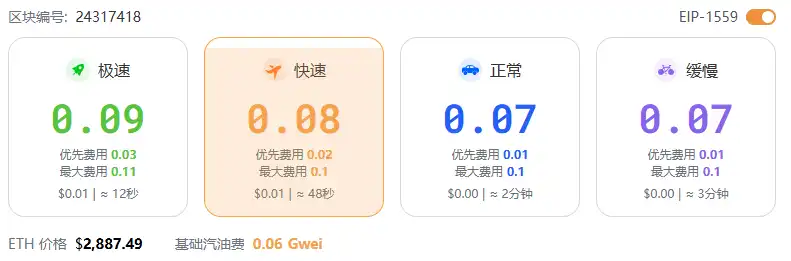
When Gas was expensive, it at least helped filter out low-quality interactions, forcing you to carefully consider every move. Now that Gas is cheap, DeFi has turned into a massive electronic assembly line.

Because interaction costs are low, projects assume you should perform a massive number of interactions. So, for that tiny potential airdrop expectation, retail investors are forced to become skilled laborers on the chain: cross-chain, swap, stake, provide LP... mechanically repeating these actions hundreds of times a day.

But this doesn't lead to higher returns. Instead, low Gas has become a tool for projects to infinitely inflate their activity metrics.

This is on-chain manual labor.

II. The Capricious Dictator: Code is No Longer Law

"Code is Law" was once DeFi's most captivating narrative. But now, DeFi protocols not only have backdoors in their code, but the teams' words are also a sickle随时waiting to fall.

This is the most hated pain point for retail investors today—the uncertainty of the rules.

Project teams have long learned how to be ruthless. They invented impossible-to-fulfill "points systems," like carrots dangling in front of a donkey, luring you to constantly invest money and time. After you've diligently grinded for half a year, eagerly awaiting the payout, the team suddenly issues an announcement:

  • "For the fairness of the community, we will strictly crack down on Sybil attacks."

  • "Our VE model needs to be modified."

  • "For the development of the community, we have added a 45-day cooldown period."

Yesterday you were their early supporter; today, because your IP address changed slightly or your funds were held for one day less, you are labeled a Sybil. The right to interpret the rules belongs solely to the project team—they change them as they please.

This feeling is like going to work for a boss who promised daily wages. After you finish the job, the boss suddenly announces: "For the long-term development of the company, we're withholding your pay. We'll see how you perform next year."

In traditional business, this is called fraud; in DeFi, it's called DAO governance.

III. The Locked-In Prisoner: Capital Hunting Under High APY
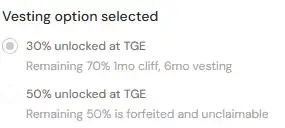
To maintain token prices, DeFi protocols are now extremely keen on locking users' funds. Various Ve models keep emerging, often requiring locks of one year, two years, or even four years.

Projects lure you with extremely tempting APY. It looks like high returns, but the outcome is already written:

  • Liquidity dries up: Your principal is locked, unable to move.

  • Whales front-run: Project teams, early investors, and whales often have special vesting schedules or can hedge their profits off-chain.

  • Price tanks to zero: When you can finally unlock, you find that while you earned a 50% return in token terms, the price has already dropped by 90%.

The essence of locking is retail investors using their liquidity to help whales cash out. You covet the interest; they eye your principal.

IV. Extreme Mismatch of Risk and Reward

Let's do some realistic math.

Current DeFi protocols, excluding those shady projects that might rug pull at any moment, offer stablecoin yields of only around 5% - 10% for mainstream ones. This seems higher than banks, but what are the risks behind it?

  • Smart contract vulnerabilities: Hackers could drain the pool at any time.

  • Front-end hijacking: Phishing sites are everywhere.

  • Depegging risk: Algorithmic stablecoins or bridged assets can go to zero instantly.

  • Project Rug Pull: Even projects with billions in TVL can disappear overnight with the funds.

Earning a 5% return while bearing a 100% risk of losing your principal. This is a classic case of high risk for low reward. This yield doesn't even cover the mental distress fee from the constant anxiety during operations. In comparison, simply buying and holding Bitcoin, or even using centralized exchange理财products, offers far better value than折腾on-chain.

Conclusion: Refuse to Become On-Chain Fuel

DeFi's innovation has stalled, but its harvesting tactics have evolved.

At this stage, for most retail investors with less than $100,000, DeFi has lost its golden attribute. It is no longer a wilderness full of opportunities, but a playground carefully designed by whales and unscrupulous project teams.

Every button, every rule, every lock-up suggestion here is designed to诱you into handing over your chips.

So, the best strategy now might be just one: Admit that current DeFi truly isn't working. Stop those meaningless interactions. Stop locking up funds for meager returns. Protect your principal. Convert it into truly valuable core assets, and then watch coldly as the whales fight amongst themselves.

Stop being an on-chain laborer. Your time and capital deserve a better place.

Related Questions

QWhy are retail investors leaving DeFi despite lower transaction fees?

ARetail investors are leaving because low fees have turned DeFi into a high-effort, low-reward environment where they perform repetitive tasks for minimal returns, while project owners exploit the system to inflate engagement metrics without fair compensation.

QHow do DeFi projects change rules arbitrarily, and what impact does this have?

ADeFi projects frequently alter rules, such as modifying tokenomics, adding lock-up periods, or labeling users as sybils, which creates uncertainty and distrust, making investors feel cheated after investing time and resources based on initial promises.

QWhat risks do investors face with high APY lock-up schemes in DeFi?

AInvestors risk illiquidity, front-running by whales, and significant token price depreciation, often resulting in capital losses despite high nominal yields, as locked assets become vulnerable to market manipulations and project failures.

QHow does risk-reward mismatch discourage participation in DeFi?

AWith stablecoin yields around 5-10%, investors bear risks like smart contract hacks, front-end attacks, stablecoin depegging, and rug pulls, making the potential returns insufficient to justify the high probability of total capital loss compared to safer alternatives like Bitcoin or centralized exchanges.

QWhat is the author's recommended strategy for retail investors in the current DeFi landscape?

AThe author advises retail investors to stop futile interactions and lock-ups, preserve capital, and allocate it to core assets like Bitcoin, avoiding DeFi's exploitative structures dominated by whales and predatory projects.

Related Reads

What Happens to Ethereum Developer Tools After the Grants Run Out?

On February 27th, the Ethereum Foundation (EF) announced Project Odin, a structured sustainability support program designed for a select group of strategic, previously grant-funded teams. Unlike a standard grant, Odin offers a long-term advisory mechanism focused on helping these teams establish credible, sustainable paths within a two-year framework, thereby reducing long-term dependence on single funding sources. The program addresses a critical post-grant challenge: how essential public goods, especially major developer tools, can achieve financial sustainability beyond initial funding. While grants from EF and programs like Gitcoin or RetroPGF remain vital for startups and research, they often fall short for mature, widely-used infrastructure. Tools like compilers, languages, and network stacks are deeply embedded but struggle with monetization, trapped between being too foundational to lose and too public to generate natural revenue. Project Odin provides teams with a dedicated Strategic Advisor to guide them through a three-phase process: 1) analyzing current funding and realistic options, 2) validating potential paths with stakeholders, and 3) executing plans, which may include crafting support contracts, service agreements, or other recurring revenue models. The first pilot participant is Vyper, a critical smart contract language for the EVM, highlighting the need for sustainable models for core infrastructure. The initiative reframes the public goods conversation from "who should be funded" to "how do already-proven teams avoid perpetual funding crises?" It encourages ecosystem participants—protocols and projects that depend on these tools—to view sustainable support not just as charity, but as essential risk management for their own operational supply chains.

marsbit20m ago

What Happens to Ethereum Developer Tools After the Grants Run Out?

marsbit20m ago

MARA Reports Q1 Revenue Below Expectations, Net Loss of $1.3 Billion, Stock Plunges After Hours

Bitcoin mining firm MARA Holdings reported disappointing Q1 2024 results, causing its stock to erase all daily gains and fall 3.44% in after-hours trading. Revenue dropped 18% year-over-year to $174.6 million, missing Wall Street estimates of $192.7 million. The company posted a net loss of $1.3 billion, a significant increase from a $533.4 million loss a year ago, primarily driven by unrealized losses on its holdings of 38,689 Bitcoin, which depreciated in value during the quarter. MARA also sold over 15,100 BTC in late March to repurchase debt at a discount. The broader mining environment remains challenging due to a 35% decline in Bitcoin's price from its all-time high and a nearly 30% increase in mining difficulty over the past year. MARA's market cap ranking among U.S. miners has slipped to seventh. Critically, the company announced a strategic pivot away from Bitcoin mining expansion. It stated it has no plans to purchase new mining equipment and is fully transitioning toward AI data centers. Its strategy involves retrofitting existing mining sites for AI and high-performance computing (HPC) and leveraging its recent $1.5 billion acquisition of Long Ridge Energy & Power, a gas-fired power plant and data center. This infrastructure could eventually support 600 MW of AI compute capacity, allowing MARA to redeploy up to 90% of its non-custodial mining power for AI and IT workloads.

marsbit20m ago

MARA Reports Q1 Revenue Below Expectations, Net Loss of $1.3 Billion, Stock Plunges After Hours

marsbit20m ago

The AI Investment Landscape Is Being Reshaped: Beyond the 'Magnificent Seven', What Opportunities Lie in the Semiconductor Supply Chain?

AI Investment Map is Reshaping: Opportunities Beyond the 'Magnificent Seven' Since ChatGPT ignited the AI wave, investment initially focused on the "Magnificent Seven" tech giants dominating cloud infrastructure. However, the rise of DeepSeek and debates on AI capital expenditure effectiveness are shifting this dynamic. Investors now recognize opportunities deeper in the supply chain—the companies providing the essential "picks and shovels." Early concerns about an AI investment "arms race" and potential low returns were partly alleviated by strong Q1 earnings from cloud providers, validating robust compute demand. This has highlighted a more certain investment thesis: regardless of which AI applications ultimately win, massive capital expenditure will first fuel demand for semiconductors and related components. This "pick-and-shovel" logic has driven semiconductor ETFs to record highs. Key beneficiaries include: * **Memory Chipmakers (e.g., SK Hynix, Samsung, Micron)**: High Bandwidth Memory (HBM) is a critical bottleneck for AI training. * **Photonics Companies**: Crucial for high-speed data transfer within AI data centers. * **The Broader "AI-11" Semiconductor Ecosystem**: This encompasses foundries & lithography (TSMC, ASML), logic & custom chips (AMD, Broadcom, Intel, Marvell), and enterprise storage (SanDisk, Western Digital). Every dollar of AI infrastructure spending flows through this chain. While the "Magnificent Seven" remain dominant in market size, their earnings growth premium over the rest of the S&P 500 ("S&P 493") is narrowing. Market attention and marginal investment are shifting towards the expanding semiconductor supply chain. The investment narrative is evolving from "betting on the ultimate AI winner" to "investing in the certainty of the infrastructure build-out." Understanding this shift from the demand side to the supply side is key to identifying future AI investment opportunities.

marsbit49m ago

The AI Investment Landscape Is Being Reshaped: Beyond the 'Magnificent Seven', What Opportunities Lie in the Semiconductor Supply Chain?

marsbit49m ago

Trading

Spot
Futures
活动图片


