The Person Who Made $69 Million from NFTs Four Years Ago Is Still Making Money

深潮Published on 2025-12-10Last updated on 2025-12-10

Abstract

Four years after making $69 million from an NFT sale, Beeple continues to innovate and profit in the digital art space. Despite the decline in the NFT market, he recently launched "Regular Animals" at Art Basel—a collection of 256 eerie robotic dogs with human faces resembling figures like Musk, Warhol, and Picasso. These AI-driven sculptures use cameras and visual algorithms to create art based on their surroundings. The NFTs, initially given away for free, now trade for over 10 ETH (around $35,000) on OpenSea, valuing the giveaway near $9 million. A physical series of 1,024 pieces is also available, with listings reaching $6,500 on eBay—though the digital versions remain more valuable. Beeple, who once struggled to sell art for over $100, now operates a large studio with a team of artists and engineers, including a former Boeing engineer and a renowned art curator. His work continues to bridge crypto and traditional art, gaining attention from outlets like WSJ.

Written by: Cookie, Lüdong

beeple, the man who sold one NFT for a staggering $69 million, has long been seen as a symbol of the golden age of NFTs that once was.

Although the glory of NFTs has faded, beeple and his team have remained active in the NFT space. At this year's Art Basel, he brought another "golden dog" to the currently quiet NFT market—Regular Animals.

Yesterday, multiple Regular Animals were sold on OpenSea for over 10 ETH (approximately $35,000) each. These artworks were given away for free at Art Basel, with a total of 256 pieces. At this price, beeple essentially gave away nearly ten million dollars worth of NFTs at Art Basel.
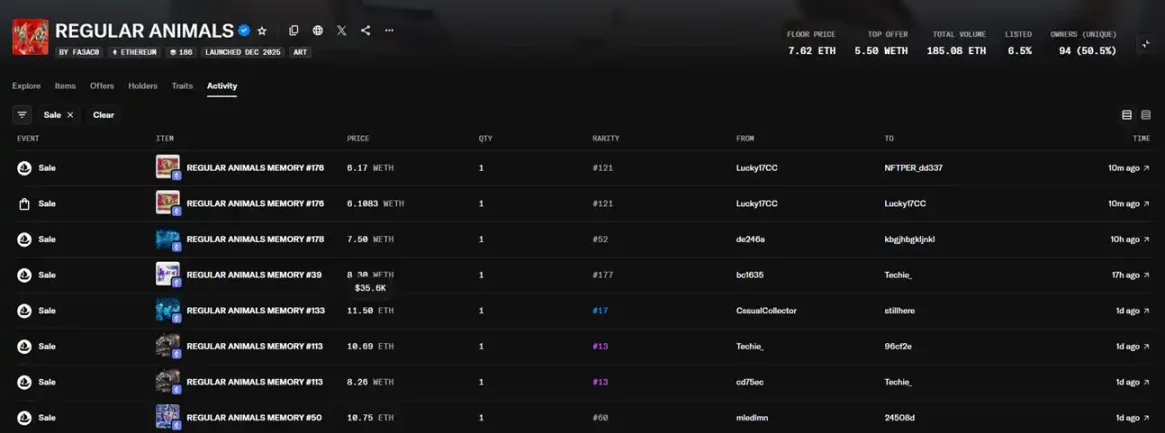
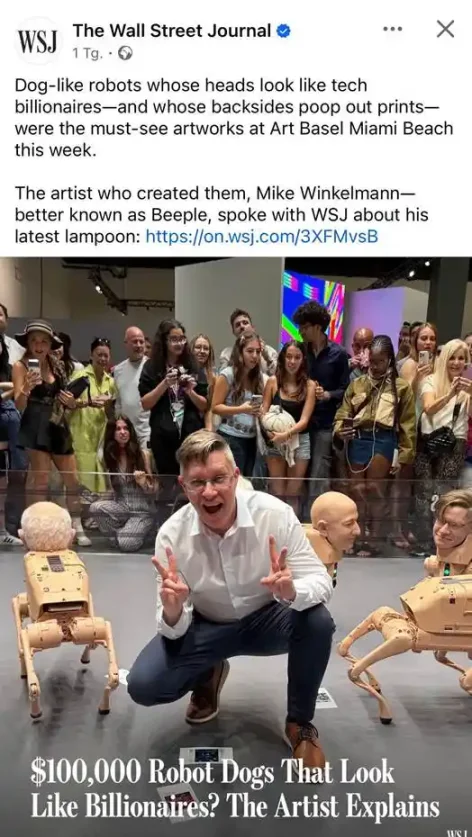
The project that beeple and his team brought to Art Basel is Regular Animals. These are robotic dogs, as shown in the image below. They look somewhat eerie because these robotic dogs have human faces, and they are faces of well-known figures such as Musk, Andy Warhol, Zuckerberg, Picasso, and even beeple himself.
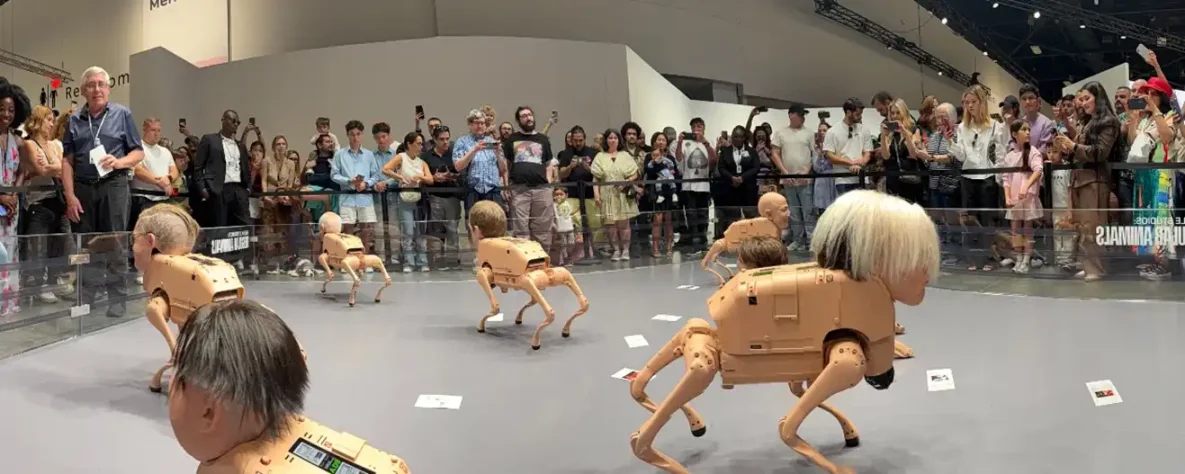
Of course, it's not just about the eerie visual effect. These robotic dogs use the cameras on their heads to observe their surroundings and employ an evolving visual algorithm to create artworks.
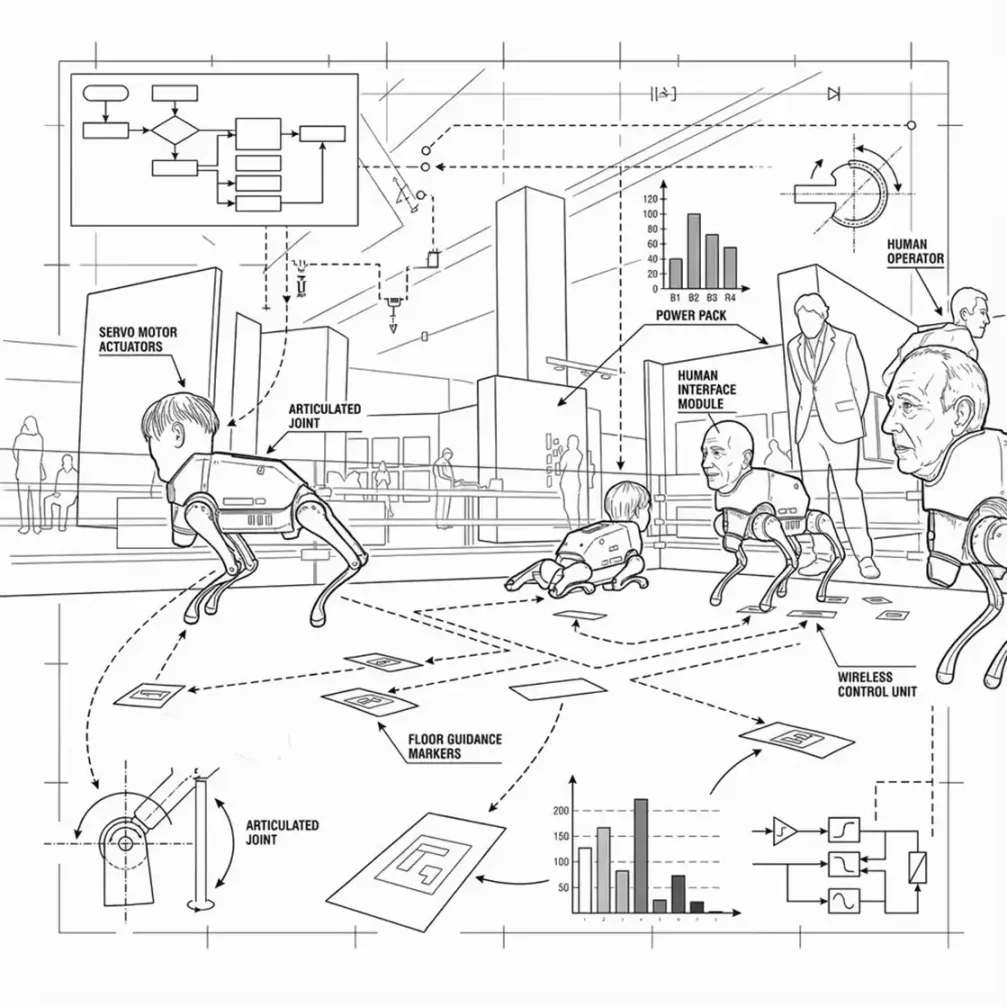
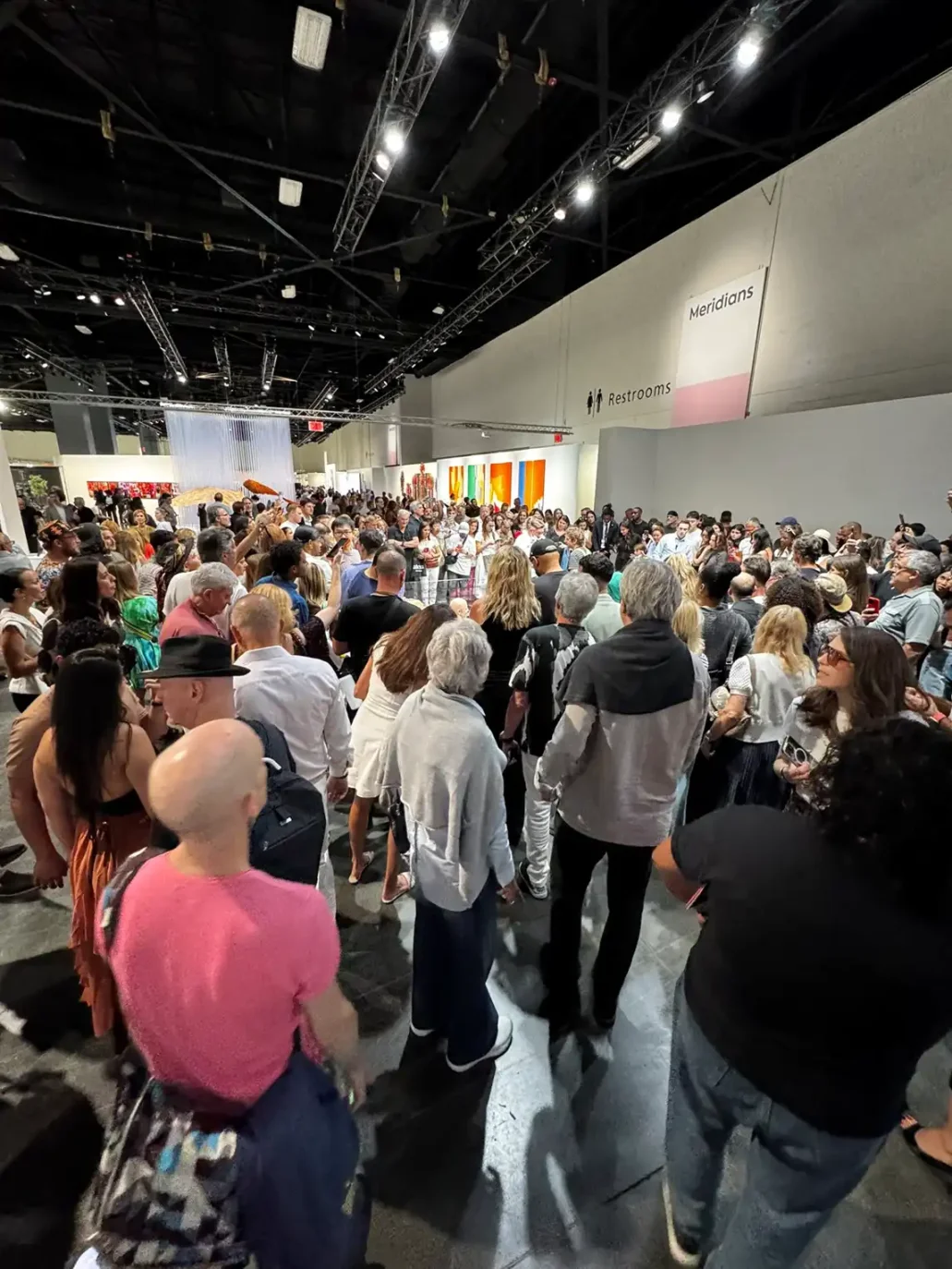
The selection of these famous figures is not arbitrary. The reason for choosing the aforementioned celebrities is that they have influenced how we view the world, whether through algorithms, art, or politics. As humans, we observe the world through these perspectives, and so do these robotic dogs. At Art Basel, these robotic dogs and humans observed each other, and each moment of observation became an artwork created by the robotic dogs. These artworks are also like autobiographies of these robotic dogs.
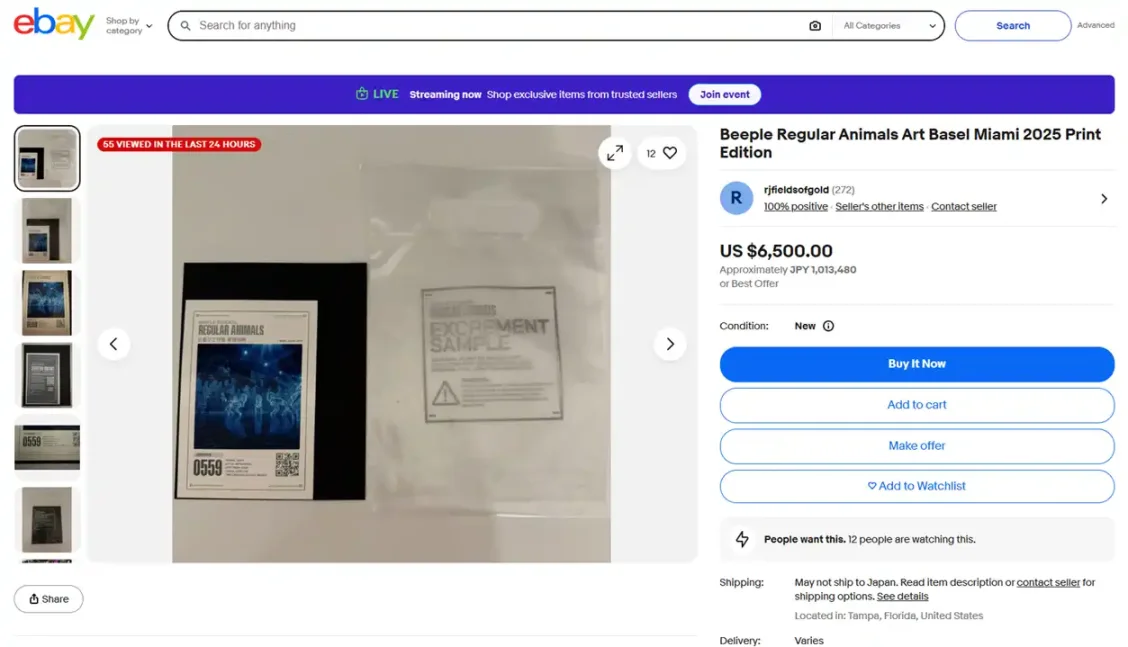
Interestingly, Regular Animals also has a physical series, with a total of 1,024 pieces. On eBay, someone has already listed one for a fixed price of $6,500. The market's valuation is that NFTs are far more valuable than physical paintings, reminiscent of Damien Hirst's "The Currency" series years ago, which forced owners to choose between physical and NFT versions.
Before achieving great success in the NFT field, beeple had been creating art every day since 2007 but had never sold anything for more than $100. After gaining fame and fortune, beeple did not squander it like some artists or crypto project teams. Instead, he acquired a studio/gallery of about 460 square meters, built a team of dozens of 3D artists, engineers, and researchers (even including a former Boeing engineer), invited Carolyn Christov-Bakargiev, the former director of the Castello di Rivoli Museum of Contemporary Art, as an advisor, and continuously exhibited at art shows around the world while creating new artworks.

This exhibition of beeple's robotic dogs has not only gained attention in the crypto circle due to its price but has also been covered by traditional media outlets like WSJ.
Related Questions

QWho is Beeple and what is he known for in the NFT world?

ABeeple is an artist who gained fame for selling an NFT for $69 million, symbolizing the golden era of NFTs.

QWhat is the name of Beeple's latest NFT project featured at the Basel Art Show?

ABeeple's latest project is called 'Regular Animals,' which features robotic dogs with human faces of famous personalities.

QHow many Regular Animals NFTs were distributed for free at the Basel Art Show, and what was their estimated total value?

A256 Regular Animals NFTs were distributed for free at the Basel Art Show, with an estimated total value of nearly $9 million based on secondary market sales.

QWhat unique ability do the Regular Animals robotic dogs have?

AThe Regular Animals robotic dogs use cameras to observe their surroundings and employ an evolving visual algorithm to create artworks, which serve as their autobiographies.

QHow has Beeple's approach to his career evolved since his NFT success?

ABeeple has established a large studio, assembled a team of artists and engineers, and continues to create and exhibit artworks globally, focusing on innovation rather than extravagance.

Related Reads

U.S. Treasury Yield at 5% Frightens AI Investors

U.S. Treasury Yields Surpass 5%, Spooking AI Investors Recent weeks have seen a sharp rise in long-term U.S. Treasury yields, with the 10-year and 30-year rates climbing 34 and 45 basis points, respectively. The 30-year yield has exceeded 5%, reaching its highest level since 2004. This surge in the global risk-free rate anchor has triggered a broad re-pricing of assets, impacting equities, currencies, and commodities, including the volatile AI sector. The primary driver is a fundamental imbalance in bond market supply and demand. Persistent U.S. fiscal expansion and massive Treasury issuance are the root cause. Concurrently, demand from traditional large buyers—foreign central banks and the Federal Reserve—has waned, shifting the burden to commercial financial institutions whose investment strategies increase market volatility. A significant marginal factor is the AI-driven corporate debt boom. Tech giants like Amazon, Alphabet, and Microsoft have issued over $1200 billion in bonds recently to fund capital expenditures, creating competition for investor capital and putting upward pressure on Treasury yields. Furthermore, resilient inflation data and expectations of a more hawkish Federal Reserve under Chair Wash have pushed up long-term inflation risk premiums. For the AI investment theme, higher yields pose a serious valuation challenge. They systematically raise the discount rate for future earnings, pressuring highly-valued tech stocks. This is a key factor behind the recent correction and profit-taking in previously crowded trades like semiconductor memory. The situation echoes the pre-2008 financial crisis period, where high financing costs exposed underlying asset-liability mismatches. There are concerns that slowing growth in AI monetization (e.g., Anthropic's Annual Recurring Revenue) may struggle to justify massive debt-fueled capital spending, especially under higher interest rates. Investor memories of the 2007 crisis are fueling a valuation reassessment. Additionally, the AI industry's own rush to issue debt before rates climb further exacerbates market liquidity strain, potentially creating a cycle where corporate borrowing contributes to the very high-rate environment that threatens its profitability.

marsbit3m ago

U.S. Treasury Yield at 5% Frightens AI Investors

marsbit3m ago

Breaking News, Fable 5.1 Leaked, Claude Experiences Another Global Major Outage

Breaking News: Fable 5.1 Leaked, Claude Faces Another Global Outage Today, Fable 5.1, the successor to Fable 5, was reportedly leaked and is in limited灰度 testing. Some Claude users are allegedly gaining free access. Reliable leaker leo@synthwavedd disclosed this, suggesting users of Claude Web端 with Fable 5 or Claude Code may already be on Fable 5.1. This follows Anthropic's recent internal development of a Model 2 stronger than Mythos, which it stated would not be released. Patterns suggest a full rollout of Fable 5.1 is imminent, potentially by late August, likely maintaining current pricing. The demand stems from Fable 5's history: launched with Mythos 5 in June, its public version included restrictive "safety classifiers," leading to a brief suspension and ongoing performance limitations, fueling developer desire for an improved model. In a related incident, Claude suffered a major global outage today, affecting all models and platforms for nearly 3 hours. This marks the 166th service disruption this year, with 7 occurring in the past five days alone. The frequent downtime is potentially linked to the model leak and underlying compute strain, despite Anthropic's skyrocketing projected annual revenue of $65 billion. The timing is critical as Anthropic prepares for a potential trillion-dollar IPO. Fable 5.1 is viewed as a strategic card to demonstrate its capability to leverage massive compute investments and compete ahead of a pivotal period, with significant pressure to show clear performance gains.

marsbit5m ago

Breaking News, Fable 5.1 Leaked, Claude Experiences Another Global Major Outage

marsbit5m ago

Trading

Spot
活动图片