The Person Who Made $69 Million from NFTs Four Years Ago Is Still Making Money

marsbitPublished on 2025-12-09Last updated on 2025-12-09

Abstract

Four# 1st-Project This is my first project

Author: Cookie

Beeple, the man who sold one NFT for a staggering $69 million, has long been seen as a symbol of the golden age of NFTs that once was.
Although the glory of NFTs has faded, Beeple and his team have remained active in the NFT circle. At this year's Art Basel, he brought another "golden dog" to the currently quiet NFT market—Regular Animals.

Yesterday, multiple Regular Animals sold for over 10 ETH (approximately $35,000) on OpenSea, and these works were given away for free at Art Basel, with a total of 256 pieces. At this price, Beeple essentially gave away nearly ten million dollars worth of NFTs at Art Basel.

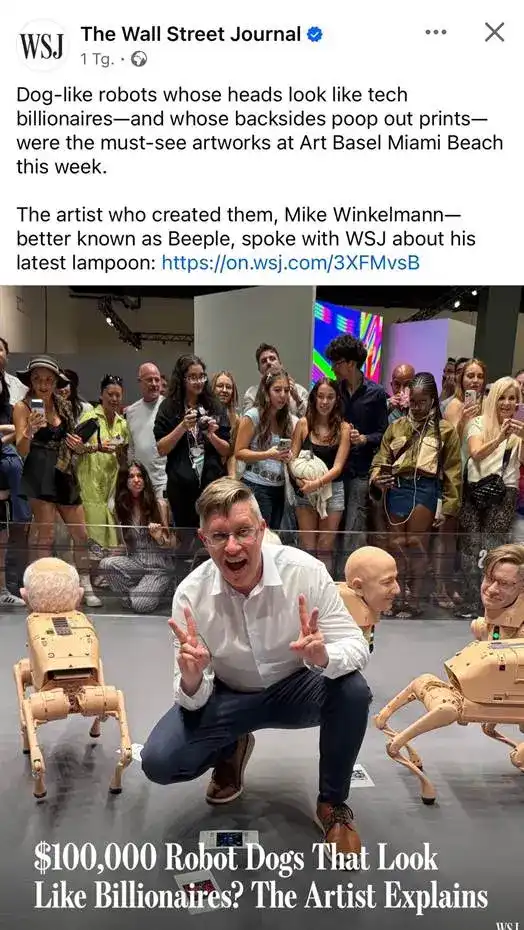
The project that Beeple and his team brought to this Art Basel is precisely Regular Animals. These are a bunch of robot dogs, as shown in the image below. They look a bit eerie because these robot dogs have human faces, and they are faces of well-known figures like Musk, Andy Warhol, Zuckerberg, Picasso, and even Beeple himself.
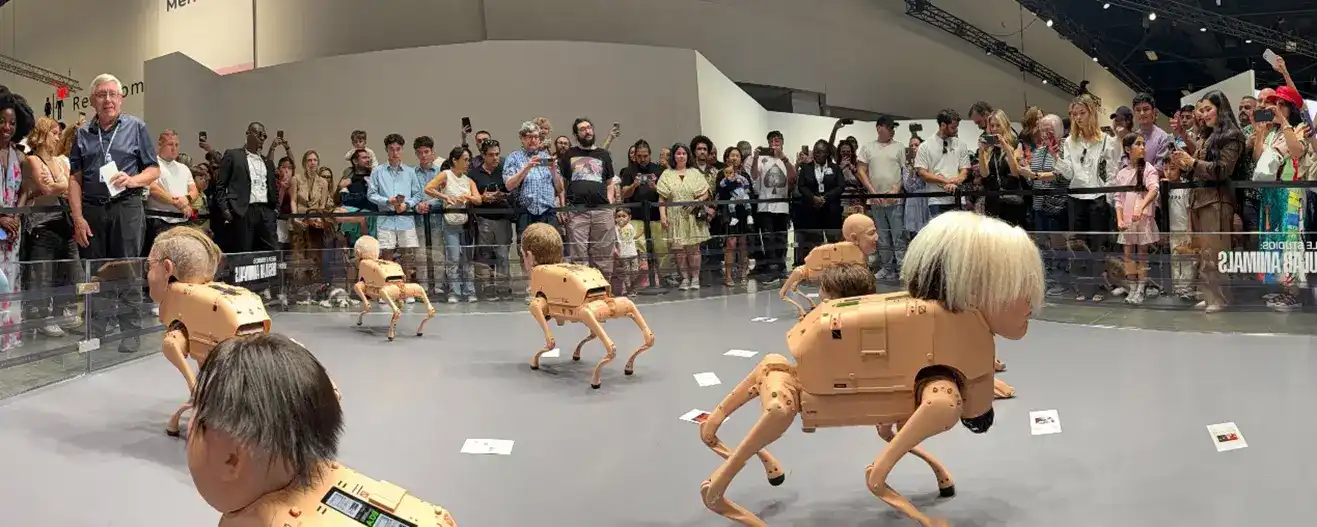
Of course, it's not just the eerie visual effect; these robot dogs use the cameras on their heads to observe their surroundings and employ an evolving visual algorithm to create artworks.
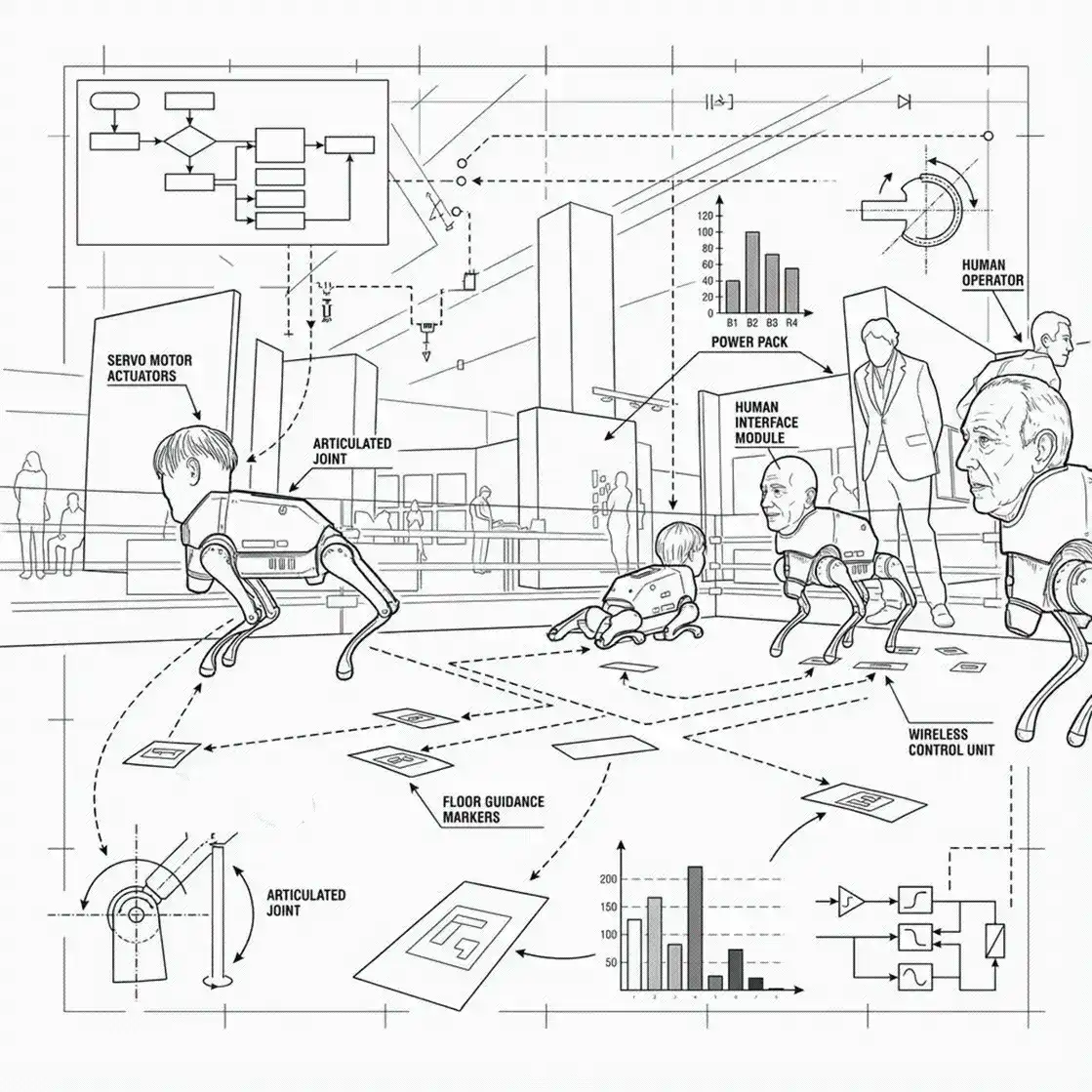
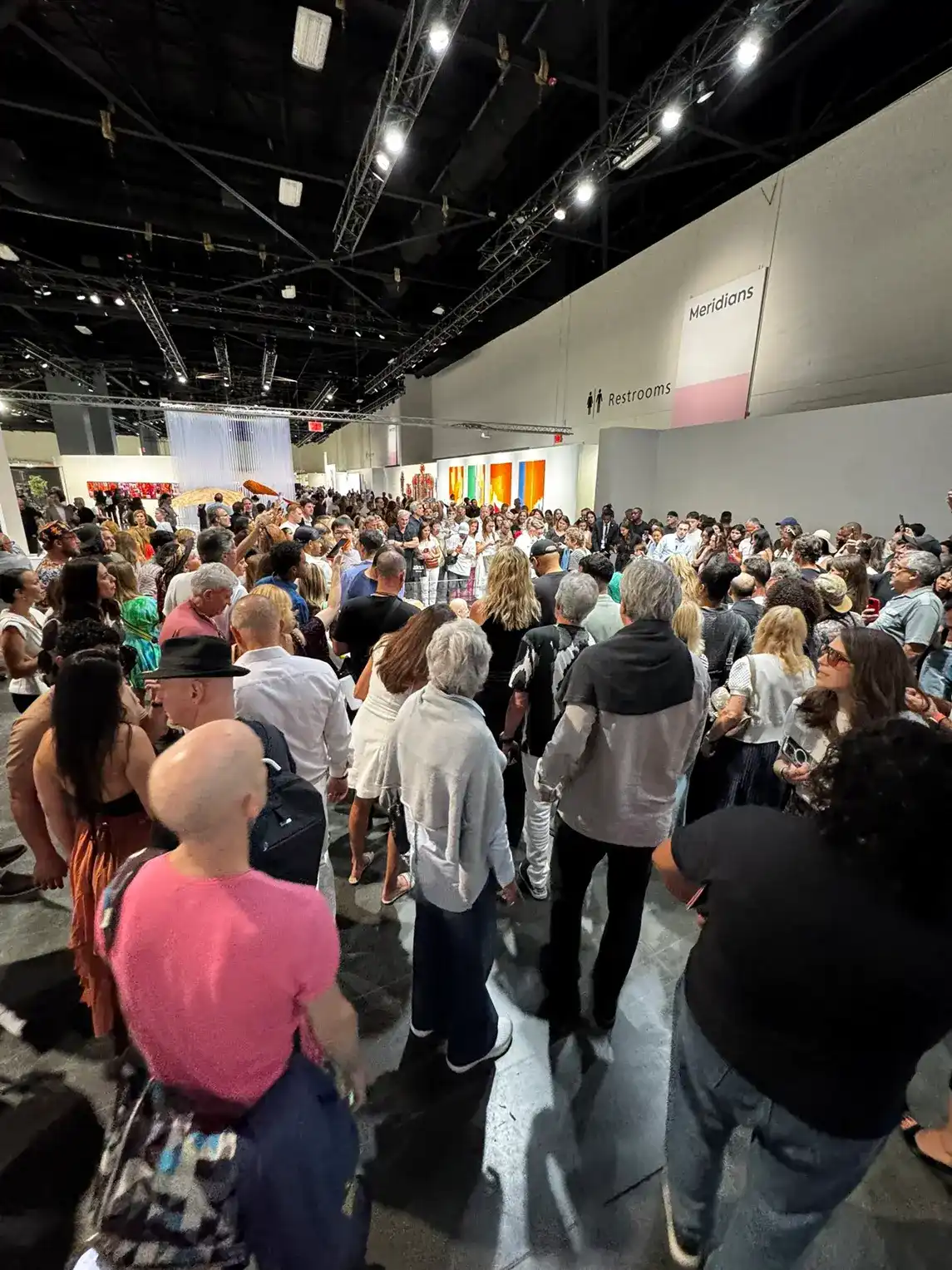
The celebrities these robot dogs portray were not chosen arbitrarily. The reason for selecting the aforementioned figures is that they have influenced how humans view the world, whether through algorithms, art, or politics. As humans, we observe the world through these perspectives, and so do these robot dogs. At Art Basel, these robot dogs and humans observed each other, and the moments of observation became the artworks created by these robot dogs—artworks that also serve as autobiographies for these machines.
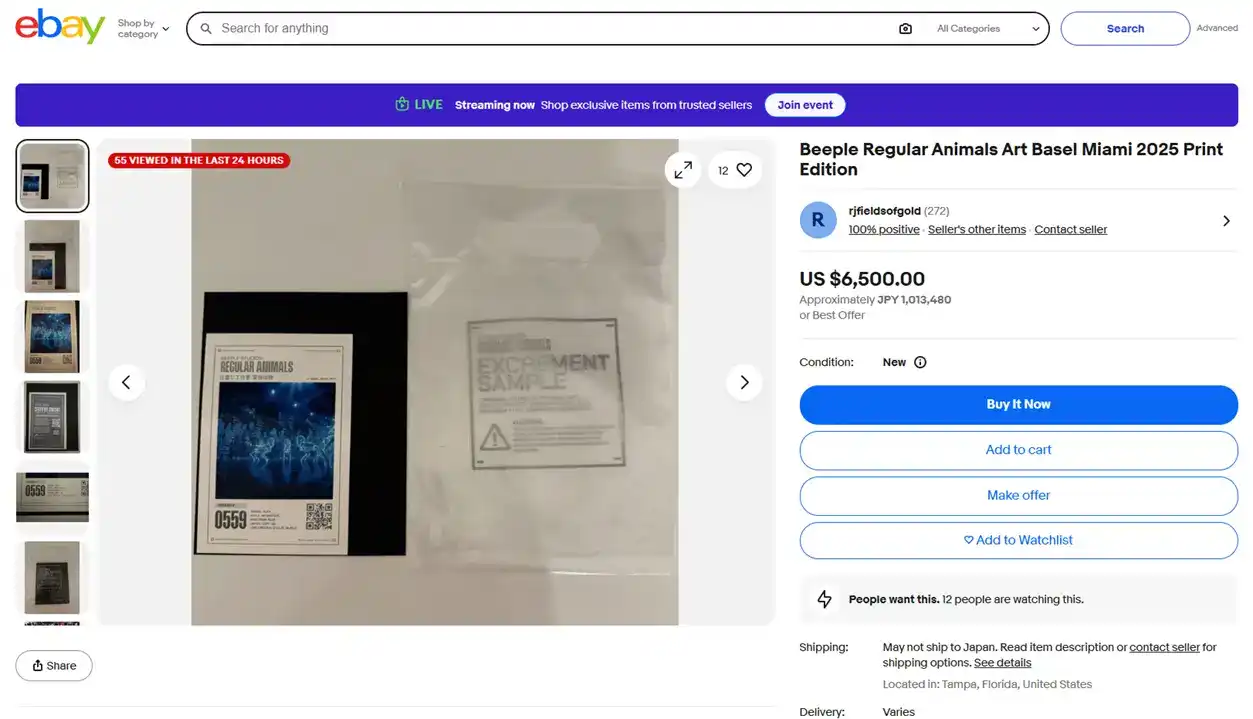
Interestingly, Regular Animals also has a physical series, with a total of 1,024 pieces. On eBay, someone has already listed one for sale at a fixed price of $6,500. The market's valuation suggests that NFTs are far more valuable than physical paintings, reminiscent of Damien Hirst's "The Currency" series years ago, which forced owners to choose between the physical and the NFT.
Before achieving great success in the NFT field, Beeple had been creating art every day since 2007 but had never sold anything for more than $100. After achieving fame and fortune, Beeple did not splurge like some artists or crypto project teams. He acquired a studio/gallery of about 460 square meters, assembled a team of dozens of 3D artists, engineers, and researchers (even including a former Boeing engineer), invited Carolyn Christov-Bakargiev, the former director of the Castello di Rivoli Museum of Contemporary Art, as an advisor, continuously exhibited at art shows around the globe, and created new artworks.

This exhibition of Beeple's robot dogs has not only gained attention in the crypto circle due to its price but has also been covered by traditional media like the WSJ.
Related Questions

QWho is the artist that sold an NFT for $69 million four years ago?

ABeeple.

QWhat is the name of the new NFT project Beeple launched at the Art Basel exhibition?

ARegular Animals.

QHow many Regular Animals NFTs were given away for free at Art Basel, and what was their estimated total value based on secondary market sales?

A256 NFTs were given away, with an estimated total value of nearly $9 million based on sales of over 10 ETH (approx. $35,000) each.

QWhat unique feature do the Regular Animals robot dogs have that allows them to create art?

AThey use cameras in their heads to observe their surroundings and a continuously evolving visual algorithm to create artworks.

QBesides the NFT collection, how many physical pieces are in the Regular Animals series, and what was one listed price for a physical piece on eBay?

AThere are 1024 physical pieces, and one was listed for sale on eBay at a fixed price of $6,500.

Related Reads

Wintermute Market Weekly: Iran War Ends, Inflation Meets Expectations, BTC Rebounds to Lower 60ks But Don’t Rush to Buy the Dip

**Wintermute Market Weekly: BTC Rebounds to $60K Lows, But Caution Advised** This week saw a broad market rebound, primarily driven by two converging factors: a US CPI inflation reading that met expectations (4.2% YoY) and former President Trump's announcement of a deal to end the Iran conflict. The latter triggered a sharp drop in oil prices, reducing geopolitical risk premiums and easing inflation fears. Consequently, risk assets like equities and cryptocurrencies rallied, with Bitcoin recovering from lows around $60,000 to close the week up 1.9%, while altcoins gained 3.1%. Despite the price bounce, the underlying liquidity picture for crypto remains weak. Key funding channels—stablecoin flows, ETF inflows, and Digital Asset Treasury (DAT) activity—show no signs of structural improvement. ETF outflows recently hit a record streak, and DAT assets have declined significantly. The rally from $60K to $83K earlier is now viewed as a bear-market rally that has failed. The current environment is characterized by low directional conviction and choppy, range-bound trading, likely persisting into summer. The report advises caution against aggressively buying the dip. While the $60K area offers attractive long-term risk/reward, a sustained bull run requires a visible turnaround in capital inflows, which hasn't materialized. The upcoming FOMC meeting and Powell's commentary, alongside the formal Iran deal signing, are noted as near-term catalysts. The core takeaway is to watch fund flows rather than price action and avoid being whipsawed by volatility before clear signs of institutional or retail capital returning emerge.

marsbit14m ago

Wintermute Market Weekly: Iran War Ends, Inflation Meets Expectations, BTC Rebounds to Lower 60ks But Don’t Rush to Buy the Dip

marsbit14m ago

Cursor, Why Boarded Musk's Starship?

SpaceX announced its acquisition of AI programming startup Cursor's parent company, Anysphere, for $60 billion in an all-stock deal, just days after its record-breaking IPO. The move sent SpaceX's stock soaring, briefly making it the most valuable U.S. company. Cursor, founded in 2022 by MIT graduate Michael Truell and his classmates, is a popular AI coding assistant that allows developers to switch between models from OpenAI, Anthropic, and others. It saw explosive revenue growth, reaching a $4 billion annualized run rate in early 2026. However, its market share was eroded by the launch of competitor Claude Code from its key AI supplier, Anthropic. This dependence prompted Cursor to develop its own AI model, Composer, in early 2026. To scale Composer, Cursor needed immense computing power. In April 2026, it struck a deal with SpaceX, granting the latter an option to acquire it post-IPO. SpaceX exercised this option, offering Cursor access to its Colossus supercomputer, powered by hundreds of thousands of top-tier Nvidia AI chips. For SpaceX, the acquisition is a strategic move to bolster its AI capabilities, particularly for its xAI division, and advance its broader ambition of building orbital, solar-powered data centers. While the deal surprised some employees and investors given Truell's earlier stance on independence, it represents a high-stakes partnership. SpaceX CEO Elon Musk has projected the company could reach $1 trillion in revenue by 2030. For Truell, joining forces with SpaceX is a monumental gamble on an unprecedented scale in the race for AI dominance.

链捕手16m ago

Cursor, Why Boarded Musk's Starship?

链捕手16m ago

The More It Rises, the More Dangerous? The Systemic Risks Behind SpaceX's Soaring Valuation

Summary: The article raises concerns about the systemic risks posed by SpaceX's skyrocketing valuation, arguing that modern market mechanics, rather than fundamentals, are driving its price discovery. Following SpaceX's market capitalization surpassing $3 trillion in after-hours trading, the author contends that the market is no longer functioning properly. The core issue is not SpaceX's business prospects but the unhealthy market structure surrounding it. With limited float and the imminent launch of options trading, the stage is set for a potential "gamma squeeze"—a feedback loop where market makers hedging call options are forced to buy shares, pushing the price higher and attracting more speculative momentum traders. This mechanism, seen previously with Tesla and meme stocks, can decouple valuation from financial reality. The danger escalates as extreme valuations force passive funds, ETFs, pensions, and major indices to hold the stock. If SpaceX grows large enough—hypothetically reaching $5 or even $10 trillion—its performance would increasingly dictate broader market indices, embedding systemic risk. The author warns that when price appreciation itself becomes the primary bullish thesis, the market transforms from a capital allocation mechanism into a self-reinforcing speculative machine, endangering the retirement savings of ordinary investors tied to passive strategies. The piece questions whether such a system can still perform its fundamental role of price discovery.

marsbit21m ago

The More It Rises, the More Dangerous? The Systemic Risks Behind SpaceX's Soaring Valuation

marsbit21m ago

Trading

Spot
Futures
活动图片





